
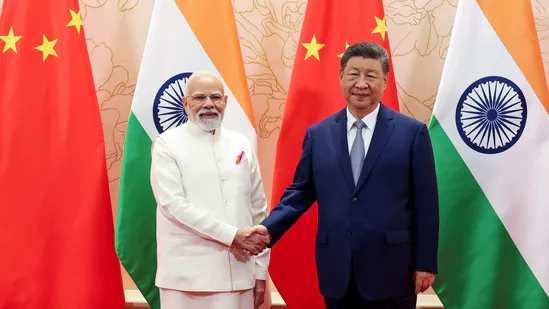
Modi and Xi Jinping Meet in Tianjin: A Defining Moment at the SCO Summit After Seven Years
Introduction
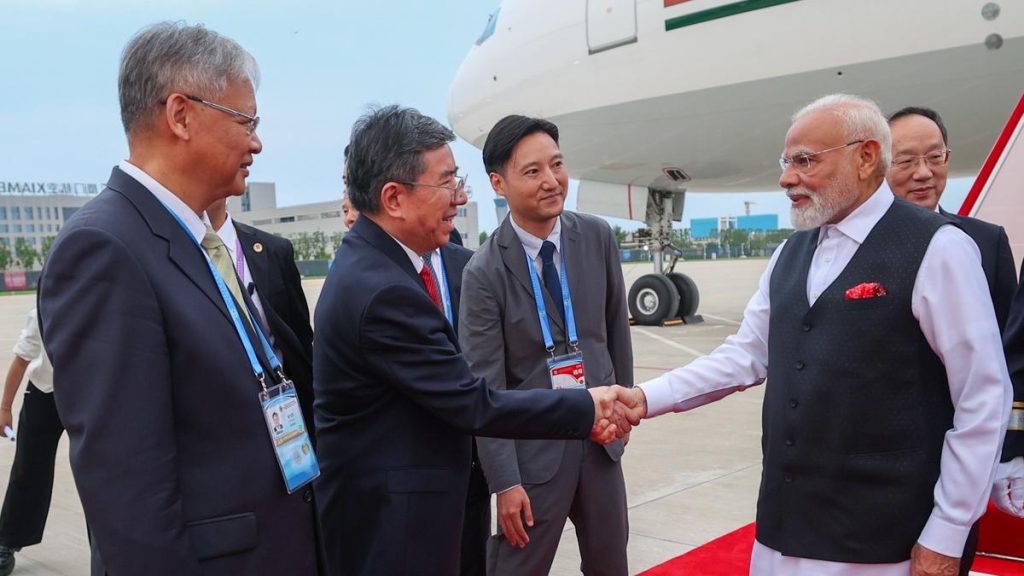
Diplomacy thrives on symbolism, timing, and the chemistry between leaders. When Prime Minister Narendra Modi landed in Tianjin, China, to attend the Shanghai Cooperation Organisation (SCO) Summit, it was not just another foreign visit. It marked the first time in seven years that Modi set foot in China, a period during which the two Asian giants have experienced some of the most turbulent phases in their modern relationship.
The much-anticipated meeting between Modi and Chinese President Xi Jinping on the sidelines of the summit quickly became the center of global attention. Against the backdrop of border tensions, trade disputes, and shifting geopolitical alignments, the encounter carried weight far beyond the bilateral table.
This blog takes a deep dive into the significance of Modi’s visit to China, the Modi–Xi meeting in Tianjin, the context of India-China relations in the last seven years, the role of SCO as a strategic platform, and what this moment means for the future of Asia and global diplomacy.
The SCO Summit in Tianjin: Why It Matters
The Shanghai Cooperation Organisation (SCO) is a regional body that includes China, Russia, India, Pakistan, and Central Asian states. Established in 2001, its primary focus is on security, counterterrorism, economic cooperation, and cultural exchanges.
The Tianjin summit is particularly significant because:
- Geopolitical Shifts – With the Russia-Ukraine war, US-China tensions, and instability in Afghanistan, the SCO has become a critical platform for Eurasian politics.
- India’s Balancing Act – As a member of both the QUAD (with US, Japan, Australia) and the SCO, India walks a diplomatic tightrope between West and East.
- China as Host – The summit being hosted in China adds layers of symbolism, especially for Modi’s first visit after years of tension.
- Global Attention – Media, analysts, and governments worldwide view the summit as a test of whether India and China can recalibrate ties.
Modi’s Return to China After Seven Years
The last time Modi visited China was in 2018 for the Wuhan Informal Summit, where he and Xi Jinping engaged in candid discussions to improve ties. Since then, relations have soured significantly.
What Has Changed Since 2018?
- Doklam Standoff (2017) and Galwan Clash (2020): Deadly border confrontations severely damaged trust.
- Trade Imbalance: China remains India’s largest trading partner, but concerns about dependence and deficits have grown.
- Global Alignments: India has deepened its ties with the US, QUAD, and Europe, while China has drawn closer to Russia.
- COVID-19 Pandemic: Originating in China, the pandemic added another layer of suspicion in India.
By stepping onto Chinese soil in 2025, Modi signaled both a willingness to engage and confidence in India’s rising global status.
The Modi–Xi Meeting in Tianjin
The highlight of Modi’s visit was his meeting with President Xi Jinping. While official statements were carefully worded, body language, gestures, and subtle signals spoke volumes.
Key Themes Likely Discussed
- Border Issues
- India’s primary demand remains restoration of peace along the Line of Actual Control (LAC).
- Modi reportedly emphasized that “normalcy in relations cannot return without stability at the border.”
- Xi, while non-committal publicly, was keen on reducing tensions to focus on China’s domestic economic recovery.
- Trade and Economy
- India’s imports from China have surged, especially in electronics, machinery, and APIs (pharmaceutical ingredients).
- Modi pushed for more balanced trade and greater Chinese investments in non-sensitive sectors.
- Global Multipolarity
- Both leaders discussed the need to resist Western dominance and strengthen multilateral platforms like SCO, BRICS, and G20.
- At the same time, India maintained its independent foreign policy without endorsing China’s global ambitions unconditionally.
- Regional Stability
- Afghanistan, Central Asia, and maritime security were on the table.
- Modi underlined the need for coordinated efforts against terrorism—a subtle dig at both Pakistan and China’s support to it.
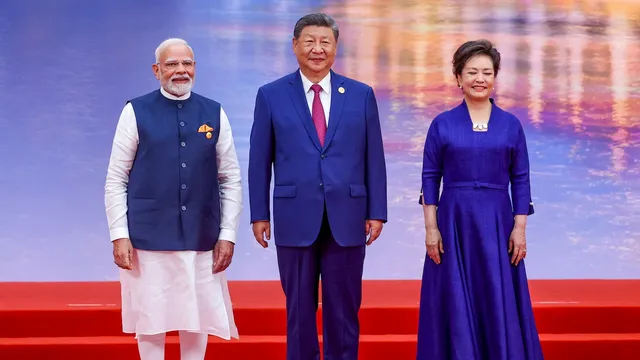
Symbolism of the Tianjin Meeting
The images of Modi and Xi shaking hands in Tianjin carried profound symbolism.
- Handshake After Galwan: It was the first time since the deadly Galwan Valley clash that the two leaders were seen exchanging warmth publicly.
- Mutual Recognition of Power: India’s economic growth and global stature make it impossible for China to ignore, just as China remains too big a player for India to sideline.
- Message to the World: Despite tensions, both nations are willing to engage diplomatically—an assurance to regional and global markets.
India-China Relations: The Tumultuous Seven Years
To understand the significance of this meeting, one must reflect on the rollercoaster of India-China ties in recent years.
1. Border Tensions
The Galwan clash in June 2020, which claimed the lives of soldiers on both sides, marked the lowest point in relations in decades. Trust deficit remains high.
2. Economic Links Amid Rivalry
Ironically, despite political hostilities, trade has boomed. Bilateral trade crossed $135 billion in 2023, with India importing far more than it exports.
3. Global Competition
Both nations compete for influence in Africa, Southeast Asia, and multilateral forums. India’s ties with the US and QUAD are seen by China as counterweights.
4. Technology and Security
India has banned over 200 Chinese apps citing security reasons, while also limiting Chinese firms in telecom and infrastructure.
Why SCO Matters for India
For India, the SCO provides a platform to:
- Engage Both Rivals and Partners: It allows Modi to interact with Xi and Putin, while also countering Pakistan.
- Regional Security: SCO’s counterterrorism framework aligns with India’s concerns on cross-border terror.
- Energy Diplomacy: Central Asia’s rich energy resources can help India diversify imports.
- Strategic Visibility: Being present ensures India is not excluded from Eurasian strategic dynamics.
Geopolitical Implications of the Meeting
The Modi–Xi engagement in Tianjin goes beyond bilateral relations.
For Asia
- India and China together account for one-third of humanity and a significant share of global GDP.
- Their cooperation or conflict shapes Asia’s stability and growth.
For the West
- Washington and Brussels closely monitor such meetings. Any thaw between India and China complicates Western strategies to balance Beijing.
For Russia
- Putin benefits when Modi and Xi engage, as it strengthens the Eurasian bloc against Western sanctions and dominance.
For Pakistan
- Pakistan watches nervously. Any softening between India and China could reduce Islamabad’s leverage.
Domestic Messaging in India
For Modi, the Tianjin visit serves several domestic purposes:
- Strong Leadership: Meeting Xi on equal footing reinforces Modi’s image as a global statesman.
- Balancing Hard and Soft Power: While firm on border issues, Modi projects himself as pragmatic enough to engage.
- Electoral Advantage: With India heading into election cycles, global visibility boosts Modi’s political capital.
Domestic Messaging in China
For Xi Jinping, the optics matter equally:
- Show of Strength: Hosting Modi after years signals China’s centrality in Asian diplomacy.
- Economic Priority: Engagement with India signals Beijing’s interest in stabilizing regional economic relations.
- Domestic Propaganda: Chinese state media framed the meeting as proof of Xi’s ability to manage complex ties.
Global Media Reactions
International outlets framed the Modi–Xi meeting as:
- The New York Times: “A cautious handshake that could redefine Asia’s balance of power.”
- BBC: “Modi and Xi meet after years of frost—symbolism matters more than substance.”
- Al Jazeera: “At SCO in Tianjin, India and China show diplomacy is not dead.”
Social media amplified the event with hashtags like #ModiInChina, #ModiXiMeet, and #SCOSummit2025, trending across India and abroad.
Challenges Ahead
Despite the optics, deep challenges remain:
- Border Resolution: Without concrete steps on LAC disengagement, trust will remain low.
- Economic Balance: India seeks fairer trade terms but structural imbalances persist.
- Geopolitical Rivalry: Competing ambitions in the Indo-Pacific continue.
- Alliance Contradictions: India’s QUAD membership and China’s ties with Pakistan remain points of friction.
The Road Ahead: What Tianjin Means
The Tianjin meeting does not magically resolve decades of mistrust, but it opens doors.
- Short Term: Likely more military-to-military talks and incremental steps toward de-escalation at the border.
- Medium Term: Possibility of expanded trade in non-sensitive sectors, cultural exchanges, and cooperation in climate change.
- Long Term: Whether India and China can coexist as competitors and collaborators will define the future of Asia.
Conclusion
Prime Minister Narendra Modi’s return to China after seven years and his meeting with President Xi Jinping at the SCO Summit in Tianjin was more than a diplomatic routine. It was a carefully choreographed moment of symbolism, strategy, and subtle signaling.
For India, it demonstrated confidence, resilience, and readiness to engage without compromising core interests. For China, it was a reminder that India is an indispensable player in Asia. For the world, it was proof that even amid rivalry, dialogue remains essential.
Whether this handshake leads to genuine thaw or remains a symbolic gesture depends on what follows—particularly on the border issue. But for now, Tianjin has etched itself as a milestone in the complex, layered, and consequential story of India–China relations in the 21st century.
Read more latest news

