
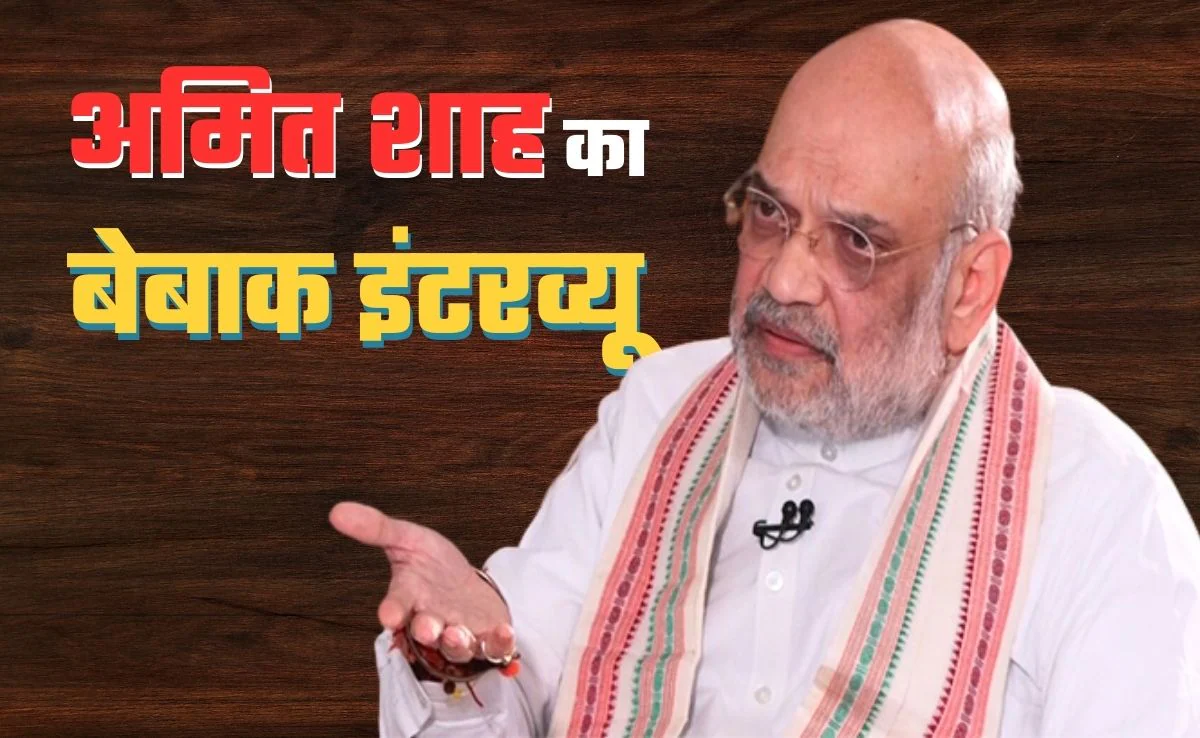
Case of Abusive Slogans Against the Prime Minister: Home Minister Amit Shah Got Angry, Urged Rahul Gandhi to Apologize.
Introduction
Case of abusive slogans against the Prime Minister: Home Minister Amit Shah got angry, urged Rahul Gandhi to apologize. Indian politics is a theatre where every word, slogan, and gesture carries immense significance. In recent days, a storm erupted in the political arena when abusive slogans were raised against Prime Minister Narendra Modi. The issue quickly escalated into a heated national debate, with Home Minister Amit Shah strongly condemning the incident and demanding that Congress leader Rahul Gandhi apologize. This episode has once again highlighted the fragile boundaries of political discourse, the responsibility of leaders to maintain decorum, and the ever-present friction between the ruling Bharatiya Janata Party (BJP) and the opposition Congress.
In this blog, we will explore the background of the incident, Amit Shah’s fiery response, the reactions of Congress leaders, the larger implications of using abusive slogans in politics, media and public responses, and how this controversy reflects deeper trends in Indian democracy.
Background of the Incident abusive slogans
The controversy began during a political protest where some Congress supporters were allegedly heard raising derogatory and abusive slogans against Prime Minister Modi. While political protests and aggressive sloganeering are not uncommon in India, this particular case drew nationwide attention due to the highly personal and indecent language used.
The BJP quickly seized the moment, accusing Congress of stooping too low in its opposition. The ruling party emphasized that while disagreement and criticism are part of democracy, personal insults and abusive slogans against the country’s Prime Minister are not acceptable under any circumstances.
The matter took a sharper turn when Amit Shah, the Union Home Minister and one of BJP’s most powerful leaders, directly targeted Congress and Rahul Gandhi, saying that the leader of the opposition cannot remain silent on such shameful behavior by party workers.
Amit Shah’s Strong Response
During a press interaction and later inside Parliament, Amit Shah expressed his deep anger over the matter. He said:
- “Raising questions on policies is fine, but abusing the Prime Minister crosses every limit of democratic decorum.”
- “Rahul Gandhi must apologize to the people of India. If he doesn’t agree with the abusive slogans, why is he silent? His silence proves his complicity.”
- “The Gandhi family always thinks they are above the country and above accountability. But this time, the people of India will not forgive them.”
Shah’s sharp remarks reflect BJP’s strategy to place Rahul Gandhi directly in the line of responsibility. By demanding an apology, the BJP hopes to portray Congress as irresponsible and disrespectful towards the institution of the Prime Minister.

Congress’ Reaction
The Congress party, on its part, tried to downplay the incident. Senior Congress leaders stated that the slogans were raised by some overenthusiastic supporters, not the leadership. They accused the BJP of trying to divert attention from core issues like unemployment, inflation, and governance failures by exaggerating the controversy.
Rahul Gandhi himself has not directly apologized for the slogans but stressed that his fight is against BJP’s policies and ideology, not individuals. His indirect approach has given BJP more ammunition, as Amit Shah and other leaders argue that silence equals approval.
Some Congress leaders have also counterattacked, saying that BJP leaders and supporters too have often used abusive language against opposition leaders, but the ruling party only makes noise when criticism is directed at Modi.
Larger Political Context
This controversy did not emerge in isolation. It reflects the larger, long-standing battle between BJP and Congress. Since 2014, when Modi rose to power, BJP has often portrayed itself as a victim of personal abuse, citing examples like when Modi was called “maut ka saudagar” (merchant of death) or “chaiwala” in a derogatory sense by opposition leaders.
The party has skillfully converted such attacks into political advantage, presenting Modi as a leader of humble background who faces insults from the elite opposition. This narrative resonates strongly with large sections of voters.
On the other hand, Congress tries to show that BJP uses such controversies to avoid discussing real governance issues. They argue that BJP wants to shift public debate from economic and social challenges to emotional controversies.
Importance of Decorum in Politics
The abusive slogans controversy also raises a broader question: how far can political criticism go before it turns into indecency? Democracy thrives on debate, dissent, and protest, but it also requires mutual respect.
In India, slogans are powerful tools of political mobilization. From “Simon Go Back” during the freedom struggle to “Garibi Hatao” in Indira Gandhi’s era, slogans have shaped narratives. But when slogans descend into abuse, they risk damaging the spirit of democracy.
This incident is a reminder that while passion is natural in politics, leaders must ensure that supporters do not cross lines of respect. Otherwise, the focus shifts from issues to insults, weakening democratic discourse.

Media Coverage
The media played a significant role in amplifying the controversy. Prime-time debates across news channels featured fiery clashes between BJP and Congress spokespersons. Some channels accused Congress of promoting hate politics, while others criticized BJP for making a mountain out of a molehill.
Social media too was flooded with hashtags like #ShameOnCongress, #RahulMustApologize, and #RespectPM. At the same time, opposition supporters trended hashtags like #RealIssuesMatter and #BJPDiversionTactics.
This digital war of words shows how every political controversy today quickly becomes a battleground for online perception, influencing public opinion at large.
Public Reaction
The public’s response has been mixed. Many ordinary citizens expressed anger that the country’s Prime Minister was insulted in such an indecent manner. They argued that while criticizing policies is valid, abusive slogans degrade India’s global image.
Others felt the controversy was unnecessary and that the government should focus more on real issues affecting people’s lives. They believed BJP was using the incident to divert attention from economic struggles.
Overall, the controversy deepened existing political divides, with supporters of each side defending their party’s stance.
Historical Precedents of Abusive Politics
Abusive politics is not new in India. From Jawaharlal Nehru’s time to Indira Gandhi, Atal Bihari Vajpayee, and now Modi, opposition leaders have often faced harsh words. But what makes the current environment more volatile is the speed and reach of social media.
Earlier, a derogatory comment may have been limited to a rally. Today, a single abusive slogan can go viral within minutes, reaching millions and sparking nationwide uproar. This amplifies the impact and forces parties to react instantly.
BJP’s Political Advantage
By demanding Rahul Gandhi’s apology, BJP has turned the incident into a political weapon. They want to highlight a contrast: while Modi remains calm and focused on governance, opposition leaders resort to abuse and negativity.
This helps BJP strengthen its narrative ahead of upcoming elections, especially in portraying Congress as arrogant, disrespectful, and disconnected from Indian values of respect.
Congress’ Challenge
For Congress, this episode is another headache. The party is already struggling with leadership issues and electoral setbacks. Now, with BJP projecting Congress as disrespectful towards the Prime Minister, the party risks alienating undecided voters.
Rahul Gandhi faces a tough choice:
- If he apologizes, it may look like surrender and weaken his image as a strong opposition leader.
- If he doesn’t, BJP will continue to attack him as arrogant and complicit.
Either way, the incident puts Congress in a difficult position.
Implications for Indian Democracy
This controversy is not just about one slogan or one apology. It reflects the larger state of Indian democracy, where political rivalry is increasingly turning into personal hostility. The balance between criticism and respect is weakening.
If this trend continues, the risk is that public debate will be dominated by insults rather than ideas. Democracy will suffer if parties focus more on attacking personalities than discussing policies.
Conclusion
The case of abusive slogans against Prime Minister Modi and Amit Shah’s demand for Rahul Gandhi’s apology is a snapshot of India’s current political climate—charged, polarized, and deeply emotional. While BJP sees an opportunity to portray itself as a victim of indecency, Congress views it as another attempt to divert attention from governance failures.
What remains clear is that Indian democracy urgently needs a return to respectful political discourse. Criticism is essential, but abuse degrades the dignity of the nation. Leaders must realize that their words and actions set the tone for millions of supporters.
As elections approach, both BJP and Congress must ask themselves: do they want to win by inspiring voters with ideas or by dragging each other down with insults?
Read more latest news

