
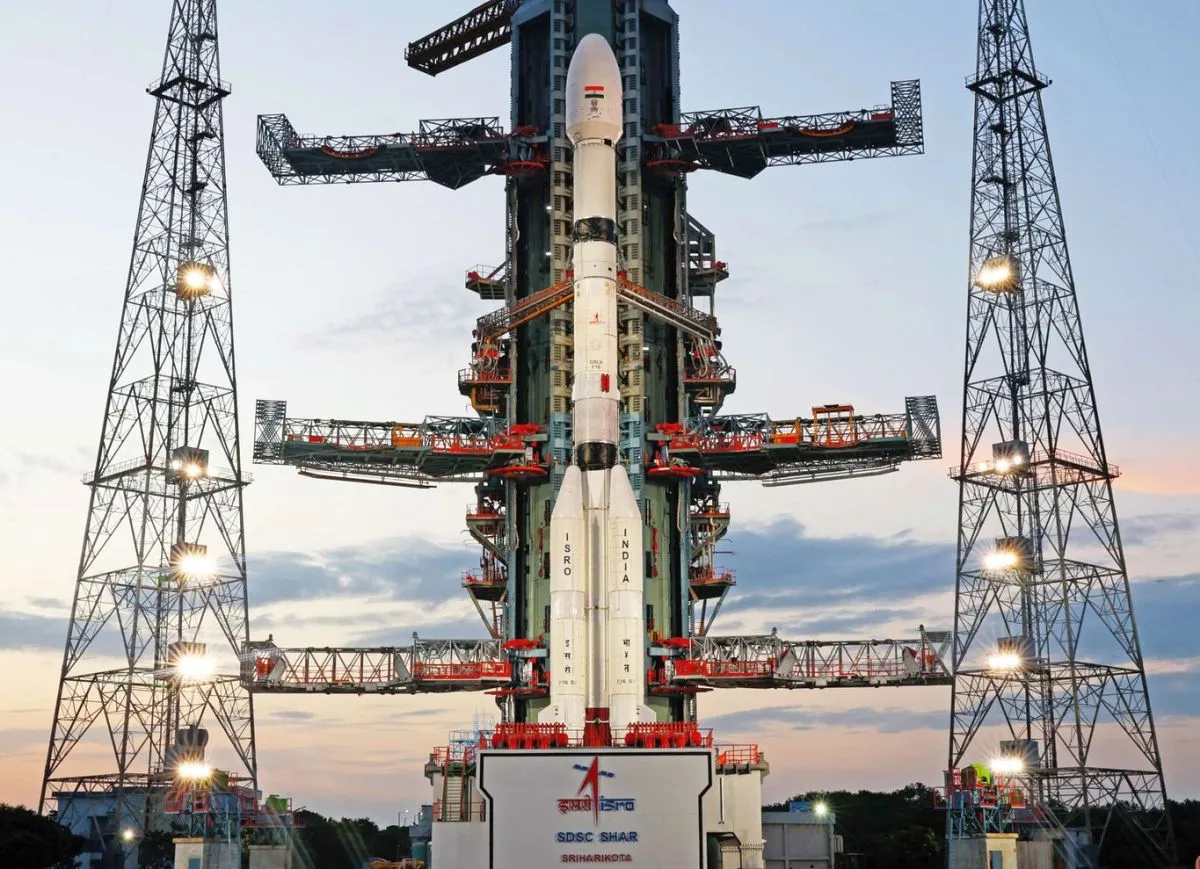
ISRO’s New Wonder: Will Build a 40-Storey Rocket
Introduction: A Giant Leap for Indian Space Research
When it comes to space exploration, the Indian Space Research Organisation (ISRO) has always surprised the world with cost-effective missions, precise engineering, and bold ideas. From launching Mangalyaan (Mars Orbiter Mission) at just a fraction of NASA’s cost to landing Chandrayaan-3 on the lunar surface, ISRO has demonstrated that ambition backed by innovation can achieve wonders.
Now, the organization is preparing for something that will once again shake the global space community — a 40-storey tall rocket. This ambitious project, which has already been described as a “new wonder” by many experts, represents India’s determination to reach the next frontier in space technology.
In this blog, we will explore every aspect of this fascinating development — from the vision behind the 40-storey rocket to its potential design, its role in upcoming space missions, and its significance in making India a global space power.
The Vision Behind ISRO’s 40-Storey Rocket
The idea of building a rocket of such colossal height is not merely about breaking records or competing with NASA and SpaceX. Instead, it is part of a larger vision for future space exploration, which includes:
- Carrying Heavier Payloads: With advancements in technology, satellites, space stations, and interplanetary spacecraft are becoming larger and more complex. India needs rockets capable of carrying payloads weighing hundreds of tonnes.
- Reducing Launch Costs: Bigger rockets mean fewer launches. A single rocket can carry multiple satellites or modules, reducing cost per kilogram for reaching space.
- Future Crewed Missions: India is already working on its first human space mission, Gaganyaan. A 40-storey rocket could play a pivotal role in sending larger spacecraft with astronauts to the Moon, Mars, or beyond.
- Space Economy Growth: As the global space economy is projected to cross $1 trillion by 2040, India wants to ensure it captures a significant share of satellite launches, deep space missions, and even space tourism.
How Tall is 40 Storeys in Space Terms?
A 40-storey building is roughly 160–170 meters tall. To put this in perspective:
- NASA’s Saturn V, which carried astronauts to the Moon, was 110 meters tall.
- SpaceX’s Starship with Super Heavy booster stands at 120 meters.
- ISRO’s most powerful rocket currently, LVM3 (formerly GSLV Mk-III), is 43.4 meters tall.
This means ISRO’s upcoming rocket will be almost 4 times taller than LVM3 and taller than even SpaceX’s Starship. Such a leap would be historic for India and place it among the top three rocket-building nations.
Technical Challenges in Building a 40-Storey Rocket
Building a rocket of such magnitude comes with unique challenges. ISRO engineers will need to overcome:
- Structural Stability: A rocket of this size will face enormous pressure during lift-off. Engineers will need to design ultra-strong but lightweight materials.
- Fuel Requirements: Larger rockets require enormous amounts of propellant. This means developing advanced engines, possibly cryogenic or reusable engines, to provide enough thrust.
- Heat Management: During re-entry, the rocket or its stages could face extreme heat. Advanced thermal protection systems will be crucial.
- Launch Pad Modifications: Existing launch pads at Sriharikota (SHAR) may need upgrades to handle a rocket of this size.
- Reusable Technology: To make it economically viable, ISRO may need to follow the SpaceX model of reusability, ensuring boosters can land and be reused.
Global Comparisons: How Does ISRO’s Rocket Stand Out?
When we compare ISRO’s dream rocket with others:
- NASA’s SLS (Space Launch System): Currently the most powerful rocket by NASA, about 98 meters tall.
- SpaceX Starship: 120 meters tall, designed for Mars missions, reusable.
- ISRO’s Future Rocket: At nearly 160 meters, it will outclass both in height, though payload capacity is yet to be disclosed.
What makes ISRO stand out is its reputation for low-cost innovation. While NASA and SpaceX spend billions, ISRO has consistently delivered missions at 1/10th the cost. If ISRO can apply this cost-effectiveness to a mega rocket, it could revolutionize the global space industry.

The Role in India’s Upcoming Missions
This rocket is not being built in isolation. It will play a central role in India’s long-term space roadmap, which includes:
- Gaganyaan Expansion: Carrying larger spacecraft for longer human missions.
- Lunar Base Development: Transporting heavy equipment to build a permanent base on the Moon.
- Mars Missions: Future human or robotic missions to Mars will require massive rockets.
- Asteroid Mining: As the world eyes resources beyond Earth, India may position itself for asteroid mining missions.
- Space Tourism & Economy: Private companies in India, such as Skyroot and Agnikul, could partner with ISRO for tourism and commercial launches.
Economic and Strategic Impact
A 40-storey rocket isn’t just about science; it has strategic and economic dimensions:
- Boost to the Indian Space Industry: India is opening up space to private players. This mega rocket could provide them a reliable and cost-effective launch platform.
- Global Satellite Launch Market: ISRO could dominate the market by offering to launch heavy satellites at much cheaper rates.
- Strategic Strength: A strong space program also adds to national defense capabilities, with potential applications in surveillance, communications, and security.
- Space Diplomacy: India could use its rocket power to help developing countries launch satellites, boosting soft power.
Challenges Ahead for ISRO
While the idea is revolutionary, challenges remain:
- Funding: Building such a massive rocket will require thousands of crores. Sustained government and private funding is essential.
- Technological Leap: ISRO will need to make rapid advancements in cryogenics, reusability, AI-driven navigation, and advanced materials.
- Competition: With SpaceX, China’s CNSA, and NASA already ahead, ISRO must innovate smartly to carve a niche.
- Safety Concerns: Larger rockets pose greater risks. Ensuring crew and mission safety will be paramount.
What Experts Say
Many space experts believe ISRO’s plan is both ambitious and realistic. Here are some views:
- Indian Scientists: They see this as a “natural progression” after Chandrayaan-3 and Aditya-L1 missions.
- Global Analysts: They believe if ISRO succeeds, it could emerge as a serious competitor to SpaceX in the global launch market.
- Defense Experts: They highlight that such rockets also enhance India’s strategic deterrence capabilities.
Public Excitement and National Pride
Every major ISRO mission — from Chandrayaan to Mangalyaan — has ignited national pride in India. The announcement of a 40-storey rocket has already created buzz on social media, with people calling it “Bharat ka Starship”.
For a country that once depended on foreign space technology, the idea of building the world’s tallest rocket is a symbol of Atmanirbhar Bharat (self-reliant India).

Future Possibilities
If ISRO successfully builds and launches this rocket, future possibilities could include:
- Indian Astronauts on the Moon by 2035.
- A permanent Indian Space Station.
- Participation in global Mars colonization efforts.
- India emerging as a leader in the trillion-dollar space economy.
Conclusion: A New Era of Indian Space Power
The announcement that ISRO will build a 40-storey rocket is more than just a technological plan — it’s a bold statement that India is ready to lead in space exploration. It represents vision, ambition, and confidence.
If successful, this rocket will not only carry satellites and astronauts but also carry the dreams of 1.4 billion Indians into the cosmos.
Read more latest news

