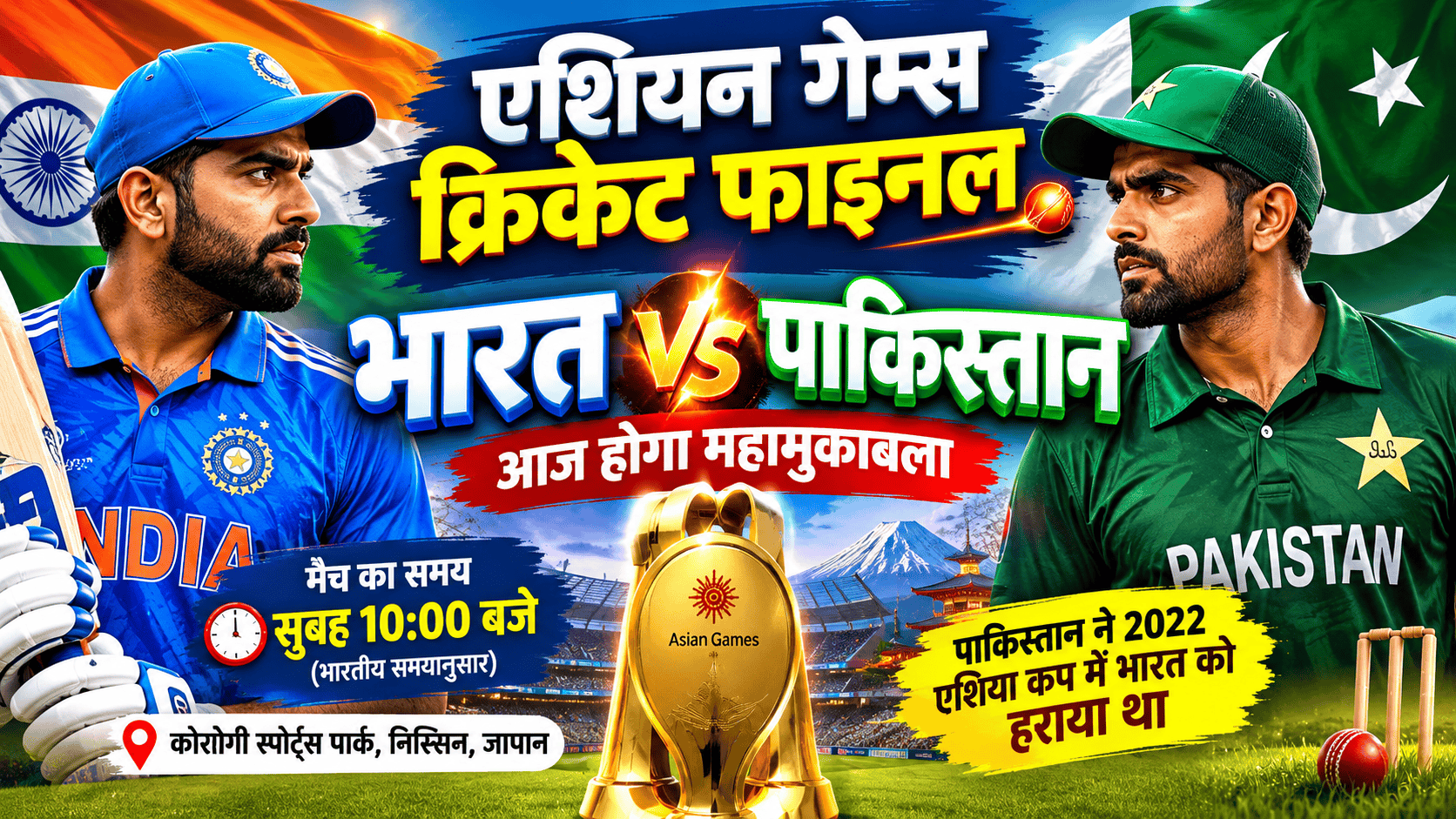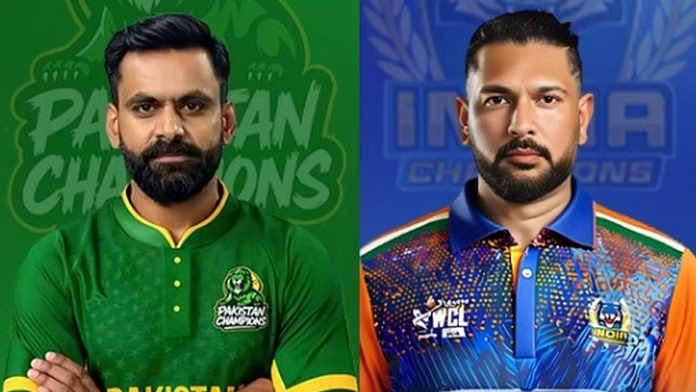
India Refuses to Play Match with Pakistan – WCL Semi-Final Cancelled
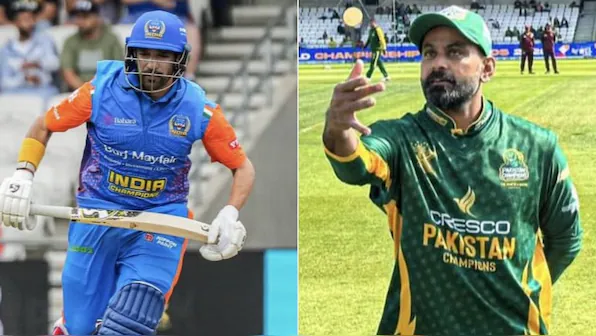
India refuses to play match with Pakistan In a dramatic turn of events, the highly anticipated WCL (World Cricket League) semi-final between India and Pakistan has been cancelled after the Indian cricket team officially refused to play the match citing national policy and security concerns. The decision has triggered massive debate in global cricketing circles, with the International Cricket Council (ICC) facing pressure from both sides. India’s refusal follows years of diplomatic and political tension between the two nations, particularly after repeated ceasefire violations, terror incidents, and Pakistan’s alleged support to cross-border terrorism.
Sources from the BCCI (Board of Control for Cricket in India) revealed that the government had advised the team not to participate against Pakistan in the current political climate. While many Indian fans and political leaders have supported the move as a matter of national pride, critics argue that politics should not interfere with sports.
This cancellation could have long-term implications for international cricket diplomacy and tournament structures. Pakistan Cricket Board (PCB) has formally lodged a protest with ICC and is contemplating legal action. Meanwhile, the Indian team maintains that national interest supersedes sporting commitments.
“No cricket with Pakistan until they stop exporting terror.”
These were the strong sentiments echoed by Indian officials and public voices after the Indian cricket team officially refused to play the WCL semi-final against Pakistan, leading to the abrupt cancellation of one of the most awaited matches of the year.
This move—unprecedented at this stage of a major international tournament—has sparked both applause and outrage. Applause from those who view it as a patriotic stand and a principled statement, and outrage from cricket purists and sports bodies who see it as a dangerous precedent.
Let’s break down what happened, why it happened, and what the implications are for international cricket and Indo-Pak relations.
⚠️ The Match That Never Happened
India was scheduled to face Pakistan in the WCL semi-final on August 2, 2025. The match was set to be held in Dubai, a neutral venue often used for India-Pakistan encounters due to political tensions. Fans had booked tickets months in advance. Broadcasters had signed million-dollar deals. Security arrangements were at peak level.
Then came the bombshell: The Board of Control for Cricket in India (BCCI) informed the ICC that the Indian team would not play against Pakistan in the current geopolitical climate.
🧭 Government’s Role and National Policy
According to BCCI insiders, the Indian government had advised against the match due to:
- Escalating ceasefire violations along the LoC
- Intelligence reports of Pakistani-based terror networks
- National sentiment following recent militant attacks in Kashmir and Punjab
- Diplomatic standstill between New Delhi and Islamabad
A senior government official anonymously stated:
“You cannot separate sports from the reality of what Pakistan is doing on our borders. Cricket is a soft power tool. Engaging them normalizes the unacceptable.”
This aligns with the Indian government’s longstanding position that “terror and talks cannot go together”, which they have now extended to “terror and tournaments.”
📜 BCCI’s Official Statement
The BCCI, in a press conference held in Mumbai, said:
“We respect the spirit of sportsmanship and international tournaments, but the security of our players and the sentiments of our people come first. After extensive consultation with the Indian government, we have decided to withdraw from the semi-final against Pakistan.”
BCCI also made it clear that this was not a reflection of fear or avoidance, but a principled stance in line with India’s current foreign policy.
🧨 Pakistan’s Reaction – Anger and Protest
The Pakistan Cricket Board (PCB) immediately slammed the decision as “a violation of ICC tournament rules” and “an act that politicizes sports.”
PCB Chairman Rana Shafiq said:
“This is not just a match, this is a test of fairness in global sport. If ICC allows teams to withdraw based on politics, the whole structure of cricket collapses. We are exploring legal options.”
Pakistan has officially lodged a protest with the ICC and requested either:
- India’s disqualification from the tournament
- Or a direct entry for Pakistan into the WCL final
They’ve also warned that this may affect their participation in upcoming tournaments hosted by India, including Champions Trophy 2025.
🧪 Reactions from Cricket Legends
Indian cricket legends like Kapil Dev, Sunil Gavaskar, and Sourav Ganguly are divided on the issue.
- Kapil Dev: “India is right. Cricket is not above national security. We must set a precedent.”
- Gavaskar: “I’m disappointed, but I understand. When there’s blood on the border, cricket can wait.”
- Ganguly: “We’ve beaten Pakistan before on field. We should have played and won. That would be the real message.”
From Pakistan’s side, cricketers like Wasim Akram and Shahid Afridi called the move “unsportsmanlike and cowardly.”
📣 Public Opinion in India
In India, the public response has largely been supportive. Twitter/X was flooded with hashtags like:
- #NoMatchWithPakistan
- #NationFirst
- #BoycottPak
A poll conducted by a leading news channel showed:
- 74% of Indians supported the decision to withdraw
- 19% opposed it
- 7% were undecided
Many families of soldiers who lost their lives in border skirmishes thanked the Indian team for “honoring the sacrifice” of martyrs.
⚖️ What Does ICC Say?
The International Cricket Council (ICC) is now facing a massive crisis. Tournament regulations do not allow teams to skip knockout matches unless there’s a health, safety, or force majeure reason.
However, India has invoked a clause around “national security and public sentiment,” which is being reviewed by the ICC’s legal team.
An ICC insider revealed:
“We are in uncharted territory. If we punish India, we risk alienating the biggest cricket market. If we let this slide, every nation may start skipping matches citing politics.”
A decision is expected within the next week, with the possibility of either:
- Rescheduling the match with heavy diplomatic coordination
- Awarding Pakistan a walkover into the final
- Declaring the tournament void (unlikely)

🧮 Economic Impact – Billions at Stake
The India-Pakistan match is cricket’s most lucrative encounter. Sponsors, advertisers, and broadcasters were expecting record-breaking viewership.
- Disney+ Hotstar and Sony Sports were expected to make $60 million from ads
- Ticketing revenue losses in Dubai alone are estimated at $5 million
- The ICC stands to lose millions in global broadcasting rights
Many advertisers have already demanded refunds or compensation.
🌍 A Larger Diplomatic Signal?
This decision is not just about cricket. Analysts say this is a strong diplomatic signal to Pakistan and the world:
- India will no longer separate diplomacy from sport.
- Any engagement, even cultural or sporting, must reflect national interest.
- India is willing to risk global criticism to maintain its geopolitical stance.
Some compare it to the 1980s Olympics boycotts, or South Africa’s exclusion during apartheid years.
🗓️ Historical Context
This isn’t the first time India has refused to play Pakistan in a non-bilateral setting.
- In 2019, after the Pulwama terror attack, there were calls to boycott the World Cup match against Pakistan. India played, but only after government clearance.
- Bilateral cricket ties between India and Pakistan have been suspended since 2012.
- All matches since then have been restricted to ICC or ACC tournaments at neutral venues.
This marks the first time India has officially withdrawn from a knockout match.
🧭 What’s Next for Indo-Pak Cricket?
- Diplomatic talks unlikely: With Indian elections nearing and Pakistan in political turmoil, the cricketing deadlock may persist.
- Champions Trophy 2025 in doubt: Scheduled to be hosted by Pakistan, India’s participation now looks uncertain.
- Rise of neutral leagues: With national teams in tension, T20 leagues like IPL, PSL, ILT20 may become platforms for Indo-Pak players to interact.
- Potential ICC rule changes: The ICC may need to update its rulebook to address political withdrawals.
📌 Final Thoughts – A Match Beyond Boundaries
The India-Pakistan semi-final of the World Cricket League 2025 may go down in history not as a game played—but as one boycotted for a cause.
For some, it’s a betrayal of the spirit of cricket.
For others, it’s a necessary stand in a world where sport can no longer pretend to be immune from politics.
What’s clear is that cricket is no longer just a game—it’s a battleground of ideologies, diplomacy, and national identity.
India’s refusal to play Pakistan is not just a cancellation—it’s a message.
A message that when national interest calls, even the biggest sporting rivalries can wait.
Read more lates sport news