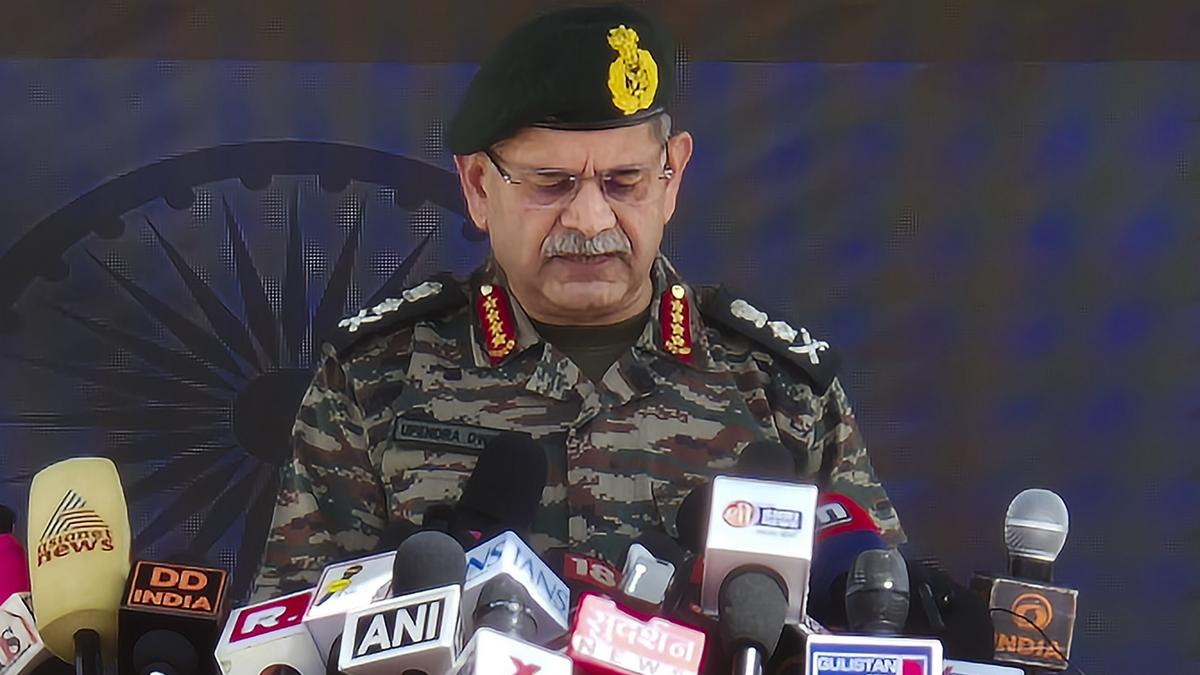
On the occasion of Kargil Vijay Diwas, Army Chief General Upendra Dwivedi paid a powerful tribute to India’s brave soldiers and sent a strong message to Pakistan. In his speech at the Dras War Memorial, General Dwivedi invoked the lesser-known but strategically significant Operation Sindoor, emphasizing India’s unmatched preparedness and decisive response capabilities.
He praised the valor of the Indian Armed Forces and said that “India will not hesitate to repeat history if provoked.” His reference to Operation Sindoor – a classified military maneuver showcasing India’s high-altitude warfare excellence – stunned many and was seen as a stern reminder to Pakistan about India’s evolving strategic doctrine.
This year’s Kargil Vijay Diwas holds particular importance, as it marks 25 years since the 1999 war victory. General Dwivedi’s statement has been interpreted as a clear and confident assertion of India’s dominance in the region and its commitment to safeguarding every inch of its territory.
🇮🇳 1. Kargil Vijay Diwas: Honouring Legacy & Sending a Message
Kargil Vijay Diwas, observed annually on July 26, commemorates India’s hard‑fought victory in the 1999 Kargil War through Operation Vijay. On its 26th anniversary, at the Kargil War Memorial in Dras, Ladakh, Chief of Army Staff Gen Upendra Dwivedi paid tribute to those who sacrificed their lives. But this year, his address carried a powerful addition—a new chapter in India’s military resolve.
2. Operation Sindoor: From Response to Symbol
Operation Sindoor was launched on May 6–7, 2025, a precise retaliation for the Pahalgam terror attack that killed tourists and locals. The strikes hit nine terror camps across Pakistan and Pakistan‑occupied Kashmir in under 25 minutes, using next-generation weapons with zero reported Indian casualties.
Gen Dwivedi described it as “India’s resolve, message and response,” asserting that terror‑supporting entities would no longer go unpunished. This marked a departure from defensive postures of the past toward a new normal of surgical retaliation and deterrence.
3. Evolution from Kargil to Sindoor: Technology & Doctrine
The contrast between Operation Vijay (1999) and Operation Sindoor (2025) illustrates profound transformation in India’s military posture:
- Kargil involved infantry assaults and artillery under extreme high-altitude conditions. The Indian Army paid a heavy price—527 soldiers were martyred before victory came.
- Sindoor, however, was a non-contact, intelligence-based strike employing precision-guided missiles, loitering munitions, and integrated command systems. It was launched jointly by Army, Air Force, and Navy with minimal collateral impact.
The operation reflected India’s shift to Generation‑4.5 warfare, deploying advanced systems with synchronized multi-domain execution.
4. Gen Dwivedi’s Address: A Strategic Rebuttal to Pakistan
Speaking at Dras, Gen Dwivedi stated that India had given peace a chance—but Pakistan chose cowardice. He emphasized that Sindoor was both a warning and a statement: “Supporters of terrorism will not be spared”. He reaffirmed that Operation Sindoor symbolised a decisive victory by targeting terror infrastructure, foiling Pakistan’s aggressive tactics.
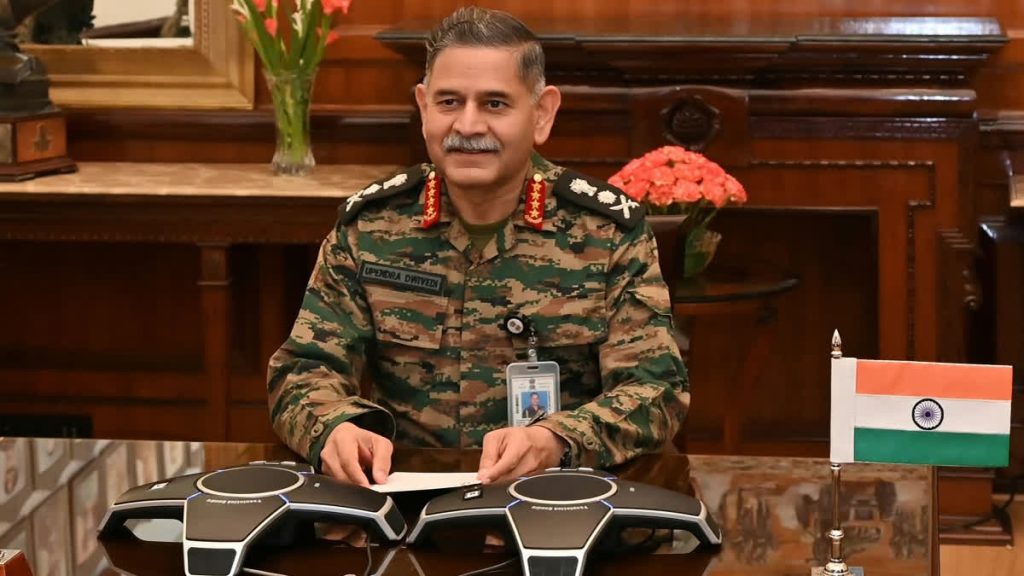
5. Operational Highlights & Strategic Precision
- Launch timing: Strikes executed between 01:05 am and 01:30 am, ensuring strategic surprise and minimal civilian presence.
- Weapons & tactics: Deployment of SCALP cruise missiles, HAMMER bombs, drones, and electronic warfare tools enabled high accuracy with zero Indian losses.
- Results: Estimated destruction of 64 terrorists and injuries to 96; Pakistani troops reportedly unaware of the scale until it was too late.
- Ethical conduct: India took care to avoid harm to civilians by timing strikes during prayer breaks and adhering to strict targeting discipline.
6. Military Reforms: Raising Future Readiness
During his speech, Gen Dwivedi also revealed major capability-enhancement initiatives:
- Formation of Rudra Brigade, an all-arms integrated brigade for rapid-response operations.
- Establishment of Bhairav Light Commando Units for surprise insertion operations.
- Every infantry battalion now has drone platoons, and artillery regiments are being equipped with drone-capable loiter-munition systems and indigenous air defence capabilities.
These steps reflect a major leap in India’s defense modernization and operational agility.
7. Symbolic Resonance: Sindoor versus Vijay
Gen Dwivedi drew parallels between Operation Vijay and Operation Sindoor, highlighting shared themes of courage and unity, even as tactics evolved. Vijay was fought face-to-face in harsh terrain; Sindoor was executed from a distance with precision. Yet both served as statements of India’s intolerance for aggression and terrorism.
Indeed, as one commentator noted, the shift from defensive posture (Kargil) to assertive retaliation (Sindoor) underlines India’s growing self-confidence as a military power capable of punitive precision operations.
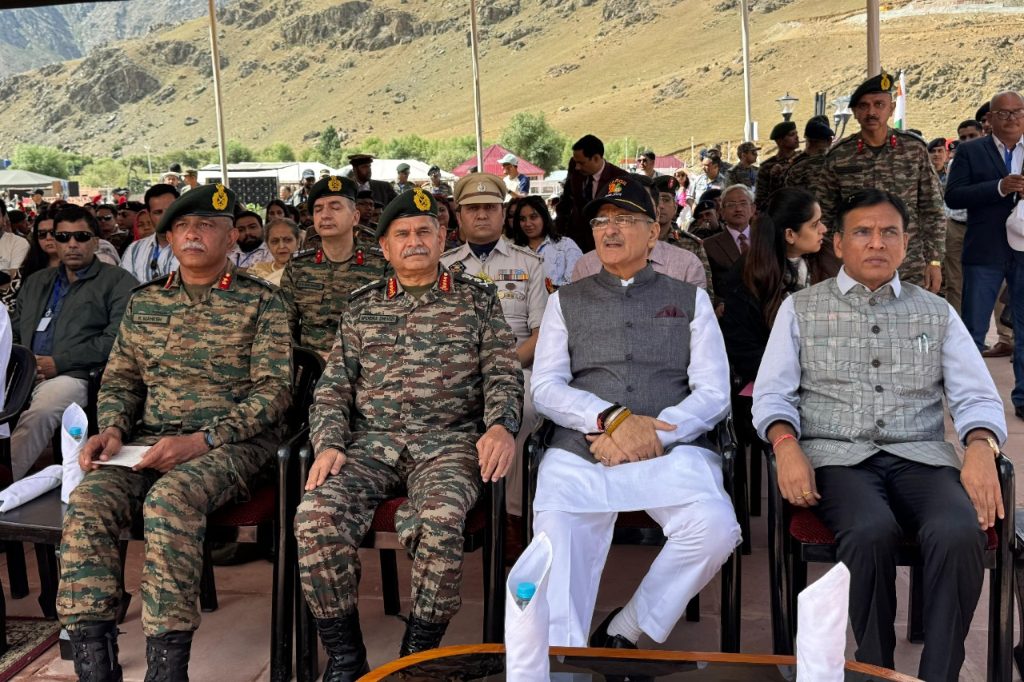
8. Regional Message: No Sanctuary for Terror
Gen Dwivedi’s remarks made clear: India’s military can—and will—cross boundaries to strike terror networks, but with restraint and precision. “Those supporting terrorism will not be spared”—a message delivered at Kargil Vijay Diwas to Pakistan and terrorist proxies alike.
Operation Sindoor thus marks a doctrinal shift—from peacekeeping to proactive deterrence backed by surgical strikes across the border.
9. Political and Public Response
- PM Modi praised the operation as India gaining “new self‑confidence,” asserting it sent a powerful message in Parliament ahead of debates on terrorist attacks and national security.
- In Bhopal, BJP organized a Tiranga Yatra celebrating Sindoor’s success, honoring women officers and highlighting Modi’s role in giving the army a free hand to act decisively—a display of political solidarity and national resolve.
10. Legacy and What Lies Ahead
As India observed Kargil Vijay Diwas this year, it wasn’t simply remembering past valor—it was heralding a new era. From infantry-led courage in frozen mountains to multi-domain precision in a fraction of an hour, Indian forces have transformed. Operation Sindoor stands as both a rebuke to Pakistan-sponsored terrorism and a landmark in India’s strategic evolution.
Gen Dwivedi’s message signals that India expects peace, but remains fully prepared—and capable—of decisive action if provoked.
Read more latest news