

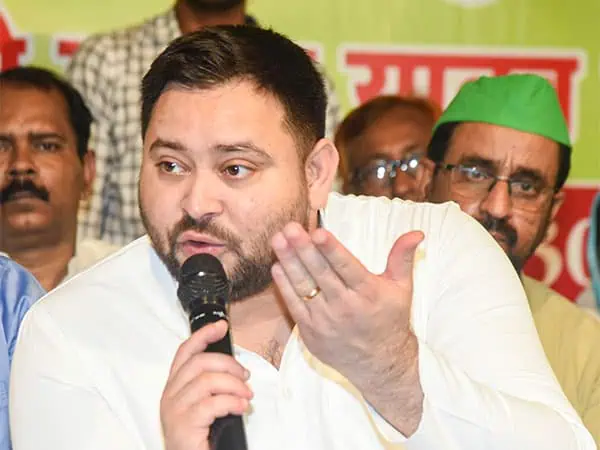
Leader of Opposition in Bihar, Tejashwi Yadav, has stirred the political waters by demanding answers from the Nitish Kumar government over the alleged ₹71,000 crore scam, as flagged in the recent CAG report. According to the audit, various state departments have failed to submit utilization certificates for funds disbursed between 2016 and 2024, raising suspicions of large-scale embezzlement. Tejashwi called it the “biggest financial scam in Bihar’s history” and accused the NDA of attempting to divert attention using communal rhetoric, which he labelled the “Triple M” strategy – Mutton, Machli, Muslim.
He alleged that ministers were collecting 30% commission on tenders and that ₹76,000 crore worth of schemes were approved without proper budgetary backing just before elections. The government, however, dismissed the allegations, defending its welfare record. Tejashwi’s bold stance has ignited a debate on governance, transparency, and electoral ethics in the state.
Tejashwi With Bihar heading towards elections, this ₹71,000 crore controversy could significantly reshape the political narrative and voter sentiment, making fiscal accountability a central issue in upcoming campaigns.
⚖️ 1. Setting the Scene: The CAG Warning & Assembly Flashpoint
In late July 2025, the Bihar Legislative Assembly was rocked when the Comptroller and Auditor General (CAG) released a report stating that the state government failed to provide utilization certificates (UCs) for nearly ₹70,877.61 crore of public funds spanning April 1, 2016 to March 31, 2024. Utilization certificates are mandatory documents verifying government spending has been used for its intended purpose.
Against this backdrop, Tejashwi Yadav, Leader of Opposition and RJD head, unleashed a scathing attack. He asked the pointed question in the Bihar Assembly: “Where did ₹71,000 crore of public money go?” He accused the Nitish Kumar government of perpetrating a mega-scam, asserting:
- The funds were neither accounted for nor policy‑justified.
- Instead, the government aimed to distract the public using trivial polarizing issues—“machli, mutton, muslim”—what he termed the “Triple M” diversion tactic.
- He demanded accountability: “This is not your fiefdom, this is taxpayers’ hard‑earned money… what pocket did it land in?”.
This confrontation amplified scrutiny on the revenue, governance, and electoral tactics of Bihar’s ruling coalition.
2. Decoding the ₹71,000 Crore Issue Tejashwi
2.1 What does the ₹70,877 cr stand for?
The CAG report flagged missing UCs across multiple fiscal years:
- ₹14,452 crore (2016–17)
- ₹3,746 crore (2017–18)
- ₹5,870 crore (2018–19)
- ₹17,980 crore (2019–21)
- ₹16,014 crore (2021–22)
- ₹12,813 crore (2022–23)
Tejashwi These sums stem from major departments accused of lapses, including Panchayati Raj, Education, Urban Development, Rural Development, and Agriculture, where utilization certificates were reportedly not furnished despite large fund disbursals.
2.2 Why are UCs important?
Lack of utilization certificates means the government cannot prove that allocated funds were spent appropriately. This raises risks of embezzlement, misappropriation, or simply administrative negligence. The CAG termed it a serious breach of financial accountability.
2.3 Why is Tejashwi calling it a “scam”?
According to Yadav:
- The magnitude—nearly ₹71,000 crore—is too large to ignore.
- Funds remained unreported during his own terms in government (he served as Deputy CM during part of the period).
- He charges the ruling alliance with diverting public attention to polarizing topics rather than addressing financial governance.
3. Political Theater: “Triple M” and Distraction Strategies
3.1 What is “Triple M”?
Tejashwi introduced the phrase “Triple M”—Mutton, Machli, Muslim—to describe the government’s alleged diversion tactic:
- First allegedly loot ₹71,000 crore.
- Then use emotional or identity-based issues (food, religion, community) for mass distraction.
He held up this formula as proof of a political smokescreen—financial scandals cloaked behind communal rhetoric.
3.2 Opposition Strategy
RJD has doubled down on the CAG findings:
- They claim organizational corruption, with ministers allegedly taking up to 30% commission on tenders.
- Accuse the government of awarding ₹76,622 crore of new schemes in early 2025 without proper budget allocations, raising questions over funding transparency—schemes approved hastily by cabinet committees.
- Furthermore, Yadav recently alleged a ₹1,000 crore tender scam in the Rural Works Department (RWD) linked to pre-election targets.
4. Government’s Counter: Image and Record Defense
The Nitish-led JD(U) and its partners have pushed back forcefully:
- Ashok Choudhary, RWD minister, defended the government’s 20-year record, urging critics to acknowledge developmental gains instead of fixating on the negatives.
- The ruling coalition counters that social welfare measures like pension hikes (from ₹400 to ₹1,100), infrastructure investments, and schemes such as Kanya Vivah Bhavans and women empowerment are their legacy.
- Assembly chaos during the Special Intensive Revision (SIR) debate underscored the volatile environment. CM Nitish labeled Tejashwi “still a kid” during heated exchanges, reflecting both political tension and dismissiveness.
5. Institutional Implications & Public Accountability
5.1 Role of CAG and Utilisation Certificates
The CAG’s inability to trace utilization certificates for nearly ₹71,000 crore is a governance red flag. Without UCs:
- There is no audit trail.
- Funds cannot be verified for proper public use.
- The door remains open to misuse or mismanagement.
Such gaps question fiscal discipline in state operations and demand inquiry not just politically, but institutionally.
5.2 Political Implications
- Opposition parties like RJD are using this as a tool for mobilization.
- Allegations of selective scrutiny and scapegoating abound. Critics remind that RJD was part of the government during substantial portions of the audited period, raising charges of retrospective retribution.
- State electoral dynamics are sharpening: concerns over voter deletion in Special Intensive Revision (SIR) and threats of election boycotts have emerged.
6. Tejashwi’s Broader Narrative: A Blueprint for Opposition Messaging
Tejashwi’s criticism over ₹71,000 crore builds upon a pattern:
| Narrative Focus | Opp. Allegations | Govt Response |
|---|---|---|
| Fiscal Misuse | Missing UCs, large-scale corruption & tender targets | Defends record, cites social welfare, infrastructure projects |
| Diversion Tactics | “Triple M”: Spending used to distract public with identity politics | Calls them ideological attacks, frames opposition as anti-development |
| Electoral Accountability | SIR voting list manipulation threatens democratic inclusion | Justifies ECI process, defends governance continuity |
By storming the discourse with accusations of systemic corruption, electoral manipulation, and distraction politics, Yadav is positioning himself as the primary challenger to Nitish ahead of Bihar’s assembly elections.
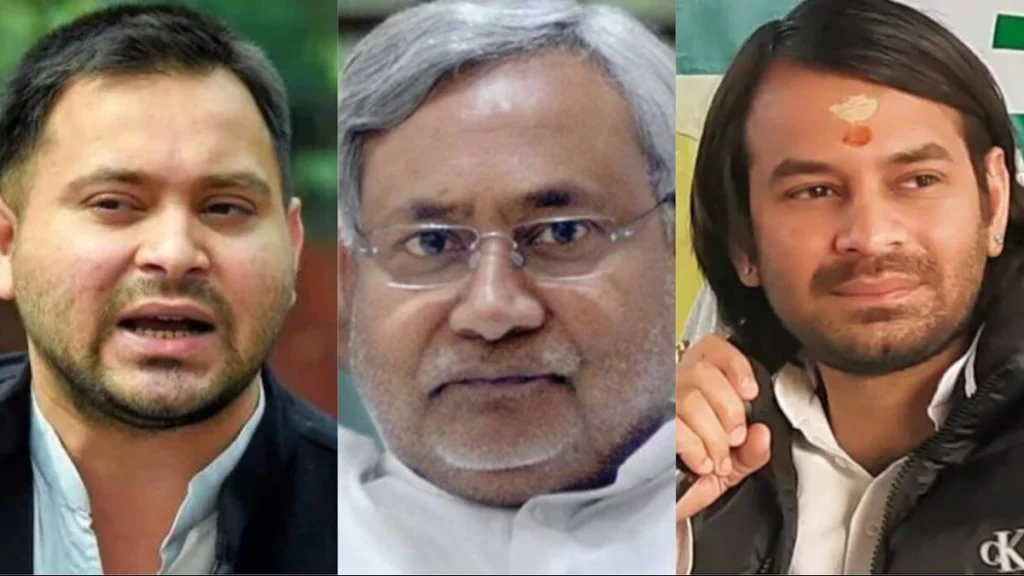
7. A Closer Look: Questions Nitish Government Must Answer
▶ Where is ₹71,000 crore?
- Which departments held unfiled UCs?
- Has reconciliation or retrospective certification been initiated?
- Are there departmental or criminal investigations underway?
▶ Who held ministerial portfolios at the time?
- Tejashwi himself served in two tenures as Deputy CM (2015–17, 2022–24).
- Where was oversight lacking? Are current or former secretaries/engineers being probed?
▶ Validation of diversion claims
- Is there evidence of orchestrated campaigns (e.g. Mahila Samvad, Rural Works) used to siphon funds?
- Are tender targets documented pre-election?
▶ Electoral fairness
- What is the official response to SIR controversy?
- Are valid voters being removed? Is the opposition’s threat of boycott credible?
8. Public Takeaways & Democratic Stakes
● For Bihar’s Citizens
- This reveals gaps in transparency—public funds may be allocated but not verified.
- Rests trust in governance on timely UCs and audit outcomes.
● For Bihar’s Institutions
- The Comptroller & Auditor General’s role gains urgency; its report demands action not only from the legislature, but from anti-corruption bodies and judiciary too.
- Legislative committees and financial controllers must be strengthened to avoid recurring lapses.
● For Bihar’s Politics
- Opposition leverages this as a reform narrative against what it paints as capitalist misuse and communal distractions.
- The ruling alliance emphasizes welfare and development continuity. Election discourse may pivot between corruption accountability and identity politics.
9. Moving Forward: What Might Happen Next?
- Public hearings or accountability committees may be constituted to trace the ₹71,000 crore.
- Enforcement agencies (like EOU, ED, CBI) could investigate if whistleblower or audit red flags emerge.
- Election campaigning intensifies: opposition uses CAG findings, ruling party counters with welfare record and identity appeals.
- Possible legal challenges: petitions may demand us-provide utilization certificates or punitive action.
- Outcome in assembly elections (later in 2025) will test if the CAG narrative manages to sway voter sentiment.
🔚 Conclusion
The ₹71,000 crore controversy has become the most potent leverage in Bihar politics yet. Tejashwi Yadav has woven together audit findings, allegations of systemic corruption, and claims of electoral manipulation to mount a sustained assault on the Nitish Kumar-led state government. While the JD(U)-BJP coalition counters with infrastructure and welfare credentials, Yadav’s narrative reframes governance as misappropriation defended by communal stratagems.
Beyond political theatrics, this moment demands hard questions:
- Are accountability institutions functioning?
- Are financial oversight norms upheld?
- Can the public demand restitution and clarity?
How Biharers respond — through civic pressure, media scrutiny, and ultimately ballots — will shape whether this issue becomes a watershed of transparency or another chapter of unresolved mistrust.
read more latest news

