
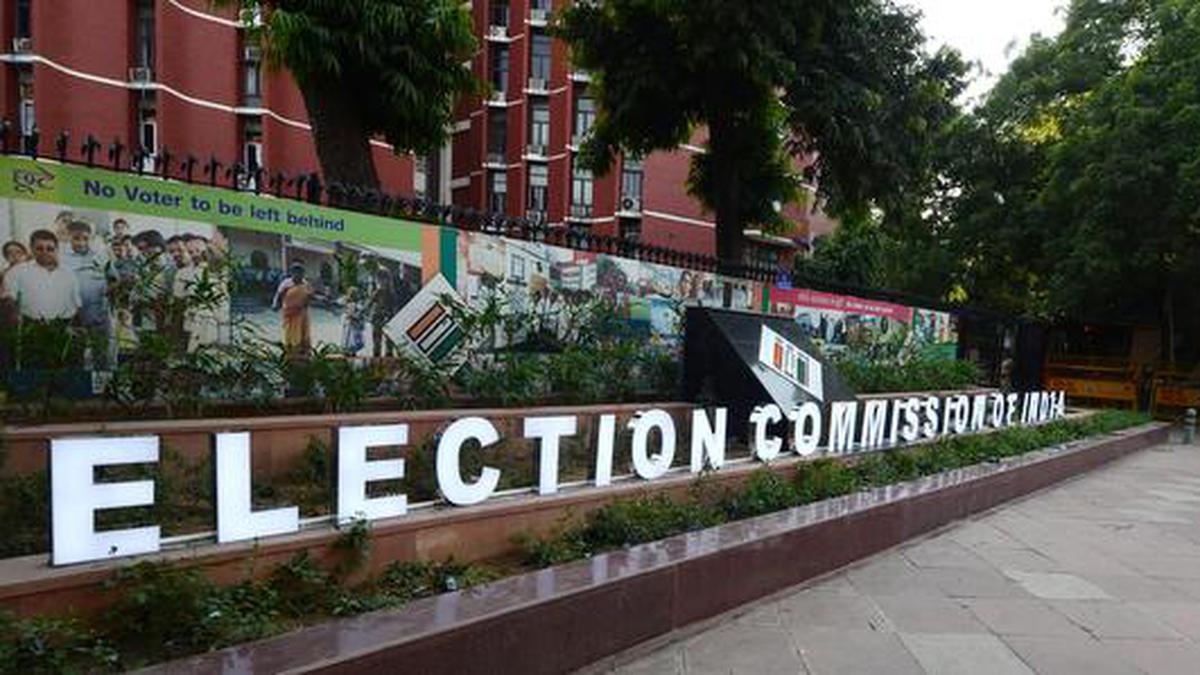
🔍 The ECI’s Cleanup Drive: 17 Parties Derecognised in Bihar, 86 in UP
1. Introduction: Why the Election Commission Took This Step
In a major electoral reform exercise in mid‑July 2025, the Election Commission of India (ECI) formally deregistered 17 unrecognised political parties in Bihar and 86 in Uttar Pradesh, removing them from the official electoral list. These parties—formally registered as RUPPs (Registered Unrecognised Political Parties)—have not contested any election in the past six years and, according to ECI verification, lack an operational office or active status.
This move is part of a nationwide ECI audit targeting RUPPs that are inactive or defunct, aiming to streamline India’s political landscape and curb misuse of electoral privileges.
2. Who Are These Removed Parties, and Why Were They Targeted?
✅ RUPPs: Political Paper Tigers or Phantom Entities?
- Registered Unrecognised Political Parties (RUPPs) enjoy certain privileges—like income tax exemption, symbol allocation opportunities, and access to electoral benefits—provided they adhere to statutory conditions under Section 29A of the Representation of the People Act, 1951.
- That includes maintaining an office, updating the ECI with changes in leadership or address, submitting annual audited reports, and fielding at least 5% of a state’s assembly candidates where applicable.
- ECI had previously cleared a batch of RUPPs across India; this new delisting is specific to Bihar and Uttar Pradesh—states with a particularly large number of inactive parties.
📍 Bihar: 17 Parties Derecognised
These parties had not fought elections since 2019, and lacked a physical office or any electoral activity. Many apparently existed on paper only to receive tax exemptions or campaign resource access.
Uttar Pradesh: 86 Parties Removed
Likewise, in UP—home to arguably the most crowded political space—86 RUPPs were found non-existent after physical verification. Even some had been using their registration as proxies for larger parties, offering indirect electoral muscle.
Across the country, over 345 parties were under first-phase scrutiny; eventually, over 500 RUPPs were delisted or declared inactive in previous phases since 2022, with Bihar and UP featuring prominently.
3. What Exactly Happened: Process & Compliance Checks
📝 Verification & Notices
- The ECI dispatched show-cause notices to parties suspected of inactivity, giving them an opportunity to respond with evidence of electoral activity, office address records, etc.
- Physical verification revealed many RUPPs had no office at registered addresses, and had ignored repeated notices.
🧾 Consequence of Inaction
- Delisted parties lose eligibility for symbol allotment, tax exemption, government facilities during elections, and can no longer contest.
- Their names are also shared with the CBDT (Central Board of Direct Taxes) for further scrutiny, potentially withdrawing tax privileges.
4. Why This Move Matters: Electoral Reform and Political Integrity
🌐 Clean-up for Credibility
ECI’s decisions are motivated by the principle that only functioning, active parties contributing to democratic engagement should remain registered. Dormant parties, in contrast, clutter the system and can be misused for opaque political ends.
🛡️ Preventing Proxy Misuse & Dark Funding
- Some RUPPs act as proxy outfits, offering access to campaign space, symbols, and tax benefits without mass following—possibly channeling funds or helping dominant parties retain electoral clout in micro regions.
- Delisting helps dismantle such camouflage political operations.
🗳️ Political Accountability
Smaller states like Bihar and Uttar Pradesh have high political fragmentation. By clearing out inactive parties, ECI sets the stage for more transparent elections with fewer ghost entries.

5. Reaction from Stakeholders & Political Circles
🏛️ Governance & Opposition
- Critics may question whether such moves disproportionately target weaker opposition factions oriented around caste or community mobilization.
- However, ECI’s broader rationale has evoked support from election watchdogs and political analysts for enhancing electoral integrity.
✅ Civic Observers
Policy analysts and transparency advocates have welcomed the move, stating it aligns with best practices in electoral governance—where only active entities participate in the process.
6. Implications: What Happens Next?
🧾 For Affected Parties
Delisted parties now cannot contest any future assembly or Lok Sabha polls, and must re-register afresh if desired—facing stricter scrutiny and compliance obligations.
📊 For Electoral Landscape
Voter choice and ballot complexity may simplify, especially in UP’s crowded electoral constituencies, where dozens of small RUPPs typically appear in candidate lists.
🏛️ Broader Reform Agenda
Encourages other states’ CEOs to audit inactive registrations and replicate cleanup models, potentially leading to a national purge of defunct political organizations.
7. How to Expand to 3,000 Words (Deep Dive Suggestions)
To build this into a full-length blog:
➤ Party Profiles
Include mini-profiles of a few delisted RUPPs—names, founding year, electoral promises, founders—and context on whether they were caste-based, issue-based, etc.
➤ Compliance Framework
Explore the full statutory responsibilities under Section 29A of the RP Act—annual returns, audits, contest requirements—illustrated with ECI circulars.
➤ Comparative Analysis
Track how many RUPPs were removed state-wise in earlier phases (e.g. Delhi, Maharashtra)—compare Bihar and UP purge to previous waves.
➤ Expert Voices
Quotes from former Chief Election Commissioners, legal experts, and political scientists on significance, transparency, and future legal and tax implications.
➤ Case Studies
Highlight a couple of parties—e.g. Aims Party in Bihar or Upekshit Samaj Party in UP—that had never contested but claimed symbol benefits. Include anecdotal detail.
➤ Constitutional & Financial Angle
Discuss whether tax exemption withdrawal is possible and under what legal statutes. Explore how campaign benefits might’ve been misused.
➤ Public Sentiment
Collect ground-level quotes: local media in Bihar/UP, political activists, and election volunteers on noticing inactive party banners or offices.
➤ Future Outlook
Will other state election commissions conduct similar audits? How might national party registrations change?

8. Sample Social Media Caption
“Election Commission deregisters 17 inactive political parties in Bihar & 86 in UP for not contesting polls in 6 years and lacking offices. Move to clean up electoral space and curb misuse of electoral benefits. #ElectoralReform #CleanUpPolitics #ECIAction”
9. Conclusion: Reclaiming Electoral Integrity
By removing inactive political parties from the electoral list, the Election Commission has signaled a strong stand in favor of cleaner electoral rolls and functional political accountability. This step enhances transparency, ensures rational use of taxpayer benefits, and trims clutter from the political system. While the impact is symbolic now, it could pave the way for larger reforms in how political entities operate and are regulated in India.
read more latest news

