
PM Modi Reaches Cyprus: President of Cyprus Personally Welcomes Him | A New Chapter in Indo-Cypriot Relations
Introduction
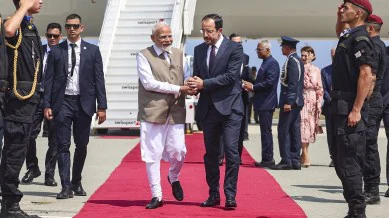
In a landmark moment for Indo-European diplomacy, Prime Minister Narendra Modi of India arrived in Cyprus to a grand ceremonial welcome, personally received by the President of, Nikos Christodoulides. The rare gesture underscores the deepening warmth and strategic importance of bilateral relations between the two nations. As Modi continues his push for enhanced global outreach and international collaboration, this visit comes at a critical time in both countries’ foreign policy trajectories.
India and Cyprus have historically maintained strong relations founded on mutual respect, democratic values, and a shared vision for global peace and cooperation. However, PM Modi’s arrival marks a fresh impetus to deepen this historic bond with new economic, digital, and geopolitical dimensions. With both countries looking to expand their strategic footprints in Europe and the Indo-Pacific respectively, the visit signals a deeper alignment in vision and policy.
The welcome ceremony was more than just protocol—it was a symbol. A symbol of friendship, diplomacy, and the importance of small states in global decision-making. In this blog, we’ll explore the entire narrative of the visit—starting from the red carpet welcome to the bilateral talks, cultural exchanges, and strategic agreements.
1. A Rich History: Indo-Cypriot Relations
India and Cypru share over six decades of diplomatic relations, having established formal ties in 1962. Since then, their relationship has flourished across cultural, political, and economic domains. India has consistently supported Cypru in its struggle for sovereignty and territorial integrity, particularly in the United Nations.
Cyprus, in return, has supported India’s bid for a permanent seat at the UN Security Council and shown solidarity in matters concerning terrorism, regional peace, and development.
High-level visits have been a constant feature, but Modi’s visit is especially significant as it seeks to broaden cooperation beyond ceremonial gestures to tangible outcomes.
2. The Grand Arrival: PM Modi in Cyprus
As PM Modi’s aircraft touched down at Larnaca International Airport, he was received with full state honors. The highlight of the arrival was President Nikos Christodoulides himself greeting Modi at the airport—a gesture rarely extended to foreign dignitaries and indicative of the strong respect for India’s global stature.
The red carpet was rolled out, a ceremonial guard of honor was presented, and local Cypriot artists performed traditional music and dances. Indian expatriates living in Cypru waved the tricolor and cheered, creating an emotional and proud moment for Indians abroad.
The event was covered widely by international media, with headlines praising the depth of India-Cypru ties and noting the significance of the President’s personal involvement in the welcome ceremony.

3. Core Agendas of the Visit
PM Modi’s Cyprus itinerary includes high-level bilateral talks, economic forums, diaspora engagements, and a focus on digital and defense cooperation. Key points of the agenda include:
➤ Economic and Trade Relations
Cyprus is seen as a gateway to the European Union and a potential hub for Indian investment. Modi is expected to push for enhanced bilateral trade, joint ventures in shipping, pharmaceuticals, fintech, and renewable energy.
➤ Defense and Maritime Security
As maritime nations, both India and Cyprus share strategic interests in sea route security. The growing instability in West Asia and the Mediterranean region makes this dialogue critical.
➤ Taxation and Investment Treaties
India and Cyprus have a Double Taxation Avoidance Agreement (DTAA). Discussions on streamlining investment flows, curbing shell companies, and increasing transparency are expected.
➤ Digital & Educational Cooperation
Cyprus is exploring digital governance and higher education collaboration. Indian tech firms and universities are set to play a role in this partnership.
4. Why Cyprus Matters to India
Though a small nation, Cyprus holds immense geopolitical value. Its EU membership makes it a key voice in Europe. As India’s relations with the EU intensify, strategic partnerships with smaller yet influential states like Cyprus become increasingly important.
Cyprus is also crucial for maritime access and a stable partner in a volatile region. With ports, connectivity, and energy infrastructure, Cyprus can serve as a base for Indian businesses looking to expand into the EU and Mediterranean markets.
Moreover, Cyprus has a favorable tax regime and investor-friendly laws, which attract Indian firms in shipping, real estate, and finance sectors.
5. Joint Statements: Modi and Christodoulides Speak
After a closed-door bilateral meeting at the Presidential Palace, both leaders addressed the media and issued a joint statement.
PM Modi said:
“India and Cyprus are bound by history, culture, and shared democratic ideals. This visit is about taking our partnership into the future—into areas of technology, education, clean energy, and global governance.”
President Christodoulides added:
“India is not just an emerging power—it is a responsible and reliable global partner. Cyprus is proud to host Prime Minister Modi and stands ready to cooperate in all areas of mutual interest.”
Both leaders reaffirmed their commitment to peaceful conflict resolution, multilateralism, climate action, and anti-terrorism cooperation.
6. The Diaspora Factor: Indians in Cyprus
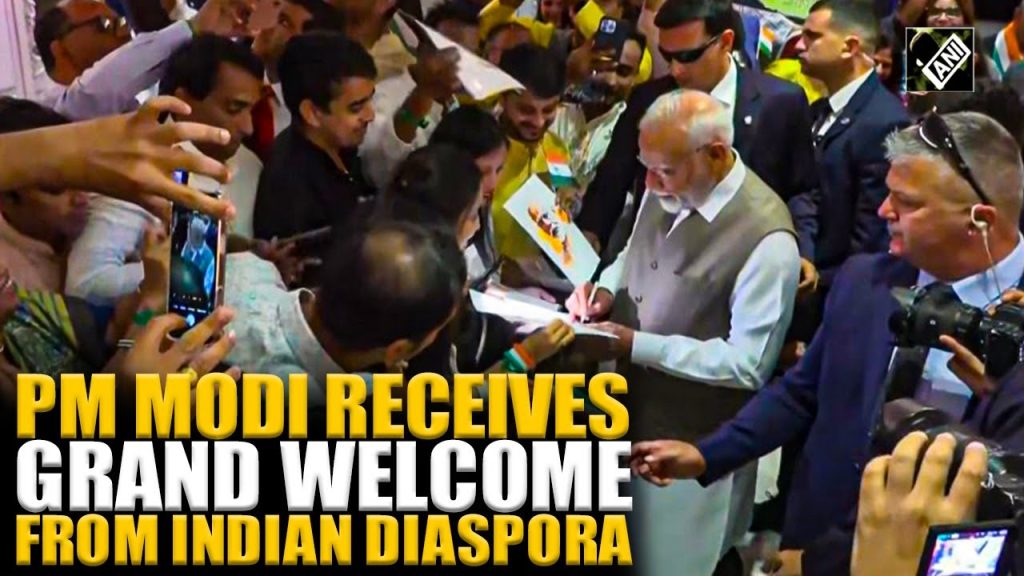
PM Modi also interacted with the Indian community in Cyprus, which though small in number, is known for its professionalism and contribution to sectors like IT, shipping, education, and healthcare.
At a community event in Nicosia, Modi addressed Indian students, professionals, and entrepreneurs, stating:
“You are the living bridge between India and Cyprus. Your work and values represent the true spirit of India abroad.”
He emphasized the government’s commitment to strengthening consular services and support systems for Indians living abroad.
7. India’s Expanding European Strategy
PM Modi’s visit is part of a broader outreach to Europe. Recent years have seen enhanced cooperation with Germany, France, Denmark, and now Cyprus. As India positions itself as a balancing force in global affairs, Cyprus becomes a crucial partner in bridging Europe and Asia.
India’s focus on Mediterranean nations also coincides with the EU’s “Global Gateway” strategy and Indo-Pacific policy—both of which aim to counter Chinese influence through infrastructure, trade, and democratic partnerships.
Cyprus, with its strategic location and EU membership, aligns perfectly with India’s goals of multilateral cooperation and rule-based global order.
8. Key Agreements & MOUs Signed
The visit is expected to result in several important bilateral agreements, including:
- MoU on Maritime Cooperation
- Agreement on Cultural Exchange Programs
- Joint Task Force on Renewable Energy
- Cybersecurity Dialogue and Data Protection Initiatives
- Skill Development Programs and Scholarships for Indian Students
Each of these agreements is designed to create long-term institutional linkages, benefitting both nations economically and diplomatically.
9. Global Reactions and Media Coverage
PM Modi’s visit has been covered extensively by both Indian and international media. Cypriot newspapers praised India’s democratic leadership and economic rise, while Indian outlets highlighted the symbolic importance of the President receiving PM Modi.
Global strategic analysts noted that the visit represents a new era where India is no longer a passive player but an assertive global partner. Experts believe this Cyprus visit will open doors for deeper engagement with smaller European states and strengthen India’s case for global leadership.
Social media was flooded with images and videos from the welcome ceremony, bilateral meetings, and community events—most notably, the President of Cyprus hugging PM Modi at the airport.
10. Conclusion: A Turning Point in Indo-Cypriot Relations
PM Modi’s visit to Cyprus is more than diplomatic symbolism—it’s a clear signal of India’s growing assertiveness on the global stage. The visit, warmly welcomed by the Cypriot leadership and people alike, shows the potential of small-state diplomacy in global politics.
From digital cooperation to maritime strategy, the Indo-Cypriot partnership is poised for a new era of growth and trust. As India eyes a greater role in the EU, Cyprus stands as both a friend and a facilitator.
In the coming years, expect to see joint ventures, cultural collaborations, academic exchanges, and a strong strategic bond between New Delhi and Nicosia. PM Modi’s visit is the beginning of a deeper and more dynamic India-Cyprus relationship.
read more latest news

