
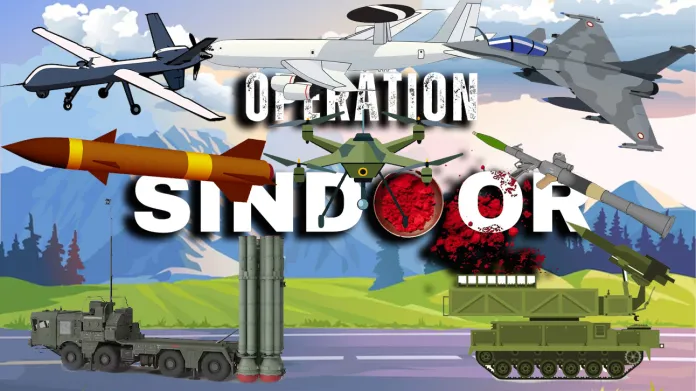
Pakistan Seeks U.S. Air Defense Amid Fears of India’s Operation Sindoor Escalation
In a startling strategic turn, Pakistan has reportedly reached out to the United States, requesting advanced air defense systems—prompted by mounting fears over India’s ongoing Operation Sindoor. With India showcasing its cutting-edge air power and Pakistan relying heavily on Chinese-supplied equipment, this plea signals seismic shifts in South Asian security dynamics. Let’s explore the motivations, military calculus, and regional impact of this pivotal move.
1. What Is Operation Sindoor?
Operation Sindoor is the name given to India’s retaliatory campaign following a major terror strike inside Indian-administered Kashmir. In early May 2025, the Indian Air Force and Army carried out coordinated air and missile strikes targeting terror infrastructure across the Line of Control, particularly in Pakistan‑administered areas. These strikes also targeted key installations—Pakistan’s AF bases, radar systems, and suspected terror camps. They represented a significant escalation from short-range tactical operations to strategic precision strikes .
2. How Pakistan’s Chinese Arsenal Fared
In response, Pakistan deployed a range of Chinese weapons, signaling both capability and urgency:
- JF-17s & J-10C fighters scrambled to challenge India’s air supremacy.
- HQ-9 long-range air defense systems were deployed near key sites.
- AWACS, UCAV drones, VT-4 battle tanks, and Type 054 frigates were mobilized.
But despite this show of strength, Pakistani efforts primarily served as platforms to display Beijing’s military technology rather than stop Indian strikes.
3. The Air Defense Imbalance: S-400 vs. HQ-9
India’s S-400 Triumf, a Russian-made air defense system, has emerged as a game-changer:
- Deployed since July 2024, it’s credited with intercepting a majority of Pakistani missiles, drones, and loitering munitions during the early phase of Operation Sindoor.
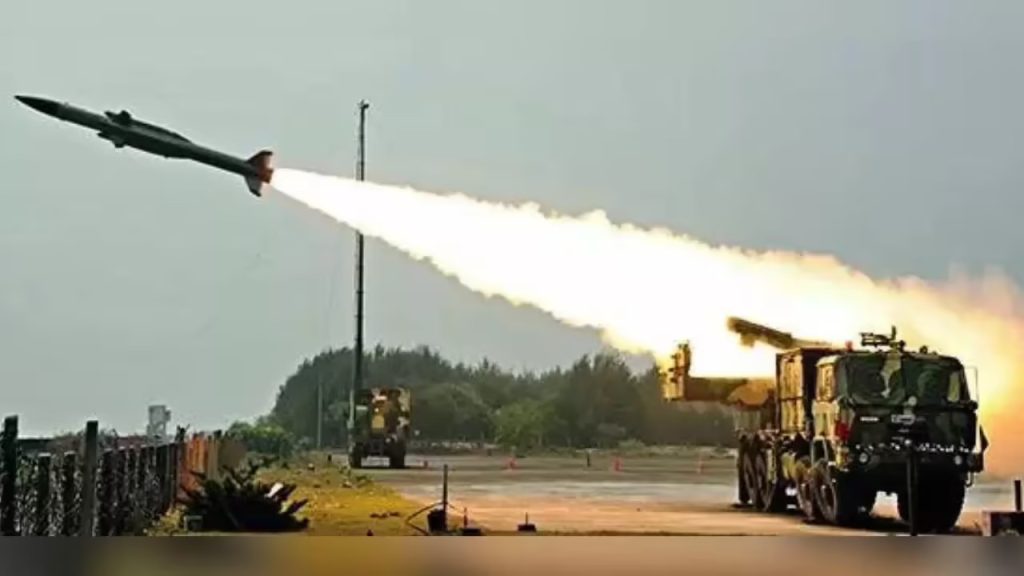
- India also leveraged short-range Akash and networked Akashteer systems for layered deterrence and 100% drone kill-rate en.wikipedia.org.
Pakistan’s defense, reliant heavily on the Chinese HQ-9, JF-17s, and other gear, proved less effective—a factor prompting strategic reassessment.
4. Pakistan’s Urgent Request to the U.S.
Facing the reality of compromised airspace and ineffective defense against India’s air might, Pakistan quietly reportedly requested an advanced air defense system from the United States.
Why Pakistan Turned to the U.S.:
- S-400 Gaps: HQ-9 coverage proved limited especially against advanced weaponry.
- Layered Threats: Precision missiles, drones, and loitering munitions bypassed Chinese shields.
- Technological Asymmetry: India’s mixed defense ecosystem—S-400, Akash, Akashteer—outmatched Pakistan’s homogeneous Chinese systems.
- Frantic Counterbalance: Desperate to avoid strategic obsolescence, Pakistan sought U.S. interceptors or systems like Patriot or NASAMS to plug defense gaps.
5. U.S. Hesitation & Regional Sensitivity
The U.S. response has been cautious:
- Though it views Pakistan as a crucial counterterrorism partner, supplying advanced systems risks upsetting the delicate power balance in South Asia.
- Past U.S. aid has been misused, and Pakistan’s missile tests now raise alarms abroad—particularly in Washington .
- Any defense deal would require Congressional approval and likely face competitive tensions from India, its strategic partner.
6. Regional Repercussions of U.S. Arms Supply
Should the U.S. provide such defensive systems, repercussions would be significant:
- Indo‑Pakistan Balance: Arming both sides risks escalating arms races and an unstable deterrence dynamic.
- Alliance Rifts: Pakistan may re-engage Washington, offering strategic value to U.S. interests in return.
- Chinese Pushback: Beijing may increase arms flow to counter any U.S. involvement—erasing any intended strategic edge.
- Tech Integration Obstacles: U.S., Israeli, and Russian systems on a mixed Pakistani network may suffer compatibility issues.
7. Can China Still Shield Pakistan?
Achilles’ Heel:
- Propaganda Showcase: China’s arsenal, while state-of-the-art, hasn’t been tested in multiple missile/drone saturation scenarios.
- Tactical Limits: Competent offline, but system integration and high-pace conflicts exposed vulnerabilities .
- Global Critique: Witnessing Chinese gear in operational challenges dims Beijing’s arms export narrative.
8. Potential U.S. Systems in Consideration
Pakistan may request systems such as:
- Patriot PAC-3: Capable of intercepting missiles, drones, aircraft.
- NASAMS / IRIS-T SLM: Short to mid-range high-precision interceptors.
- Phalcon AWACS: Already eyed by Pakistan, used by India.
These are capable but politically and technologically expensive, and would require Congressional, executive, and policy-level approval.
9. Broader Strategic Takeaways
- Pakistan’s desperation shows its air defense is no longer credible in isolation.
- Pakistan turning to U.S. weapons may signal intent to diversify beyond China.
- India’s air dominance is redefining deterrence—diplomatically, technologically, geographically.
- Geopolitical realignment: A Pakistan–U.S. uptick could redefine Islamabad’s regional position.
10. Risks & the Road Ahead
Short-Term Risks:
- Pakistan requesting U.S. systems may provoke India into even deeper upgrades.
- China may overcompensate with newer tech exports to Pakistan.
Long-Term Effects:
- South Asia may see a full-fledged arms race involving U.S., China, Russia—eroding regional stability.
- Neutral states like Sri Lanka or Maldives may be forced to retool alliances.
Pakistan’s Strategic Challenge:
Determine whether a defensive posture suffices or it needs broader deterrence—which may drive nuclear and conventional proliferation.
🔚 Conclusion
Pakistan’s request for U.S. air defense systems—triggered by fear of India’s S-400-powered Operation Sindoor—marks a significant turning point. It reflects deep flaws in Pakistan’s current defense strategy and signals a possible tactical pivot toward Washington. As India continues to modernize and assert military supremacy, Pakistan’s defense calculus may realign, potentially reshaping South Asia’s strategic landscape for decades.
read more latest news

