
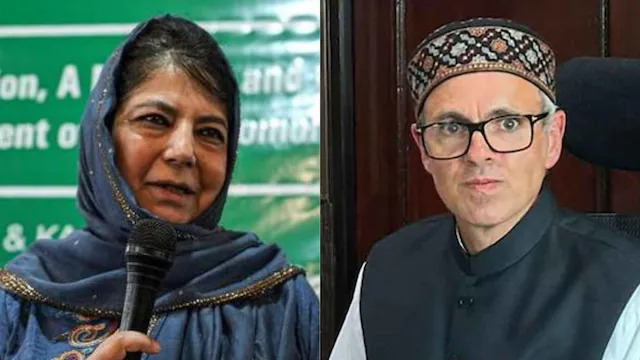
PDP’s Call for Liquor Ban Triggers Row in J&K, NC Accuses Mehbooba’s Party of ‘Hypocrisy’
In the politically charged environment of Jammu and Kashmir (J&K), the Peoples Democratic Party (PDP) has found itself at the center of a fierce controversy after its call for a complete ban on the sale and consumption of liquor in the region. The demand, which was made by party president Mehbooba Mufti, has sparked a major row in the Union Territory, triggering heated debates between political parties, especially the National Conference (NC). The NC, led by the influential Farooq Abdullah and Omar Abdullah, has accused the PDP of ‘hypocrisy,’ citing contradictions in the party’s stance on this issue.
This blog delves into the complexities of this issue, analyzing the political, social, and economic dimensions of the liquor ban call, the reactions from various political entities, and the potential ramifications for Jammu and Kashmir’s governance and its people.
The Call for a Liquor Ban: Mehbooba Mufti’s Proposal
Mehbooba Mufti’s statement calling for the imposition of a liquor ban in Jammu and Kashmir was made in the context of her party’s broader vision for a socially responsible and ethically driven society. Mufti claimed that the consumption of alcohol was contributing to the erosion of values in the region, particularly among youth. She emphasized that her party’s stand was rooted in public health concerns, societal well-being, and the need to promote a healthier environment for J&K’s younger generation.
Mufti’s statements echoed her party’s long-standing advocacy for moral governance and its previous opposition to policies seen as detrimental to societal fabric. In her speech, Mufti expressed concerns over the growing consumption of alcohol, which, according to her, was linked to rising social problems such as crime, addiction, and family breakdowns.
However, the political timing of the call for a liquor ban, especially after the Jammu and Kashmir Reorganisation Act of 2019, which saw the revocation of Article 370 and the bifurcation of the state into two Union Territories, raised eyebrows. Critics pointed out that the liquor ban proposal may have more to do with populist politics than genuine concern for public health.
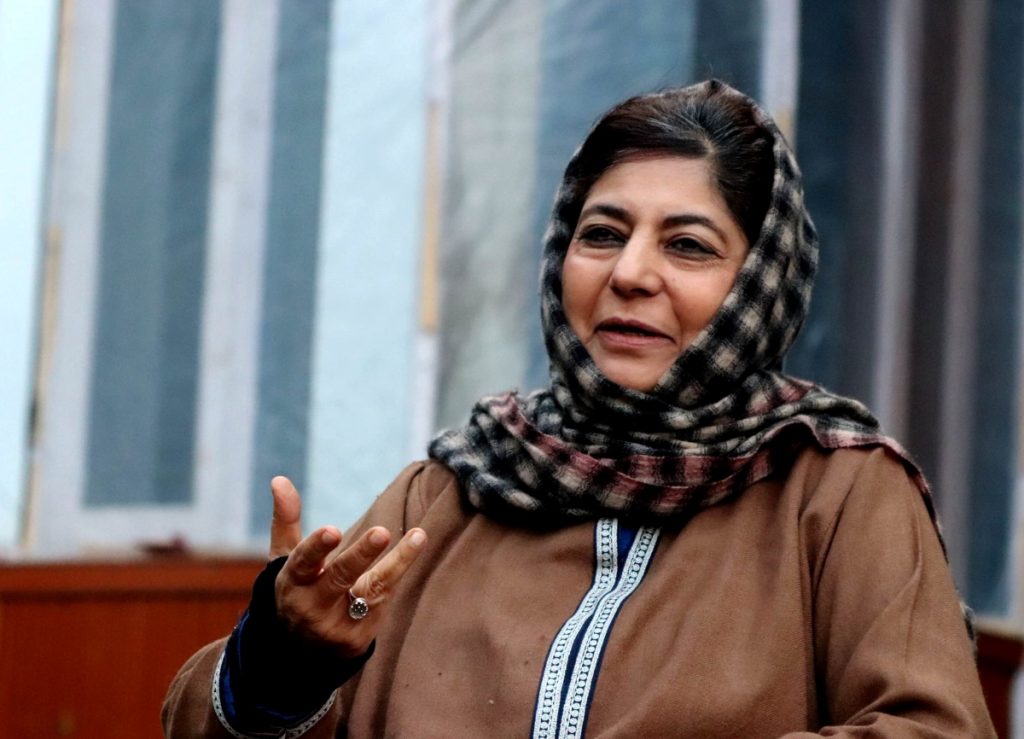
The National Conference (NC) Responds: Hypocrisy or Political Strategy?
The National Conference (NC), a major political player in Jammu and Kashmir, did not take kindly to Mufti’s proposal. The NC, led by the Abdullah family, quickly dismissed the PDP’s demand as a political gimmick, accusing the party of hypocrisy. According to NC leaders, the PDP had previously endorsed policies that facilitated the growth of the alcohol trade in the region during its tenure in power, particularly when it was part of the coalition government with the Bharatiya Janata Party (BJP) from 2015 to 2018.
NC leaders, including Farooq Abdullah and Omar Abdullah, were quick to point out that Mehbooba Mufti’s government had failed to take any significant action on this issue during her tenure as Chief Minister of Jammu and Kashmir. Instead, they argued that her government had not only allowed the sale of alcohol to continue but had even facilitated the setting up of liquor outlets in several districts. In the eyes of the NC, the PDP’s sudden call for a liquor ban seemed like a politically motivated move aimed at regaining lost ground in the region, especially in light of its declining popularity.
The NC also raised questions about the moral high ground the PDP was attempting to adopt. Omar Abdullah, in a public statement, mocked the PDP for its inconsistent stance on the matter, asking why they hadn’t called for a liquor ban when they were in power. “Now that they are out of power, they find it convenient to raise issues that they never addressed when they had the opportunity to do so,” Omar said.
The PDP’s Political Motive and Its Implications for Jammu and Kashmir
While the NC’s accusations of hypocrisy have sparked significant controversy, the PDP’s call for a liquor ban raises several important questions about its political strategy and long-term vision for Jammu and Kashmir. The PDP has long positioned itself as a party advocating for the moral and ethical development of the region. Mufti’s call for a liquor ban appears to align with the party’s broader social welfare agenda, which seeks to strengthen family values and curb societal issues related to addiction.
From a political standpoint, Mehbooba Mufti’s proposal can be seen as an attempt to appeal to the religious and conservative sections of society, especially in the wake of the political changes brought about by the revocation of Article 370. Since the abrogation of Jammu and Kashmir’s special status in August 2019, the region has seen significant shifts in political alignments and an increasing rise of nationalistic sentiments, which have led some regional parties like the PDP to recalibrate their strategies.
Mufti, who has faced criticism for her party’s performance in the post-Article 370 era, may see the liquor ban as a way to consolidate the party’s position among the conservative voters who have traditionally supported the PDP for its moderate stance on socio-cultural issues.
Moreover, the call for a liquor ban could be an attempt by the PDP to align itself with the growing sentiments in favor of social reforms and anti-alcohol movements that have emerged globally. In a state like Jammu and Kashmir, where cultural conservatism plays a crucial role in shaping public opinion, such a proposal could enhance the PDP’s appeal, particularly in rural areas where the consumption of alcohol is viewed with skepticism.
Public Health Concerns and Societal Implications of a Liquor Ban
On the surface, the call for a liquor ban is rooted in genuine public health concerns, particularly regarding the rising levels of alcohol consumption among the youth of Jammu and Kashmir. Alcohol abuse has been linked to a range of social issues, including addiction, violence, and family breakdowns. Advocates of the ban argue that alcohol is contributing to the deterioration of societal values and public health.
However, critics of the ban, including many within the NC and other political entities, argue that such a move would be impractical and overly simplistic. They contend that banning alcohol would not address the root causes of substance abuse or societal disintegration. Instead, they argue that a more comprehensive approach, including education, rehabilitation, and support for those suffering from addiction, is needed.
The economic impact of a liquor ban is also a significant consideration. The sale of alcohol contributes to the revenue of the government and supports numerous local businesses, including bars, restaurants, and tourism-related enterprises. A blanket ban could have serious repercussions on the local economy, particularly in a region that has been struggling with economic challenges since the revocation of Article 370.
The Role of Religious and Cultural Conservatism in Jammu and Kashmir
Jammu and Kashmir is a region where religious and cultural conservatism has always been an integral part of its social fabric. Islam plays a dominant role in shaping the cultural and social values of the Kashmir Valley, and many conservative groups have long opposed the consumption of alcohol. For these groups, the call for a liquor ban resonates strongly, as it aligns with their religious beliefs and their desire to protect traditional values.
However, this ideological divide has also led to tensions between different political groups. While the PDP has attempted to tap into the conservative vote bank, the NC and other secular parties have sought to maintain a more liberal stance, arguing that the government should not interfere in the personal choices of individuals.
This clash between conservative and liberal ideologies is not unique to Jammu and Kashmir but reflects a broader debate across India and the world regarding the role of religion in politics and the extent to which the state should intervene in matters of personal conduct.
The Liquor Ban Controversy in the Broader Context of J&K Politics
The liquor ban controversy is part of a larger ongoing debate over governance and political ideologies in Jammu and Kashmir following the revocation of Article 370. Since the state’s special status was revoked in 2019, Jammu and Kashmir has been undergoing a major political and social transformation. The region, once a hotbed of separatist movements and political instability, is now facing a new phase of its political evolution.
The call for a liquor ban is just one example of the ways in which regional parties like the PDP are attempting to carve out their identity in this new political landscape. For the NC, which has historically advocated for a more secular and moderate approach to governance, the liquor ban issue highlights the ideological rift between the two major parties.
While the PDP seeks to distance itself from its former coalition partner, the BJP, and build a base among the conservative populace, the NC continues to stress the importance of maintaining a more inclusive and secular political framework in Jammu and Kashmir.
Conclusion: A Controversial Yet Symbolic Issue in J&K Politics
The row over the PDP’s call for a liquor ban in Jammu and Kashmir is emblematic of the complex political landscape in the region. On the one hand, the issue raises important questions about the intersection of politics, religion, and governance. On the other hand, it highlights the deep ideological divides between Jammu and Kashmir’s major political parties.
For the PDP, the liquor ban may be a calculated move to regain political ground and re-establish itself as the party that cares about the moral and social welfare of the region. For the NC, the controversy serves as a reminder of the PDP’s past contradictions, which the NC is eager to exploit in the battle for political dominance.
As Jammu and Kashmir continues to navigate its post-Article 370 reality, the liquor ban debate will likely remain a symbol of the ideological and political tensions that define the region’s ongoing transformation.
read more latest news

