
PM Modi Pays Tribute to Savarkar in Marseille, Recalls City’s Connection to Freedom Fighter
On a historic day, as Prime Minister Narendra Modi visited the French city of Marseille, he took a moment to honor a figure who played a pivotal role in India’s fight for independence. That figure is none other than Vinayak Damodar Savarkar, a man whose contributions to India’s freedom movement continue to spark debates but whose role in shaping the nation’s journey towards independence is undeniable. During his visit, PM Modi paid tribute to Savarkar in Marseille, a city that holds significant connections to the revolutionary’s life and struggle.
Savarkar’s life, both in India and abroad, was marked by his uncompromising spirit, his fierce nationalism, and his profound impact on the history of the Indian freedom struggle. In paying homage to him, PM Modi not only recognized his personal sacrifice but also brought attention to the pivotal role that cities like Marseille played in the broader context of the Indian freedom movement. Marseille, as a city with ties to the Indian nationalist movement, holds a unique place in the history of the struggle against British colonial rule.
PM Modi’s visit to this iconic French city and his tribute to Savarkar was a momentous occasion, as it not only spotlighted the untold stories of the freedom fighters’ contributions from foreign shores but also reflected the continuity of India’s rich history as it forges ahead on the global stage.

Savarkar’s Role in the Indian Freedom Struggle
Vinayak Damodar Savarkar, known more widely as Veer Savarkar, was an Indian independence activist, a revolutionary, a writer, and a politician who is best remembered for his early efforts in the struggle against British colonial rule. Born on May 28, 1883, in the small village of Bhagur near Nashik in Maharashtra, Savarkar was a brilliant student with a keen intellect and a strong sense of justice.
Savarkar’s journey toward the Indian freedom struggle began when he was studying in England. He was drawn to revolutionary activities that sought to overthrow British rule. His passion for independence, along with his membership in the revolutionary organization Abhinav Bharat, led him to take radical steps that would forever change his life.
One of the most notable events in Savarkar’s life came when he was involved in the conspiracy to assassinate a British official, a crime for which he was sentenced to life imprisonment. In 1909, Savarkar was arrested and deported to the Andaman Islands, one of the most infamous British prison colonies. It was here, in the cellular jail, that he faced immense hardship and torture, yet his resolve to fight for his country never wavered. Despite this, Savarkar’s time in prison transformed him into one of the most prominent figures in India’s fight for freedom.
He was eventually released in 1924 under controversial circumstances, and his ideas about Indian nationalism evolved over time. His vision of Hindutva – a term he coined – proposed that India should be united as a nation by a shared culture, religion, and history. This concept of Hindu nationalism and Savarkar’s later political career remain highly debated, but his contribution to India’s struggle for independence cannot be denied.
Savarkar’s legacy is a complex one. While some view him as an uncompromising patriot who played a crucial role in India’s freedom movement, others criticize his later political philosophy and his stance on issues such as caste and religion. Regardless of these debates, his contributions to India’s independence cannot be overlooked.
The Significance of Marseille in the Freedom Struggle
Marseille, a city on the southern coast of France, holds a special place in the history of the Indian independence movement. It was in this city that Savarkar, during his time in exile, interacted with several key members of the Indian diaspora who were involved in the anti-colonial struggle. Marseille was also a hub for revolutionaries who sought refuge from British oppression. The city was a base for several Indian freedom fighters, particularly those who had fled British rule to continue their activism abroad.
Savarkar was not the only freedom fighter who found refuge in European cities such as Paris and Marseille. The early 20th century saw an increasing number of Indian revolutionaries take shelter in foreign lands as they planned and organized acts of defiance against the British Empire. It was in these cities that they worked to garner international support for their cause while also gathering resources for the revolution.
In Marseille, Savarkar and other leaders associated with the Indian independence movement, such as Lala Lajpat Rai and Bipin Chandra Pal, formed networks and alliances to push forward the cause of independence. The city provided an environment where they could operate with relative freedom from British colonial rule, allowing them to strategize, mobilize, and spread their revolutionary ideas to a wider international audience.
Marseille, thus, became one of the strategic locations from where Indian revolutionaries continued their fight for independence. It was in these foreign cities that the seeds of the Indian freedom struggle were sown, with Savarkar playing a critical role in bridging the gap between the diaspora and the political developments in India.
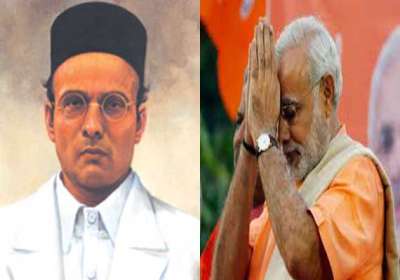
Prime Minister Modi’s Tribute to Savarkar
PM Modi’s visit to Marseille and his tribute to Savarkar was a deeply symbolic moment, as it was an opportunity to recognize the international dimensions of India’s fight for freedom. By honoring Savarkar in Marseille, PM Modi highlighted the significance of the city in the larger narrative of the Indian struggle for independence.
The Prime Minister paid homage to Savarkar by laying a wreath at a memorial dedicated to the freedom fighter, acknowledging his indomitable spirit and dedication to India’s freedom. During his speech, PM Modi recounted the history of Savarkar’s struggle, his time in exile, and the sacrifices he made for the country. He also pointed out that while Savarkar’s name is often linked to controversies, his contributions to India’s independence and his role in shaping the national movement should not be overlooked.
PM Modi also emphasized the importance of remembering and celebrating the contributions of freedom fighters from all corners of the world. He pointed out that Savarkar, in his time abroad, was able to bring global attention to India’s plight under British rule. This is a reminder of the critical role that international support and solidarity played in the fight for Indian independence.
The Symbolism of the Tribute
PM Modi’s gesture of paying tribute to Savarkar in Marseille holds immense symbolism. It reflects the idea that India’s independence movement was not confined to the borders of the subcontinent. Savarkar, along with other revolutionaries, actively sought international support to challenge the British Empire. The tribute also highlights the longstanding connection between India and France, with cities like Marseille acting as important centers of resistance against colonialism.
The timing of the tribute also speaks volumes. It comes at a time when India is celebrating its achievements as a sovereign nation, with a rapidly growing economy and an increasingly influential presence on the global stage. By paying tribute to Savarkar, PM Modi has brought attention to the historical roots of India’s current global stature. This tribute serves as a reminder of the sacrifices made by countless freedom fighters, many of whom remain unsung heroes of history.
Furthermore, the tribute is a message to the youth of India. In the age of global connectivity, the Prime Minister’s visit to a city like Marseille symbolizes how interconnected the world was even during the freedom struggle. It is a testament to how Indian revolutionaries worked tirelessly across borders, drawing inspiration and support from people around the world who were fighting similar battles for freedom.
The Political Dimension of PM Modi’s Tribute
PM Modi’s tribute to Savarkar also carries political significance. As a leader of the Bharatiya Janata Party (BJP), which has consistently drawn inspiration from Savarkar’s ideology of Hindutva, this gesture signals his alignment with the freedom fighter’s vision. The BJP, under Modi’s leadership, has often invoked Savarkar’s legacy to bolster its political narrative, emphasizing themes of nationalism, cultural pride, and a strong sense of identity.
The tribute is not only a nod to Savarkar’s role in the freedom struggle but also a way of reiterating the BJP’s commitment to his ideas. By honoring Savarkar in Marseille, PM Modi is asserting that India’s identity is shaped by its historical figures, and the legacy of Savarkar is a critical part of the country’s narrative.
Critics, however, argue that Savarkar’s later political ideologies – particularly his views on Hindu nationalism – are controversial and should not overshadow his role in the freedom struggle. Nonetheless, the tribute serves to remind the world that India’s independence was won not only through constitutional means but also through radical action and revolutionary thought.
Conclusion: Honoring the Legacy of a Freedom Fighter
PM Modi’s tribute to Vinayak Damodar Savarkar in Marseille is a powerful reminder of the contributions made by freedom fighters both within and outside India. It underscores the global dimension of India’s struggle for independence and acknowledges the sacrifices made by individuals who fought against colonial rule, regardless of where they were situated in the world.
Savarkar’s life and legacy remain a subject of intense debate in Indian politics, but his role in the independence movement is undisputed. By paying tribute to Savarkar, PM Modi not only honored a key figure in India’s history but also shed light on the significance of international solidarity in the fight for freedom.
Marseille, as a city with deep ties to the Indian freedom struggle, will always hold a special place in India’s history. It is here, in the quiet corners of foreign cities, that the seeds of revolution were sown. As PM Modi’s tribute reminded us, the battle for India’s independence was not just fought on Indian soil, but across the globe, by countless revolutionaries who believed in the power of freedom and justice.
In the end, the tribute serves as a reminder that history is a living, breathing entity, and the story of India’s freedom struggle continues to inspire the world even today.
Read More Latest news

