
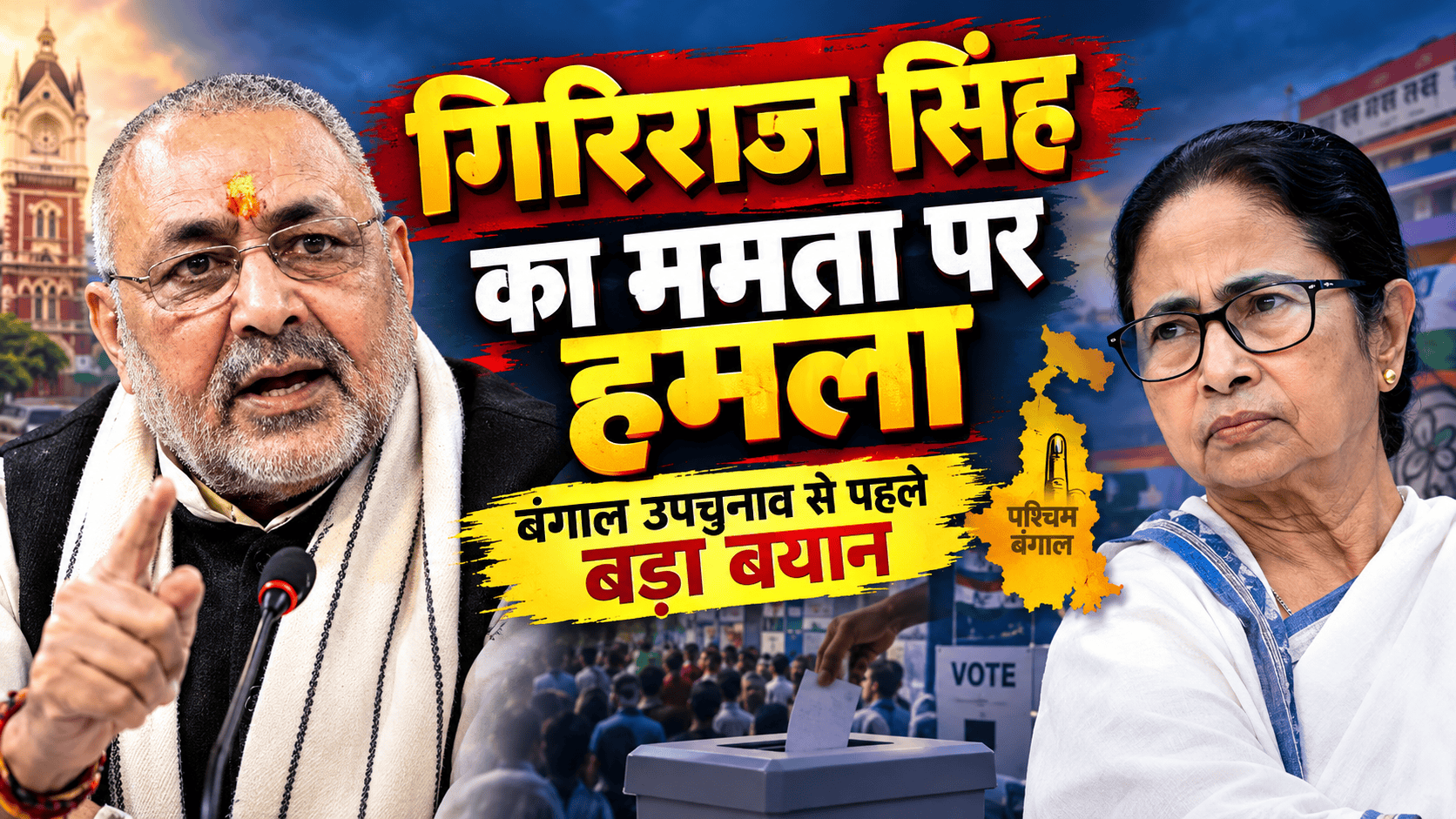
Giriraj Singh Targeting Mamata: Bengal By-Elections Spark Political Debate
Giriraj Singh’s Remarks Ahead of West Bengal By-Elections
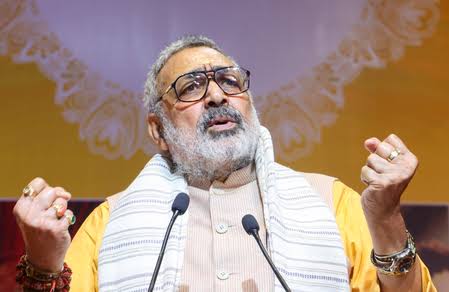
Giriraj Singh Targeting Mamata Banerjee has become a major political talking point ahead of the upcoming West Bengal assembly by-elections. Union Minister Giriraj Singh, speaking in Patna on September 19, 2026, criticised the administration associated with Mamata Banerjee and made several allegations about the political situation in the state. His comments came ahead of the October 6 by-elections in West Bengal.
Singh said that whether political parties or independent candidates contest the elections, the final decision would be made by voters through their ballots. He also claimed that people in Bengal were now able to “breathe freely” and contrasted this with what he described as an atmosphere of fear during Mamata Banerjee’s rule. These remarks are Singh’s political assessment of the situation in the state.
Claims About Fear Crime and Extortion
The latest Giriraj Singh Targeting Mamata statement focused strongly on law and order and alleged political intimidation. Singh claimed that during Mamata Banerjee’s administration, people faced fear and that crime and “cut-money,” a term used in political discourse to describe alleged extortion, had affected the public.
These allegations were made by Singh in the context of the upcoming by-elections. The reported comments do not, by themselves, establish the allegations as independently verified facts. Political parties in West Bengal have frequently exchanged accusations over law and order, governance and political violence.
Singh’s comments therefore form part of the wider political debate surrounding the state’s electoral environment.
“Bengal into Bangladesh” Remark
Another significant part of Giriraj Singh Targeting Mamata was his allegation that there had been an attempt to turn Bengal into “Bangladesh.” This was a political claim made by the Union Minister while criticising the previous administration. He connected the statement with his broader allegations concerning fear, crime and governance.
The “Bangladesh” reference is politically charged and has become part of Singh’s criticism of Mamata Banerjee. It is important to distinguish between the minister’s allegation and independently established evidence. Reports of the statement attribute the claim directly to Singh rather than presenting it as an established fact.
Suvendu Adhikari and Ram Rajya
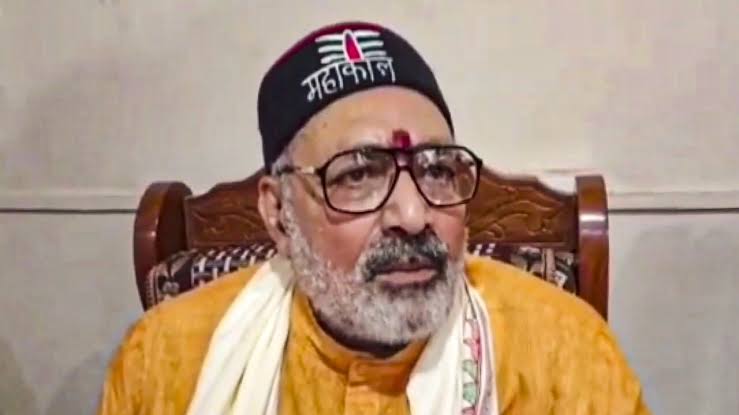
In another key portion of Giriraj Singh Targeting Mamata, Singh praised Suvendu Adhikari and described the political alternative under him as an open “Ram Rajya.” Singh used the expression to argue that people in Bengal could now live without fear.
The phrase “Ram Rajya” is commonly used in Indian political discourse to describe an idealised model of governance associated with justice, public welfare and good administration. In this case, however, it represents Singh’s political characterisation and should be understood as such.
The remarks also underline the political contrast being drawn between the two sides ahead of the by-elections.
Election Campaign Intensifies in Bengal
The latest Giriraj Singh Targeting Mamata controversy comes at a time when political activity in West Bengal is intensifying. The upcoming by-elections are expected to provide another electoral contest involving different political parties and candidates.
Singh’s comments indicate that issues such as governance, law and order, political freedom and public security are likely to remain prominent themes during campaigning. At the same time, parties are expected to focus on local constituency issues and the concerns of voters.
For voters, the by-elections will provide an opportunity to assess the candidates and parties contesting their respective constituencies.
Political Parties and Independent Candidates
According to Singh, both political parties and independent candidates can participate in the electoral process and ultimately the people will cast their votes. His statement places emphasis on the role of voters in determining the outcome of an election.
The Giriraj Singh Targeting Mamata episode is therefore connected not only with criticism of a political leader but also with the larger electoral debate over governance and political choices in West Bengal.
The final decision in an election rests with eligible voters, while candidates and political parties seek public support through campaigning, manifestos and public outreach.
Mamata Banerjee and Election-Related Developments
The political environment has also been affected by developments involving the Trinamool Congress and its organisational dispute. According to reports, the Election Commission had issued an interim arrangement concerning the use of the original Trinamool Congress name and traditional symbol by rival factions. The Mamata Banerjee-led faction was subsequently assigned the name “Mamata All India Trinamool Congress” and the “Football Player” symbol, while the rival faction led by Arup Roy was assigned “Democratic Trinamool Congress” and the “Envelope” symbol.
Banerjee has challenged the Election Commission’s interim order in the Supreme Court, according to the reports. The dispute adds another layer to the political developments taking place ahead of the by-elections.
Law and Order as an Election Issue
The Giriraj Singh Targeting Mamata remarks have again brought law and order into the political conversation. Singh has alleged that people previously lived under fear and intimidation, while presenting the current political situation as one in which people can live more freely.
Such claims are likely to be debated by political parties during the campaign. Supporters and opponents may present different assessments of governance, security and public administration.
For voters, understanding the distinction between political claims and independently verified information remains important when assessing election-related statements.
Broader Political Context
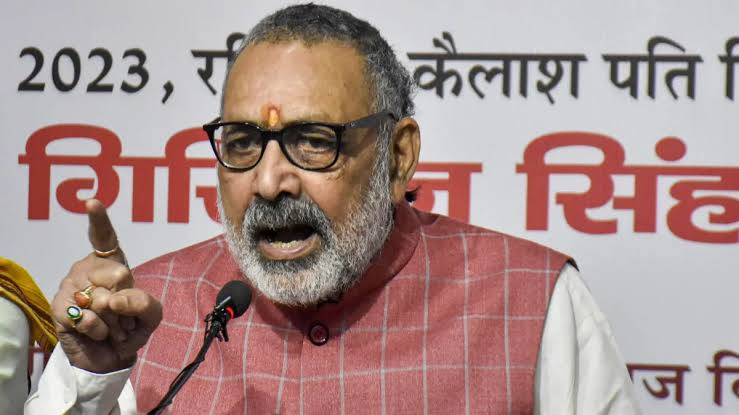
The Giriraj Singh Targeting Mamata episode is also part of a broader pattern of political exchanges between BJP and TMC leaders. West Bengal has remained a politically competitive state, with questions surrounding governance, welfare, employment, law and order and political organisation frequently featuring in public debates.
Singh’s latest remarks reflect the BJP’s criticism of Mamata Banerjee, while the wider electoral process will involve competing narratives from multiple political groups.
Political statements made during election periods can be strongly worded, making it important to attribute claims clearly rather than presenting allegations as established facts.
What the By-Elections Could Highlight
The Giriraj Singh Targeting Mamata controversy has placed renewed attention on the issues that may shape the political discussion in West Bengal. Law and order, governance, political freedom and the performance of political administrations are among the subjects being raised.
At the same time, voters may consider constituency-specific matters, candidate backgrounds, local development and other issues while making their decisions.
The Giriraj Singh Targeting Mamata remarks are therefore one part of a much larger political conversation surrounding the upcoming by-elections.
Voters Remain Central to the Electoral Process
The Giriraj Singh Targeting Mamata debate ultimately returns to the central role of voters. Singh himself said that regardless of whether parties or independent candidates contest, the public will cast its vote.
The Giriraj Singh Targeting Mamata remarks are expected to remain part of the political discussion as campaigning continues. The minister’s criticism of Mamata Banerjee, his allegations regarding the previous administration, and his praise for Suvendu Adhikari reflect one side of the ongoing political contest.
The Giriraj Singh Targeting Mamata statement has also drawn attention because of the strong language used to describe governance in Bengal. Singh’s references to fear, crime, “Bangladesh” and “Ram Rajya” have become key elements of his political message.
As the October 6 by-elections approach, the Giriraj Singh Targeting Mamata issue may continue to feature in political speeches and public debate. Ultimately, the electoral process will allow voters to evaluate the candidates, parties, claims and competing policy positions before casting their ballots.
The Giriraj Singh Targeting Mamata remarks therefore represent a significant political statement ahead of the West Bengal by-elections, while the claims made by the Union Minister should be understood as attributed political allegations rather than independently established conclusions.

