
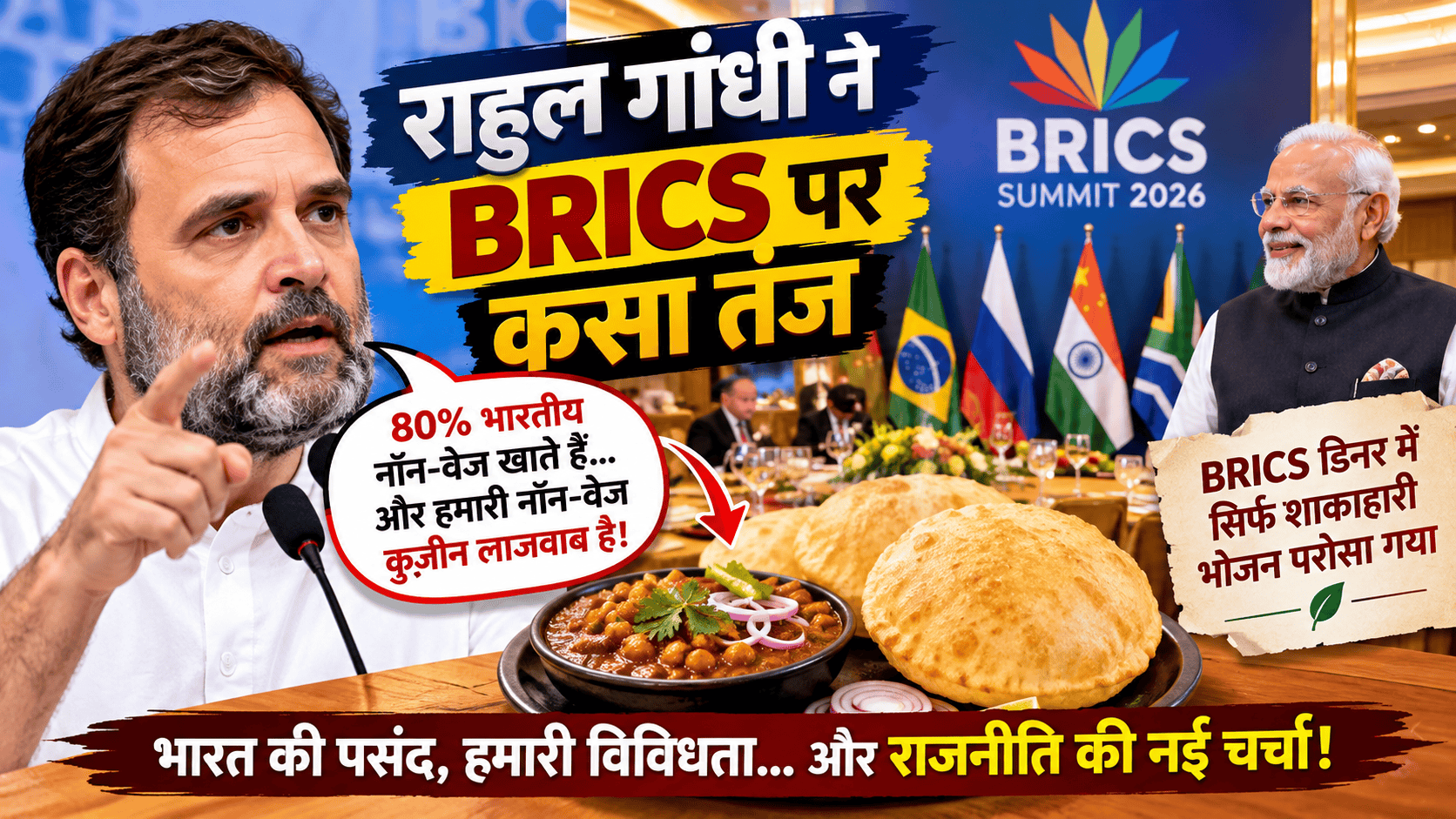
Rahul Gandhi Took a Dig BRICS: Chhole Bhature Remark Sparks Discussion Over Vegetarian Dinner Menu
Following the conclusion of the BRICS Summit 2026, Rahul Gandhi took a dig Brics over the vegetarian menu served at the gala dinner hosted by Prime Minister Narendra Modi. The Congress leader’s social media post, featuring a picture of chhole bhature, drew attention to India’s diverse food culture and quickly became a talking point in political and social circles.
The BRICS Summit 2026 brought together leaders and delegations from major emerging economies for discussions on global politics, trade, economic cooperation, development, and other international issues. Alongside the diplomatic engagements, the food served to visiting dignitaries also attracted public attention. It was in this context that Rahul Gandhi took a dig Brics, making a comment about India’s preference for non-vegetarian cuisine.
Rahul Gandhi Took a Dig BRICS Over Dinner Menu
After the summit concluded, Rahul Gandhi shared a picture of chhole bhature on X. In his post, he highlighted India’s diverse culinary traditions and claimed that around 80% of Indians are non-vegetarian. He also praised Indian non-vegetarian food, describing it as exceptionally delicious.
The post was interpreted as a political dig at the menu selected for the BRICS gala dinner. Thus, Rahul Gandhi took a dig Brics by drawing a contrast between the vegetarian dishes served at the official dinner and what he described as the broader food preferences of Indians.
The remark generated considerable discussion because official diplomatic dinners often use food as a way to showcase a country’s culture. In India’s case, vegetarian cuisine offers an opportunity to present traditional dishes from different regions while accommodating a wide range of dietary preferences among international guests.
What Was Served at the BRICS Gala Dinner?
The gala dinner hosted by Prime Minister Narendra Modi reportedly featured a selection of traditional Indian vegetarian dishes. The menu was designed to highlight the country’s rich culinary heritage and regional diversity.
Indian vegetarian cuisine includes an enormous variety of preparations, from breads and rice dishes to lentils, vegetables, dairy-based preparations, sweets, and snacks. Chhole bhature itself is among India’s most popular dishes, although it is generally considered a vegetarian preparation.
Interestingly, Gandhi’s choice of chhole bhature for his social media post also underlined the popularity of Indian food beyond formal diplomatic menus. As Rahul Gandhi took a dig Brics, the discussion moved beyond the dinner itself and toward the larger question of how India’s food habits are represented at international events.
Rahul Gandhi’s Food-Culture Argument
At the heart of Gandhi’s post was an argument about India’s dietary diversity. India does not have a single food culture. Eating habits vary substantially across states, communities, regions, and families.
While vegetarian food has an important place in Indian culinary traditions, non-vegetarian dishes are equally prominent in many parts of the country. Chicken, fish, mutton and seafood feature prominently in the cuisines of several Indian regions.
Therefore, when Rahul Gandhi took a dig Brics, his post could also be viewed as an attempt to highlight the country’s diverse eating habits rather than simply criticizing the dinner menu.

His reference to the large share of Indians who consume non-vegetarian food also encouraged online conversations about dietary statistics, regional differences, and India’s culinary identity.
BRICS Summit 2026 and India’s Global Image
The BRICS Summit is primarily about diplomacy, economics, development and international cooperation. However, major international gatherings also provide countries with an opportunity to showcase their cultural heritage.
Food is an important part of this cultural diplomacy. A carefully selected dinner menu can introduce foreign leaders to traditional ingredients, cooking methods, and regional specialties.
Against this backdrop, Rahul Gandhi took a dig Brics by using food as a subject for political commentary. His post attracted attention because it came immediately after a major international summit hosted by India.
The episode demonstrates how even cultural elements surrounding major diplomatic events can become part of political debate in India.
Chhole Bhature Becomes the Centre of Attention
Chhole bhature is widely recognized as a popular North Indian dish. The combination of spicy chickpea curry and deep-fried bhature has become a familiar part of Indian street food and restaurant culture.
By posting a picture of the dish, Gandhi selected a food item that is instantly recognizable to a large Indian audience. The post therefore had a simple and visually engaging message.
The fact that Rahul Gandhi took a dig Brics using a popular food item also made the comment more accessible than a conventional political statement. Social media users could immediately connect the image with the discussion about the BRICS dinner.
Political Reactions and Social Media Debate
Political leaders frequently use social media to comment on events of national and international importance. Food, culture and lifestyle can sometimes become part of political messaging because they connect directly with everyday experiences.
Gandhi’s post triggered discussions over whether an official diplomatic dinner needs to represent the majority dietary preferences of the population or whether it should primarily showcase selected aspects of Indian culinary heritage.
The debate surrounding Rahul Gandhi took a dig Brics therefore reflects two different perspectives. One focuses on dietary representation, while the other emphasizes cultural diplomacy and the presentation of traditional vegetarian cuisine.
Neither perspective changes the broader significance of the summit itself, but the discussion illustrates the way political communication can extend beyond formal policy issues.
India’s Diverse Culinary Heritage
India’s culinary heritage is extraordinarily diverse. Different regions have developed distinctive dishes based on local ingredients, climate, traditions and historical influences.
From vegetarian Gujarati and Rajasthani cuisine to Bengali fish dishes, South Indian seafood preparations, Kashmiri meat specialties and North Indian kebabs, Indian food represents a broad spectrum of tastes.
This diversity is an important part of India’s cultural identity. The BRICS dinner’s vegetarian menu showcased one part of that identity, while Gandhi’s social media post highlighted another.
Consequently, Rahul Gandhi took a dig Brics became a phrase associated with a much wider conversation about Indian food and cultural representation.
Why the Remark Got Attention
The timing of Gandhi’s post was one of the main reasons it attracted attention. The BRICS Summit had just concluded, making the gala dinner and its menu fresh topics of public discussion.
Furthermore, the post combined politics, food and social media, three subjects that routinely generate strong public engagement. His assertion about the number of non-vegetarian Indians added another dimension to the debate.
As Rahul Gandhi took a dig Brics, the conversation quickly moved from what was served at the dinner to broader questions about Indian dietary preferences.
Conclusion
The BRICS Summit 2026 was primarily focused on international cooperation and India’s role in the changing global order. Yet, the vegetarian menu at the gala dinner became an unexpected subject of political discussion after Rahul Gandhi shared a picture of chhole bhature on X.
By emphasizing India’s non-vegetarian population and praising Indian cuisine, Rahul Gandhi took a dig Brics at the dinner menu while drawing attention to the country’s enormous culinary diversity.
The episode also highlights the growing role of social media in political communication. A single food photograph can transform an otherwise formal diplomatic event into a widely discussed public topic. Ultimately, the debate surrounding Rahul Gandhi took a dig Brics is as much about India’s diverse food culture as it is about political messaging surrounding a major international summit.
Read more latest news

