
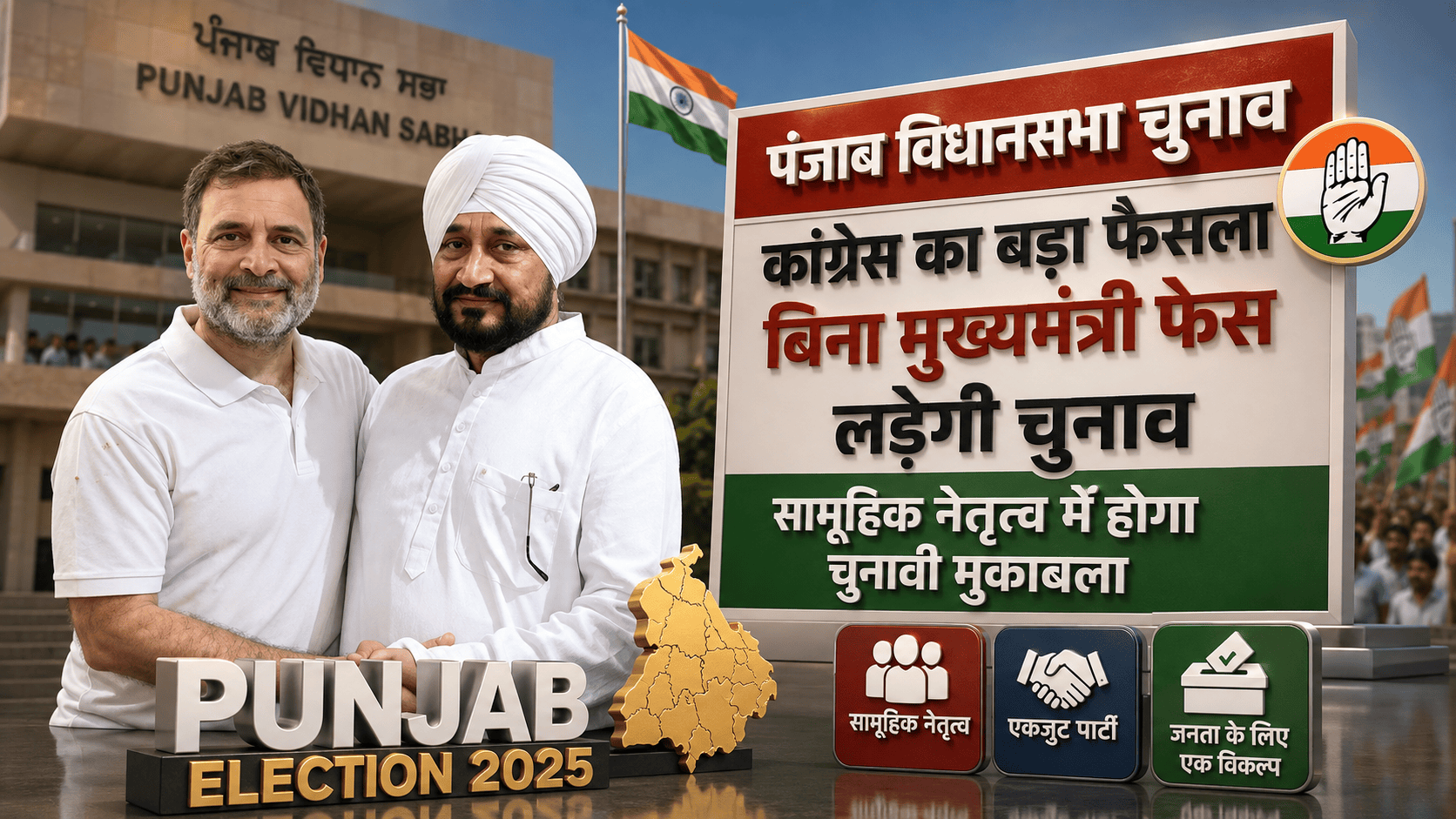
Congress Chooses Collective Leadership Strategy for Punjab Assembly Elections
Punjab Assembly elections The Congress party appears to be preparing for the next electoral battle in Punjab with a strategy that avoids projecting a single chief ministerial candidate before voting. Reports surrounding the latest internal discussions suggest that the party intends to enter the Punjab Assembly elections under collective leadership, bringing its senior state leaders together rather than allowing the contest to revolve around one face.
The reported decision comes at a crucial stage for the Congress, which is attempting to rebuild its organisation and regain political ground in Punjab. The party’s internal differences, particularly among senior leaders, have repeatedly attracted attention. Against this backdrop, the collective leadership approach could be an attempt to maintain unity while keeping the focus on organisational strengthening and electoral preparation.
Congress Avoids Early CM Face
The most important feature of the reported strategy for the Punjab Assembly elections is the decision not to announce a specific chief ministerial face before the polls. This is consistent with statements made earlier by Congress’s Punjab in-charge Bhupesh Baghel, who said that the party would fight the 2027 Assembly elections through collective leadership rather than depend on one individual.
The strategy effectively allows several senior leaders to remain important to the campaign. Instead of declaring one leader as the future chief minister, Congress can present a combined leadership structure involving Punjab Pradesh Congress Committee president Amarinder Singh Raja Warring, Leader of Opposition Partap Singh Bajwa, former chief minister Charanjit Singh Channi and other prominent leaders.
For the Punjab Assembly elections, this approach may provide the party with greater flexibility. It can avoid an early leadership contest and allow the organisation to concentrate on constituency-level preparation, voter outreach and strengthening its booth network.
Internal Turmoil Behind the Decision
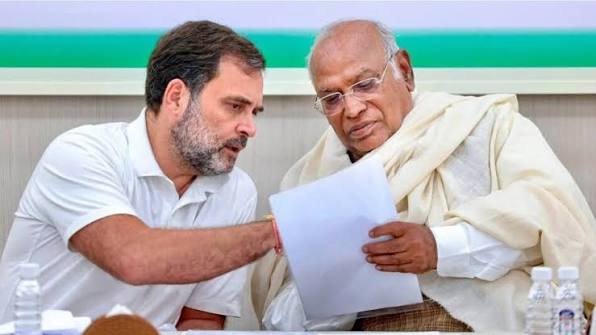
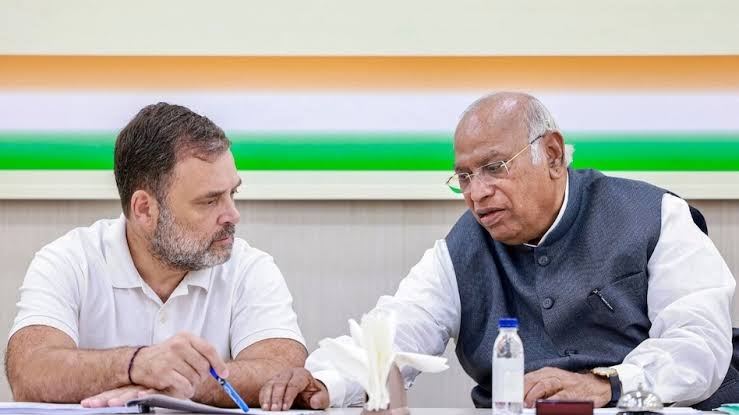
The collective leadership formula also needs to be viewed against the backdrop of factionalism within the Punjab Congress. The party has faced disagreements involving different groups and senior leaders, with questions surrounding organisational appointments and political leadership.
Reports in July indicated that the Congress high command had resisted demands for a change in the state leadership and wanted the Punjab unit to function collectively. The party’s central leadership maintained that the 2027 elections would be fought under the collective leadership of Raja Warring and Partap Singh Bajwa.
The internal debate became particularly significant because former Chief Minister Charanjit Singh Channi and his supporters had expressed concerns about the organisation. The high command’s response was essentially to maintain the existing structure while asking leaders to work together.
For the Punjab Assembly elections, avoiding a CM-face battle could therefore be as much about internal management as electoral strategy.
Kharge Meeting and High Command’s Role
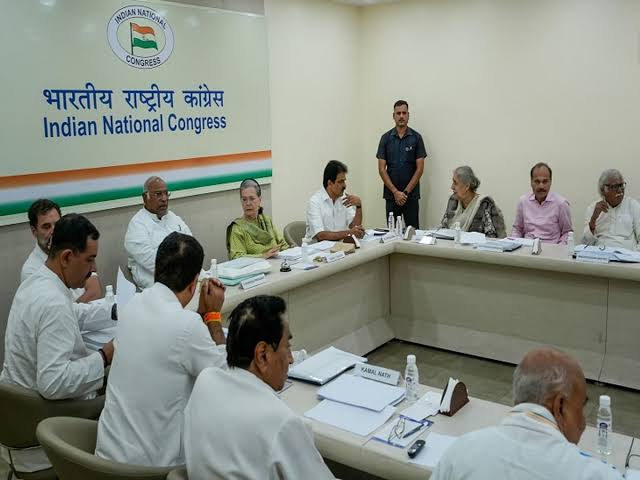
The reported high-level discussions at Congress president Mallikarjun Kharge’s residence underline the importance that the central leadership is attaching to the Punjab situation. Earlier reports have also described meetings at Kharge’s residence involving senior Congress leaders amid concerns over factional differences in Punjab. The high command reiterated the collective-leadership approach and ruled out immediately changing the state leadership.
The involvement of senior national leaders demonstrates that the Congress leadership does not want internal disagreements to overshadow preparations for the Punjab Assembly elections.
The central leadership’s role will likely remain important in coordinating different factions, deciding campaign priorities and ensuring that state leaders do not publicly undermine one another.
Why Collective Leadership Could Help Congress
There are several potential advantages to the collective strategy.
First, it can reduce the possibility of a leadership rivalry before the election. If one leader is projected as the CM candidate too early, supporters of other senior leaders could become dissatisfied.
Second, collective leadership allows Congress to appeal to different sections of Punjab’s electorate through multiple established leaders.
Third, it gives the party an opportunity to postpone the chief ministerial question until after the election. This is broadly consistent with the strategy reported by Hindustan Times, which described Congress’s approach as winning the election first and deciding the chief minister later.
For the Punjab Assembly elections, such flexibility could be particularly valuable if the party succeeds in improving its electoral position.
The Challenge Presenting a United Face
However, collective leadership also carries risks. Voters need clarity about who will be responsible for the party’s campaign and governance agenda. If multiple leaders send conflicting messages, opponents could portray the arrangement as evidence of internal weakness.
This is one of the central challenges facing Congress ahead of the Punjab Assembly elections. The party must demonstrate that collective leadership means coordination rather than competing power centres.
The leadership will also need to ensure that disagreements remain within party forums rather than becoming public controversies. Reports have indicated that Congress has instructed Punjab leaders to raise internal issues before the party leadership instead of airing them publicly.
Competition in Punjab
The Congress strategy must also be understood in the context of a competitive political environment. The Aam Aadmi Party remains a major force in Punjab, while the BJP and Shiromani Akali Dal are also positioning themselves for the next election.
Recent developments suggest that alliances and electoral calculations remain fluid. For example, reports indicate that the BJP has publicly discussed contesting independently, while speculation about possible future arrangements with the Akali Dal continues.
The BSP has also announced a separate path for the 2027 Punjab polls rather than continuing its earlier alliance with the Akali Dal.
Consequently, the Punjab Assembly elections are likely to involve a multi-cornered contest in which vote distribution, alliances, leadership and local issues could all play important roles.
What Congress Needs to Do Next
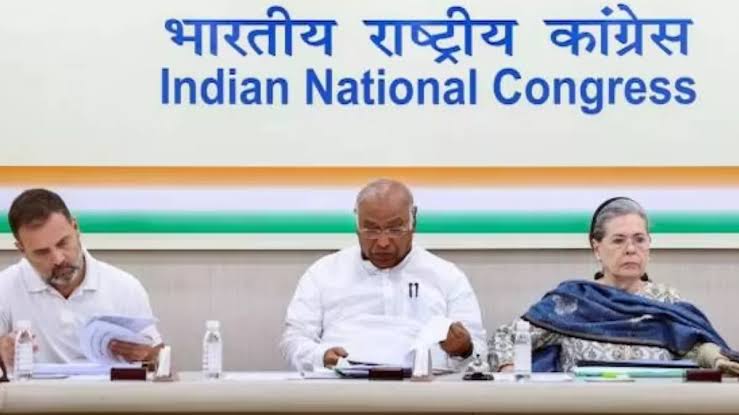
For the Punjab Assembly elections, simply announcing collective leadership will not be enough. Congress will need to convert the strategy into an effective ground campaign.
The party’s immediate priorities are likely to include strengthening its organisation, resolving factional disputes, identifying strong candidates and developing a clear message for voters.
The leadership will also have to balance state-level personalities with a common campaign narrative. Raja Warring, Partap Singh Bajwa, Channi and other senior leaders may have individual political bases, but the party’s electoral performance will depend on whether they can operate under a coordinated framework.
Congress will also need to focus on issues that matter directly to Punjab voters, including employment, agriculture, law and order, economic conditions, public services and governance.
A Strategic Test for Congress
The collective leadership decision makes the Punjab Assembly elections an important test of Congress’s ability to manage internal diversity. Rather than allowing the question of the next chief minister to dominate the campaign, the party appears determined to make the election primarily about its organisation, policies and broader leadership team.
The approach is not entirely new. Congress has already indicated several times in 2026 that it does not intend to project a single CM candidate for Punjab before the election.
Whether this strategy succeeds will depend on execution. If senior leaders maintain unity and communicate a consistent message, collective leadership could become an advantage. If factional disputes continue publicly, however, the same strategy could be interpreted as a lack of clarity.
Ultimately, the Punjab Assembly elections will test whether Congress can transform its leadership structure into an effective electoral machine. The party’s decision to avoid a premature CM face gives it time to focus on rebuilding its organisation and expanding its appeal. But that opportunity will only produce results if the leadership can maintain discipline, coordinate its campaign and convince voters that the party is ready to govern.
As preparations accelerate, the Punjab Assembly elections are expected to remain a major focus of state and national political discussions. The Congress strategy signals that the party wants to fight as a team first and settle the question of individual leadership later. The success or failure of that formula could have significant consequences for Punjab’s political landscape.
Read more latest news

