

Namo Bharat Corridor PM Modi Launches 13-Km Delhi Section
Namo Bharat Corridor In a landmark development for India’s infrastructure and urban mobility, Prime Minister Narendra Modi inaugurated the 13-km Delhi section of the Namo Bharat Corridor on Saturday, January 11, 2025. The corridor, a state-of-the-art regional rapid transit system (RRTS), represents a significant leap in the country’s push for sustainable and efficient urban transportation. With the event drawing widespread attention, PM Modi not only inaugurated the corridor but also delighted schoolchildren by taking a symbolic first ride with them, emphasizing his government’s commitment to fostering development that benefits future generations.
This inaugural segment is part of the larger Delhi-Meerut RRTS project, designed to connect the National Capital Region (NCR) with high-speed, environmentally friendly public transport. The Delhi section is expected to transform urban commuting and reduce congestion, pollution, and travel time across the region.
The Namo Bharat Corridor: A Vision for the Future
The Namo Bharat Corridor is a flagship initiative of the central government, embodying its vision of modernizing urban transport. The project is being developed by the National Capital Region Transport Corporation (NCRTC) under the Ministry of Housing and Urban Affairs. Once fully operational, the corridor will span 82 km, connecting Delhi with Meerut via Ghaziabad and other urban centers.
Key Features of the Namo Bharat Corridor:
- High-Speed Connectivity: The RRTS trains, known for their sleek and aerodynamic design, can achieve speeds of up to 180 km/h, making them one of the fastest public transit systems in India.
- Reduced Travel Time: The full stretch from Delhi to Meerut, which currently takes about 3–4 hours by road, will be covered in just 55 minutes. The newly launched Delhi section allows commuters to travel 13 km in under 12 minutes.
- Eco-Friendly Design: Equipped with regenerative braking systems, energy-efficient lighting, and solar-powered stations, the corridor aligns with India’s sustainable development goals.
- World-Class Passenger Amenities: The stations and trains offer modern conveniences such as free Wi-Fi, digital displays, dedicated luggage spaces, and priority seating for women, elderly passengers, and persons with disabilities.
- Safety and Automation: Advanced signaling systems, automatic train operation (ATO), and CCTV-monitored platforms ensure passenger safety.
The corridor aims to cater to millions of daily commuters, significantly reducing reliance on personal vehicles and thereby cutting down emissions and urban traffic congestion.
Namo Bharat Corridor The Inauguration Ceremony
The inauguration ceremony at the Sarai Kale Khan station in Delhi was a grand affair attended by dignitaries, senior government officials, and representatives from the transport and infrastructure sectors. PM Modi was accompanied by Union Minister for Housing and Urban Affairs Hardeep Singh Puri, Delhi Lieutenant Governor V. K. Saxena, and other key stakeholders in the project.
Addressing the gathering, PM Modi emphasized the transformative impact of the corridor:
“The Namo Bharat Corridor is not just a transportation project; it is a symbol of our commitment to building a New India. It showcases how modern technology and innovative planning can address the challenges of urbanization while ensuring sustainability and inclusivity. Projects like these will strengthen the economic fabric of our cities and provide people with world-class infrastructure.”
The Prime Minister also highlighted how the corridor aligns with the government’s broader “Atmanirbhar Bharat” initiative, as much of the technology and components for the project were developed indigenously.
Namo Bharat Corridor A Memorable Ride with Schoolchildren
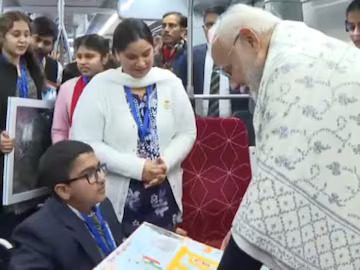
One of the most heartwarming moments of the inauguration was when PM Modi took the inaugural ride with a group of schoolchildren. The Prime Minister interacted with the students, sharing his vision for India’s future and encouraging them to dream big.
Clad in their school uniforms, the children excitedly clicked selfies with PM Modi and shared their thoughts about the new train system. Twelve-year-old Ananya, a student who participated in the ride, expressed her excitement:
“It was such a thrilling experience to ride in the new train, and getting to meet the Prime Minister made it unforgettable. He told us that we are the future of India, and it’s projects like this that will make our lives better.”
During the ride, PM Modi explained the features of the train to the children, demonstrating its modern amenities and highlighting the importance of adopting sustainable travel solutions. His interaction underscored the message that large-scale infrastructure projects should ultimately serve the needs of the people, especially the younger generation.
Namo Bharat Corridor Impacts on Delhi and NCR
The inauguration of the Delhi section of the Namo Bharat Corridor is expected to have a transformative effect on the region in multiple ways:
- Enhanced Urban Mobility: By providing a high-speed alternative to congested roads, the corridor will significantly reduce travel times and improve connectivity across NCR.
- Economic Boost: Efficient transport systems like the RRTS often lead to increased productivity and economic activity, as businesses benefit from faster, more reliable logistics and commuter services.
- Environmental Benefits: With an anticipated reduction of over 2.5 lakh vehicles on NCR roads, the corridor will contribute to lowering carbon emissions and improving air quality in the region.
- Social Inclusion: Affordable ticket pricing and accessibility features ensure that the corridor caters to a broad spectrum of society, making it a truly inclusive project.
Challenges and the Road Ahead
While the inauguration marks a significant milestone, the Namo Bharat Corridor still faces challenges in its full implementation. Delays in land acquisition, coordination between state governments, and managing public expectations remain critical hurdles. However, the successful launch of the Delhi section has instilled confidence in the project’s eventual completion.
NCRTC officials confirmed that the corridor’s remaining sections are on track to be completed by 2026, with trial runs already underway in Ghaziabad and Meerut.
Reactions from the Public and Stakeholders
The inauguration has drawn widespread praise from various quarters:
- Urban Planners: Experts have lauded the RRTS for its forward-thinking design, emphasizing its potential to serve as a model for other metropolitan regions in India.
- Environmentalists: Green activists have welcomed the project for its focus on sustainability and renewable energy, calling it a step in the right direction for urban transport.
- Commuters: Many Delhi residents expressed excitement about the prospect of faster and more comfortable travel.
However, some critics have voiced concerns about the project’s high costs and the need to ensure affordability for the average commuter.
Conclusion
The inauguration of the 13-km Delhi section of the Namo Bharat Corridor is more than just an infrastructure milestone; it is a testament to India’s ability to execute world-class projects that address the challenges of urbanization. PM Modi’s involvement and his ride with schoolchildren underscore the government’s vision of a modern, sustainable, and inclusive India.
As the project progresses towards completion, its impact on the lives of millions in the NCR and its role in setting benchmarks for urban transportation across the country will be closely watched. For now, the corridor stands as a shining example of how India is embracing innovation to build a better tomorrow.
Read more Latest News

