
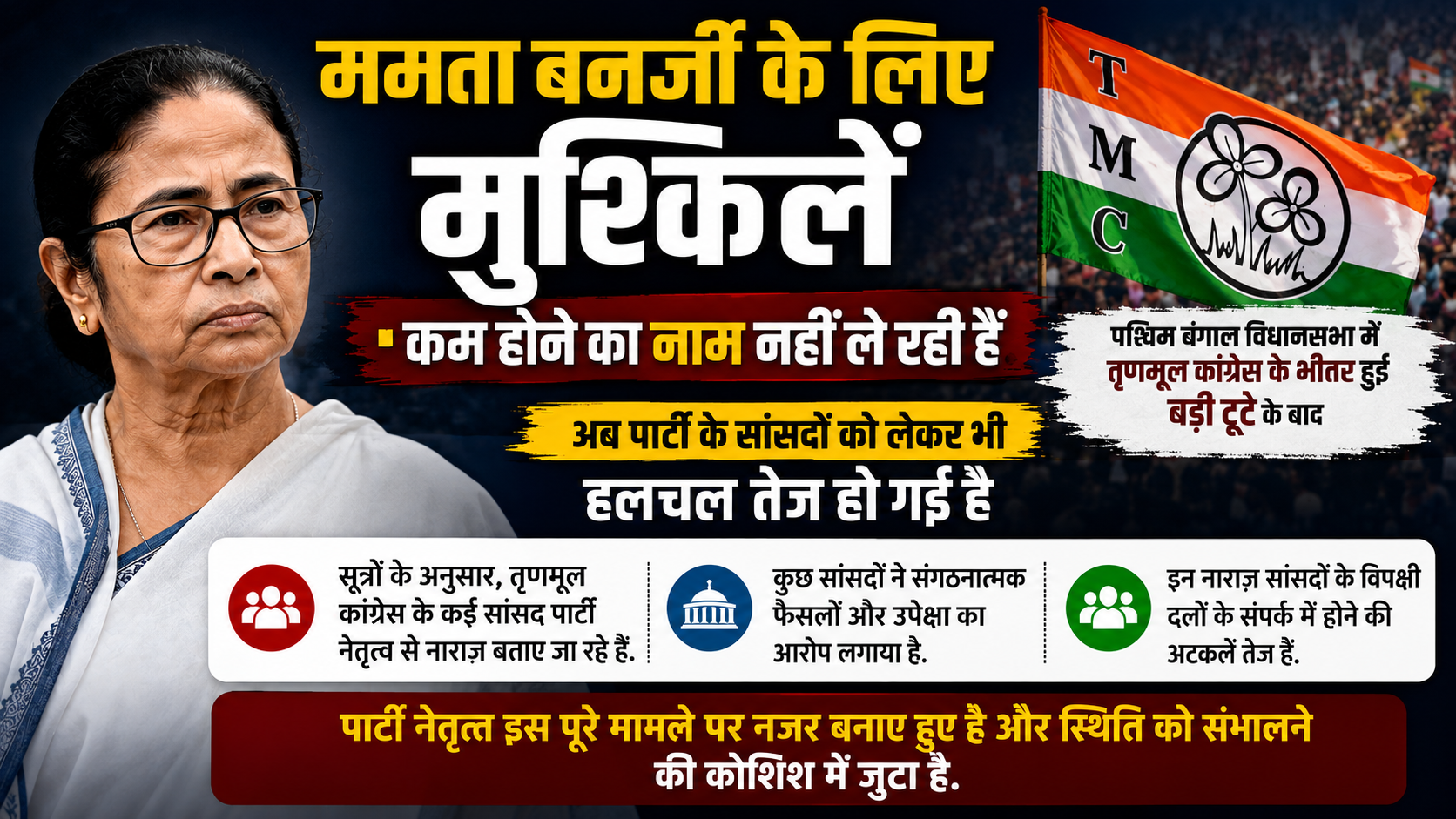
Mamata Banerjee’s Troubles Show No Signs of Abating: Growing Rebellion Within TMC Sparks Political Anxiety
For political analysts, the situation has become significant because Mamata Banerjee troubles show how internal party dynamics can become as challenging as opposition attacks.
West Bengal politics is once again witnessing a period of uncertainty as internal tensions within the Trinamool Congress (TMC) continue to dominate political discussions. Reports of dissatisfaction among legislators and Members of Parliament have raised concerns for the party leadership. What initially appeared to be isolated disagreements within the organization is now being viewed by many political observers as a challenge that could test the unity of the ruling party in the coming months.
The latest developments suggest that the troubles facing Chief Minister Mamata Banerjee are far from over. Following reports of divisions within the West Bengal Assembly, speculation has intensified that similar unrest could emerge among TMC representatives in both the Lok Sabha and the Rajya Sabha. As a result, senior leaders have reportedly begun extensive damage-control efforts to prevent further erosion of party unity.
Internal Challenges Surface
The Trinamool Congress has long been regarded as one of the strongest regional political parties in India. Under the leadership of Mamata Banerjee, the party successfully established its dominance in West Bengal and became an influential voice in national politics.
However, recent reports indicate that not all members are satisfied with the current political and organizational direction. Differences regarding leadership decisions, candidate selection, and strategic priorities are said to be contributing factors behind the growing unrest.
Political observers argue that Mamata Banerjee troubles show the difficulties faced by large political organizations when balancing the aspirations of numerous leaders and factions.
Assembly Developments Trigger Concern
The first signs of serious concern emerged from developments within the West Bengal Assembly. Reports of disagreements and factionalism among legislators attracted considerable attention. Although party leaders publicly attempted to project unity, political insiders suggested that dissatisfaction among certain members continued to simmer beneath the surface.
The Assembly developments quickly became a talking point because they raised questions about whether the party could maintain its internal discipline ahead of future electoral challenges.
Many commentators believe Mamata Banerjee troubles show how even dominant political parties can face internal turbulence despite enjoying electoral success.
Growing Speculation About MPs
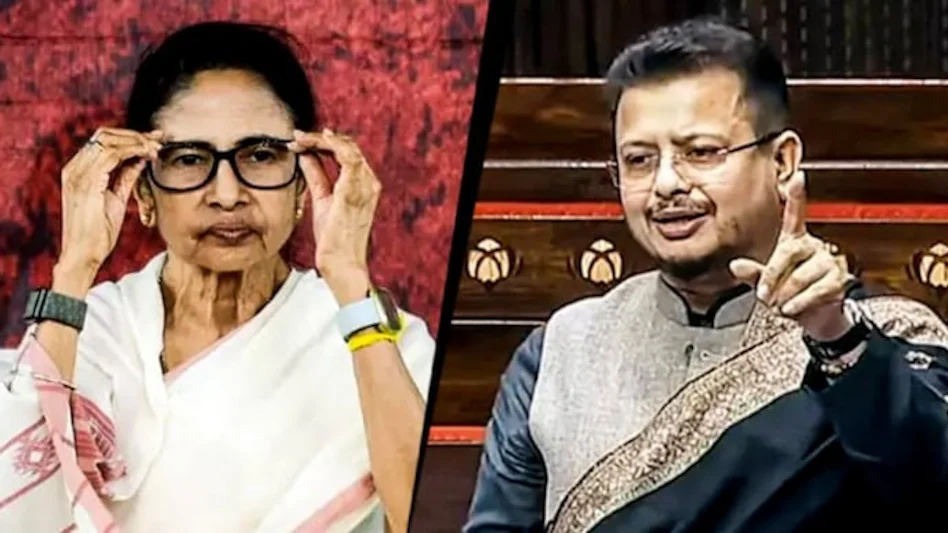
What has intensified concern within the TMC leadership is speculation that unrest may not remain limited to the Assembly. Reports suggest that dissatisfaction could also be present among Members of Parliament.
The possibility of rebellion in the Lok Sabha and Rajya Sabha has naturally increased anxiety within the party’s leadership circles. While no major public revolt has emerged, rumors of internal disagreements continue to circulate.
Political analysts say Mamata Banerjee troubles show the importance of maintaining strong communication channels between party leadership and elected representatives.

Damage Control Begins
Recognizing the seriousness of the situation, the party leadership has reportedly become fully active in managing internal concerns. Senior leaders are believed to be engaging with legislators and MPs in an effort to prevent dissatisfaction from escalating further.
Damage-control strategies often include direct meetings, organizational restructuring, and assurances regarding future political opportunities. Such efforts are common in political parties facing internal unrest.
Observers note that Mamata Banerjee troubles show how leadership teams must often devote significant energy to maintaining organizational cohesion.
Challenges of Managing a Large Political Party
As political parties grow larger, managing competing interests becomes increasingly difficult. Leaders at various levels may have different expectations regarding responsibilities, recognition, and political advancement.
The TMC’s expansion beyond West Bengal has created new opportunities but also introduced additional complexities. National ambitions require coordination among leaders operating in diverse political environments.
Many experts argue that Mamata Banerjee troubles show the challenges associated with balancing regional priorities and national aspirations within a single political organization.
The Importance of Party Unity
Political history demonstrates that unity often plays a crucial role in determining electoral success. Parties divided by internal conflicts frequently struggle to present a coherent message to voters.
For the Trinamool Congress, maintaining unity is particularly important because it remains engaged in political competition at both the state and national levels. Any perception of instability could provide opportunities for rival parties.
According to analysts, Mamata Banerjee troubles show why party discipline remains one of the most valuable assets in modern politics.
Opposition Watches Closely
As reports of internal tensions gain attention, opposition parties are naturally monitoring developments with interest. Political rivals often seek to capitalize on signs of dissatisfaction within competing organizations.
Opposition leaders may use reports of internal divisions to question leadership effectiveness and organizational stability. Even if disagreements remain manageable, public perception can significantly influence political narratives.
In this context, Mamata Banerjee troubles show how internal party matters can quickly become part of a broader political battle.
Leadership Under Pressure
Mamata Banerjee has built a reputation as one of India’s most influential regional leaders. Her political journey has been marked by numerous challenges, electoral battles, and organizational achievements.
Yet leadership often involves navigating periods of uncertainty. Internal disagreements can sometimes be more difficult to manage than opposition criticism because they originate from within the organization itself.
Political commentators believe Mamata Banerjee troubles show the pressures faced by leaders who must simultaneously address governance responsibilities and party management.
National Political Implications
The developments within the TMC are attracting attention beyond West Bengal because the party plays an important role in national political discussions. Any significant shift in the party’s internal dynamics could influence broader opposition strategies.
As India continues to witness evolving political alliances and realignments, regional parties remain important stakeholders in shaping national debates. Therefore, developments within the TMC are being watched closely by political observers across the country.
Experts say Mamata Banerjee troubles show how regional political developments can have implications that extend far beyond state boundaries.
Communication Becomes Critical
During periods of political uncertainty, communication often becomes the key factor determining whether disagreements can be resolved. Effective communication helps leadership understand concerns while reassuring members about the party’s future direction.
Reports suggest that efforts are underway to strengthen engagement between senior leaders and party representatives. Such initiatives aim to address grievances before they evolve into larger political problems.
Analysts believe Mamata Banerjee troubles show the importance of proactive communication in preventing organizational fragmentation.
The Role of Party Workers
Beyond legislators and MPs, party workers also play an important role in maintaining organizational stability. Grassroots supporters frequently serve as the backbone of political movements and help shape public perception.
If party workers remain motivated and united, leadership often finds it easier to navigate periods of internal disagreement. Conversely, widespread dissatisfaction at the grassroots level can create additional challenges.
Political experts suggest Mamata Banerjee troubles show how organizational strength depends not only on top leaders but also on the commitment of workers at every level.
Electoral Considerations
Internal political developments often become particularly significant when elections are approaching. Parties typically seek to project confidence, unity, and readiness to voters.
Any signs of rebellion or factionalism can complicate campaign planning and strategic messaging. As a result, leadership teams usually prioritize resolving disputes as quickly as possible.
For election strategists, Mamata Banerjee troubles show why maintaining unity is often viewed as a prerequisite for electoral success.
Lessons From Political History
Indian political history offers numerous examples of parties that experienced internal divisions. In some cases, disagreements were successfully resolved through negotiation and compromise. In others, conflicts eventually resulted in splits and the emergence of new political formations.
The outcome often depends on leadership decisions, organizational flexibility, and the willingness of members to prioritize collective goals over personal differences.
Many analysts believe Mamata Banerjee troubles show the timeless political lesson that unity requires continuous effort and engagement.
What Happens Next?
The coming weeks and months may prove crucial for the Trinamool Congress. Party leaders will likely continue their efforts to address concerns, strengthen communication, and reassure members about the organization’s future.
Whether current tensions remain manageable or evolve into a larger political challenge will depend on how effectively the leadership responds to internal concerns. Observers will be closely watching developments in both the Assembly and Parliament.
Political commentators note that Mamata Banerjee troubles show the unpredictable nature of political organizations, where stability can never be taken for granted.
The Road Ahead for TMC
Despite the current concerns, the Trinamool Congress remains a significant political force with a strong organizational structure and an established voter base. The party has overcome challenges in the past and continues to play an influential role in West Bengal politics.
However, internal unity will remain a critical factor as the party prepares for future political contests. Addressing dissatisfaction, strengthening communication, and ensuring collective participation in decision-making may become essential priorities.
Ultimately, Mamata Banerjee troubles show that even powerful political organizations must constantly adapt to internal and external pressures. The current situation serves as a reminder that political success is not determined solely by electoral victories but also by the ability to maintain unity during difficult times.
As West Bengal’s political landscape continues to evolve, all eyes will remain on the Trinamool Congress and its leadership. Whether the party can successfully navigate these challenges may shape not only its own future but also the broader political dynamics of the state and beyond.
In conclusion, the ongoing developments demonstrate why Mamata Banerjee troubles show an important chapter in contemporary Indian politics. The story is still unfolding, and the decisions made in the coming period could have lasting consequences for the Trinamool Congress, its leadership, and the political future of West Bengal.
Read more latest news

