
Rabri Devi Vacates Govt Residence: Bihar Government Orders Former CM to Leave Official Bungalow
Introduction
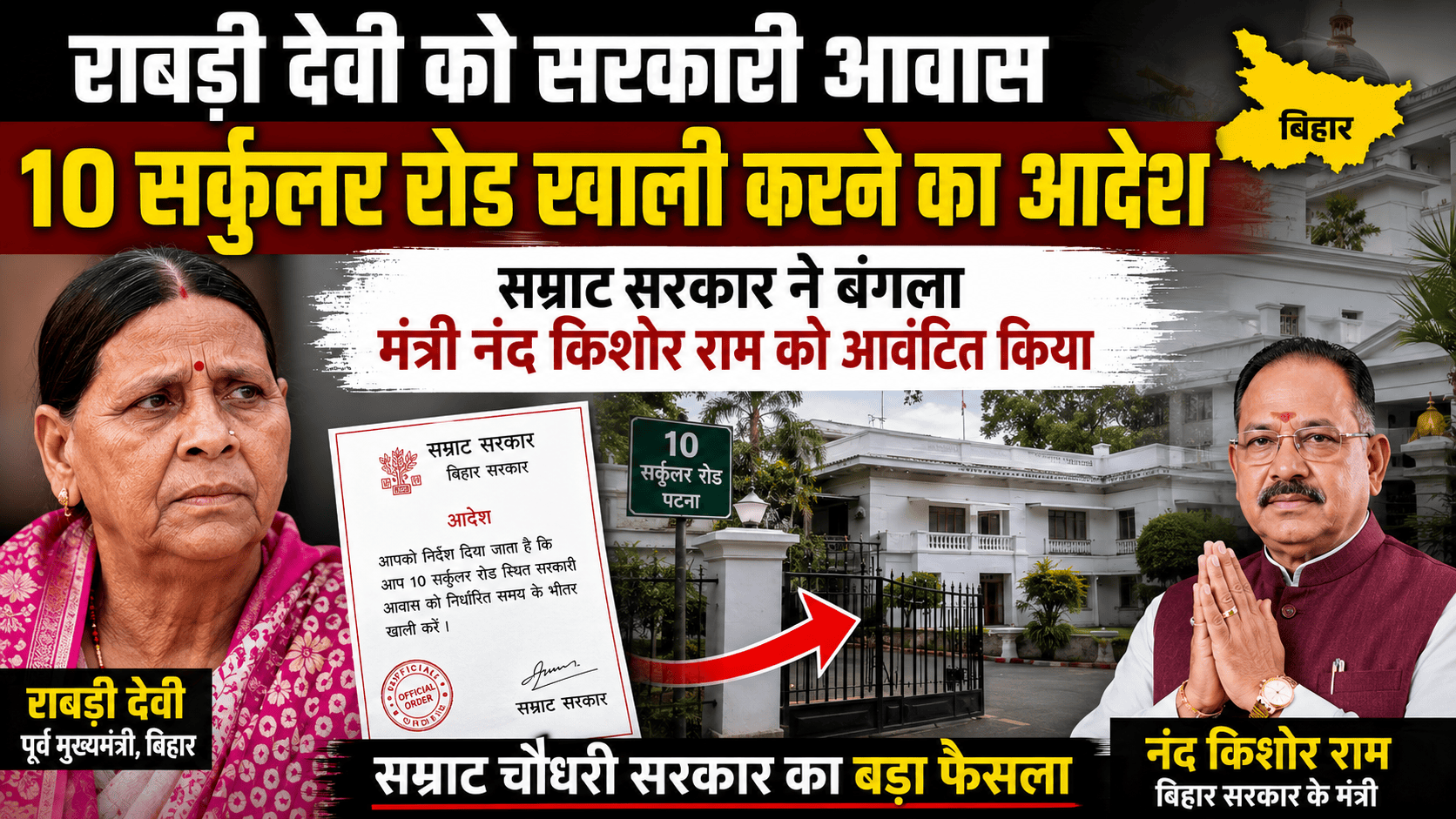
A major political and administrative development has emerged from Bihar as the government led by Samrat Chaudhary has directed former Bihar Chief Minister and Rashtriya Janata Dal (RJD) leader Rabri Devi to vacate her official residence located at 10 Circular Road in Patna. The decision has sparked political debate and renewed discussions regarding the allocation of government residences to former chief ministers and senior political leaders.
The development gained attention after reports confirmed that Rabri Devi vacates govt residence following orders issued by the state’s Building Construction Department. The bungalow has reportedly been allotted to Bihar minister Nand Kishore Ram. This marks a significant administrative move because notices had already been issued to Rabri Devi in the past regarding the vacation of the government property.
The latest directive is particularly noteworthy because it is the second official notice served to the former chief minister. As a result, the issue has become a major topic of political discussion across Bihar.
Background of the Official Residence
The residence at 10 Circular Road is one of the prominent government bungalows in Patna. Over the years, it has been associated with several important political figures and has remained a symbol of political influence within Bihar.
The news that Rabri Devi vacates govt residence has attracted public attention because of her long political career and her association with the property for many years.
Government residences are allotted according to specific rules and administrative procedures. Once a leader no longer qualifies under existing guidelines, authorities may issue notices requiring the property to be vacated.
In this case, the Building Construction Department reportedly determined that the bungalow should be reassigned, leading to the latest order.
Government’s Decision and Official Notice
The Bihar government has stated that the decision was taken in accordance with administrative procedures governing government accommodations.
Officials indicated that Rabri Devi vacates govt residence after the government allotted the bungalow to Minister Nand Kishore Ram. According to reports, the Building Construction Department had already issued notices requesting that the residence be vacated.
Authorities maintained that the process followed established rules and regulations concerning government housing.
The issuance of a second notice suggests that the matter had been under consideration for some time before the latest directive was implemented.
Government officials emphasized that all allotments and reallocations are conducted according to administrative requirements rather than political considerations.
Political Significance of the Move
The development carries significant political implications due to Rabri Devi’s position within Bihar politics and her role as a senior RJD leader.
The news that Rabri Devi vacates govt residence has generated reactions from both supporters and opponents.
Supporters of the government argue that official residences should be allocated according to established norms and eligibility criteria.
Meanwhile, opposition leaders have raised questions regarding the timing and circumstances surrounding the decision.
As Bihar remains one of India’s most politically active states, even administrative decisions often become subjects of broader political debate.
Rabri Devi’s Political Legacy
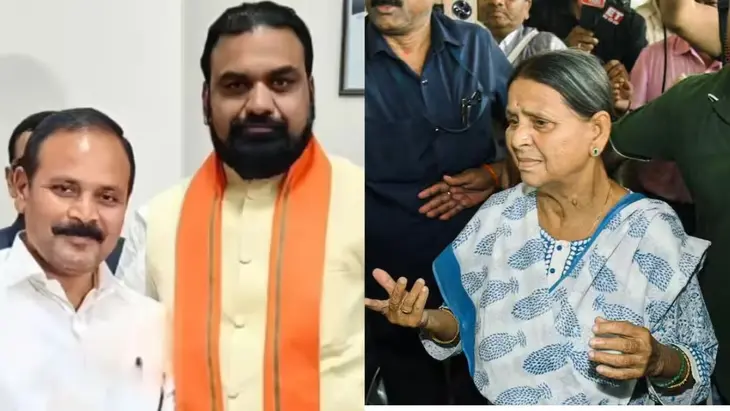
Rabri Devi remains one of the most recognized political figures in Bihar. She served as Chief Minister of Bihar and played a significant role in state politics during a crucial period.
The development that Rabri Devi vacates govt residence has attracted attention partly because of her long-standing political influence.
Her tenure as chief minister marked an important chapter in Bihar’s political history. Even today, she remains an influential voice within the Rashtriya Janata Dal.
Many political observers believe that any decision involving senior leaders of her stature naturally attracts widespread public interest.
Her association with the residence has therefore become part of a larger political discussion.
Allocation of the Bungalow to Nand Kishore Ram
One of the key aspects of the controversy is the government’s decision to allot the bungalow to Minister Nand Kishore Ram.
Officials confirmed that Rabri Devi vacates govt residence following the reallocation of the property.
Government representatives stated that the minister requires official accommodation and that the bungalow was allotted through the appropriate administrative process.
Such reallocations are not uncommon in government systems, especially when leadership changes or housing requirements evolve.
However, because the property is linked to a prominent political figure, the decision has received considerable media attention.
The Role of the Building Construction Department
The Building Construction Department plays a crucial role in managing government accommodations across Bihar.
Reports indicate that Rabri Devi vacates govt residence after receiving notices from this department.
The department is responsible for maintaining official properties, managing allotments, and ensuring compliance with housing regulations.
When occupants no longer meet eligibility criteria, authorities may issue notices requesting the property be vacated.
In this case, the second notice reportedly served as a final step before implementation of the government’s decision.
Why the Issue Matters
The matter extends beyond a simple housing allocation because it touches upon governance, administrative transparency, and political accountability.
The fact that Rabri Devi vacates govt residence has become a major headline demonstrates how closely the public follows decisions involving prominent leaders.
Government housing often symbolizes political authority and status. Consequently, disputes regarding such properties can become politically sensitive.
Observers note that transparent procedures are essential to maintaining public confidence in administrative decisions.
The case has therefore generated discussion not only about housing policy but also about governance standards.
Opposition’s Reaction
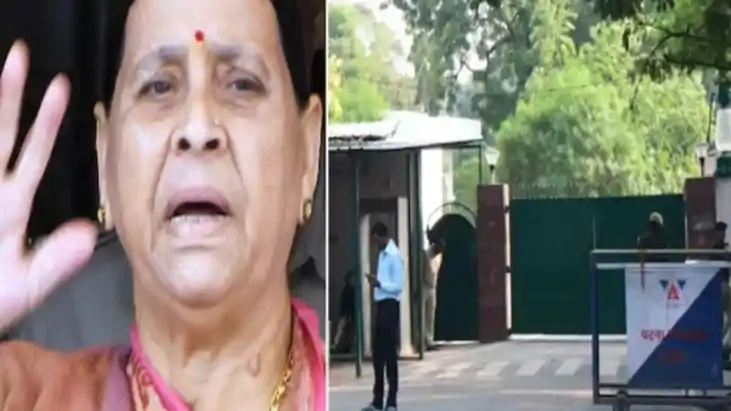
Opposition leaders have criticized the government’s action and questioned its motivations.
Following reports that Rabri Devi vacates govt residence, some opposition representatives suggested that the decision may carry political undertones.
They argue that senior leaders who have served the state deserve appropriate consideration in matters involving official accommodation.
Supporters of Rabri Devi have also expressed disappointment with the government’s approach.
However, government representatives reject these allegations and insist that the process was conducted according to established regulations.
Government’s Defense
The Bihar government has defended its decision by emphasizing adherence to administrative procedures.
Officials state that Rabri Devi vacates govt residence as part of a routine process related to government property management.
According to authorities, the allotment of official residences must follow legal and administrative guidelines.
The government maintains that no individual, regardless of political affiliation, is exempt from these rules.
Supporters of the decision argue that consistent application of regulations strengthens institutional credibility.
Administrative Rules and Housing Policies
Government accommodation policies are designed to ensure fair and efficient use of public resources.
The development that Rabri Devi vacates govt residence has brought renewed attention to these policies.
Housing regulations typically specify eligibility requirements, tenure periods, and procedures for vacating official residences.
Administrative experts note that clear rules are necessary to prevent disputes and ensure transparency.
The current controversy may encourage broader discussion regarding how such policies should be implemented in the future.
Public Response
Public reactions have been mixed. Some citizens support the government’s decision, arguing that official properties should be reassigned according to need and eligibility.
Others believe that Rabri Devi vacates govt residence under circumstances that deserve further explanation.
Social media platforms have witnessed extensive debate on the issue.
Many users view the matter through a political lens, while others focus on administrative principles.
The diversity of opinions reflects the importance of both governance and political symbolism in public discourse.
Broader Political Context
The decision comes at a time when Bihar’s political environment remains highly competitive.
The announcement that Rabri Devi vacates govt residence has therefore been interpreted within the context of ongoing political rivalries.
Political analysts suggest that developments involving senior leaders often influence public perception and media narratives.
As elections and political alignments continue to shape Bihar’s future, even administrative decisions can acquire broader significance.
This explains why the issue has generated widespread discussion across the state.
Potential Legal and Political Implications
Although the government insists that all procedures were followed, the issue could continue to generate political debate.
The fact that Rabri Devi vacates govt residence may lead to further discussions regarding government housing policies and the treatment of former chief ministers.
Legal experts note that such matters are typically governed by specific regulations and administrative orders.
If disputes arise, courts may be called upon to interpret relevant provisions.
For now, the focus remains on the implementation of the government’s decision.
Impact on Bihar Politics
The development may influence political narratives in Bihar in the coming months.
The news that Rabri Devi vacates govt residence has already become a talking point among political parties.
RJD supporters may portray the move as politically motivated, while government supporters may present it as an example of rule-based governance.
Such competing narratives are common in democratic politics.
Ultimately, public opinion will depend on how citizens interpret the government’s actions and explanations.
Future of Government Housing Policy
The controversy highlights the need for clarity and transparency in government housing policies.
The case in which Rabri Devi vacates govt residence may prompt policymakers to review existing regulations and communication strategies.
Clear guidelines and timely implementation can help reduce misunderstandings and political controversies.
Experts suggest that transparency is the most effective way to maintain public confidence in administrative decisions.
Future reforms may focus on ensuring that allocation processes remain fair, efficient, and accountable.
Conclusion
The decision involving the official residence at 10 Circular Road has become one of the most discussed political developments in Bihar. The announcement that Rabri Devi vacates govt residence following government orders has generated reactions from political leaders, citizens, and policy observers alike.
According to the government, the bungalow has been allotted to Minister Nand Kishore Ram and the decision was implemented in accordance with administrative procedures. The Building Construction Department had previously issued notices regarding the matter, making the latest directive the second such notice served to the former chief minister.
As discussions continue, the issue highlights broader questions concerning government housing policies, administrative transparency, and political accountability. Whether viewed as a routine administrative action or a politically significant development, the fact remains that Rabri Devi vacates govt residence has become a major topic in Bihar’s political landscape.
The coming weeks may bring further reactions and developments, but the case has already underscored the close relationship between governance decisions and public perception in one of India’s most politically dynamic states.
Read more latest news

