
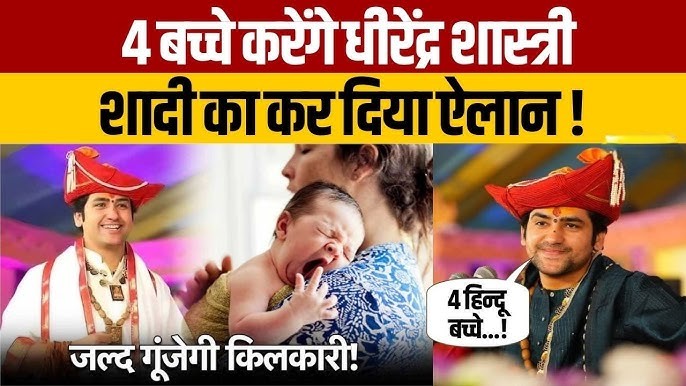
“After Marriage, I Will Also Contribute…”: Dhirendra Krishna Shastri’s Remarks on Hindu Population Spark Debate.
Pandit Dhirendra Krishna Shastri, the head priest of Bageshwar Dham Sarkar, once again found himself at the center of public debate after commenting on the declining Hindu population and encouraging Hindu families to have at least four children. Known for his outspoken views and advocacy of a Hindu nation, Dhirendra Krishna Shastri made the remarks during a public discourse, blending humor with a serious message.
In a light-hearted tone, he said that after his own marriage, he too would contribute to increasing the Hindu population. While the statement drew laughter from the audience present at the religious gathering, it also reignited discussions across social and political platforms regarding demographics, faith, and public discourse.
This blog explores the context of his statement, the reactions it generated, the demographic data surrounding India’s population trends, and the broader implications of religious leaders commenting on social issues.
The Statement That Sparked Attention
During a recent religious event, Dhirendra Krishna Shastri addressed followers on cultural and religious identity. Expressing concern over what he described as a decline in Hindu population growth rates, he suggested that Hindus should have at least four children to preserve demographic balance.
He then added humorously that he himself is not yet married but, after marriage, he would also contribute to increasing the Hindu population. The remark was greeted with cheers and laughter from devotees, but outside the gathering, it quickly became a subject of debate.
Clips of the speech circulated widely on social media platforms, where supporters praised his candidness while critics questioned the appropriateness of such comments from a religious leader.
Who Is Dhirendra Krishna Shastri
Dhirendra Krishna Shastri is the head priest of Bageshwar Dham in Madhya Pradesh. Over the past few years, he has gained significant attention for his religious discourses and for advocating the idea of India as a Hindu nation. His gatherings often attract thousands of followers, and his speeches frequently trend online.
Supporters see him as a spiritual guide who emphasizes cultural pride and religious revival. Critics, however, argue that some of his statements blur the line between religious discourse and political commentary.
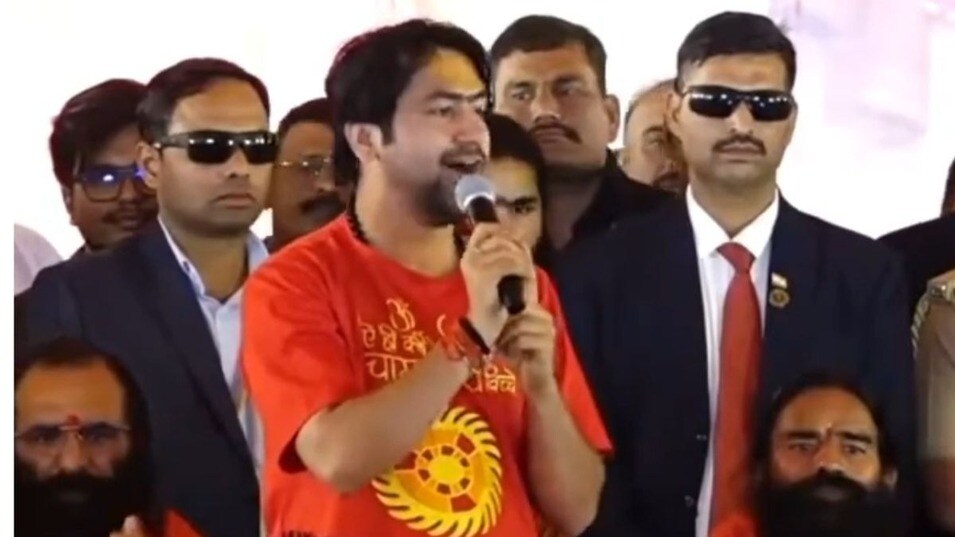
His recent remarks about family size and population growth have once again highlighted his influence in shaping conversations among his followers.
Demographics and Population Trends in India
To understand the broader context, it is important to look at demographic data. India is currently the world’s most populous country. However, like many nations, it has been experiencing a steady decline in fertility rates.
According to recent national surveys, India’s total fertility rate (TFR) has fallen below replacement level, which is approximately 2.1 children per woman. The replacement level is the average number of children needed to maintain a stable population without migration.
The decline in fertility rates is not limited to any single community; it is a nationwide trend driven by factors such as:
- Increased education levels
- Urbanization
- Greater workforce participation among women
- Access to healthcare and family planning
- Rising cost of living
Demographers point out that declining fertility is common in developing economies transitioning toward urban and industrial growth.
Religious Leaders and Social Messaging
Religious leaders have historically played influential roles in shaping social norms and family values. In India, faith-based messages often resonate strongly among communities.
When Dhirendra Krishna Shastri suggested that Hindus should consider having four children, it was framed within a cultural and religious context. Supporters argue that he was advocating for the preservation of traditions and community strength.
However, experts caution that demographic trends are influenced by complex socio-economic factors rather than single appeals. Family planning decisions are typically shaped by education, financial stability, career goals, and access to healthcare.
Public and Political Reactions
The statement triggered mixed reactions:
Supporters’ View
Supporters believe Dhirendra Krishna Shastri was emphasizing cultural continuity and expressing concern about demographic changes. They argue that he was speaking in a personal and religious capacity rather than issuing a directive.
Critics’ View
Critics, including some political commentators and social activists, questioned the timing and impact of such remarks. They argue that population policies are matters of national planning, not religious advocacy.
Some observers also pointed out that encouraging larger families could conflict with broader public policies promoting sustainable development and women’s empowerment.
The Humor Element
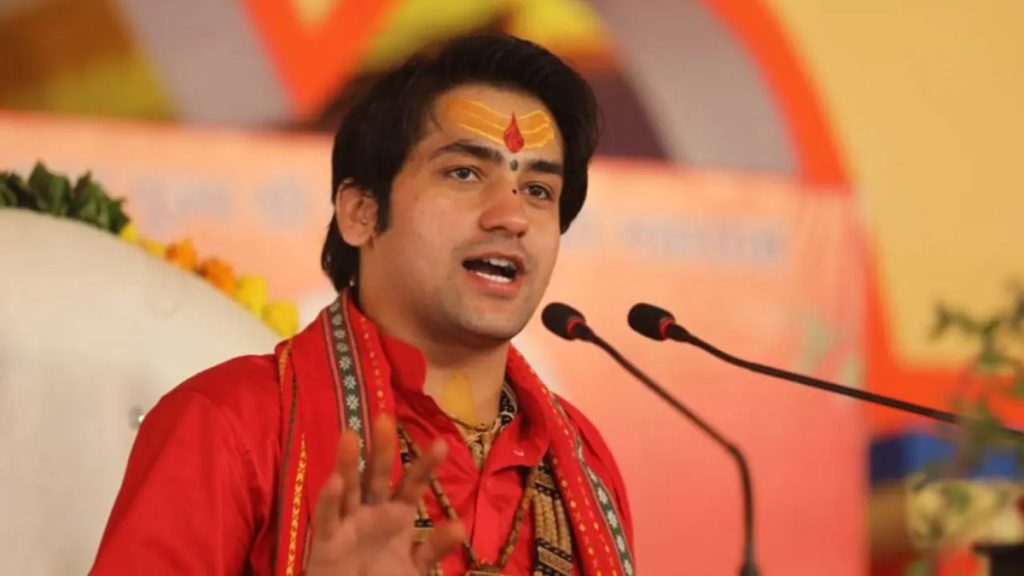
It is important to note that part of Dhirendra Krishna Shastri statement was delivered humorously. When he said he is not yet married but will also contribute after marriage, the audience responded with laughter.
This raises an important question: where does humor end and serious messaging begin? Public figures often use light-hearted remarks to connect with audiences, but in today’s digital age, even jokes can carry significant weight once shared widely online.
Population and Development: A Complex Equation
India faces both opportunities and challenges regarding population.
Advantages of a Young Population
- Large workforce
- Expanding consumer market
- Innovation potential
Challenges
- Employment generation
- Resource allocation
- Urban infrastructure strain
- Environmental sustainability
Experts emphasize that the key issue is not simply population size but human capital development—ensuring education, skills training, and healthcare access.
Historical Context of Population Debates in India
Discussions around population growth are not new in India. In earlier decades, the government implemented family planning campaigns aimed at controlling rapid population expansion.
Over time, as fertility rates declined, the narrative shifted toward balancing economic growth with demographic changes. Today, many states report fertility rates below replacement level.
This evolving demographic landscape forms the backdrop against which Dhirendra Krishna Shastri remarks are being analyzed.
The Role of Faith in Modern India
India’s identity is deeply intertwined with religion and spirituality. Religious leaders often address social and cultural issues during discourses.
When Dhirendra Krishna Dhirendra Krishna Shastri speaks about family size, he frames it as a matter of cultural preservation. However, in a pluralistic society, such statements can prompt debate about inclusivity and secular governance.
Scholars suggest that while religious guidance influences personal choices, public policy decisions must remain rooted in constitutional principles and scientific data.
Media Amplification and Social Media Debate
The viral spread of video clips amplified the impact of Dhirendra Krishna Shastri remarks. In the age of digital communication:
- Short excerpts often travel faster than full speeches
- Context may sometimes be lost
- Online debates quickly polarize
Some users shared the clip as a motivational message, while others criticized it as divisive rhetoric.
The rapid amplification demonstrates the power—and responsibility—associated with public statements by influential figures.
Balancing Cultural Identity and Policy
A key tension in the debate lies between cultural advocacy and public policy.
Cultural identity discussions are legitimate parts of public discourse. However, experts caution that demographic strategies must align with broader development goals, including:
- Gender equality
- Women’s health
- Economic sustainability
- Educational advancement
Encouraging larger families without considering these factors may create long-term socio-economic pressures.
Women’s Perspective and Empowerment
Population discussions inevitably intersect with women’s rights and autonomy.
Modern India has witnessed significant strides in:
- Girls’ education
- Women’s employment
- Access to healthcare
- Family planning awareness
Decisions regarding family size increasingly reflect women’s aspirations and economic participation. Many analysts emphasize that demographic trends should prioritize informed choice rather than societal pressure.
Economic Realities of Large Families
Raising multiple children requires substantial financial resources. Urban households in particular face rising costs in:
- Education
- Healthcare
- Housing
- Nutrition
Economists argue that sustainable family planning must consider affordability and quality of life.
The Broader Narrative of a Hindu Nation
Dhirendra Krishna Shastri has previously expressed support for the concept of a Hindu nation. His recent remarks are viewed by some as part of that broader ideological narrative.
Supporters interpret his message as cultural pride. Critics caution that demographic framing can heighten communal sensitivities.
India’s Constitution defines the nation as secular, guaranteeing equal rights to all citizens regardless of religion.
Government Position on Population Policy
The Indian government has emphasized voluntary family planning and reproductive health awareness rather than coercive measures.
National population policies aim to ensure:
- Maternal health
- Child survival
- Informed reproductive choice
- Sustainable development
Policy experts underline that demographic balance is best achieved through education and economic progress.
Long-Term Implications
While a single speech may not drastically alter demographic trends, influential voices can shape public conversation.
The larger impact of Dhirendra Krishna Shastri statement lies in:
- Renewed demographic debate
- Increased scrutiny of religious commentary
- Political discourse around identity
Whether the remark fades as a momentary headline or contributes to sustained dialogue remains to be seen.
Conclusion
Pandit Dhirendra Krishna Shastri’s comment encouraging Hindus to have at least four children—delivered partly in humor—has ignited a multifaceted debate. At its core, the discussion touches upon religion, identity, demographics, economics, and governance.
While supporters see his remarks as cultural advocacy, critics emphasize the need for evidence-based population planning aligned with constitutional principles and socio-economic realities.
India’s demographic future will likely be shaped not by isolated statements but by long-term trends in education, urbanization, economic growth, and women’s empowerment.
As the conversation continues, one thing is clear: population and identity remain deeply interconnected topics in India’s evolving social landscape.
Read More latest news

