

“Don’t speak nonsense…”: Nitish Kumar Fiery Exchange with RJD MLAs Shakes Bihar Assembly
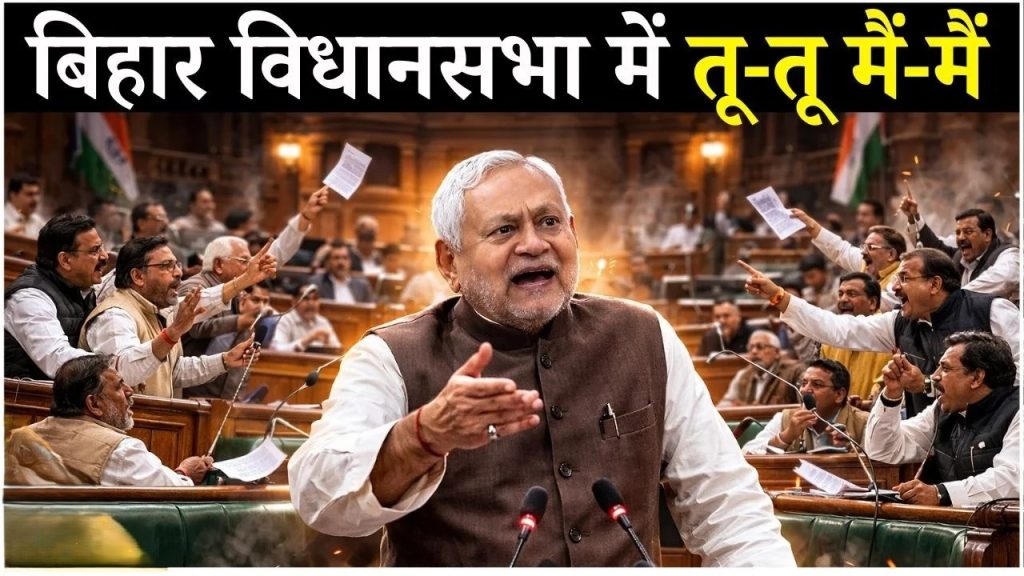
The political temperature in the Bihar Legislative Assembly soared during a heated session when Chief Minister Nitish Kumar clashed sharply with legislators from the Rashtriya Janata Dal (RJD). What began as a routine debate quickly escalated into a fiery confrontation, with the Chief Minister’s frustration clearly visible on the floor of the House.
At the center of the storm was a pointed rebuke delivered by the Chief Minister: “Don not speak nonsense.” The remark echoed through the Assembly chamber, setting the tone for one of the most dramatic exchanges of the current legislative session.
The Moment That Sparked the Clash
During a debate over governance and policy implementation, RJD MLAs raised sharp questions regarding administrative decisions and development claims. Interruptions grew frequent, and voices grew louder. As opposition members continued to challenge the government’s stance, Chief Minister Nitish Kumar rose to respond.
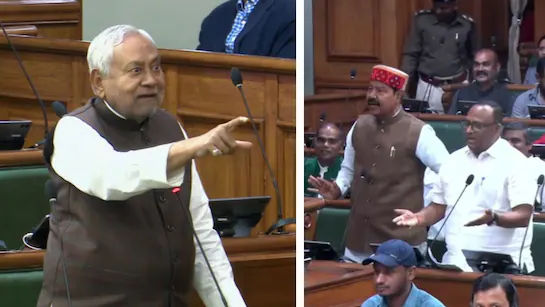
In a visibly agitated tone, he fired back, saying, “Don not speak nonsense.” The phrase immediately triggered uproar in the Assembly. Opposition benches protested, while ruling party members defended the Chief Minister’s response.
Observers noted that Nitish Kumar, usually measured in tone, appeared unusually stern. The repeated interruptions seemed to test his patience, culminating in his sharp retort — “Don not speak nonsense.”
Nitish Kumar Angry Side on Display
For years, Nitish Kumar has cultivated an image of calm governance and administrative focus. However, the Assembly session revealed a different side. As the debate intensified, he responded to opposition allegations with visible irritation.
At one point, as RJD MLAs continued to interject, he turned toward them and reiterated, “Don not speak nonsense.” The Speaker had to intervene to restore order, but the political drama was already unfolding.
Political analysts suggest that the Chief Minister’s strong words were a reaction to what he perceived as repetitive and unfounded criticism. His supporters argue that the phrase “Don not speak nonsense” was a call for maintaining decorum in the House.
RJD’s Counterattack
Leaders from the Rashtriya Janata Dal were quick to react. They accused the Chief Minister of losing his composure and failing to answer substantive questions. Several RJD MLAs said the remark “Don not speak nonsense” reflected frustration within the ruling establishment.
Opposition members walked out briefly in protest, claiming that their right to question the government was being undermined. The House witnessed slogans, counter-slogans, and heated exchanges.
Yet the Chief Minister stood firm, emphasizing that the government had provided detailed answers and that repeated disruptions were unwarranted. Again, amid interruptions, he stated, “Don not speak nonsense.”
Political Context Behind the Outburst
The clash did not occur in isolation. Bihar’s political landscape has been marked by shifting alliances and intense rivalry between Nitish Kumar and the RJD leadership. Debates over development projects, employment figures, law and order, and welfare schemes have often turned contentious.
During the debate, RJD MLAs questioned certain budget allocations and alleged gaps in implementation. Nitish Kumar responded by defending his government’s track record. As cross-talk continued, he once again asserted, “Don not speak nonsense.”
Political commentators believe that mounting political pressure may have contributed to the sharp tone. The phrase “Don not speak nonsense” has since become a talking point across media channels and social platforms.
Inside the Assembly: A Charged Atmosphere
The atmosphere inside the Bihar Legislative Assembly was tense from the beginning of the session. With key issues on the agenda, both sides came prepared for confrontation.
As the exchange intensified, the Chief Minister’s voice rose above the din. His words — “Don not speak nonsense” — reverberated across the chamber. The Speaker repeatedly urged members to maintain order.
Eyewitness accounts suggest that ruling party legislators thumped desks in support, while opposition members shouted in protest. The Assembly session had transformed into a spectacle of political theatre.
Nitish Kumar’s Defense
Later, speaking to reporters outside the House, Nitish Kumar clarified his stance. He said he had no intention of disrespecting anyone but insisted that debates should be based on facts. He reiterated that baseless allegations derail meaningful discussion.
According to sources, he told party colleagues that his remark “Don not speak nonsense” was directed at maintaining seriousness in debate rather than attacking individuals personally.
Supporters argue that in the heat of parliamentary debate, strong language is sometimes used to emphasize a point. Critics, however, see it as a sign of rising tensions.
The Broader Political Implications
The confrontation has wider implications for Bihar politics. With elections always on the horizon, Assembly debates are closely watched for signals of political mood.
The phrase “Don not speak nonsense” has already become symbolic of the session’s intensity. Opposition leaders have vowed to continue pressing their questions, while the ruling coalition insists it remains committed to transparency.
Some analysts suggest that such moments energize political bases on both sides. The sharp exchange could shape narratives in the coming months.
Media and Public Reaction
Television channels replayed clips of the confrontation throughout the day. Social media platforms were flooded with discussions, memes, and political commentary.
Many viewers were struck by Nitish Kumar’s stern tone when he declared, “Don not speak nonsense.” Some praised his assertiveness; others questioned the appropriateness of the language.
Political debates often feature dramatic moments, but this particular exchange captured widespread attention due to the Chief Minister’s typically restrained public persona.
A Pattern or an Exception?
Is this outburst indicative of a larger pattern, or was it an isolated incident? Observers point out that legislative sessions frequently witness heated exchanges. However, the clarity and repetition of “Don not speak nonsense” made this moment stand out.
Senior political observers say that the increasing polarization of state politics may lead to more such confrontations. Both ruling and opposition members are keen to assert their narratives strongly.
Looking Ahead
As the Bihar Assembly session continues, attention will remain focused on how both sides navigate future debates. Will the sharp tone persist, or will leaders seek a more conciliatory approach?
For now, the phrase “Don not speak nonsense” remains etched in the memory of the session — a snapshot of political tempers flaring in the heat of debate.
Nitish Kumar’s clash with RJD MLAs serves as a reminder of the charged atmosphere that defines contemporary politics in Bihar. Legislative assemblies are arenas of accountability, but they are also stages where emotions can run high.
Conclusion
The dramatic exchange in the Bihar Legislative Assembly underscores the intensity of political discourse in the state. Chief Minister Nitish Kumar’s remark — “Don not speak nonsense” — encapsulated his frustration during a turbulent debate.
Whether seen as a justified defense against persistent interruptions or as an unnecessary escalation, the confrontation has become a defining moment of the session. As Bihar’s political landscape continues to evolve, such episodes highlight the fine balance between assertive leadership and parliamentary decorum.
The echoes of “Don not speak nonsense” may fade with time, but the issues debated in the Assembly — governance, accountability, and public welfare — will continue to shape Bihar’s political narrative in the days ahead.
Read More latest news

