
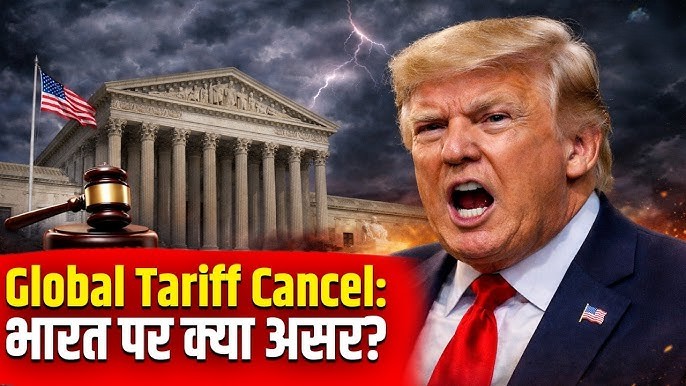
Will Trump’s Global Tariffs Impact India? A Deep Analysis of Trade Economy and Strategic Implications
global tariffs impact India trade landscape has once again been shaken after former U.S. President Donald Trump announced sweeping tariff measures following a setback in the Supreme Court of the United States. After facing legal hurdles on reciprocal tariffs, Trump declared a 10% universal tariff on imports—only to raise it to 15% within 24 hours. This bold move has triggered intense discussions worldwide, especially in New Delhi, as policymakers and economists ask: will global tariffs impact India significantly?
The debate over whether global tariffs impact India is not merely academic. India and the United States share a growing trade relationship valued in hundreds of billions of dollars annually. Any blanket tariff imposed by Washington could influence exports, currency movements, supply chains, and investor confidence.
Understanding the Policy Shift
Trump’s sudden escalation from 10% to 15% universal import duties marks a dramatic shift toward protectionism. The administration argues the measure will protect American manufacturing, reduce trade deficits, and strengthen domestic production.
However, critics warn that such policies may trigger retaliation, disrupt global supply chains, and increase consumer prices in the U.S. Naturally, this raises the key question: how will global tariffs impact India in this rapidly evolving scenario?
India exports a diverse basket of goods to the U.S., including pharmaceuticals, textiles, engineering goods, electronics, and IT services. Even a moderate tariff could reshape export competitiveness.
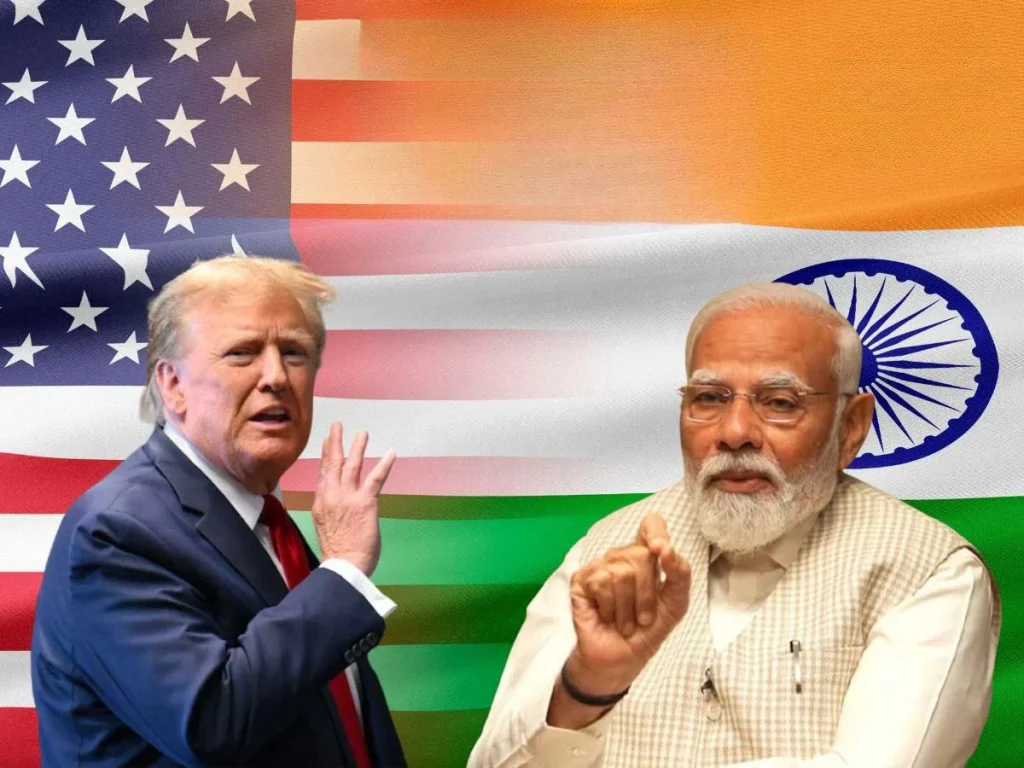
India US Trade Ties at a Glance
India and the United States have strengthened economic ties over the last decade. The U.S. remains one of India’s largest export destinations.
If global tariffs impact India, several sectors could face immediate consequences:
- Pharmaceuticals
- Information technology services
- Auto components
- Textile and apparel exports
- Engineering goods
Trade analysts suggest that even a 5%–10% additional duty can erode price advantages in competitive markets.
Short Term Market Reactions
Financial markets tend to react swiftly to policy shocks. Following Trump’s announcement, global equity indices showed volatility. The Indian rupee also faced mild pressure amid concerns about capital flows.
If global tariffs impact India, currency fluctuations may become more pronounced. A weaker rupee could partially offset export disadvantages but may increase import costs, particularly for crude oil.
Stock markets in export-driven sectors—especially IT and pharma—could witness sharp movements depending on clarity around exemptions.
Impact on Indian Exporters
One of the most direct ways global tariffs impact India is through export pricing. Indian manufacturers operate in highly competitive international markets. A 15% tariff in the U.S. could reduce demand or shift sourcing to alternative countries.
For instance:
Pharmaceuticals
Indian generic drugs dominate U.S. markets. Tariffs could increase healthcare costs for American consumers, potentially prompting negotiations.
Textiles
Indian textile exports face competition from Bangladesh and Vietnam. If universal tariffs apply equally, the competitive gap may narrow.
Engineering Goods
Auto components and heavy machinery exports could face higher landed costs.
Thus, whether global tariffs impact India significantly depends on how evenly the tariffs are applied and whether sector-specific exemptions emerge.
IT and Services Sector: A Different Story
Unlike physical goods, IT services are not typically subject to conventional tariffs. However, indirect measures—such as digital taxes or regulatory tightening—could influence the sector.
If global tariffs impact India, service exports might remain relatively insulated compared to manufacturing exports. Still, investor sentiment and visa policies could play roles in shaping outcomes.
Diplomatic and Strategic Dimensions
India and the U.S. share a strategic partnership spanning defense, technology, and Indo-Pacific cooperation. Trade tensions could test diplomatic resilience.
If global tariffs impact India, New Delhi may consider:
- WTO consultations
- Bilateral trade negotiations
- Retaliatory tariffs (unlikely but possible)
- Sectoral exemptions through diplomacy
Historically, India has responded cautiously to global trade disruptions.
Supply Chain Realignments
The global supply chain has already experienced upheaval due to pandemics and geopolitical tensions. A new wave of protectionism could accelerate diversification.
If global tariffs impact India, multinational companies may reassess sourcing strategies. India could paradoxically benefit if U.S. companies shift away from higher-tariff countries.
In this context, tariffs may create both risks and opportunities.
Domestic Policy Responses
India’s policymakers are likely to respond proactively. If global tariffs impact India, measures may include:
- Export subsidies
- Production-linked incentive (PLI) expansions
- Currency management
- Trade agreement acceleration
India has been actively pursuing free trade agreements with the UK, EU, and other partners. Diversification may mitigate risks.
Inflationary Pressures and Consumers
If tariffs raise global prices, inflationary pressures may spread. For India, higher import costs—especially in energy—could affect domestic prices.
Thus, when economists ask whether global tariffs impact India, they consider both export losses and import costs.

Global Economic Ripple Effects
Tariffs rarely exist in isolation. Retaliatory measures can escalate trade wars. If major economies respond similarly, global growth could slow.
In such a scenario, global tariffs impact India not just directly through exports but indirectly through reduced global demand.
India’s GDP growth projections might face marginal downward revisions if trade volumes shrink.
Investor Sentiment and FDI
Foreign investors closely monitor trade policy stability. If protectionist measures intensify, risk perception may increase.
Should global tariffs impact India, foreign direct investment (FDI) flows might slow temporarily. However, India’s large domestic market may continue to attract long-term capital.
Sector-by-Sector Outlook
Here’s how global tariffs impact India sectorally:
- Pharma: Moderate risk, potential negotiations
- Textiles: Competitive reshuffling
- Electronics: Supply chain shifts
- Automobiles: Export challenges
- IT Services: Minimal direct impact
The overall impact depends on duration and diplomatic negotiations.
Political Implications in India
Trade tensions often become political talking points. Opposition parties may criticize overdependence on the U.S., while the government emphasizes diversification.
If global tariffs impact India, political discourse may focus on self-reliance and “Make in India” initiatives.
Historical Lessons from Trade Wars
Past trade wars between major economies have shown mixed results. Some industries benefit from protectionism, while others suffer due to retaliation.
When analyzing whether global tariffs impact India, historical patterns suggest adaptation is possible but requires agile policy responses.
Currency Dynamics
Exchange rates play a crucial role. If the rupee depreciates, Indian exports may regain competitiveness despite tariffs.
Thus, currency flexibility could cushion how global tariffs impact India.
The Role of Multilateral Institutions
The World Trade Organization (WTO) could become a forum for dispute resolution. India may seek clarity on compliance with global trade rules.
If global tariffs impact India, multilateral negotiations may intensify.
Long-Term Strategic Realignment
In the long run, trade disruptions often accelerate structural reforms. India could use the moment to boost domestic manufacturing and diversify markets.
Therefore, while global tariffs impact India in the short term, they may catalyze long-term resilience.
Conclusion: Threat or Opportunity?
The question remains complex. Yes, global tariffs impact India through export competitiveness, market volatility, and diplomatic recalibration. Yet the magnitude depends on implementation details, exemptions, and global responses.
If negotiations ease tensions, the impact may be temporary. If trade wars escalate, broader economic consequences could follow.
Ultimately, how global tariffs impact India will hinge on strategic diplomacy, domestic reforms, and global market dynamics. India’s diversified economy and growing domestic demand provide resilience, but vigilance remains essential.
As policymakers analyze evolving developments, one thing is clear: the debate over whether global tariffs impact India will remain central to economic discussions in the coming months.
Read More latest news

