
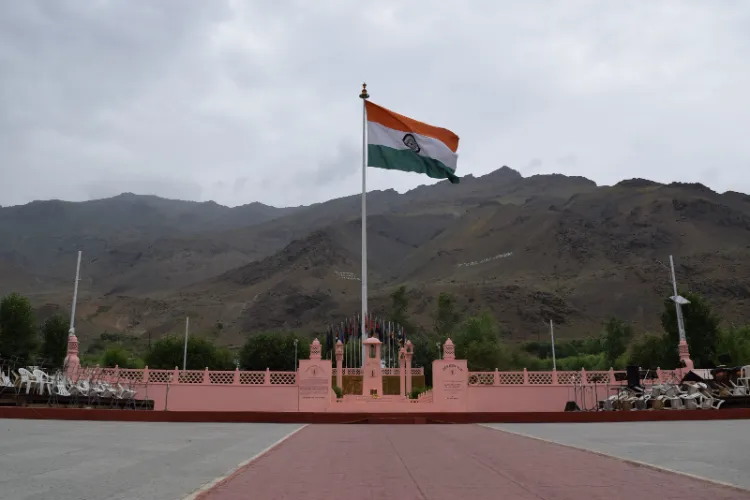
72 Feet High Tricolor Hoisted Proudly in Lamochan, Dras – A Glorious Salute to the Martyrs of Kargil
Introduction: A Tricolor That Touches the Sky and Hearts Alike
On the solemn soil of Dras, Ladakh—the second coldest inhabited place in the world and the epicenter of India’s fierce victory in the Kargil War of 1999—a 72-feet high Indian Tricolor was proudly hoisted in Lamochan village on Kargil Vijay Diwas 2025. This grand gesture is not just a symbol of national pride but a heartfelt tribute to the bravehearts who made the supreme sacrifice for the motherland.
Dras, often referred to as the “Gateway to Ladakh”, witnessed some of the most intense battles during the Kargil conflict. Today, this iconic Tricolor stands as a beacon of patriotism, fluttering high with the resolve, courage, and undying spirit of Indian soldiers.
In this detailed 3000-word blog, we revisit the essence of Kargil Vijay Diwas, the strategic and emotional significance of hoisting the Tricolor in Lamochan, and the undying legacy of India’s martyrs.
1. The Soul of Dras: Where Heroes Rest and History Echoes
The small town of Dras in Kargil district holds a special place in every Indian’s heart. It was here that some of the bloodiest and most decisive battles of the Kargil War were fought — Tololing, Tiger Hill, Batalik, and Point 4875.
The Lamochan village, located near these iconic battlegrounds, now proudly holds a 72-feet Tricolor — a tribute that rises tall like the mountains around it and firm like the bravery of the soldiers who defended them.
This Tricolor now stands guard over the land that witnessed sacrifice and valor of the highest kind.
2. Why 72 Feet? A Symbol Beyond Numbers
The 72-foot height of the flag is symbolic — representing the 72nd Independence Day post-1947 and the progressive journey of a nation built on the foundation of courage, sacrifice, and unity. The flag’s height is meant to mirror the heights of Tiger Hill and Tololing, which were recaptured during Operation Vijay.
But more than symbolism, this towering Tricolor:
- Inspires patriotism among locals and visitors
- Educates youth about the significance of Kargil War
- Acts as a visual tribute seen from afar — a constant reminder of those who gave their today for our tomorrow
3. The Ceremony: A Day to Remember
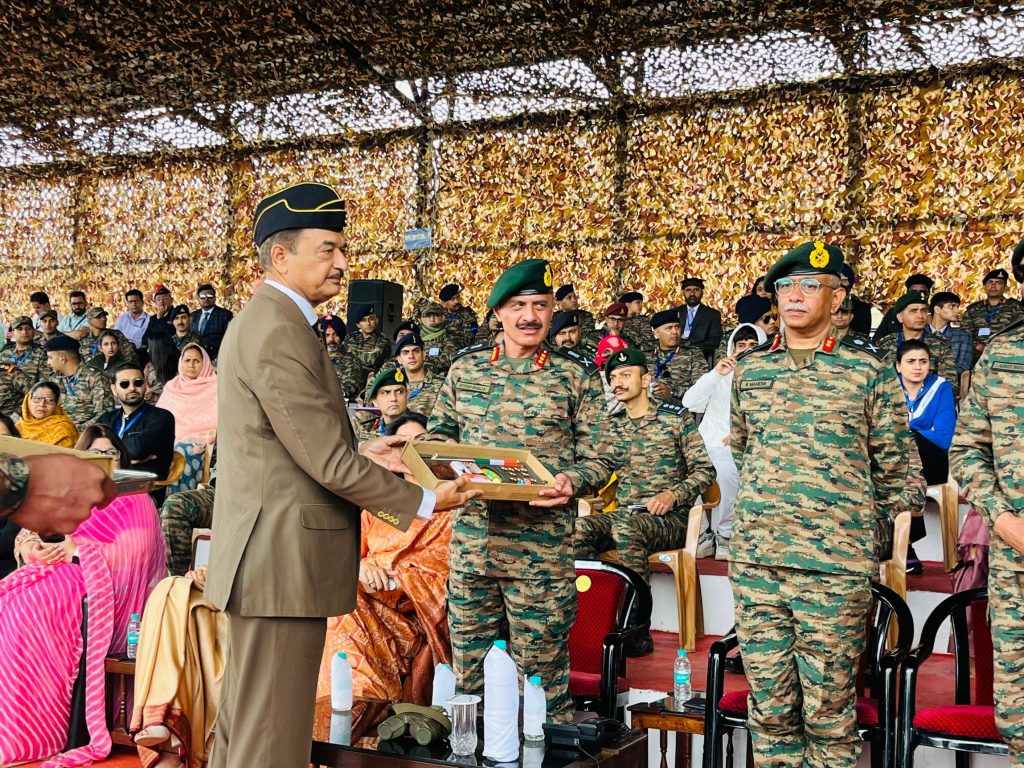
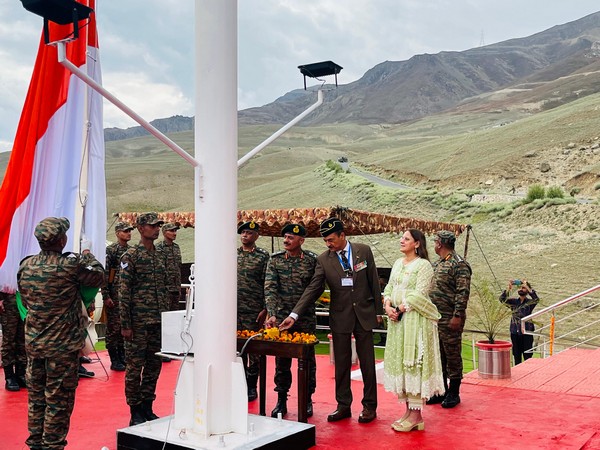
The hoisting ceremony, held on 26th July 2025, began with full military honors. Attended by:
- Senior officers from the Indian Army
- Family members of martyred soldiers
- Local civilians and school children
- Members of various veteran organizations
- Government officials and local leaders
The National Anthem echoed through the valley as the flag was slowly raised, and a flypast by the Indian Air Force added emotional intensity to the moment.
Speeches by Army officers and veterans not only paid homage to fallen heroes but also reminded the audience of the price of freedom and the duty of every citizen.
4. Voices from the Ceremony: Emotions That Stir the Soul
Colonel Rajeev Sharma (Retd), a Kargil War veteran, said:
“This flag is not just fabric. It’s the soul of every soldier who stayed awake so the nation could sleep in peace. Standing under it feels like being in the presence of those who are no longer with us.”
A student from the local school, holding a miniature flag, said:
“I want to be a soldier one day. My grandfather fought in Kargil. This Tricolor makes me proud of him.”
5. Remembering the Heroes of Kargil
Operation Vijay, which began in May 1999, lasted over 60 days and culminated in India reclaiming its territory from infiltrators.
Bravehearts like:
- Captain Vikram Batra (PVC) – “Yeh Dil Maange More”
- Grenadier Yogendra Singh Yadav (PVC)
- Rifleman Sanjay Kumar (PVC)
- Major Padmapani Acharya
- Lieutenant Manoj Kumar Pandey (PVC)
… became immortal in Indian military history.
The 72-ft Tricolor at Lamochan now waves in honor of these brave sons of Bharat Mata.
6. The Strategic Importance of Lamochan and Dras
Dras’s proximity to the Line of Control (LoC) makes it a sensitive location. The area is now heavily fortified, but in 1999, it became vulnerable due to high-altitude enemy occupation.
Lamochan’s selection for the flag post is not accidental — it’s both strategic and symbolic:
- Visible from multiple army positions
- Located near memorial sites and war museums
- Reminds soldiers stationed at the border of the country they protect
- Acts as a moral anchor for local youth
7. Infrastructure and Tourism Boost in the Region
The flag hoisting is not just ceremonial; it marks a major step toward boosting patriotic tourism in the region. The local administration, in coordination with the Indian Army and Tourism Ministry, is planning:
- Development of a flag plaza and viewpoint
- Setting up a Kargil War Museum Annex in Lamochan
- Organizing guided heritage walks for students and tourists
- Launch of a mobile app narrating soldier stories based on location tracking
These efforts aim to connect the people of India emotionally with their armed forces.
8. Role of the Indian Army and Local Population
The Indian Army, especially the 14 Corps stationed in Leh, took a lead role in building and managing the project. The local population, despite tough terrain and harsh weather, extended their full cooperation.
Villagers contributed:
- Labor and land for the platform
- Arranged homestays for visitors
- Shared war stories passed down generations
This synergy between soldiers and citizens exemplifies the essence of national integration and unity.
9. Reactions Across India
Social media erupted in applause:
- Celebrities, cricketers, and politicians praised the initiative
- Photos and videos of the flag waving went viral
- Citizens demanded similar flags be erected in other battle-honored locations
Twitter, Instagram, and YouTube were flooded with hashtags:
#DrasFlag #KargilVijayDiwas #SaluteToMartyrs #IndianArmy
10. What This Tricolor Means to the Youth
For India’s youth, born after the Kargil War, this Tricolor is a physical history lesson.
It teaches:
- Freedom is not free — it’s earned and defended
- Courage has a cost, often paid in blood
- Unity is strength — India stands because Indians stand together
Schools and universities have now begun planning student exchange programs to Lamochan, ensuring future generations stay connected to their heroes.
11. Challenges of High-Altitude Flag Installation
Hoisting a flag at such height in -30°C to -40°C temperatures with strong wind speeds isn’t easy.
- Special foundation and flagpole materials were used
- The Tricolor was stitched using high-wind resistance fabric
- Solar-powered LED lights illuminate it at night
- Local engineers and army technicians worked day and night to ensure success
This flag is built to last, like the memories of our soldiers.
12. Beyond the Flag – A Call to Action
The hoisting is not the end — it is a beginning of a new patriotic journey. Citizens are urged to:
- Visit Kargil Memorial at least once in a lifetime
- Encourage children to learn about military history
- Support welfare programs for martyr families
- Join or volunteer for civil defense and NCC/NSS
The Tricolor asks not just for admiration, but for action.
Conclusion: A Sky Full of Stars, A Land Full of Heroes
As the sun sets in Dras and the wind sings across the snow-capped peaks, the 72-feet Tricolor in Lamochan flutters high and proud. It tells a thousand stories — of courage, pain, love, sacrifice, and ultimate victory.
This flag doesn’t just mark a spot on the map — it marks the soul of India.
To our soldiers – past, present, and future – we bow with pride. Jai Hind.
read more latest news

