
🔄 Leadership at Crossroads: Upendra Kushwaha’s Advice to Nitish Kumar on Passing JD(U) Baton to Nishant
1. The Statement That Stirred Bihar’s Political Waters
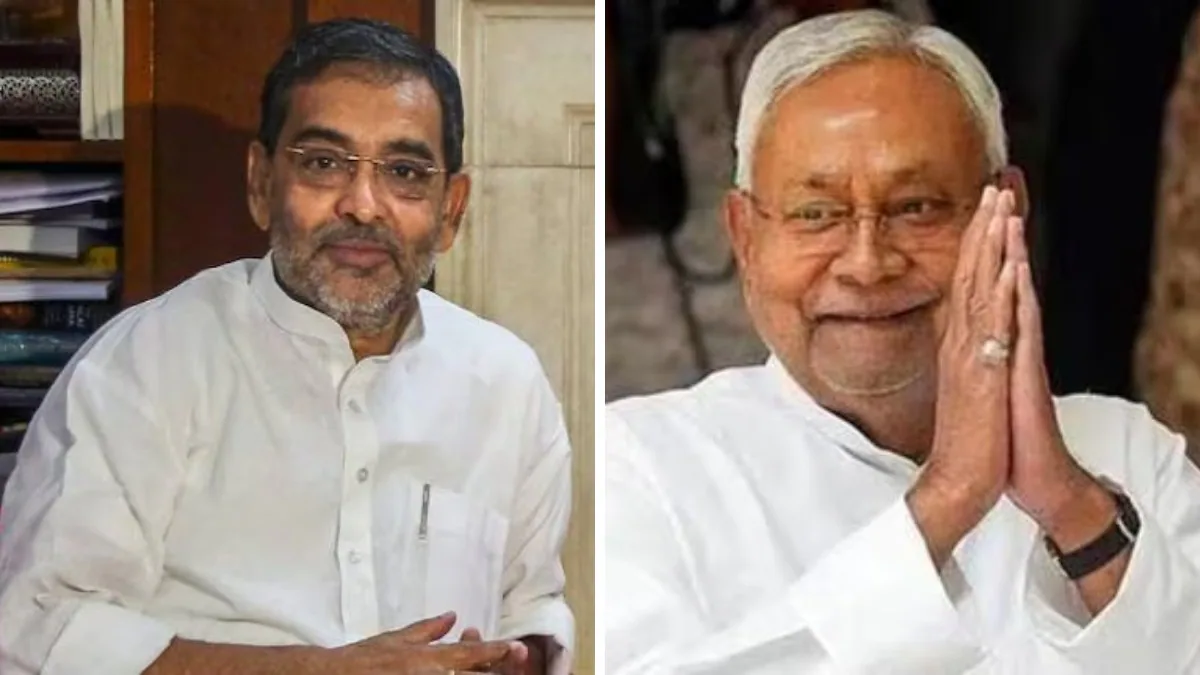
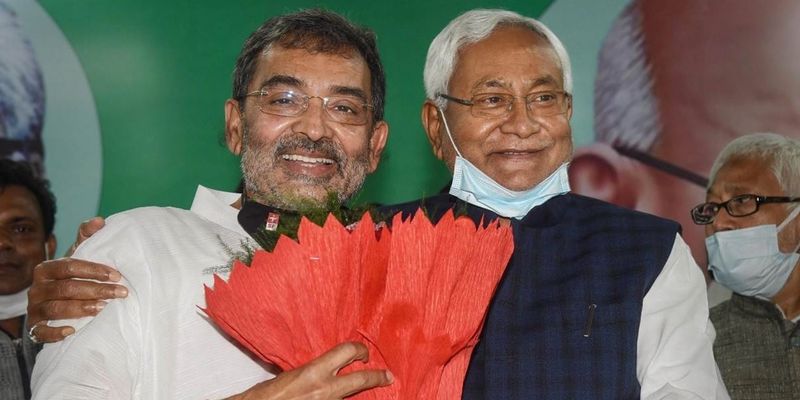
On July 20, 2025, in a stirring social media message, Rajya Sabha MP and Rashtriya Lok Morcha (RLM) president Upendra Kushwaha publicly urged Bihar CM Nitish Kumar to relinquish the leadership of the Janata Dal (United) party in favor of his son, Nishant Kumar, while continuing to lead the government—a dual role Kushwaha described as no longer feasible
Marked significantly by Kushwaha’s message timed to Nishant’s 44th birthday—“Many happy wishes to JD(U)’s new hope Nishant…”—the appeal revealed deep undercurrents within the party and may influence both intra-party morale and electoral strategy.
2. What Kushwaha Said – and Why It Matters
🎯 Core Message
Kushwaha’s key points:
- Nitish Kumar’s dual role—running both the government and JD(U)—is now untenable.
- Nishant represents fresh leadership, embraced by thousands of party workers.
- Any delay risks irreparable damage to JD(U).
Why It’s Significant
- First NDA ally to make such a public plea. Unlike allies who keep concerns internal, Kushwaha voiced them openly—signalling internal urgency.
- A direct pressure tactic timed with electoral gearing up in Bihar, where JD(U) is seeking to retain or regain power
3. Political Context & Timing
🗳️ Upcoming Bihar Elections
The state is entering a critical electoral phase. High-stakes governance, anti-incumbency factors, and a revitalised opposition underscore the need for strategic clarity. Leadership transitions—or the lack thereof—matter.
🏛️ Nitish’s Current Position
At 75, Nitish has steered Bihar for over two decades—clinching impressive gains in development, law-and-order, and social welfare. However, his leadership has faced criticisms over dynastic politics, internal party stagnation, and governance fatigue.
👨👦 Who Is Nishant?
Nishant Kumar, though absent from grassroots politics, holds symbolic weight. Viewed as a fresh image, he could act as a bridge between Nitish’s legacy and organizational rejuvenation.
4. Intra-Party Reflections
✅ Workers’ Sentiment
Kushwaha emphasized that the demand wasn’t just his own—a groundswell in the party favors generational transition. Echoed slogans and birthday celebrations in JD(U) offices signal internal readiness.
🧭 Official Reactions
While cautious, JD(U) spokesperson Neeraj Kumar affirmed: “Only Nitish and Nishant can decide… party workers stand firmly behind them”. Similarly, national spokesperson Rajiv Ranjan stated that Nitish remains indispensable for both party and government.
5. Upendra Kushwaha’s Political Position
📜 A Storied History
- Originally with JD(U), Kushwaha quit and merged his Rashtriya Lok Samta Party (RLSP) twice before fully integrating into JD(U) in 2021.
- Departed again in 2023 to revive the Rashtriya Lok Morcha, positioning himself as a force for change

His appeal now reflects both personal relationship with Nitish and his broader brand as a party reformer.
🔍 Strategic Motive
- By aligning with grassroots calls for new leadership, Kushwaha reasserts prominence in Bihar politics.
- His recommendations appeal to both traditionalists (valuing Nitish’s governance) and reformists (wanting a generational shift).
6. Potential Scenarios Ahead
1. Status Quo Maintained
Nitish holds onto both PM and party leadership, keeping Nishant in symbolic roles. This avoids internal conflict but may fuel dissatisfaction among younger party workers.
2. Incremental Transition
Nitish retains CM post, gradually stepping down as JD(U) president in favor of Nishant—bridging experience with renewal and energizing party cadre.
3. Full Transition
Nishant takes both party leadership and chief ministerial role—a rapid, bold change which would redefine party identity but risk alienating traditionalists.
4. Internal Turbulence
Kushwaha’s bold stance could fracture internal unity, empower rival factions, and attract attention from opposition parties.
7. Implications for Bihar & Beyond
✅ For JD(U)
- Rejuvenation or rupture—leadership shift may revitalize party appeal but risks backlash from entrenched vested interests.
- Voter perception—a fresh face may galvanize youth and undecided voters ahead of polls.
🏛️ For NDA
- A generational transition signals NDA openness to leadership refreshment—helpful in coalition negotiations.
- Failure, however, might fracture support or embolden competition.
⚖️ For Opposition
- A smooth transition strengthens JD(U) positioning.
- Delay or internal conflict offers opposition avenues to challenge unity and project JD(U) as out of touch.
8. Public & Media Reaction
💬 Analyst Take
Political analysts view it as a test of Nitish’s leadership ethos: will he cling to dual roles, or embrace delegation?
🗣️ Public Commentary
- Some see Kushwaha’s message as overdue, encouraging generational leadership.
- Critics argue it smacks of dynastic politics and nepotism, a critique often leveled at other parties too.
- Reddit and X discussions highlight mixed feelings: “Nishant should be tested before leading,” opposed to “Nithish should focus on governance” camps.
9. Lessons from Other States
- Tamil Nadu saw peaceful succession in AIADMK after Jayalalithaa.
- Gujarat and Rajasthan avoided leadership handovers beyond similar party divisions.
- JD(U)’s move could become a template or cautionary tale for other dynastic transitions.
10. Leadership Models: What Works
🟢 Shared Leadership
Separating state and party control—seen in successful global democracies—combines stability with rejuvenation.
🔵 Dynastic Consolidation
Past models show this works with grassroots grooming and legitimacy, not just inheritance.
🔴 Leadership Vacuum
Delayed transition risks internal revolt—opportunities arise for breakaway factions.
11. Kushwaha vs. Tejashwi Rivalry
Kushwaha’s current alignment may also be a strategy to counter RJD-Tejashwi’s rise. By projecting Nishant as young leadership, he balances the Tejashwi effect within JD(U)’s OBC vote bloc.
12. Final Analysis: What’s Next?
📅 Short-Term Outlook
- JD(U) high command likely to mull a phased transition before elections. Nishant may gain party roles.
- BJP colleagues signal they support generational leadership—emerging internal consensus may shape the next steps.
🧭 Long-Term Forecast
- If executed judiciously, JD(U) can stabilize its leadership and electoral brand.
- Mishandled, the move could fracture the party—leading to potential loss of seats and influence.
✅ Summary Takeaways
- Kushwaha’s advice is both pressingly strategic and symbolically significant.
- Internal sentiment favors fresh leadership, raising generational and ideological stakes.
- Party unity is crucial: choosing between governance and organizational stewardship must be handled sensitively.
- Electoral timing amplifies importance—no premature decisions, yet no stalling.
- JD(U)’s move could reshape Bihar politics—with ramifications across state-level politics.
🔜 What to Watch Next
- Will Nishant take on formal roles like working president?
- How will Nitish respond—rebuttal, delegation, or reassertion?
- Will Kushwaha deepen his demands or align with a younger leadership push?
Read more latest news

