
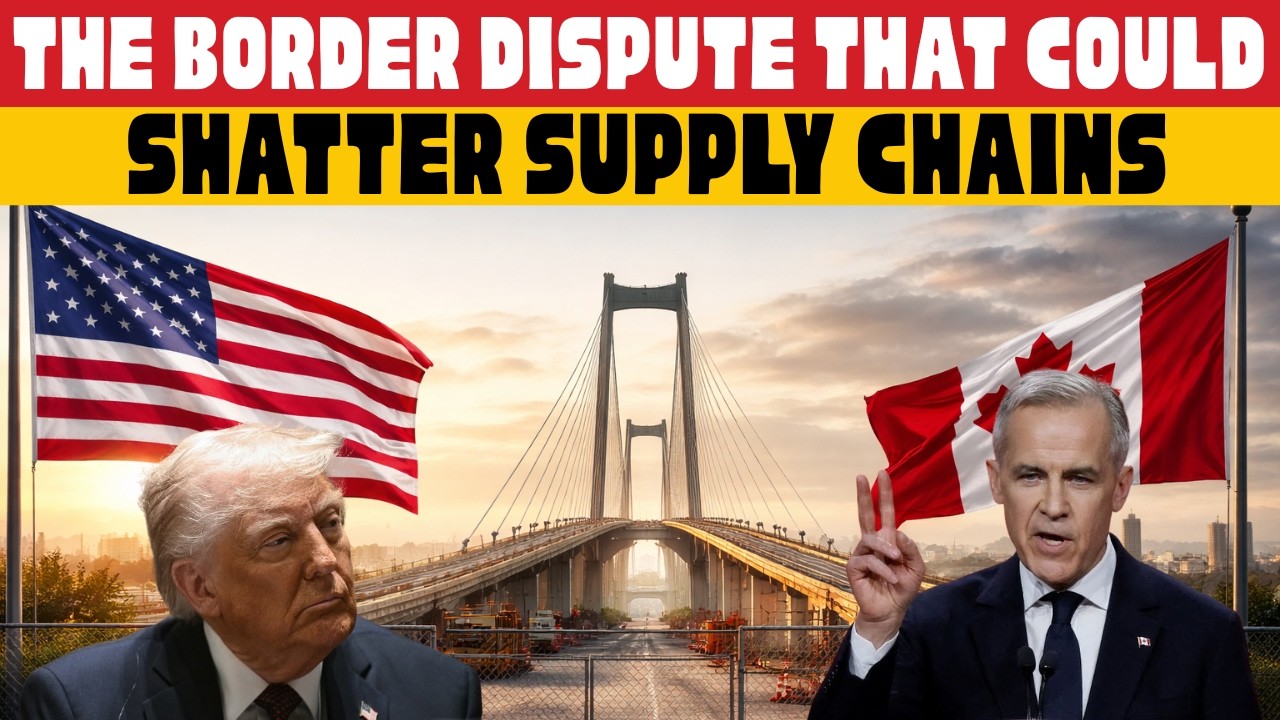
A New Transatlantic Dispute? Trump Claim Over the Detroit Windsor Bridge Sparks Debate
International politics has always had its share of surprises, but few developments raise eyebrows quite like a dispute over infrastructure that physically connects two allied nations. In a dramatic and unexpected twist, former U.S. President Donald Trump has reportedly staked a claim over a newly built bridge connecting Detroit, Michigan (USA) and Windsor, Ontario (Canada). The bridge, fully funded and developed by Canada, was designed as a symbol of cooperation and shared economic growth. However, controversy erupted when Trump asserted that the United States deserves half ownership.
Trump is claiming half bridge
This development has sparked widespread debate across political, legal, and diplomatic circles. How can one country lay claim to infrastructure funded entirely by another sovereign nation? What are the legal grounds? And what does this mean for U.S.–Canada relations moving forward?
The Strategic Importance of the Detroit Windsor Corridor
The Detroit–Windsor border crossing is not just another international link. It is one of the busiest commercial crossings in North America. For decades, trade between the U.S. and Canada has relied heavily on this corridor. Automotive supply chains, agricultural exports, energy products, and countless goods move daily between the two countries.

The new bridge—widely known as the Gordie Howe International Bridge—was funded primarily by Canada, which covered the majority of construction costs. The Canadian government justified the expense by emphasizing long-term trade efficiency, economic resilience, and reduced congestion.
Trump is claiming half bridge
The bridge was celebrated as a symbol of partnership. Canada took on the financial burden, while both nations would benefit from improved trade flow. But now, the claim that the United States deserves half ownership has introduced uncertainty into what was meant to be a shared success story.
The Financial Structure of the Project
The financial framework behind the bridge was clear from the beginning. Canada financed the construction and planned to recover costs through toll revenues over time. The U.S. government did not contribute direct funding for construction.
Trump is claiming half bridge
If this claim were to be taken seriously, it would raise significant questions. On what legal basis can a country demand ownership of infrastructure it did not finance? International infrastructure agreements typically rely on formal treaties, bilateral agreements, and negotiated cost-sharing arrangements.
Legal experts argue that ownership structures are defined before construction begins. Changing that arrangement post-completion would require renegotiation and consent from both sovereign governments.
Political Motivations Behind the Claim
Political analysts suggest that the claim may be rooted in broader nationalist rhetoric. Throughout his political career, Trump emphasized “America First” policies, trade renegotiations, and economic leverage.
Trump is claiming half bridge
Some observers believe the statement is symbolic—intended to reinforce the narrative that America should assert stronger economic control over cross-border trade routes. Others fear it may represent a more serious attempt to renegotiate infrastructure control.
Regardless of the intent, the statement has stirred strong reactions in both Canada and the United States.
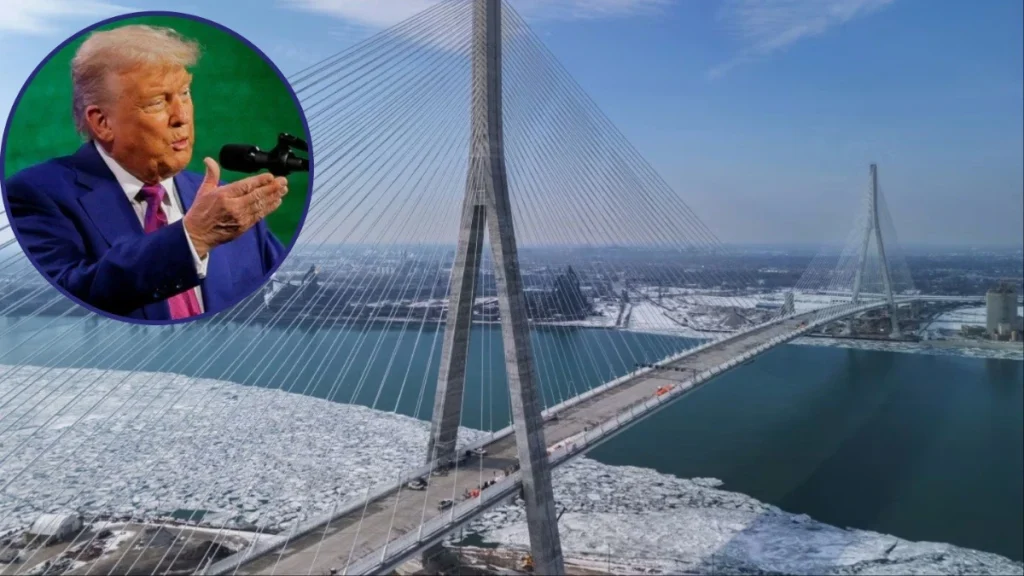
Canadian Reaction
Canadian officials have expressed confusion and concern over the assertion. Many Canadian lawmakers view the bridge as a national investment designed to strengthen economic ties while maintaining clear ownership boundaries.
Trump is claiming half bridge
Public sentiment in Canada has also been vocal. Social media discussions, opinion columns, and political commentary have emphasized that the bridge was financed with Canadian taxpayer money. For many Canadians, the claim feels like an overreach.
Some Canadian analysts warn that entertaining such demands could set a dangerous precedent for international infrastructure agreements.
U.S. Domestic Response
Within the United States, reactions are mixed. Some supporters argue that since the bridge directly benefits American commerce and connects to U.S. soil, there may be grounds for shared control.
Trump is claiming half bridge
Others counter that infrastructure agreements are governed by contracts and treaties—not unilateral declarations. Legal scholars point out that cross-border bridges typically involve joint authorities or clearly defined ownership structures established before construction.
If the U.S. were to formally pursue partial ownership, it would require diplomatic negotiations—not public statements alone.
Legal Implications
International law operates on principles of sovereignty and contractual agreement. Infrastructure crossing borders is typically governed by detailed agreements covering funding, maintenance, toll collection, and jurisdiction.
Trump is claiming half bridge
Without a pre-existing agreement granting the United States partial ownership, the claim would face major legal hurdles. Canada retains sovereign authority over its investments, especially when funding originates solely from its government.
Experts suggest that any attempt to assert ownership would likely involve prolonged diplomatic discussions or even arbitration.
Economic Consequences
The Detroit–Windsor corridor handles billions of dollars in trade annually. Disruptions or political uncertainty could have ripple effects across industries.
Trump is claiming half bridge
Automakers, manufacturers, and logistics companies rely on predictability. Even symbolic disputes can create market uncertainty. Investors may grow cautious if political tensions threaten operational stability.
Economists warn that politicizing infrastructure could discourage future cross-border investments.
Diplomatic Fallout
The United States and Canada share one of the closest bilateral relationships in the world. From defense partnerships to trade agreements like USMCA, cooperation has long been the foundation of the relationship.
Trump is claiming half bridge
A dispute over bridge ownership risks straining diplomatic goodwill. Canadian leaders may interpret the claim as undermining their financial commitment and sovereignty.
Diplomatic experts stress that maintaining mutual respect is crucial for long-term stability.
Historical Context
Cross-border infrastructure projects are not new. Bridges, tunnels, and pipelines have historically required careful coordination.
Trump is claiming half bridge
In most cases, ownership structures are clarified before groundbreaking begins. Retroactive claims are rare and often contentious.
Looking back, similar disputes have typically been resolved through negotiation rather than confrontation.
Public Perception and Media Coverage
Media outlets on both sides of the border have amplified the controversy. Headlines questioning the legitimacy of the claim have fueled debate.
Trump is claiming half bridge
Public discourse reflects broader political polarization. Supporters frame it as strategic negotiation, while critics see it as unnecessary provocation.
The narrative continues to evolve as policymakers weigh in.
Sovereignty vs. Shared Benefit
One central issue is the distinction between benefiting from infrastructure and owning it.
Trump is claiming half bridge
While the United States undeniably benefits from improved trade flow, benefit does not automatically confer ownership. International infrastructure often serves mutual interests without shared financial control.
This distinction lies at the heart of the controversy.
The Role of Trade Agreements
The USMCA agreement governs trade between the U.S., Canada, and Mexico. However, it does not automatically alter ownership of infrastructure projects.
Trump is claiming half bridge
Trade agreements focus on tariffs, market access, and regulatory standards—not retroactive claims on physical assets.
Any ownership renegotiation would require new bilateral discussions.
Strategic Implications
Infrastructure has strategic value beyond economics. Control over major crossings can influence logistics, border security, and economic leverage.
Trump is claiming half bridge
Some analysts speculate that the claim could be part of a broader strategy emphasizing control over key trade arteries.
However, strategic gains must be balanced against diplomatic costs.
Potential Outcomes
Several scenarios could unfold:
- The claim remains rhetorical and fades.
- Formal negotiations begin.
- Canada firmly rejects the idea, and the matter ends diplomatically.
Trump is claiming half bridge
Most observers predict that practical realities and existing agreements will prevail.
Voices from the Business Community
Industry leaders have largely called for stability and cooperation.
Trump is claiming half bridge
For businesses, certainty matters more than political symbolism. Trade corridors function best when shielded from political turbulence.
Executives emphasize maintaining strong bilateral relations.
National Identity and Symbolism
Infrastructure can carry symbolic weight. The bridge represents engineering achievement and cross-border unity.
Trump is claiming half bridge
For Canadians, the investment reflects national initiative. For Americans, it represents economic connectivity.
Ownership debates can quickly become symbolic battles over sovereignty.
Long-Term Implications for Cross-Border Projects
Future projects may include more explicit clauses to prevent similar disputes.
Trump is claiming half bridge
Governments may seek clearer frameworks to avoid ambiguity.
The controversy underscores the importance of detailed agreements.
The Broader Political Landscape
The claim emerges within a broader political context marked by strong rhetoric on trade and national interests.
Trump is claiming half bridge
Observers note that infrastructure can become a talking point in broader political campaigns.
How leaders frame such issues influences public perception.
Conclusion: A Test of Diplomacy
At its core, the dispute highlights tensions between nationalism and cooperation. The Detroit–Windsor bridge was designed as a testament to partnership. Whether this controversy escalates or fades will depend on diplomatic dialogue and adherence to established agreements.
Trump is claiming half bridge
Ultimately, cross-border infrastructure succeeds when grounded in mutual respect and legal clarity. While political statements may capture headlines, long-term international relationships depend on cooperation rather than confrontation.
The coming months will reveal whether this claim reshapes policy—or remains a rhetorical moment in the evolving story of U.S.–Canada relations.
Read More latest news

