
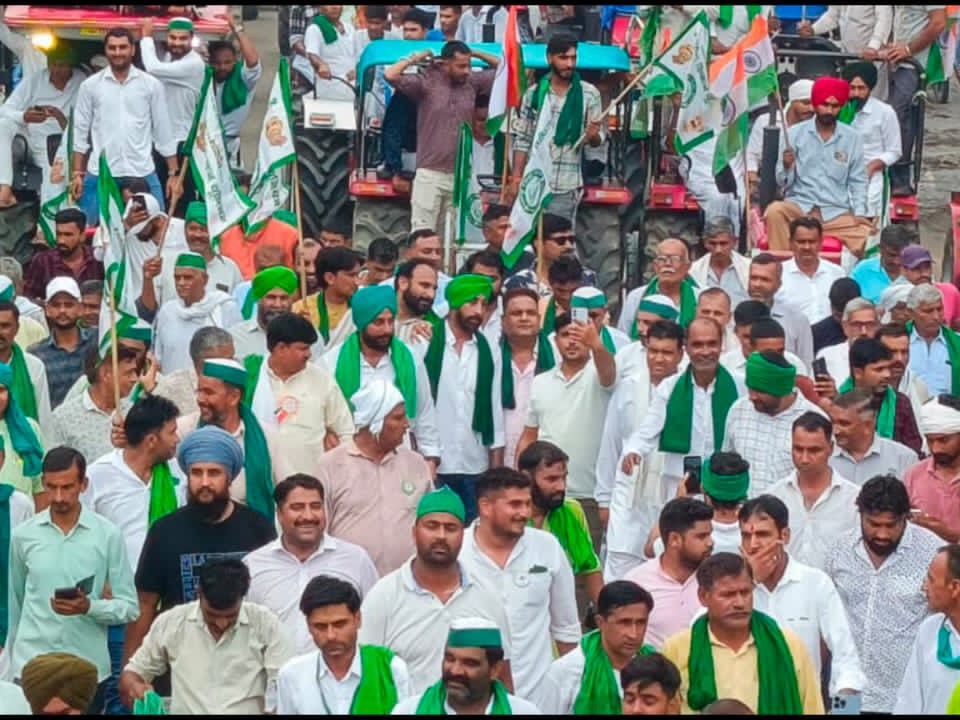
Farmers Play Flutes to Wake Sleeping System: Inside the Unique Protest by Bharatiya Kisan Union (Tikait)
Bharatiya Kisan Union On Wednesday, the district headquarters witnessed a sight unlike any typical protest scene. Instead of loud slogans, angry marches, or heated clashes with police, hundreds of farmers gathered peacefully—but firmly—armed with a symbolic tool: the flute. The unusual protest was organised by the Bharatiya Kisan Union (Tikait), which used this musical instrument as an instrument of resistance. For the protesting farmers, the flute was both a metaphor and a message—a way to “awaken the officials” whom they accuse of sleeping on their long-pending grievances.
This creatively staged demonstration has now drawn national attention. The protest not only captured the emotional frustration of farmers but also highlighted a deeper socio-political narrative: a broken communication channel between the agricultural community and government machinery.
In this 3000-word blog, we examine the significance, symbolism, and broader implications of this protest led by the Bharatiya Kisan Union, while exploring why farmers felt the need to resort to such a dramatic—and peaceful—method of civil resistance.
Introduction: Why Farmers Chose the Path of Symbolism
Across India, agrarian distress is not new. Farmers have used dharnas, tractor marches, hunger strikes, and highway blockades. But a flute protest stands out. According to leaders of the Bharatiya Kisan Union, this unique method represents both non-violence and a loud wake-up call. The farmers allege that administrative officials have ignored their pleas for months, forcing them to devise a protest style that would be impossible to overlook.
The protest took place in front of the district headquarters, drawing farmers from multiple villages. As they sat together playing flutes, the atmosphere became a powerful blend of calmness and deep frustration. The message was simple: if officials refuse to hear farmers’ voices, farmers will “awaken” them through their instruments.
Leaders of the Bharatiya Kisan Union stated that their grievances were neither new nor sudden—they have been raised repeatedly through written applications, meetings, and village committees. Yet, no action has been taken. The protest was a culmination of delayed justice and administrative apathy.

Background: The Issues Behind the Protest
Farmers participating in the protest highlighted a series of unresolved problems:
1. Compensation Delays
Several farmers claim that compensation for crop loss due to unseasonal rain and pest attacks is still pending despite multiple surveys by local officials.
2. Electricity Supply Issues
Erratic power supply has made irrigation nearly impossible in many regions. Farmers allege that officials do not respond to complaints about power cuts that last for hours.
3. Fertiliser and Seed Shortages
Farmers say that they are forced to buy expensive fertilisers from private traders because government-approved centres often run out of stock.
4. Pending Irrigation Canal Repairs
Repeated demands for canal cleaning and repair have not been met, affecting thousands of acres of farmland.
According to the Bharatiya Kisan Union, all these issues have been brought to the district administration’s notice, yet officials only “assure action” but never act. Thus, the flute protest became a symbolic way to awaken the system.
Why the Flute? The Political Symbolism Behind the Protest
The flute, in Indian culture, holds multiple meanings:
- It is associated with peace and harmony.
- It signifies awakening and awareness.
- It is used to gather attention gently and respectfully.
However, in this context, the flute also represented the frustration of farmers who felt neglected. Leaders of the Bharatiya Kisan Union explained that shouting slogans had lost its impact. “Officials don’t respond to noise,” one farmer said. “So maybe they will respond to music.”
The protest conveyed a message without aggression. It suggested that farmers are not enemies of the administration—they are citizens demanding basic rights. The Bharatiya Kisan Union thus used the flute to redefine protest culture: symbolic, peaceful, yet powerful.

Ground Atmosphere: A Protest That Looked Like a Village Gathering
This was no ordinary demonstration. Elderly farmers, young cultivators, and women all gathered in large numbers. They sat in groups, playing flutes in harmony. Some brought traditional instruments from their villages. While the protest looked peaceful, the emotion beneath it was intense.
A large banner placed at the entrance read:
“Officials are asleep. Farmers have come to wake them up.”
Members of the Bharatiya Kisan Union marched to the collectorate gate, playing flutes along the way. The sight was so striking that pedestrians stopped to watch. Several local shopkeepers joined briefly, expressing solidarity with the farmers.
The visual created by the protest was symbolic of rural India asserting its identity and rights.
Officials’ Response: Silence or Strategy?
When asked about the protest, some officials claimed they were working on the issues and blamed the delay on “administrative procedures.” However, no concrete deadline or written commitment was given.
Leaders of the Bharatiya Kisan Union were disappointed by this vague response. They stated that the flute protest would be followed by more impactful demonstrations if the administration did not provide written solutions within the next 15 days.
Another official, when pressed by media, admitted that the flute protest was “highly creative” but sidestepped questions about why grievances remained unresolved.
Political Reactions: Parties Jump Into the Debate
As expected, political parties wasted no time in reacting:
- Opposition parties praised the creativity of the farmers and blamed the government for failing to address rural concerns.
- Ruling party leaders accused the Bharatiya Kisan Union of staging the protest for political mileage, especially with elections around the corner.
However, farmers present at the site said they had no political agenda—they simply wanted solutions to their problems.
One elderly farmer stated:
“We are not here to support or oppose any party. We are here because our fields are dying.”
This statement resonated deeply with the broader narrative: farmers protesting not for ideology, but survival.
Voices From the Ground: What Farmers Had to Say
The blog would be incomplete without hearing from the farmers themselves.
1. “We Feel Invisible”
Farmers reported that despite visiting offices multiple times, officials treated them as if their complaints did not matter.
2. “Deadlines Are Given, But Nothing Happens”
The administration promises timelines, but none are met.
3. “Flute Is Our Hope”
Many farmers said the flute symbolised their hope of rising above pain with dignity.
The Bharatiya Kisan Union facilitated these testimonies, recorded them, and presented them to the administration during the protest.
Historical Context: Creative Protests in India
India has seen many symbolic protests:
- Gandhi’s Dandi March against salt tax
- Anna Hazare’s hunger strike
- Farmers’ tractor rally
- Black band protests
- Silent candle marches
However, the flute protest by the Bharatiya Kisan Union stands apart because of its cultural rootedness. It draws from rural traditions where the flute is used to call the community together. It evoked nostalgia while sending a strong political message.
Why Are Farmer Protests Increasing?
The rise in farmer protests across the country suggests deeper systemic issues:
- Rising cost of farming
- Unpredictable weather
- Market instability
- Delay in compensation
- Poor irrigation infrastructure
- Policy confusion
According to the Bharatiya Kisan Union, the government’s failure to respond promptly only adds to the frustration. Farmers feel that policies are made without consulting them, leading to decisions that do not match ground realities.
The Administrative Disconnect: A Chronic Issue
The protest revealed a glaring disconnect between the rural population and district administration. Farmers allege that officials either avoid meetings or offer superficial assurances.
The Bharatiya Kisan Union claims that despite submitting memorandums, holding talks, and attending meetings, no step-by-step action plan has been shared by authorities.
The disconnect widens because:
- Farmers are not updated on file movement
- Grievances remain pending for months
- Accountability is missing
- Communication is unclear
This chronic gap results in protests becoming the only language officials seem willing to hear.
Media Attention: A Turning Point
Local media channels and national correspondents covered the protest widely. The visuals of hundreds of farmers playing flutes became viral on social media. Analysts noted that the creative protest forced even indifferent officials to take notice.
The Bharatiya Kisan Union also leveraged digital media to amplify their message, live-streaming the event and sharing updates with journalists.
This media attention pressure could nudge authorities into action, showing how symbolic protests can be strategically effective.
Possible Outcomes: What Happens Next?
The future depends heavily on how the administration responds. Three broad scenarios may unfold:
1. Quick Action
Officials may clear pending grievances swiftly to avoid further embarrassment.
2. Temporary Relief
The administration may offer short-term solutions without addressing core issues.
3. Escalation of Protests
If no action is taken, the Bharatiya Kisan Union is likely to intensify its movement, potentially with state-level marches or larger demonstrations.
Why This Protest Matters: A Deeper Reflection
Beyond the issues, the protest carries deeper implications:
- It shows farmers are evolving their methods of protest
- It highlights the power of cultural expression
- It demonstrates non-violent resistance can be loud
- It exposes flaws in governance
- It reveals the emotional weight behind farmers’ struggles
The Bharatiya Kisan Union turned music into a message—and that message resonated widely.
Conclusion: A Wake-Up Call Beyond the District Headquarters
The flute protest has truly awakened more than just officials. It has awakened national consciousness about farmers’ grievances. It has awakened debates on governance, accountability, and responsiveness. And most of all, it has awakened the realisation that farmers are willing to fight—not with anger, but with creativity.
As the Bharatiya Kisan Union continues to push for justice, this protest will remain a symbolic reminder that even the softest sound can shake the foundations of power when it carries the voice of the people.
read more latest news

