

Russian President Vladimir Putin’s India Visit on December 4–5: Strategic Diplomacy, Global Implications & Rising Geopolitical Equations.
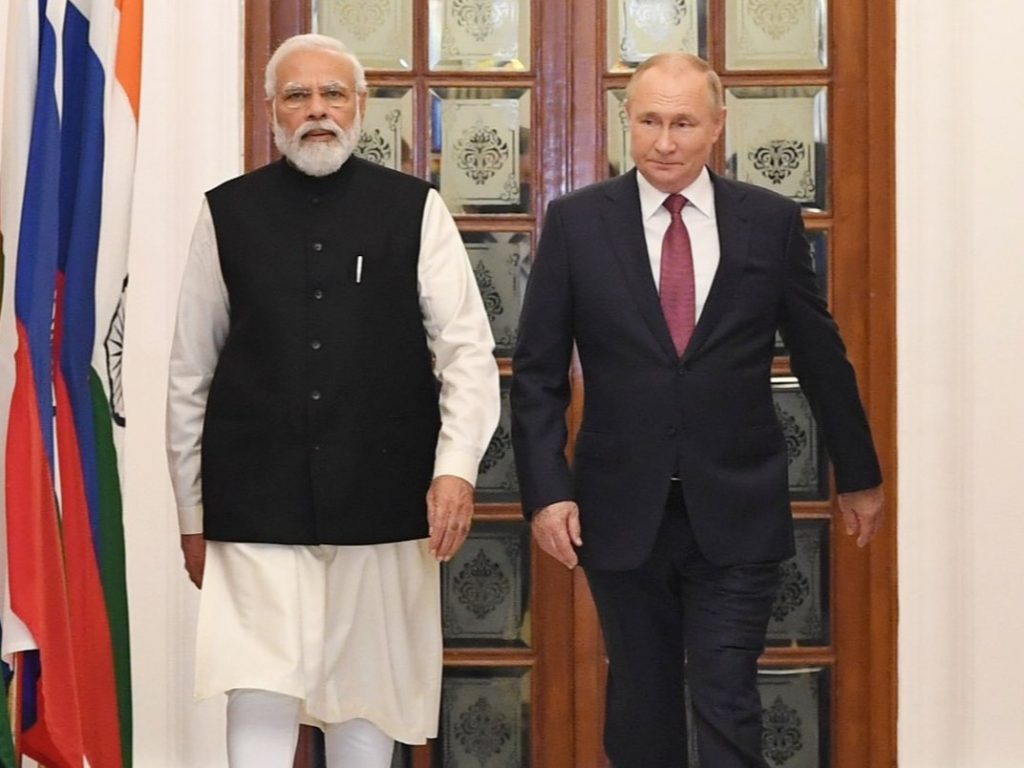
The upcoming visit of Russian President Vladimir Putin to India on December 4 and 5, as confirmed by Russian state news agencies quoting the Kremlin, marks one of the most significant diplomatic moments of 2025. The invitation extended by Prime Minister Narendra Modi comes at a time when global geopolitics is experiencing intense realignments, ongoing conflicts, and a growing need for balanced international partnerships. For New Delhi and Moscow, this visit represents more than a routine diplomatic engagement—it symbolizes continuity, mutual trust, strategic collaboration, and a renewed political vision for the coming decade.
Over the past several years, India and Russia have navigated an increasingly complicated geopolitical environment. Despite global pressure, India has maintained a “strategic autonomy” approach, balancing relations with the West while also preserving its traditional partnership with Russia. The December 4–5 visit by the Russian President is therefore an essential diplomatic signal, reinforcing the depth and resilience of India–Russia ties.
In this comprehensive blog, we explore the context, motivations, and potential outcomes of this important visit. We examine the geopolitical implications, bilateral agreements expected to be signed, defense collaborations, energy partnerships, regional security concerns, and what the meeting between Prime Minister Modi and the Russian President could mean for the future of both nations.
1. Historical Context of India–Russia Relations
India and Russia share a long-standing partnership that dates back to the Cold War era. During the 1970s and 1980s, the Soviet Union played a substantial role in supporting India at the global stage, including in defense, energy, and technological cooperation. Over the years, this relationship transformed into a modern strategic partnership, and events like the annual India–Russia Summit became a symbol of continued cooperation.
The arrival of the Russian President in December is in line with this legacy. The annual summit, which had experienced delays due to global disruptions, is expected to regain full diplomatic vigor with this high-level visit. Despite international sanctions, shifting alliances, and major geopolitical tensions, both India and Russia have maintained a robust dialogue.
India’s import of Russian crude oil, ongoing defense contracts, and joint infrastructure projects like the Kudankulam Nuclear Power Plant underscore the enduring relevance of Russia for India’s economic and strategic interests. The visit of the Russian President is poised to reinforce these collaborations while potentially shaping new areas of cooperation.
2. Significance of the Timing
The timing of the Russian President’s visit is particularly significant. With the world witnessing major geopolitical upheavals, including tensions in Europe, rising China–US rivalry, and growing instability in the Middle East, this trip reflects Russia’s intention to deepen its Asian partnerships—especially with India, which remains one of the few global powers pursuing an independent foreign policy.
India, on the other hand, is balancing its expanding ties with the United States, Japan, and European powers, while ensuring that its long-term partnership with Russia continues unhindered. The visit also comes shortly after several important global forums, where relations between India and Russia have been discussed indirectly in the context of broader strategic debates.
By welcoming the Russian President, New Delhi sends a strong message that its ties with Moscow remain multifaceted and intact, regardless of global pressure.
3. Key Areas of Focus During the Visit
The December 4–5 meeting between Prime Minister Modi and the Russian President will span several critical areas. Below are the most important segments expected to dominate discussions:
a. Defense and Security Cooperation
Defense has traditionally been the backbone of India–Russia relations. Russia remains India’s largest defense supplier, even as India diversifies procurement sources. The ongoing S-400 delivery, BrahMos missile production, and maintenance support for legacy Russian equipment will likely be discussed.
The strategic dialogue with the Russian President could include:
- Expansion of the BrahMos project
- Potential joint production of advanced weapons and aircraft
- Long-term supply of spare parts
- Upgradation of India’s naval and air defense capabilities
India’s emphasis on “Atmanirbhar Bharat” (self-reliance) in defense may see renewed agreements for joint manufacturing instead of simple procurement.
b. Energy Sector Partnerships
Russia is now one of India’s top oil suppliers. The discount-based energy trade strengthened during a period when Moscow faced international sanctions.
The arrival of the Russian President will likely revive discussions on:
- Long-term oil supply agreements
- Expansion of LNG transportation
- Joint energy exploration
- Strengthening ties between Indian refineries and Russian suppliers
Nuclear energy cooperation—particularly the Kudankulam project—may also gain fresh momentum.
c. Trade & Economic Corridors
The India–Russia trade volume witnessed substantial growth in the past three years. With Moscow shifting focus toward Asia, India has become a major partner in ensuring Russian economic resilience.
Key economic topics during talks with the Russian President may include:
- Increasing rupee–ruble trade mechanisms
- Strengthening the International North–South Transport Corridor (INSTC)
- Boosting bilateral trade in pharmaceuticals, fertilizers, and agro-products
- Digital economy collaboration
Both leaders are expected to address trade imbalance concerns, as India imports significantly more from Russia compared to its exports.
d. Space and Technology
Russia has been a traditional supporter of India’s space ambitions, including assistance during ISRO’s early years. Today, as both nations work on advanced space programs, further cooperation may emerge in:
- Space exploration
- Satellite navigation
- Human spaceflight
- Joint missions involving Roscosmos and ISRO
The Russian President may push for deeper technological collaboration spanning AI, advanced computing, and cyber-security frameworks.
e. Regional & Global Security Issues
India and Russia share concerns about terrorism, instability in Afghanistan, and rising extremism. They also maintain a dialogue on the Indo-Pacific, even though their positions on China differ sharply.
The leaders will likely engage in discussions regarding:
- Ukraine conflict and its global impact
- Indo-Pacific security challenges
- China’s growing military influence
- Peace in Afghanistan
- BRICS expansion and multilateral reforms
The Russian President’s viewpoint on global power shifts will influence long-term strategic coordination.
4. Geopolitical Importance of the Visit
The upcoming India visit by the Russian President is more than a bilateral engagement—it carries implications for the global order. Let’s explore its deeper geopolitical significance:
a. India’s Strategic Autonomy
India has resisted being drawn into geopolitical blocs, whether US-led or Russia–China-led. The warm relationship with both Washington and Moscow is a core component of India’s “multi-alignment” policy.
By hosting the Russian President, India asserts:
- Its right to choose independent partners
- That Western pressures will not dictate Indian diplomacy
- A balanced approach between democratic alliances and traditional partnerships
This strengthens India’s positioning as a sovereign global power.
b. Russia’s Pivot to Asia
Facing economic sanctions and European hostility, Russia is shifting its strategic attention toward the East. This involves strengthening cooperation with China, but also diversifying through India.
The visit by the Russian President is therefore an attempt to reinforce Asia-focused diplomacy and secure stable partnerships beyond China.
c. The China Factor
Both India and Russia have complex relationships with China. While Russia has deepened its partnership with Beijing, India continues to face border tensions with China. This creates a delicate diplomatic dynamic.
Russia often plays a balancing role between the two Asian giants. The Russian President’s discussions with Prime Minister Modi could involve efforts to maintain stability in the region and prevent escalation.
5. Potential Agreements Expected During the Visit
Though the exact list will be finalized during the meetings, analysts predict several possible agreements:
- New defense collaboration frameworks
- Long-term energy supply contracts
- Technological and digital cooperation treaties
- Expanded trade corridor agreements (INSTC)
- Joint space missions
- Cultural and educational collaborations
- Agricultural trade expansion
The presence of the Russian President is expected to add political weight to these agreements.
6. Public and Global Reactions
The world will be closely watching the visit. Western nations, particularly the United States, may view it with mixed reactions. While acknowledging India’s sovereign diplomacy, they may be concerned about deepening India–Russia ties during a period of Western sanctions on Moscow.
Domestically, the visit of the Russian President will likely be seen as a reaffirmation of India’s global stature and as a reinforcement of trust between the two countries.
7. Symbolism of the Putin–Modi Relationship
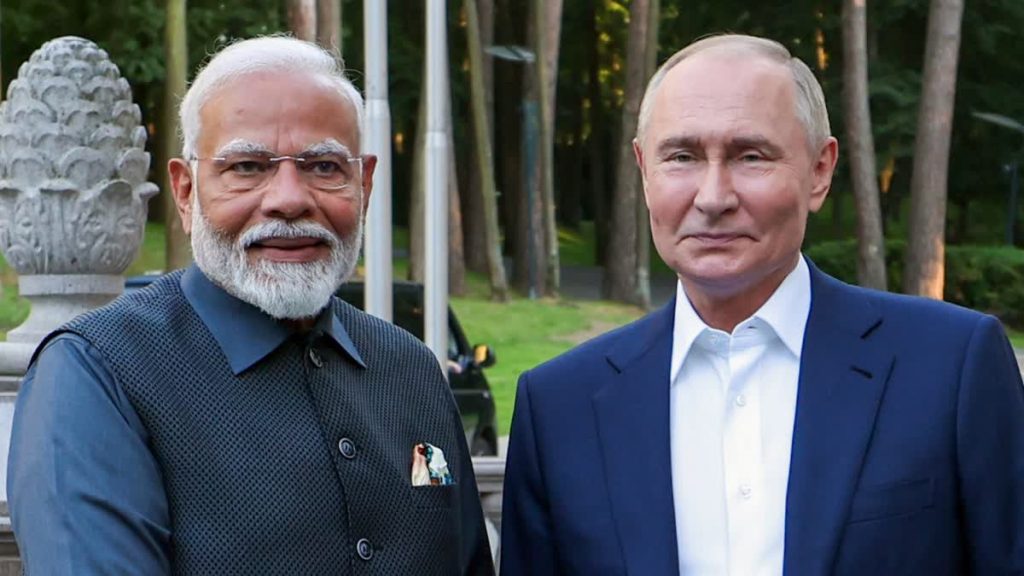
Prime Minister Modi and the Russian President share a strong personal rapport. This relationship has been instrumental in keeping India–Russia ties resilient, even when global circumstances turned complicated.
Their meeting signifies:
- Long-term mutual respect
- Strategic trust
- Continuity in cooperation
Their discussions will likely shape major diplomatic and strategic initiatives over the next decade.
8. The Future of India–Russia Relations
The December visit sets the stage for future cooperation deeply rooted in mutual strategic interests. Given the global transformations underway, India and Russia will increasingly rely on each other in areas such as defense modernization, energy security, technology exchange, and regional stability.
For India, the continued partnership with the Russian President represents a path toward ensuring autonomy, diversity of alliances, and national security. For Russia, India offers a major market, a reliable partner, and a gateway to Asian strategic architecture.
9. Conclusion
The upcoming visit of Russian President Vladimir Putin to India on December 4 and 5 is a major diplomatic milestone. It showcases the enduring strength of India–Russia relations and reflects a broader shift in global power dynamics. While the world continues to polarize, India and Russia are working to maintain a stable and mutually beneficial partnership.
With cooperation expanding across defense, energy, technology, space, trade, and geopolitical dialogue, the December summit is expected to produce far-reaching outcomes. The personal rapport between Prime Minister Narendra Modi and the Russian President adds further depth to this engagement.
As both nations continue navigating an increasingly complex international environment, this visit symbolizes strategic continuity, diplomatic balance, and a shared vision for a multipolar world.
Read more latest news

