
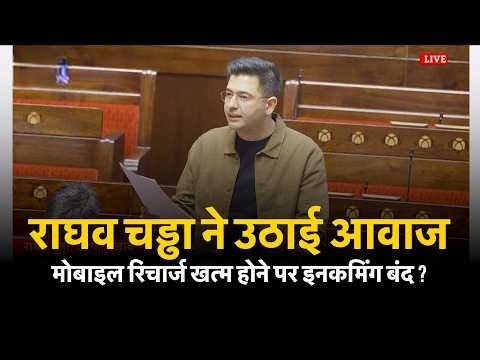
Raghav Chadha Raised the Issue of Mobile Recharge in Rajya Sabha Questioning Why Incoming Messages Stop
Introduction
Raghav Chadha raised the issue India’s Parliament often becomes the platform where concerns affecting millions of ordinary citizens are brought to national attention. Recently, Raghav Chadha highlighted an issue that many mobile users face every day. During a discussion in the Rajya Sabha, Raghav Chadha raised the issue of mobile recharge policies followed by telecom companies.
In his speech, the MP questioned why incoming messages stop when a mobile recharge expires. He argued that while it may be understandable for outgoing services to stop after a recharge plan ends, it is difficult to justify why incoming SMS messages are also blocked. Through his intervention, Raghav Chadha raised the issue as a matter affecting millions of common mobile users across the country.
The statement quickly caught public attention because it highlighted a problem that many people have experienced but rarely seen discussed at the national policy level. By bringing the matter to Parliament, Raghav Chadha raised the issue of consumer rights and telecom regulations in India.
The Concern Raised in Parliament
During his speech, Raghav Chadha raised the issue of how telecom companies manage services after prepaid plans expire. He explained that many users experience a situation where they stop receiving important SMS messages such as OTPs, bank alerts, and government notifications once their recharge validity ends.
This problem affects people who may temporarily run out of balance or forget to recharge immediately. By speaking about this concern, Raghav Chadha raised the issue of fairness in telecom service policies.
He argued that blocking incoming messages could create inconvenience for citizens who rely on mobile phones for banking, digital payments, and government services. In this context, Raghav Chadha raised the issue not just as a telecom matter but as a broader digital rights concern.
Why Incoming Messages Matter
India has rapidly transformed into a digital economy where mobile numbers play a critical role in everyday life. OTP authentication, bank alerts, government schemes, and service notifications are all delivered via SMS.
When Raghav Chadha raised the issue, he emphasized that stopping incoming messages can create serious problems. For example:
- A person may miss a bank transaction alert.
- OTPs required for online payments may not arrive.
- Important government notifications may be missed.
- Emergency messages from family members could be delayed.
Because of these reasons, Raghav Chadha raised the issue as something that directly impacts the daily lives of common citizens.

The Telecom Industry Recharge Policies
India’s telecom sector operates largely on prepaid models, where users must recharge periodically to maintain active services. When the recharge validity expires, telecom operators typically suspend outgoing calls, data, and SMS services.
However, according to many consumers, incoming services may also stop after a certain period if the number remains inactive. During the parliamentary debate, Raghav Chadha raised the issue of whether such policies are fair to consumers.
He questioned whether telecom companies should allow incoming messages even when a recharge has expired, especially because these messages often contain critical information.
By bringing this topic into Parliament, Raghav Chadha raised the issue of balancing corporate policies with consumer convenience.
A Voice for the Common Man
In his speech, the MP emphasized that the matter directly affects the “common man.” India has more than a billion mobile subscribers, and prepaid plans dominate the market.
Many people use low-cost recharge plans and may not always be able to recharge immediately after expiry. For these users, losing access to incoming messages can be frustrating.
By highlighting this concern, Raghav Chadha raised the issue as an example of how parliamentary discussions can address everyday problems faced by citizens.
He argued that policymakers must ensure that telecom services remain accessible and fair for everyone.
Digital India and Communication Access
India’s Digital India initiative has encouraged citizens to adopt online platforms for payments, government services, and communication. Mobile numbers have become the primary identity for digital authentication.
When Raghav Chadha raised the issue, he pointed out that blocking incoming messages could undermine digital inclusion. People rely on SMS notifications for:
- banking OTP verification
- Aadhaar authentication
- government scheme updates
- healthcare and vaccination reminders
Because of this dependence, Raghav Chadha raised the issue as a matter connected to the country’s digital infrastructure.
Reactions in Parliament
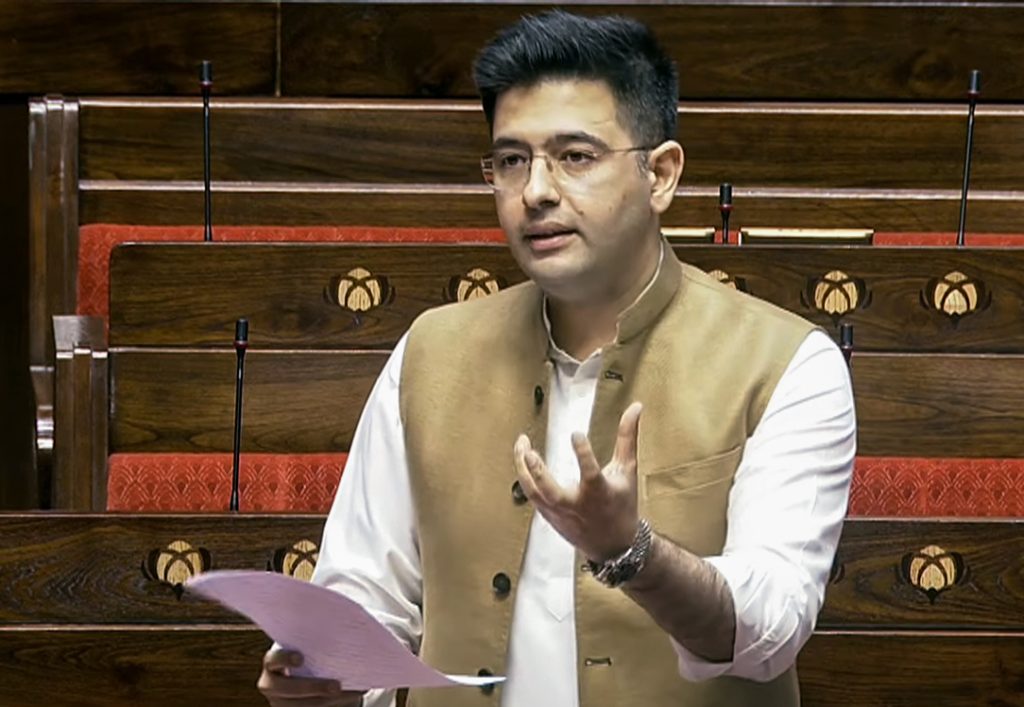
The issue raised during the Rajya Sabha session drew attention from lawmakers across parties. Some MPs agreed that telecom companies must reconsider policies that inconvenience customers.
As the discussion progressed, Raghav Chadha raised the issue repeatedly to emphasize that millions of people are affected by such service interruptions.
Several lawmakers acknowledged that the concern deserved further examination by regulatory authorities. Through this debate, Raghav Chadha raised the issue in a way that pushed telecom policies into the national spotlight.
The Role of Telecom Regulators
India’s telecom sector is regulated by the Telecom Regulatory Authority of India (TRAI). The regulator establishes guidelines for pricing, service quality, and consumer rights.
When Raghav Chadha raised the issue, it indirectly highlighted the role of regulators in ensuring that telecom companies operate in a consumer-friendly manner.
TRAI has previously introduced rules to protect consumer interests, including regulations on recharge validity and service transparency. However, the question of incoming messages after recharge expiry remains a topic of debate.
By bringing the matter to Parliament, Raghav Chadha raised the issue in a way that could potentially influence future regulatory discussions.
Impact on Consumers
The concern about incoming messages may seem minor at first glance, but it affects millions of users across the country. Many people rely on SMS alerts for important information.
When Raghav Chadha raised the issue, he highlighted how such policies can create inconvenience for:
- senior citizens who depend on SMS banking alerts
- rural users with limited internet access
- people using feature phones instead of smartphones
- individuals who rely on OTP verification for digital payments
Through this argument, Raghav Chadha raised the issue as part of a broader conversation about digital accessibility.
Telecom Companies’ Perspective
Telecom operators often justify service suspension policies by pointing to network costs and the need to maintain active subscriber bases.
They argue that continuous incoming services for inactive numbers could create operational challenges. However, critics say that basic incoming SMS access should not depend entirely on recharge validity.
During his speech, Raghav Chadha raised the issue to encourage a balanced discussion between business interests and consumer rights.
Experts believe that if the issue gains momentum, telecom companies may eventually review their policies.

Public Reaction and Social Media Discussion
After the parliamentary debate, clips of the speech quickly circulated on social media platforms. Many users praised the MP for highlighting a common problem that affects everyday life.
For many people, the fact that Raghav Chadha raised the issue resonated strongly because it reflected a real-life inconvenience they experience regularly.
Online discussions showed widespread support for the idea that incoming messages should remain active even after recharge expiry.
As the debate spread across news platforms, Raghav Chadha raised the issue became a trending topic in political and technology discussions.
The Bigger Picture: Consumer Rights
The debate also raises broader questions about consumer rights in the telecom industry. As digital communication becomes essential, access to basic messaging services becomes more important.
By raising the concern in Parliament, Raghav Chadha raised the issue of how corporate policies affect everyday citizens.
Consumer rights advocates argue that telecom services should prioritize accessibility and fairness. They believe regulators must ensure that users are not deprived of essential communication channels.
In this context, Raghav Chadha raised the issue as a reminder that even small policy changes can make a big difference in people’s daily lives.
Conclusion
The speech delivered in the Rajya Sabha has sparked a national conversation about telecom service policies. When Raghav Chadha raised the issue of incoming messages stopping after recharge expiry, he highlighted a problem that millions of Indians encounter every day.
His argument was simple yet powerful: while outgoing services may stop after recharge expiry, basic incoming communication—especially SMS messages—should continue so that citizens do not miss important information.
By bringing the matter to Parliament, Raghav Chadha raised the issue of consumer convenience, digital inclusion, and regulatory responsibility. The debate has drawn attention from lawmakers, telecom regulators, and the public alike.
Whether this discussion eventually leads to policy changes remains to be seen. However, the moment when Raghav Chadha raised the issue in the Rajya Sabha has already succeeded in putting a spotlight on a concern that affects millions of mobile users across India.
read more latest news

