
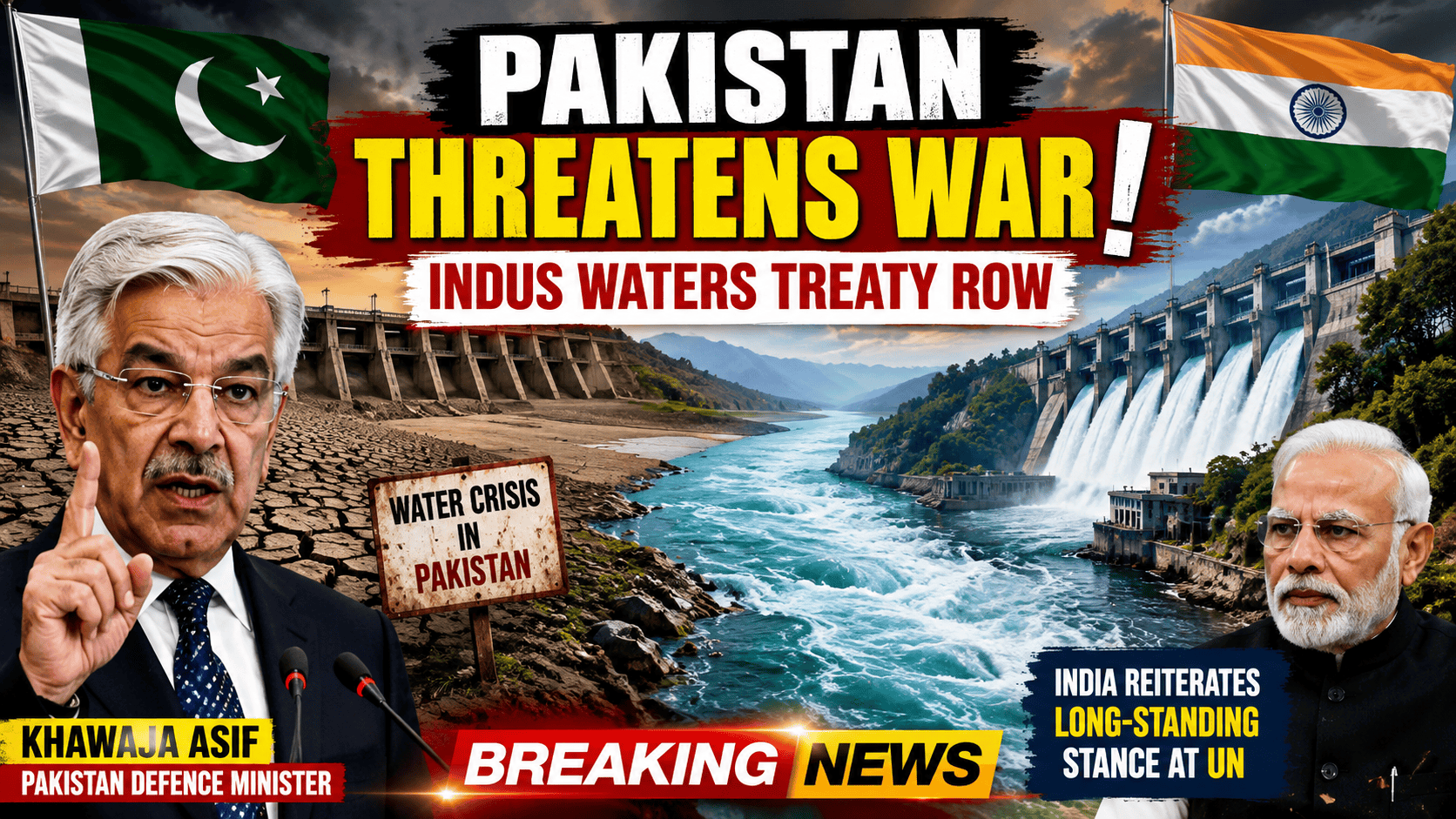
Pakistan’s Defence Minister Threatens India Over Indus Waters Treaty: Rising Tensions Amid Pakistan’s Water Crisis
Introduction
The statement that Pakistan will wage war against India if its water interests are threatened has drawn attention internationally. Analysts believe such remarks reflect growing frustration within Pakistan over both domestic water scarcity and regional diplomatic challenges.
Tensions between India and Pakistan have once again escalated after India reiterated its long-standing position on the Indus Waters Treaty (IWT) at the United Nations. The diplomatic exchange has triggered strong reactions from Islamabad, with senior Pakistani leaders issuing aggressive statements. First, Pakistan Peoples Party (PPP) Chairman Bilawal Bhutto Zardari criticized India’s stance and warned of serious consequences. Now, Pakistan’s Defence Minister Khawaja Asif has taken the rhetoric a step further by threatening India with war.
The controversy comes at a time when Pakistan is facing one of its worst water shortages in decades. With reservoirs running low, agricultural regions struggling, and climate change intensifying existing challenges, water has become a highly sensitive issue in Pakistan. Against this backdrop, Khawaja Asif’s comments have generated widespread debate across South Asia.
Understanding the Indus Waters Treaty
The Indus Waters Treaty, signed in 1960 between India and Pakistan with the assistance of the World Bank, is widely regarded as one of the most successful water-sharing agreements in the world (Pakistan will wage war against India).
Under the treaty:
- India received rights over the eastern rivers: Ravi, Beas, and Sutlej.
- Pakistan received rights over the western rivers: Indus, Jhelum, and Chenab.
- Mechanisms were established for information sharing and dispute resolution.
Despite multiple wars and periods of intense hostility between the two countries, the treaty has largely survived. However, in recent years, tensions have increased over hydroelectric projects, water management, and allegations of treaty violations.
India has consistently maintained that it remains committed to the treaty while exercising its legitimate rights under its provisions. Pakistan, meanwhile, has repeatedly expressed concerns regarding Indian infrastructure projects on western rivers.
India’s Statement at the United Nations
India recently reiterated its long-standing position regarding the treaty during discussions at the United Nations. Indian representatives emphasized that New Delhi has always respected international agreements while safeguarding national interests.
India argued that any discussions regarding water sharing must acknowledge changing realities, including population growth, environmental challenges, and evolving security concerns.
Indian officials stressed that the country has acted within the legal framework of the treaty and has repeatedly sought transparent dialogue on technical issues.
This position was viewed by Pakistan as an attempt to increase pressure on Islamabad, especially given the country’s growing water challenges (Pakistan will wage war against India).
Bilawal Bhutto’s Earlier Warning
Before Khawaja Asif’s remarks, PPP leader Bilawal Bhutto had already expressed strong opposition to India’s position.
Bilawal argued that water security is directly linked to Pakistan’s national security. He accused India of attempting to exert pressure through water-related policies and called upon the international community to intervene.
His comments attracted significant media attention in Pakistan and India alike. However, many observers viewed them as part of political messaging aimed at domestic audiences.
The situation intensified when Khawaja Asif entered the debate with much stronger language.
Khawaja Asif’s Threatening Remarks
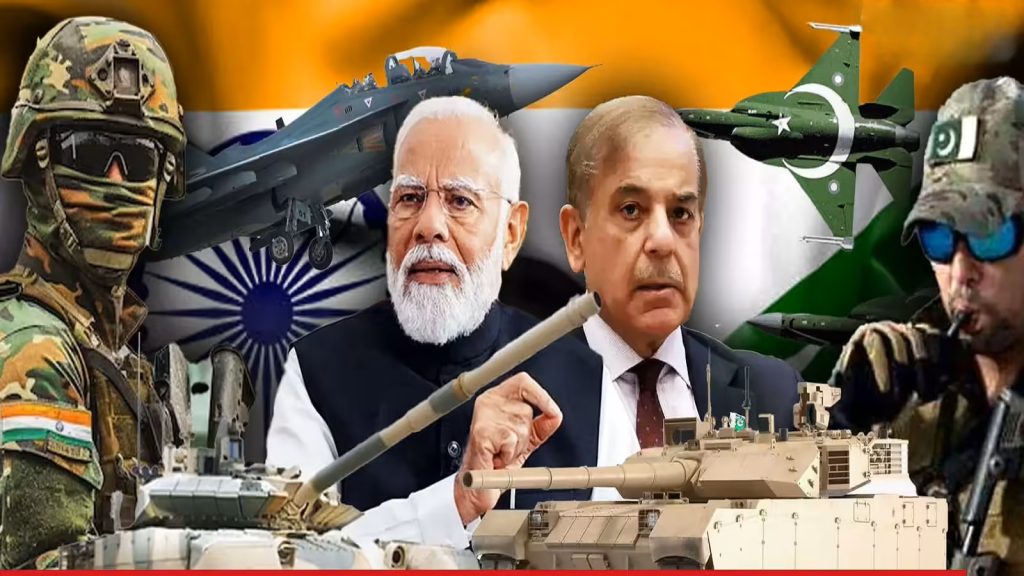
Pakistan’s Defence Minister Khawaja Asif stated that Pakistan will wage war against India if the country’s access to water is threatened.
His remarks immediately sparked controversy across the region.
According to reports, Khawaja Asif argued that water is a matter of survival for Pakistan and that any attempt to restrict or manipulate water resources would be considered a direct threat to national security.
During his statements, he suggested that Pakistan will wage war against India if Islamabad believes its water rights are being undermined.
The declaration that Pakistan will wage war against India was widely reported by media outlets and quickly became a topic of discussion among political analysts.
Critics argued that such statements increase tensions rather than encourage diplomatic solutions.
Why Water Is a Sensitive Issue for Pakistan
To understand the significance of these remarks, it is important to examine Pakistan’s ongoing water crisis.
Pakistan is among the world’s most water-stressed countries. Several factors contribute to the problem:
Population Growth
Pakistan’s population has increased dramatically over the past few decades. Rising demand for drinking water, agriculture, and industry has put enormous pressure on available resources.
Climate Change
Climate change has altered rainfall patterns and increased the frequency of droughts and floods. Glacial melt in the Himalayas further complicates water management.
Poor Infrastructure
Experts frequently point to inadequate storage facilities, inefficient irrigation systems, and water wastage as major contributors to the crisis.
Agricultural Dependence
Agriculture accounts for a significant portion of Pakistan’s economy and relies heavily on river water. Any disruption in water supply can have severe economic consequences.
Against this backdrop, statements that Pakistan will wage war against India resonate strongly within sections of Pakistani society concerned about water security.
Domestic Political Factors
Many experts believe domestic politics also play a role in the rhetoric surrounding water disputes.
Pakistan has faced economic difficulties, inflation, political instability, and security challenges in recent years. In such circumstances, external issues often become prominent in public discourse.
Political leaders may use strong language to demonstrate firmness on national issues. Some analysts suggest that declarations such as Pakistan will wage war against India are aimed at domestic audiences rather than reflecting actual military intentions.
However, such rhetoric can still have significant diplomatic consequences.
India’s Response
Indian officials have consistently maintained that the country acts according to international law and treaty obligations.
New Delhi has rejected allegations that it seeks to deprive Pakistan of its rightful share of water. Instead, India argues that it is merely utilizing resources allocated to it under the treaty framework.
Indian analysts point out that water disputes should be resolved through established legal and diplomatic channels rather than threats.
In response to claims that Pakistan will wage war against India, many Indian commentators have emphasized the importance of dialogue and technical negotiations.
International Reactions
The international community generally views the Indus Waters Treaty as a critical framework for regional stability.
Experts warn that inflammatory statements could undermine efforts to maintain peaceful cooperation.
Several observers noted that declarations such as Pakistan will wage war against India are unhelpful at a time when both countries face numerous shared challenges, including climate change and water scarcity.
International organizations continue to encourage constructive engagement between the two neighbors.
Military Implications
While Khawaja Asif’s comments generated headlines, military analysts caution against interpreting them as an indication of imminent conflict.
India and Pakistan are both nuclear-armed nations. Any military confrontation would carry enormous risks.
For this reason, experts believe that statements like Pakistan will wage war against India are more likely intended as political messaging than as actual military planning.
Nevertheless, repeated threats can contribute to mistrust and increase tensions along the border.
Water Security and Regional Stability
Water security is emerging as one of the most important strategic issues in South Asia.
As populations grow and climate pressures intensify, competition over water resources may become increasingly significant.
Many experts argue that cooperation, rather than confrontation, is the only sustainable solution.
Threats that Pakistan will wage war against India do little to address the underlying causes of water scarcity.
Instead, specialists recommend:
- Improved water conservation.
- Modern irrigation systems.
- Better reservoir management.
- Joint scientific cooperation.
- Transparent dispute resolution mechanisms.
The Broader Geopolitical Context
The dispute also reflects broader geopolitical tensions between India and Pakistan.
Relations have remained strained for years due to disagreements over terrorism, border issues, and regional security concerns.
Water disputes often become intertwined with these larger political disagreements.
When leaders claim that Pakistan will wage war against India, the statement is interpreted not only in the context of water resources but also against the backdrop of long-standing bilateral tensions.
This makes diplomatic management even more important.
Expert Opinions
Several regional experts have expressed concern regarding the escalating rhetoric.
According to analysts, repeated assertions that Pakistan will wage war against India risk creating public expectations that make compromise more difficult.
Others note that practical water challenges cannot be solved through military means.
Technical experts emphasize that Pakistan’s water crisis stems from a combination of factors, including infrastructure deficiencies, inefficient management, and environmental pressures.
Addressing these issues requires long-term planning rather than confrontational rhetoric.
Future Prospects
Despite current tensions, many observers remain optimistic that the Indus Waters Treaty will continue to serve as a framework for managing disputes.
The treaty has survived wars, political crises, and decades of mistrust.
Even as voices declare that Pakistan will wage war against India, diplomatic channels remain open.
History suggests that both countries recognize the importance of preventing water disputes from escalating into larger conflicts.
Continued engagement between technical experts, diplomats, and policymakers will be essential.
Conclusion
The latest controversy surrounding the Indus Waters Treaty highlights the growing importance of water security in South Asia. Pakistan’s Defence Minister Khawaja Asif has intensified tensions by declaring that Pakistan will wage war against India if Pakistan’s water rights are threatened. His remarks follow earlier warnings from Bilawal Bhutto and come during a period of severe water stress in Pakistan.
While the rhetoric has attracted considerable attention, most analysts believe that diplomacy remains the only viable path forward. Water scarcity is a complex challenge driven by climate change, population growth, and infrastructure limitations. Military threats cannot solve these issues.
The repeated assertion that Pakistan will wage war against India underscores the emotional and political significance of water security in Pakistan. However, regional stability will ultimately depend on cooperation, dialogue, and responsible leadership.
As South Asia faces increasing environmental pressures, both India and Pakistan have a shared interest in preserving peace and ensuring sustainable water management for future generations.
Read more latest news

