
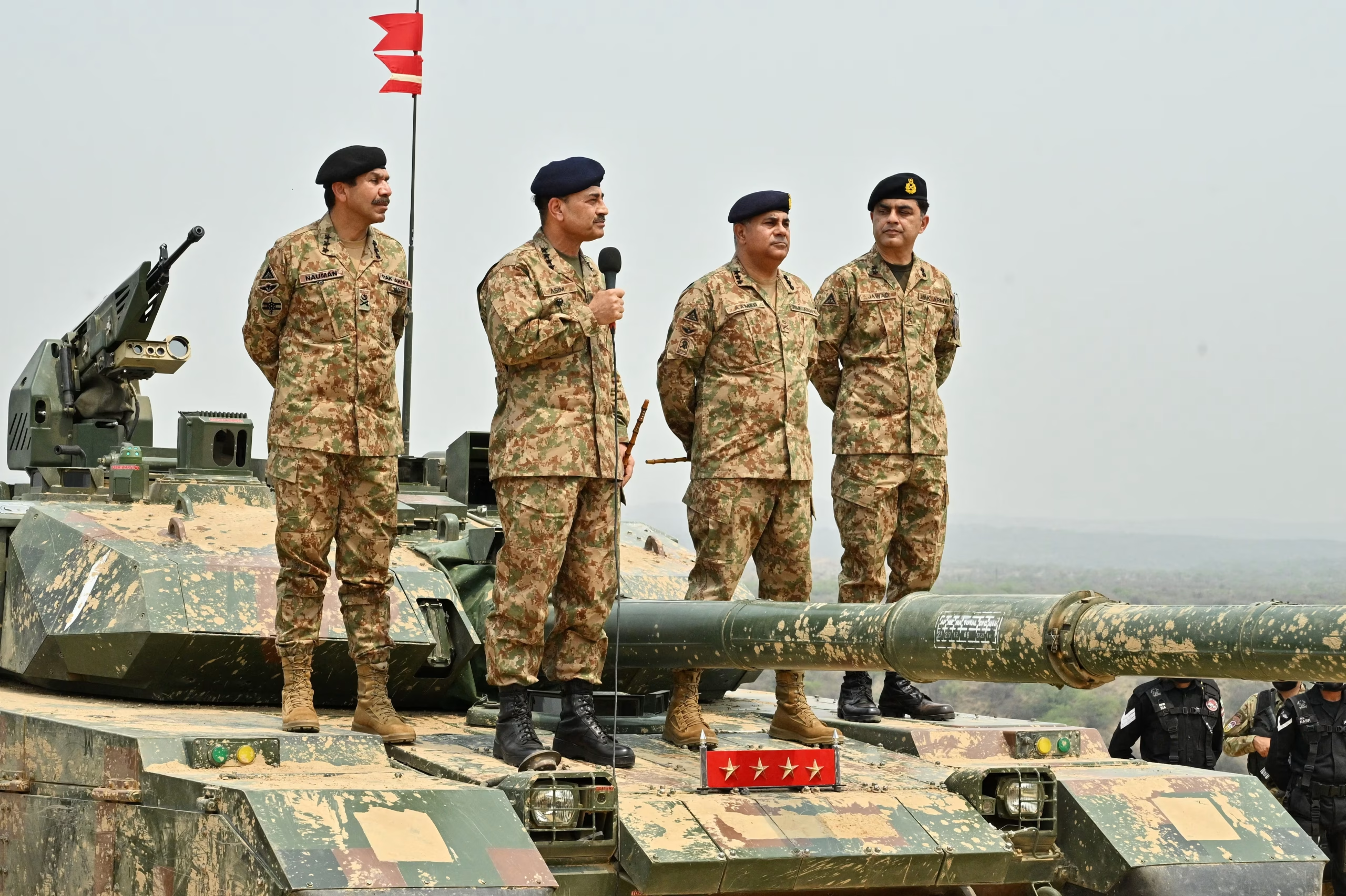
Pakistan Army Chief Asim Munir’s U.S. Visit: Diplomacy, Nuclear Jeers & Unbroken Ties
Setting the Stage: May 2025 – A Reckoning on the Edge
In early May 2025, India and Pakistan plunged into one of their most intense military confrontations in decades. Sparked by the deadly terrorist attack in Pahalgam on April 22, in which militant violence claimed dozens of lives, India retaliated with precision missile strikes on targets in Pakistan and Pakistan-administered Kashmir. Pakistan responded with its own missile launches and, for the first time in their decades-long rivalry, both sides employed drone warfare. The conflict rapidly escalated—nuclear alarm bells rang.
As tensions peaked, diplomacy arrived—in an intense few hours, the U.S., alongside other international actors, stepped in. Secretary of State Marco Rubio spoke with Pakistan’s Army Chief Asim Munir, while Vice President J.D. Vance called Indian Prime Minister Narendra Modi, urging de-escalation. The result was a ceasefire announced on May 10, 2025, with both militaries halting hostilities and agreeing to broader talks.
The U.S. State Department, while not overly explicit, acknowledged that further escalation would have severely impacted regional stability—and that U.S. diplomatic pressure played a pivotal role in halting the spiral.
June 2025: The First U.S. Passage and a Peace Broker’s Praise
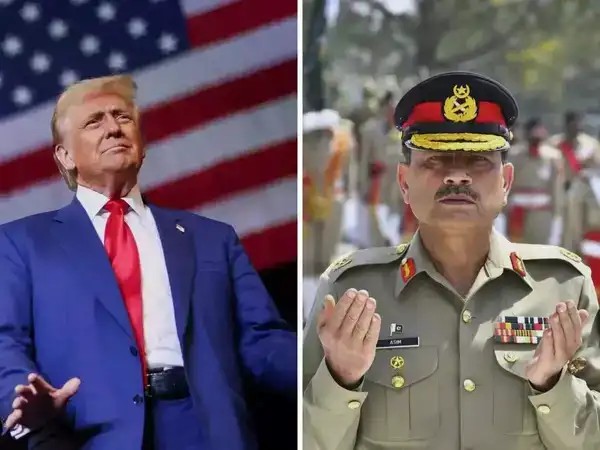
On June 18, 2025, Field Marshal Asim Munir made his first visit to Washington. In a move laden with symbolism, he had a private lunch with the U.S. President at the White House—President Trump—without any senior Pakistani civilian officials present. Trump lauded both Munir and Modi for their restraint in preventing what he called a “potentially nuclear war.” Regional concerns, including Iran, were also discussed, with Trump reportedly praising Pakistan’s strategic understanding.
Munir audaciously suggested nominating Trump for the Nobel Peace Prize, citing his role in defusing the crisis. Though contacts with India were less emphasized, this meeting reaffirmed Pakistan’s renewed positioning as a peace partner and early post-crisis diplomatic victor.
August 2025: A Return Visit, a Nuclear Jest, and U.S. Reassurance
Just two months later, Asim Munir returned to the U.S. for a second visit, signaling deeper, more structural military ties with Washington. This was part of a deliberate outreach to strengthen cooperation amid shifting regional landscapes.

This visit coincided with strategic U.S. decisions, including re-designating Pakistan as a key counterterrorism partner. One prominent move: the U.S. labeling the Balochistan Liberation Army (BLA) and its Majeed Brigade as Foreign Terrorist Organizations (FTOs)—an aligned step during Munir’s presence in America that suggested mutual counterterrorism goals.
Yet diplomacy carries risk. During this U.S. stop, Munir reportedly made a provocative statement in Florida: “We are a nuclear nation. If we think we are going down, we’ll take half the world down with us.” India slammed the remarks as irresponsible “sabre rattling,” criticizing not just the words but their delivery from U.S. soil.
India’s lawmakers expressed outraged alarm, questioning how such a nuclear threat could be uttered from the sanctuary of a strategic U.S. ally. The issue was even raised for diplomatic escalation.
In response, the U.S. State Department, via spokesperson Tammy Bruce, reiterated that its relationships with both India and Pakistan “remain unchanged”, and that American diplomats remain committed to both nations equally. She reaffirmed pride in U.S. diplomatic interventions that averted a catastrophic escalation.
The Strategic Triangle: U.S., India, and Pakistan Post-Conflict
- U.S. as Stabilizer
The intense diplomatic activity of May 2025 illustrates America’s ability to act decisively under pressure. Calls by Rubio and Vance—and Trump’s direct social media announcement—helped diffuse the worst military exchange between two nuclear powers in decades. - Pakistan’s Tactical Diplomacy
Munir’s two U.S. visits underscore Islamabad’s refined diplomatic maneuver: leveraging military authority to secure renewed relevance in Washington, especially in counterterrorism and regional positioning. - India’s Uneasy Diplomacy
While India de-emphasized third-party mediation in its public posture, events—especially Munir’s nuclear-related remarks—spark renewed skepticism and domestic scrutiny of U.S. alignments. The deterioration of Modi–Trump warmth has only complicated things. - U.S. Reaffirmation of Balance
In spite of provocative messaging or shifting alliances, the U.S. maintains that its policy remains one of equidistance and strategic stability—for both India and Pakistan.
In-Depth Breakdown: Core Themes & Analytic Insights
1. Conflict Emergence and U.S. Mediation
- Origins: An April 2025 terrorist attack in Pahalgam spurred Indian strikes; Pakistan countered fiercely—this spark set off an unprecedented four-day near-war.
- U.S. Intervention: As nuclear anxiety rose, U.S. officials, including Rubio and Vance, intervened—staging multiple communications with military and political leaders—pulling both India and Pakistan back from the brink.
2. Munir’s Diplomatic Chess Moves
- First Visit (June): A secretive White House luncheon—Munir’s intentional absence of civilian counterparts emphasized military influence and U.S. validation of Pakistan’s leadership.
- Second Visit (August): This visit further deepened military ties at a critical juncture, with synchronous U.S. designations of FTOs. Munir’s statements, however controversial, underscored Pakistan’s unapologetically assertive posture.
3. U.S. Balancing Act
- Despite the high-stakes rhetoric and diverging leadership narratives, U.S. messaging remains firm: no favoritism, only a dedication to stability through both relationships. Diplomacy and counterterrorism dialogue continue on parallel tracks with India and Pakistan.
4. India’s Critique and Regional Calculus
- Munir’s nuclear-related remarks from U.S. soil stirred a diplomatic uproar in India. MPs decried the irresponsibility; in turn, Modi–Trump relations—already frayed over tariffs and strategic differences—felt further strain.
Concluding Reflections
This evolving saga between May and August 2025 lays bare the tumult—and the possibilities—of South Asian diplomacy:
- The U.S. stands out as a broker with tangible influence during regional crises, capable of averting fragile escalations.
- Pakistan’s military leadership, through Asim Munir, has shown that deft diplomacy can re-establish a seat at Washington’s strategic table—even amidst global power shifts.
- India, while resisting third-party mediation publicly, must contend with a shifting diplomatic tableau where U.S.–Pakistan military ties are visibly warming.
- Despite dramatic exchanges—missiles, nuclear jest, lunch tables, and designations—the U.S. keeps a steady line: “relationship unchanged” with both players, and committed diplomacy as the foundation of regional equilibrium.
read more latest news

