
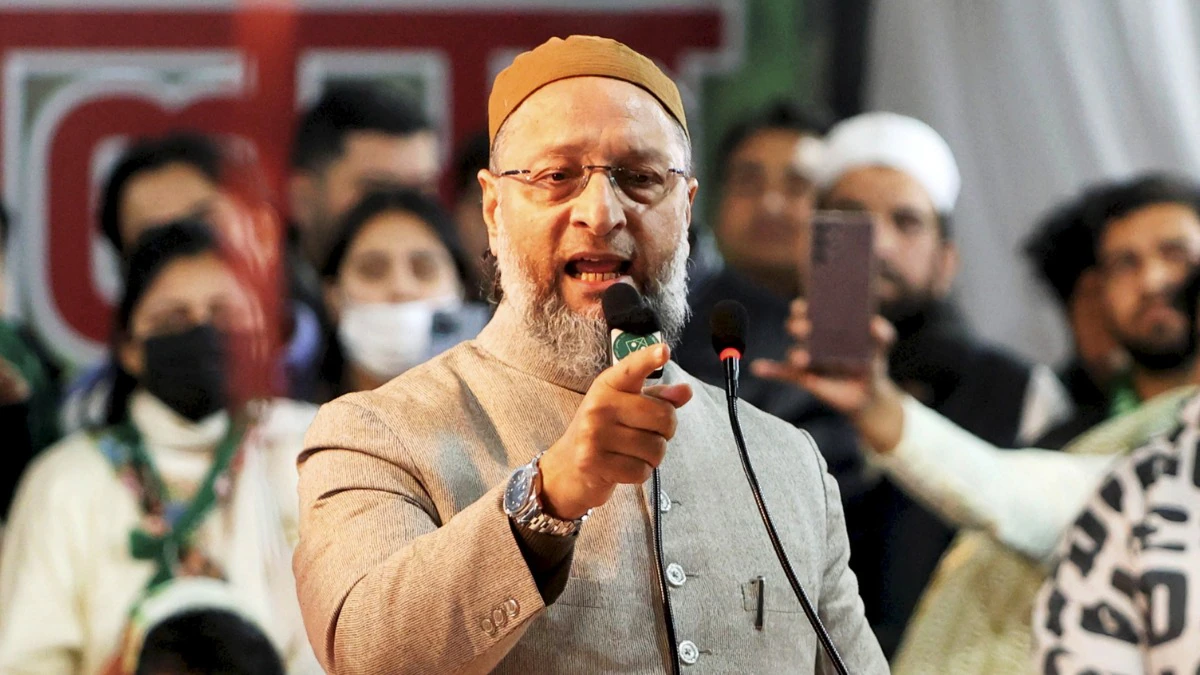
AIMIM Chief Asaduddin Owaisi Questions BJP on India vs Pakistan Match: “Is the Life of 26 Indians More Important or Money?”
Introduction
AIMIM chief Asaduddin Owaisi asked BJP on IND vs PAK match The debate surrounding the India vs Pakistan cricket match once again spilled over from the stadium into the corridors of politics. AIMIM chief and Hyderabad MP Asaduddin Owaisi posed a sharp and provocative question to the ruling Bharatiya Janata Party (BJP): “Is the life of 26 Indians more important or money?” His statement, loaded with political undertones, was not merely about cricket—it was about national security, governance, and the government’s decision-making priorities.
Owaisi’s remarks came in the backdrop of heightened tensions between India and Pakistan, where terrorism, border disputes, and diplomatic challenges form the uneasy context of a cricket rivalry that goes far beyond sport. His comment directly targeted BJP’s stance on holding the much-anticipated match despite the martyrdom of 26 Indians in recent terror attacks.
This blog takes a deep dive into Owaisi’s statement, the political implications, BJP’s possible counterarguments, the history of India-Pakistan cricket amid tensions, and what this controversy reveals about the intersection of politics, cricket, and national security.
Owaisi’s Statement: The Core Question
During his address, Asaduddin Owaisi framed his criticism in a direct and emotional way:
“Is the life of 26 Indians more important, or is money more important? If you value the lives of Indians, then why are you allowing a cricket match with Pakistan to go ahead?”
This statement resonated with a section of the public, particularly those angry about terrorism emanating from Pakistan. Owaisi essentially accused the government of double standards—on one hand, the BJP projects itself as a protector of national security; on the other, it allows cricket diplomacy with Pakistan even after loss of Indian lives.
The Timing of the Remark
The timing of Owaisi’s statement was crucial:
- Recent Terror Attacks: India had recently witnessed deadly terror strikes in which 26 Indians were killed. These attacks, according to reports, had links to Pakistan-based terror groups.
- Upcoming IND vs PAK Match: Cricket boards and ICC had finalized an India-Pakistan match, seen as a major commercial event.
- Political Climate: With elections approaching, every decision of the government is under scrutiny, and Owaisi capitalized on the emotional issue of national pride and security.
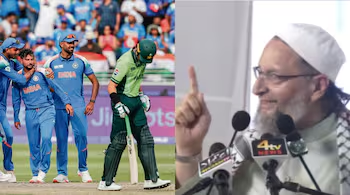
Cricket Beyond the Boundary: India vs Pakistan Rivalry
The India-Pakistan cricket rivalry is not just about sport. It is perhaps the most politically charged rivalry in the world.
- Historic Context: Since partition, every India-Pakistan cricket match has carried emotional weight.
- Post-Kargil Policy: After the 1999 Kargil War and subsequent terror attacks, bilateral cricket between the two nations was virtually suspended, with encounters limited to ICC tournaments.
- Terror Attacks & Cricket Boycotts: After the 2008 Mumbai terror attacks, India stopped hosting bilateral matches with Pakistan.
- Economic Angle: The India-Pakistan match is one of the most watched sporting events globally, bringing in massive TV ratings and revenue for broadcasters and the ICC.
This is precisely why Owaisi’s “money vs lives” question cuts sharply—he is accusing the government of prioritizing cricket revenue over the sanctity of Indian lives lost to terror.
Owaisi’s Political Strategy
Owaisi is known for his fiery speeches and sharp criticisms of BJP. His statement serves multiple purposes:
- Exposing Contradictions: By questioning BJP’s decision, he highlights what he sees as contradictions in BJP’s nationalist rhetoric.
- Positioning AIMIM: As a strong opposition voice, Owaisi positions himself as a leader who dares to ask uncomfortable questions.
- Targeting Emotions: Linking cricket with the lives of 26 Indians evokes strong emotions among citizens.
- Challenging BJP’s Monopoly on Nationalism: BJP often claims the mantle of nationalism, but Owaisi’s remark attempts to reclaim that space by saying true nationalism is valuing lives over money.
BJP’s Likely Response
BJP leaders have not taken Owaisi’s remarks lightly. While some dismissed them as “political theatrics,” others are expected to defend the decision on the following grounds:
- Government’s Duty vs Sports: The government separates political issues from international sports events organized by ICC.
- Global Diplomacy: Avoiding a match might send a message of weakness, while playing asserts India’s confidence.
- Economic Stakes: The match brings enormous revenue, not just to ICC but also to BCCI and indirectly to India’s sports ecosystem.
- Respect for Players: The Indian cricket team, representing national pride, should not be dragged into political debates.
BJP may also turn the tables by accusing Owaisi of selective outrage—questioning BJP on cricket but not condemning Pakistan strongly enough.
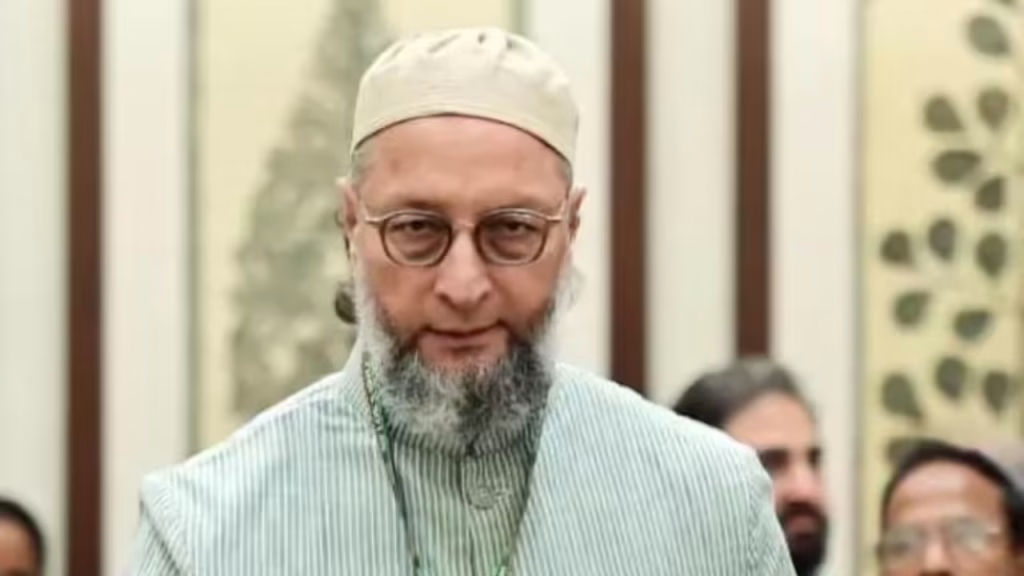
Public Opinion: Divided Sentiments
The Indian public is deeply divided on the issue:
- Against the Match: Many argue that India should not play Pakistan until it stops supporting terrorism.
- For the Match: Others believe cricket should remain separate from politics, and that Indian players should use the match to defeat Pakistan on the field.
- Middle Ground: Some argue India should play but use the platform to highlight Pakistan’s terror links globally.
Owaisi’s statement reflects the first category—those who believe national pride and lives lost are more important than cricket diplomacy.
Operation Sindoor and the National Security Context
Interestingly, Owaisi’s remarks come close on the heels of BJP celebrating the success of Operation Sindoor, a counter-terror operation.
- Modi and BJP leaders projected it as proof of India’s strong stance on security.
- Owaisi’s question indirectly challenges this narrative—if BJP is truly strong on security, why compromise by playing Pakistan in cricket?
Thus, the statement is not just about cricket but a direct attack on BJP’s national security credibility.
Historical Precedents: Cricket and Terror
Several moments in history highlight how India has used cricket ties with Pakistan as a diplomatic tool:
- Post-1965 and 1971 Wars: Cricket ties were suspended.
- After Kargil War: Bilateral cricket became rare, and public sentiment turned hostile.
- 2008 Mumbai Attacks: India completely stopped bilateral matches.
- 2019 Pulwama Attack: Calls to boycott Pakistan grew louder, and BCCI decided against playing Pakistan outside ICC events.
Owaisi’s remarks echo these sentiments, suggesting that if terror continues, cricket ties should not.
The Economics of IND vs PAK Matches
The India-Pakistan match is not just another cricket game—it is a financial jackpot.
- TV Ratings: It is the most-watched cricket match globally.
- ICC Revenue: A significant portion of ICC’s income comes from broadcasting India’s matches.
- BCCI’s Clout: As the richest cricket board, BCCI’s decisions influence ICC heavily.
Owaisi’s criticism directly targets this aspect—suggesting that money, not national interest, is driving the decision to allow the match.
Owaisi and BJP: A Clash of Narratives
This controversy reflects the ideological clash between Owaisi and BJP:
- BJP’s Narrative: Strong nationalism, decisive leadership, global diplomacy, and keeping cricket apolitical.
- Owaisi’s Counter: True nationalism means valuing Indian lives over money or sports events.
By raising this issue, Owaisi is forcing BJP to defend its stance on nationalism—something BJP usually uses against opposition parties.
Media Coverage and Public Discourse
The statement quickly became a talking point in national media and social media platforms:
- News Channels: Debated whether Owaisi was raising a genuine concern or just politicizing cricket.
- Social Media: Hashtags like #BoycottPakMatch and #OwaisiVsBJP trended.
- Cricket Fans: Many fans argued they were torn between national pride and love for cricket.
Implications for Indian Politics
- BJP Under Pressure: BJP may face tough questions from opposition parties who echo Owaisi’s stance.
- Polarization: The issue could polarize voters emotionally, especially in states with upcoming elections.
- Cricket as a Political Weapon: Once again, cricket is being used as a metaphor for India-Pakistan relations.
- Owaisi’s Profile: The AIMIM leader gains visibility by entering the national cricket-politics debate.
Conclusion
Asaduddin Owaisi’s pointed question—“Is the life of 26 Indians more important or money?”—is more than just a statement about cricket. It is a challenge to BJP’s nationalist credentials, a reminder of the sacrifices of Indians in terror attacks, and a criticism of the prioritization of revenue over lives.
While BJP defends its stance on keeping cricket separate from politics, Owaisi’s remarks strike at the emotional chord of the public, making the government justify its decision in moral terms rather than just diplomatic or economic ones.
The India-Pakistan cricket rivalry has always been larger than sport, and Owaisi’s intervention proves that every ball bowled between the two nations is also a test of political will, national pride, and moral responsibility.
In the end, the controversy reveals how deeply intertwined cricket, politics, and national security are in India. Whether the match happens or not, the question Owaisi raised will linger: What should matter more—money or the memory of lives lost?
Read more latest news

