
Introduction
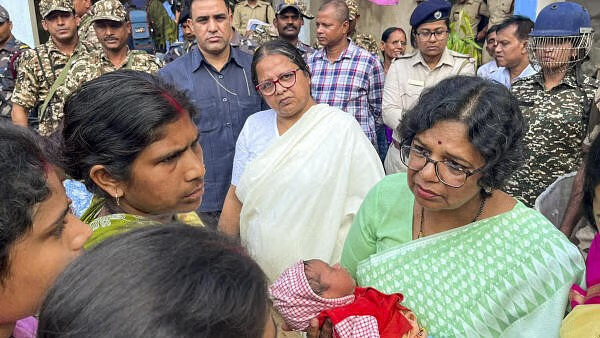
In a significant move underscoring the rising concern over women’s safety and human rights in West Bengal, National Commission for Women (NCW) Chairperson Vijaya Rahatkar recently visited Dhuliyan in the Murshidabad district, which has been rocked by violence in recent weeks. Accompanied by a team of NCW officials, Rahatkar’s visit was aimed at assessing the ground reality, listening to the victims’ accounts, and ensuring that the mechanisms for justice are activated and effective.
The visit holds importance not only because of its human rights dimension but also due to the socio-political tension prevalent in the region, drawing national attention. The victims, mostly women and children, bore the brunt of mob violence that erupted during local unrest, reportedly stemming from political and communal tensions.
This blog takes a detailed look at what transpired during the NCW Chairperson’s visit, her interactions with the victims, the observations made, and the broader implications for governance, law enforcement, and gender justice in West Bengal.
Background: What Led to the Violence in Dhuliyan
Dhuliyan, a bustling town in Murshidabad district located near the India-Bangladesh border, has been under the scanner due to sporadic incidents of violence involving clashes between different groups. According to local sources, tensions flared over issues ranging from political dominance, land disputes, and cultural provocations.
In the past month, certain neighborhoods in Dhuliyan witnessed arson, looting, and attacks, with numerous women reporting harassment, assault, and displacement. The situation escalated quickly, prompting intervention from law enforcement and eventually catching the attention of national bodies such as the NCW.
Arrival of NCW Delegation
On a cloudy morning, NCW Chairperson Vijaya Rahatkar, flanked by a four-member team of legal and women’s rights experts, arrived in Dhuliyan. They were received by district authorities and escorted under tight security. The visit, though official, had a humanitarian focus, as Rahatkar insisted on personally meeting the victims and their families.
The delegation visited relief camps, local police stations, women’s shelters, and the affected households in the violence-hit zones. The Chairperson also conducted closed-door meetings with the victims to ensure they felt secure and free to narrate their experiences.
First-Hand Accounts from Victims
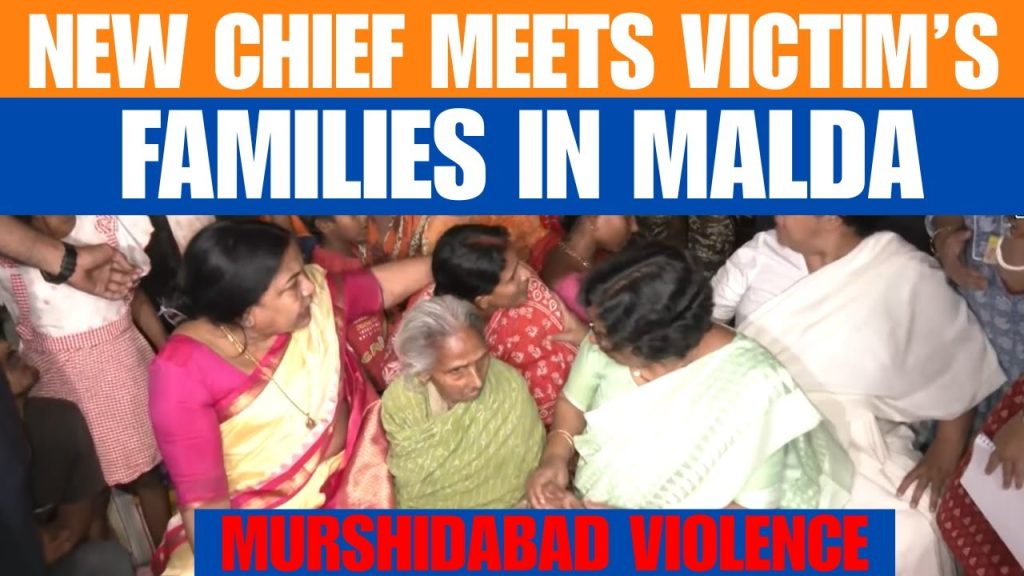
The stories from victims were gut-wrenching. Women recounted being dragged from their homes, verbally abused, and physically assaulted. Some narrated how they lost their loved ones to mob attacks. Others revealed they had to flee without even basic belongings, taking refuge in temporary shelters with no clarity on when they could return.
One victim, Ruksana Begum, told the Chairperson:
“We didn’t know what was happening. One moment we were cooking dinner, the next, our house was set on fire. I ran with my two daughters.”
Another woman, Meera Devi, said:
“The police came late. By the time they arrived, the damage was done. We still don’t feel safe.”
These accounts laid bare the systemic challenges that women in conflict zones face—not just from the violence itself but also from apathy, delay in justice, and lack of safe rehabilitation.
NCW Chairperson’s Response and Promises
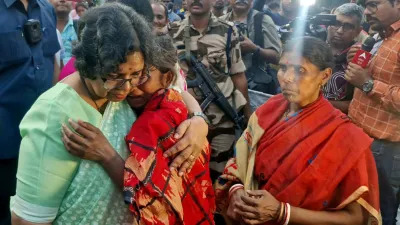
Deeply moved by the testimonies, Chairperson Vijaya Rahatkar addressed the media, stating:
“What we’ve heard here is horrifying. Women were not only attacked but made to feel completely abandoned by the system. The NCW will not let this go unaddressed.”
She made several key announcements:
- Legal Aid: The NCW will provide free legal aid to all women victims of violence in Dhuliyan.
- Counseling Support: Psychological counselors will be sent to the area to help victims recover from trauma.
- Report to Central Government: A detailed report will be submitted to the Ministry of Home Affairs and the Ministry of Women and Child Development.
- Monitoring Mechanism: A local NCW-appointed committee will keep track of the situation and regularly update the central body.
Interaction with Local Authorities
Rahatkar also held discussions with Murshidabad district officials, including the District Magistrate and Superintendent of Police. In these meetings, she raised concerns over the slow police response, the lack of preventive measures, and the delay in FIR registration.
While district authorities assured her that action was being taken and investigations were underway, Rahatkar emphasized the need for swift justice and proactive measures to prevent recurrence.
She remarked:
“Law enforcement has to act swiftly. If they fail to do so, it sends the message that perpetrators can act with impunity.”
Political Reactions
As expected, the visit drew varied reactions from political quarters. Opposition parties hailed Rahatkar’s visit, stating that the state had failed its citizens and external intervention was the need of the hour.
On the other hand, the state government maintained that law and order was under control and accused the NCW of politicizing the issue. Spokespersons pointed to the state’s relief efforts and compensation schemes for affected families.
Regardless of political posturing, the visit brought national attention to a volatile situation that many feared would be swept under the rug.
Social Media and Civil Society Response
The news of Rahatkar’s visit went viral, with pictures and videos of her consoling victims widely shared. Hashtags like #NCWInDhuliyan, #WomenSafetyWB, and #JusticeForVictims trended on X (formerly Twitter).
Civil society organizations, including women’s rights groups and human rights watchdogs, applauded the NCW for stepping in. Some even offered to assist in rehabilitation, legal aid, and mental health support for the victims.
Broader Implications
The Dhuliyan incident and the NCW’s intervention underscore the need for structural reforms:
- Faster response mechanisms during communal or political violence.
- Dedicated women’s helplines that function effectively in rural and semi-urban areas.
- Stronger accountability for law enforcement who fail to protect vulnerable populations.
- Political neutrality in addressing humanitarian crises to ensure focus remains on victims.
Conclusion
Chairperson Vijaya Rahatkar’s visit to Dhuliyan may not solve all problems overnight, but it has certainly re-centered the conversation around women’s safety, justice, and accountability in West Bengal. Her presence offered a glimmer of hope to those who felt abandoned and unheard.
As the NCW prepares its report and recommendations, the country watches closely—will justice prevail? Will the women of Dhuliyan see their rights restored? Or will it become another statistic in a long list of tragedies?
For now, one thing is clear: change begins with listening, and this visit was a vital step in that direction.


Awesome https://is.gd/tpjNyL
Good https://shorturl.at/2breu
Good https://shorturl.at/2breu
Good https://lc.cx/xjXBQT
Awesome https://lc.cx/xjXBQT
Very good https://lc.cx/xjXBQT
Awesome https://t.ly/tndaA
Very good https://t.ly/tndaA
Awesome https://t.ly/tndaA
Good https://urlr.me/zH3wE5
Very good https://rb.gy/4gq2o4
Good https://rb.gy/4gq2o4
Very good https://rb.gy/4gq2o4
Very good https://rb.gy/4gq2o4
Good https://is.gd/N1ikS2
Good https://is.gd/N1ikS2
Awesome https://is.gd/N1ikS2
Good https://is.gd/N1ikS2
Good https://is.gd/N1ikS2
Awesome https://is.gd/N1ikS2
Very good https://is.gd/N1ikS2
Awesome https://is.gd/N1ikS2
Very good https://is.gd/N1ikS2
Awesome https://is.gd/N1ikS2
Awesome https://is.gd/N1ikS2
Good https://is.gd/N1ikS2
Very good https://is.gd/N1ikS2
Good https://is.gd/N1ikS2
Very good https://is.gd/N1ikS2
Very good https://is.gd/N1ikS2
Awesome https://is.gd/N1ikS2
Good https://is.gd/N1ikS2