
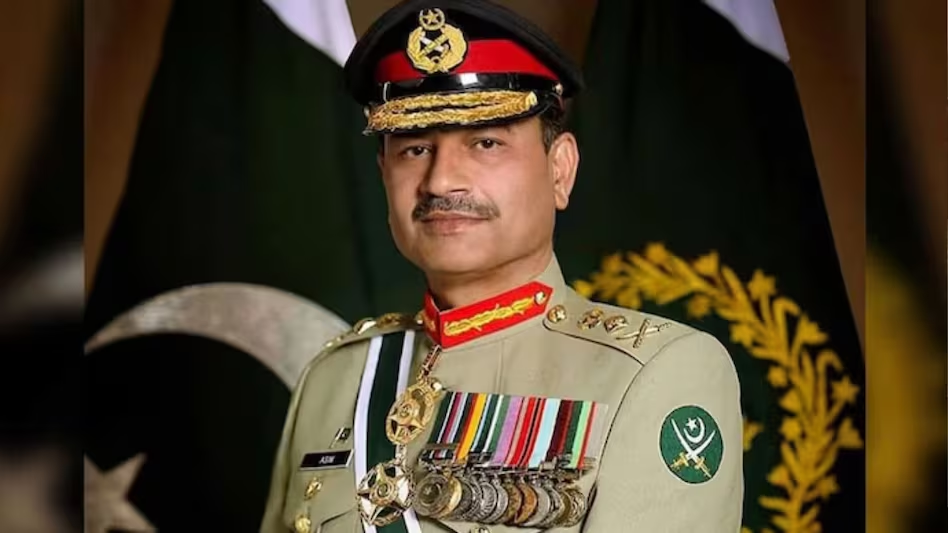
Pakistan Army Chief Asim Munir Faces Three-Front Pressure: Can Pakistan Handle This Escalating Crisis?
Munir faces three front pressure In a rapidly shifting geopolitical landscape, Pakistan finds itself confronting one of the most challenging security environments in its recent history. At the center of this storm stands Pakistan Army Chief Munir faces three front pressure, who is navigating a complex and volatile situation marked by border tensions with India, rising insurgent attacks in Balochistan, and growing friction with the Taliban-led Afghanistan.
Today, Munir faces three front pressure unlike anything seen in the past decade. The convergence of these security threats has raised pressing questions about Pakistan’s military readiness, political stability, and regional strategy. Can the country manage simultaneous tensions on three different fronts? Or is this moment a turning point that could redefine Pakistan’s strategic posture in South Asia?
This in-depth analysis explores the layers of the crisis and assesses whether Pakistan can withstand this mounting pressure.
1. India Border Tensions A Persistent Flashpoint
The India-Pakistan border, particularly along the Line of Control (LoC) in Kashmir, has long been a flashpoint. Relations between Islamabad and New Delhi remain fragile, with periodic escalations that threaten regional peace.
Under Prime Minister Narendra Modi, India has adopted a firm security posture toward Pakistan. Since the 2019 Pulwama attack and the subsequent Balakot airstrikes, both nations have remained in a cautious but tense standoff.
For Pakistan’s military leadership, managing this eastern front is always a top priority. However, at a time when internal and western border challenges are intensifying, Munir faces three front pressure that stretches military focus and resources.
Strategic Dilemma
- Any miscalculation along the LoC could trigger a wider confrontation.
- Pakistan cannot afford a full-scale conflict given its economic challenges.
- India’s increasing military modernization adds another layer of complexity.
While ceasefire agreements have reduced large-scale violations, the trust deficit remains high. Pakistan’s military must remain vigilant, ensuring deterrence without provoking escalation.
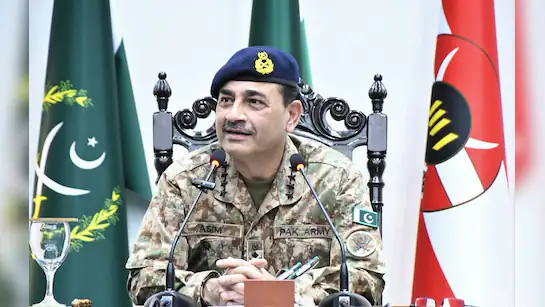
2. BLA Insurgency in Balochistan The Internal Security Storm
The second front lies within Pakistan’s own borders. The Balochistan Liberation Army (BLA) has intensified its insurgency in Balochistan, targeting security forces, infrastructure, and Chinese interests linked to the China-Pakistan Economic Corridor (CPEC).
Balochistan’s grievances are rooted in decades of political marginalization and economic disparities. However, the recent spike in violence has posed a direct challenge to Pakistan’s security establishment.
Why This Front Matters
- Balochistan is strategically critical due to Gwadar Port.
- Attacks undermine investor confidence.
- Military operations risk alienating local populations.
At this critical juncture, Munir faces three front pressure, balancing counterinsurgency operations with the need for political reconciliation. Heavy-handed military action may contain violence temporarily, but long-term peace requires addressing root causes.
3. Afghanistan Taliban Tensions A Complicated Western Border
The western front presents another serious challenge. After the Taliban takeover in 2021, many in Pakistan believed strategic depth would be restored. However, relations between Islamabad and the Taliban have grown increasingly strained.
Clashes along the Durand Line, disputes over border fencing, and concerns about Tehrik-i-Taliban Pakistan (TTP) safe havens have complicated relations.
Key Issues
- Taliban reluctance to act decisively against TTP.
- Border skirmishes creating diplomatic strain.
- Refugee and cross-border movement challenges.
Ironically, a group once perceived as an ally has become another source of tension. Once again, Munir faces three front pressure, forced to secure the western border while avoiding direct confrontation with Kabul’s rulers.
Economic Constraints A Silent Fourth Front
Pakistan’s struggling economy intensifies the security crisis. Inflation, IMF negotiations, and declining foreign reserves limit defense spending flexibility.
Sustaining operations on multiple fronts demands resources. With economic pressure mounting, military planners must prioritize carefully. In this fragile environment, Munir faces three front pressure not only militarily but economically as well.

Regional Implications: Stability at Stake
The implications extend beyond Pakistan’s borders. Instability in Pakistan could:
- Heighten India-Pakistan tensions.
- Destabilize Afghanistan further.
- Impact China’s CPEC investments.
- Influence U.S. regional calculations.
South Asia remains a nuclear-armed region. Any escalation, particularly on the India front, carries global consequences.
Can Pakistan Handle This Three-Front Crisis?
The central question remains: Can Pakistan manage simultaneous challenges from India, BLA insurgents, and Afghan border tensions?
Military Capability
Pakistan’s army remains one of the strongest institutions in the country. It has experience handling insurgencies and border conflicts. However, simultaneous escalation would test operational capacity.
Political Stability
Civil-military coordination is crucial. Internal political divisions could weaken national unity during crisis management.
Diplomatic Strategy
Engagement with Afghanistan, maintaining ceasefire stability with India, and addressing Baloch grievances through dialogue are essential.
Leadership Test for Asim Munir
This moment represents a defining chapter for General Munir faces three front pressure. History often judges military leaders by how they handle multi-dimensional crises.
At this moment, Munir faces three front pressure that could shape Pakistan’s strategic future. His decisions will influence whether tensions are de-escalated or intensified.
Strong intelligence coordination, calibrated military responses, and diplomatic engagement will be key pillars of crisis management.
Strategic Options Moving Forward
- De-escalation with India – Maintain ceasefire stability.
- Political Engagement in Balochistan – Complement military operations with reforms.
- Firm Diplomacy with Taliban – Address TTP concerns while avoiding full confrontation.
- Economic Stabilization – Prioritize fiscal reforms to sustain security commitments.
Without a balanced approach, sustained pressure could strain Pakistan’s internal cohesion.

Conclusion: A Defining Moment
Pakistan stands at a crossroads. The convergence of India border tension, BLA insurgency, and Afghan border clashes has created a rare strategic scenario.
Repeatedly, observers note that Munir faces three front pressure — a phrase that captures the intensity of this moment. Whether this pressure leads to fragmentation or reform depends on strategic decisions taken now.
If managed prudently, Pakistan could stabilize its borders and rebuild regional confidence. If mismanaged, the consequences could reverberate across South Asia.
The coming months will determine whether Pakistan can transform crisis into opportunity—or whether this three-front pressure will redefine the region’s security balance.
Read More latest News

