
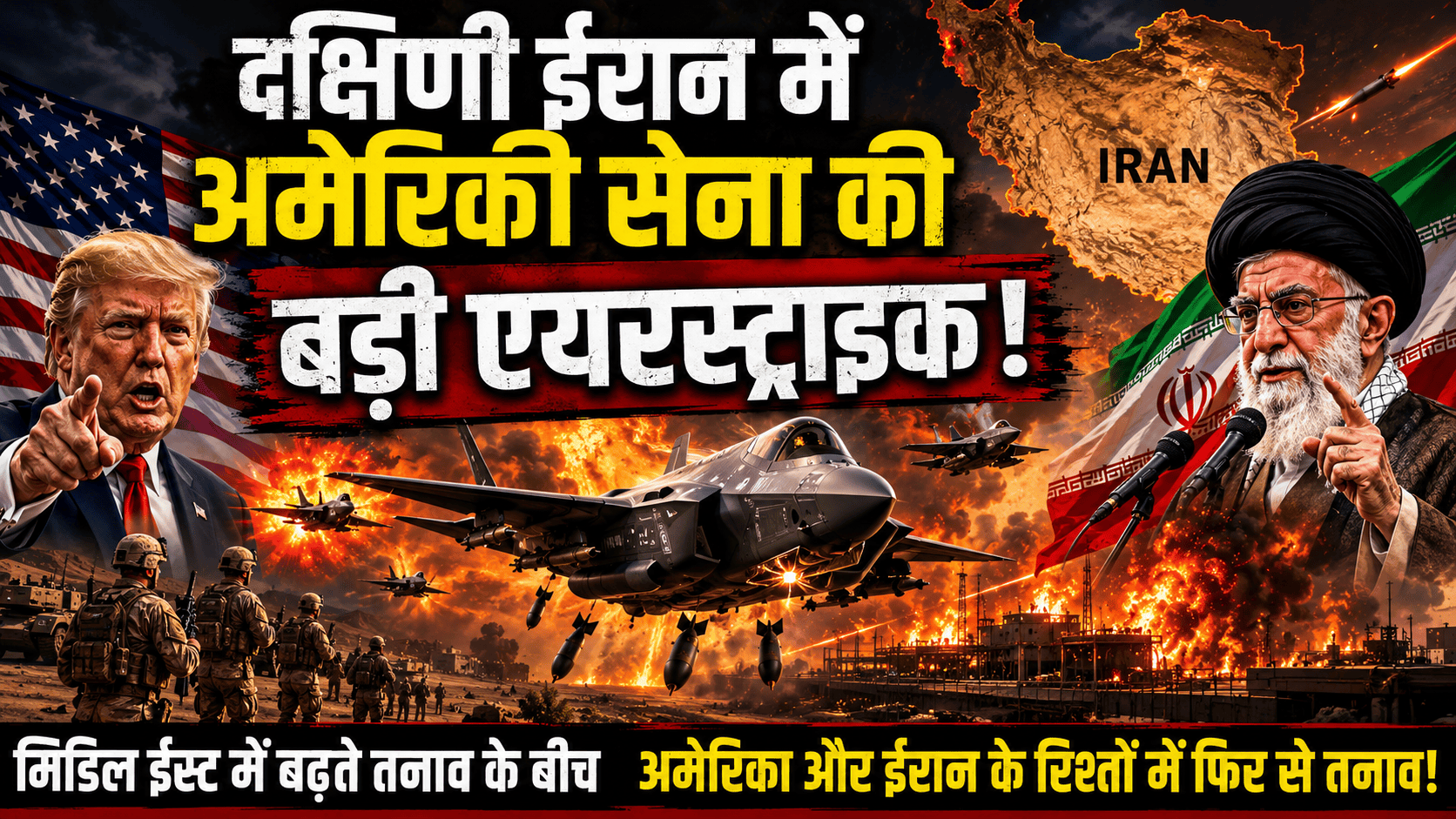
Major US Airstrike in Southern Iran: Middle East Tensions Rise Again
The Middle East is once again witnessing a dangerous escalation after reports emerged of a major US airstrike in southern Iran. The latest developments have increased fears of a broader regional conflict and sparked concerns over global oil supplies, maritime trade, and international diplomacy. The situation has become even more critical because the alleged strikes reportedly targeted missile sites and naval assets near the Strait of Hormuz — one of the world’s most important oil shipping routes.
According to multiple international reports, the major US airstrike in southern Iran comes at a time when diplomatic talks between Washington and Tehran were already under strain. Military actions in the region have once again shifted the focus toward the fragile balance of power in the Gulf.
Recent reports suggest that the United States carried out attacks near the Strait of Hormuz, with US officials describing the operation as defensive in nature.
Why the Strait of Hormuz Matters
The Strait of Hormuz is often called the world’s most critical energy chokepoint. Nearly one-fifth of global oil shipments pass through this narrow waterway. Any military confrontation in this area immediately impacts international markets, shipping companies, and energy prices.
The major US airstrike in southern Iran has intensified fears that commercial shipping in the region could face further disruptions. Reports indicate that vessel traffic through the Strait remains severely restricted amid continuing tensions.
Experts warn that if the Strait of Hormuz becomes unstable for a prolonged period, countries dependent on Gulf oil exports could experience significant economic pressure. This includes nations across Asia, Europe, and even North America.
Reports of Missile Sites and Naval Targets
According to media reports, the major US airstrike in southern Iran reportedly targeted missile launch systems and naval boats believed to be operating near strategic shipping lanes. Some reports suggested that Iranian military boats suspected of laying mines were among the targets.
US officials reportedly described the operation as a “self-defense” measure aimed at protecting maritime navigation and American interests in the Gulf region. Iran, however, condemned the attacks and accused Washington of violating diplomatic understandings.
The strikes reportedly occurred near Bandar Abbas, a strategically important port city in southern Iran that overlooks the Strait of Hormuz.

Diplomatic Talks Under Pressure
Ironically, the major US airstrike in southern Iran took place while diplomatic negotiations between the two nations were still ongoing. Several international mediators have been trying to reduce tensions between Tehran and Washington in recent months.
Despite the military escalation, reports indicate that Iran has not entirely withdrawn from peace negotiations.
However, the latest developments have made diplomacy significantly more complicated. Iranian officials reportedly accused the US of acting in “bad faith,” while American officials insisted that the strikes were necessary for regional security.
The timing of the major US airstrike in southern Iran has therefore raised serious questions about whether diplomacy can survive amid continued military operations.
Rising Global Concerns
Global leaders and analysts are now worried that the major US airstrike in southern Iran could trigger a chain reaction across the Middle East. Several countries in the region are already facing political instability, and any large-scale confrontation between Iran and the US could involve multiple regional actors.
International markets reacted sharply to the news. Oil prices initially surged as investors feared disruptions in energy supplies from the Gulf region. Reports suggest that traders remain extremely sensitive to any updates related to the Strait of Hormuz.
The possibility of military escalation has also alarmed shipping companies, insurance providers, and global investors.
The Strategic Importance of Southern Iran
Southern Iran has always played a vital role in Tehran’s military strategy. The region hosts key naval installations, missile systems, and access points to the Persian Gulf.
The major US airstrike in southern Iran reportedly focused on military infrastructure that Washington considers a threat to international shipping and allied forces.
For decades, Iran has invested heavily in asymmetric warfare capabilities in the Gulf region. These include missile systems, fast attack boats, drones, and naval mines. US military officials have frequently expressed concerns about Iran’s ability to disrupt maritime traffic through the Strait of Hormuz.
Past reports have also highlighted increased missile threats to merchant shipping in the area.
Impact on Oil Prices
One of the biggest consequences of the major US airstrike in southern Iran is the potential impact on global oil markets. Even the possibility of conflict near the Strait of Hormuz can trigger major fluctuations in energy prices.
Energy analysts say that traders fear any scenario where oil tankers are unable to safely pass through the Gulf. A prolonged disruption could increase fuel prices worldwide and worsen inflation pressures in many countries.
Although some shipping activity has reportedly resumed, the situation remains highly uncertain.
Countries such as India, China, Japan, and South Korea closely monitor developments in the Gulf because they rely heavily on imported oil from the Middle East.
Iran’s Response
Iran strongly criticized the major US airstrike in southern Iran and warned that the country would defend its sovereignty. Iranian leaders have repeatedly stated that foreign military operations near their territory will not go unanswered.
Iranian officials also warned the United States against interfering in the Strait of Hormuz. Earlier statements from Tehran suggested that any attempt to control or dominate the waterway could lead to direct confrontation.
At the same time, Iranian authorities appear to be balancing military responses with diplomatic calculations. Analysts believe Tehran may want to avoid a full-scale war while still demonstrating strength.
US Position on the Crisis
American officials have defended the major US airstrike in southern Iran by emphasizing the need to protect commercial shipping and regional stability.
US officials reportedly accused Iranian naval units of threatening maritime routes and placing mines in strategic areas. Washington insists that freedom of navigation in the Strait of Hormuz is essential for global economic stability.
Some US leaders have also stressed that the Strait will remain open “one way or another.”
The Biden administration — or any future US leadership — faces a difficult balancing act: avoiding a major war while maintaining military deterrence against Iran.

Regional Reactions
Countries across the Middle East are closely monitoring the aftermath of the major US airstrike in southern Iran. Gulf nations are especially concerned because they sit directly along major shipping routes and energy infrastructure.
Saudi Arabia, the UAE, Qatar, and Bahrain all understand that any conflict in the Strait of Hormuz could immediately affect their economies and national security.
Meanwhile, Israel continues to monitor Iran’s military activities closely. The broader geopolitical rivalry involving Iran, Israel, and the United States remains one of the key drivers of instability in the region.
Shipping and Maritime Security
The major US airstrike in southern Iran has once again highlighted how vulnerable maritime trade routes remain during geopolitical crises.
Shipping companies are already taking precautionary measures. Some tankers have reportedly turned off tracking systems while moving through the Strait to avoid detection or targeting.
Insurance premiums for ships operating in the Gulf region are also expected to rise sharply if tensions continue.
Military analysts warn that even limited naval clashes in the Strait of Hormuz could disrupt billions of dollars in global trade.
The Risk of Wider Conflict
The biggest concern surrounding the major US airstrike in southern Iran is the possibility of wider regional escalation.
If retaliation continues from either side, the conflict could spread beyond southern Iran and affect neighboring countries. Proxy groups aligned with Iran across the Middle East could also become involved.
The Gulf region has witnessed similar cycles of escalation before, but experts warn that current tensions are particularly dangerous because multiple flashpoints are active simultaneously.
International Diplomacy and the United Nations
The United Nations and several global powers are expected to intensify diplomatic efforts following the major US airstrike in southern Iran.
European nations, China, and Russia have repeatedly called for restraint in the Gulf region. Many governments fear that prolonged instability could damage the global economy and trigger humanitarian crises.
Diplomats are likely to push for renewed negotiations aimed at preventing direct military confrontation.
Future Outlook
The coming days will be crucial in determining whether the major US airstrike in southern Iran becomes part of a broader military campaign or remains a limited escalation.
Much depends on how Iran responds, whether diplomatic talks continue, and how international powers intervene diplomatically.
At the moment, the Middle East remains on edge. Oil markets remain volatile, shipping routes remain uncertain, and global leaders remain concerned about the possibility of further escalation.
The major US airstrike in southern Iran has once again demonstrated how quickly tensions in the Gulf can impact the entire world. From rising oil prices to fears of military conflict, the consequences extend far beyond the Middle East.
As negotiations continue alongside military posturing, the world watches closely to see whether diplomacy or confrontation will define the next chapter in US-Iran relations.
Read more latest news

