
Introduction
A video of Rashtriya Janata Dal (RJD) supremo Lalu Prasad Yadav, dating back to 2010, has recently resurfaced and gone viral on social media. In this video, Lalu Prasad Yadav can be seen advocating for the creation of a strict law regarding Waqf properties inside the House. The sudden reappearance of this video has reignited discussions on the legal framework surrounding Waqf properties in India and has triggered political reactions across various parties.
As the debate on the Waqf (Amendment) Bill, 2024, gains momentum, this old clip has sparked controversy and speculation. What was the context behind Lalu Prasad Yadav’s statement in 2010? How does it relate to the present political climate? And what are the broader implications of this resurfacing video?
This blog provides an in-depth analysis of the viral clip, the political and historical background of Lalu Prasad Yadav’s statement, and the ongoing discussions surrounding Waqf laws in India.
1. Understanding the Viral Video
A. The Context of Lalu Prasad Yadav’s 2010 Statement
In the resurfaced video, Lalu Prasad Yadav, who was a Member of Parliament at the time, is seen speaking inside the House, advocating for a strong and strict law regarding Waqf properties. He emphasized the need to protect Waqf land from encroachments and called for stronger administrative measures to ensure that Waqf assets are utilized for the welfare of the Muslim community.
Some key points from his speech include:
- Strict protection of Waqf properties against illegal occupation.
- Need for stronger Waqf boards with better financial and legal powers.
- Criticism of encroachments and misuse of Waqf land by powerful individuals and government agencies.
- Demand for more transparency in Waqf board functioning.
B. Why Has the Video Gone Viral Now?
The resurfacing of this video in 2024 has come at a politically charged moment when the government is debating amendments to the Waqf Act.
Several factors have contributed to its viral spread:
- The ruling party and opposition leaders are engaged in heated debates on the Waqf (Amendment) Bill, 2024.
- There are allegations that Waqf boards have been misused, and the government wants more oversight.
- Political opponents have used the video to question RJD’s shifting stance on Waqf laws over the years.
- Social media users have reignited discussions on secularism, religious property rights, and Lalu Prasad Yadav’s legacy in Indian politics.
2. Political Reactions to the Video
A. RJD’s Stand: A Shift in Position?
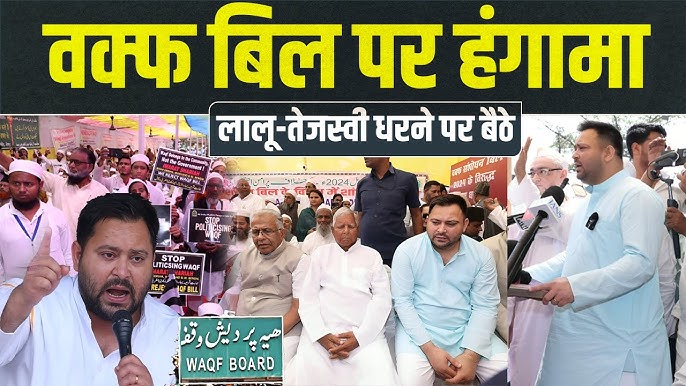
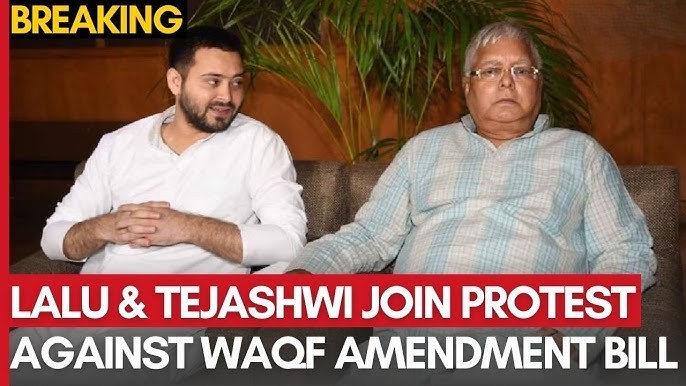
The resurfaced video has put RJD in an uncomfortable position, as the party has recently opposed the Waqf (Amendment) Bill, 2024, which seeks stricter regulations on Waqf boards. Critics argue that RJD’s position has changed over time.
RJD spokespersons have responded by stating:
- Lalu Prasad Yadav’s 2010 demand was for protection of Waqf properties, not for government interference.
- The 2024 amendment reduces community control over Waqf properties, which is why RJD is opposing it.
- The political climate in 2010 was different, and today’s amendments do not align with the original spirit of Lalu Prasad Yadav’s demands.
B. The BJP’s Response: A Political Opportunity
The Bharatiya Janata Party (BJP) has seized upon this video to attack RJD and its allies, arguing that:
- Lalu Prasad Yadav himself advocated for strict Waqf laws in 2010, but his party is now opposing similar measures.
- Opposition parties are engaging in vote-bank politics by changing their stance on Waqf regulation.
- The 2024 amendments are aimed at ending corruption and ensuring transparency in Waqf properties, not targeting any community.
C. Muslim Organizations and Community Leaders
Various Muslim organizations and clerics have reacted differently to the video:
- Some have praised Lalu Prasad Yadav’s 2010 statement as a genuine attempt to safeguard Waqf properties.
- Others argue that the 2024 bill is more about government control than protection, and thus, Lalu’s past speech should not be misinterpreted.
- Calls have been made for a non-political approach to Waqf reforms, ensuring that they benefit the community without political interference.
3. The Importance of Waqf in India
A. What is Waqf?
Waqf refers to an endowment of property for religious or charitable purposes under Islamic law. These properties are administered by State Waqf Boards and the Central Waqf Council, which manage land, mosques, graveyards, educational institutions, and other assets for community welfare.
B. Challenges Faced by Waqf Properties
Some of the longstanding issues with Waqf properties include:
- Encroachments by private and government agencies.
- Corruption and mismanagement within Waqf boards.
- Lack of financial transparency in asset utilization.
- Political interference in the administration of Waqf properties.
C. Government Reforms Over the Years
Several governments have attempted to introduce reforms to improve Waqf management:
- The Waqf Act, 1995 was introduced to create structured governance for Waqf properties.
- Amendments in 2013 sought to digitize Waqf records and improve accountability.
- The 2024 Waqf (Amendment) Bill aims to increase government oversight and restructure Waqf governance.
4. The Larger Political Implications
A. The Role of Social Media in Political Narratives
The viral spread of Lalu Prasad Yadav’s 2010 speech highlights how social media has become a battleground for political narratives. In an era where old clips can be used to challenge politicians, parties must remain consistent in their policy stances to avoid controversies.
B. The 2024 Elections and Vote Bank Politics
With the 2024 General Elections approaching, parties are carefully crafting their messaging around Waqf laws to appeal to different voter bases:
- BJP is positioning itself as a party that wants transparency in religious endowments.
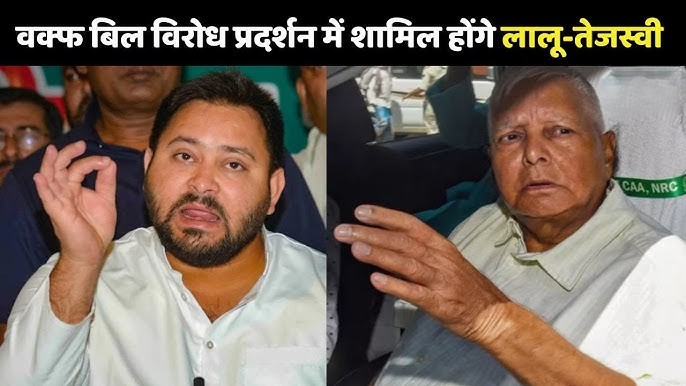
- RJD and other opposition parties are focusing on the autonomy of religious institutions.
- Muslim leaders are divided on whether stricter laws are necessary or whether they pose a threat to community control over Waqf assets.
C. The Future of Waqf Reforms
The debate on Waqf laws will likely continue for years to come. While there is consensus on the need for better Waqf management, there is disagreement on how to balance transparency with religious autonomy.
To move forward, stakeholders need to:
- Establish independent regulatory bodies to monitor Waqf properties.
- Ensure political neutrality in Waqf board appointments.
- Strengthen legal protections against encroachments while maintaining community involvement.
Conclusion
The resurfacing of Lalu Prasad Yadav’s 2010 speech on Waqf has sparked a new political controversy, highlighting the shifting dynamics in India’s approach to religious endowments. While his original intent was to protect Waqf properties from misuse, the current debate revolves around whether government intervention is the right approach.
As the 2024 Waqf (Amendment) Bill continues to generate discussions, it remains to be seen whether the government will adopt a balanced approach that respects both transparency and religious autonomy. In the meantime, the viral video serves as a reminder that political statements, once recorded, can resurface to shape narratives in unexpected ways.
read more latest news

