
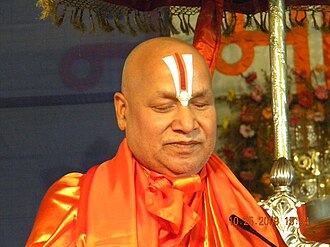
“I Have Asked for PoK as Dakshina”: Jagadguru Rambhadracharya’s Call for a Spiritual and National Awakening
Introduction
In a statement that has captivated the nation and sparked intense discussions across religious, political, and cultural circles, Jagadguru Rambhadracharya, one of India’s most revered Hindu saints and spiritual scholars, recently declared:
“I gave him the initiation of the same Ram Mantra which Mother Sita gave to Lord Hanuman, after which he conquered Lanka. I have asked for Dakshina from him that I want PoK.”
These words, rich in historical symbolism and contemporary relevance, were not mere religious rhetoric—they struck a deep chord in the national psyche. The allusion to Ramayana, the call for reclaiming Pakistan-occupied Kashmir (PoK), and the subtle alignment of spiritual devotion with national resolve have created ripples throughout the country.
In this blog, we will explore the multiple layers of this profound statement—its religious origins, symbolic interpretation, political implications, and the growing sentiment around PoK’s integration with India. We’ll also delve into Jagadguru Rambhadracharya’s role as a spiritual force in the nation and how such voices are shaping contemporary India’s identity and aspirations.
Who Is Jagadguru Rambhadracharya?
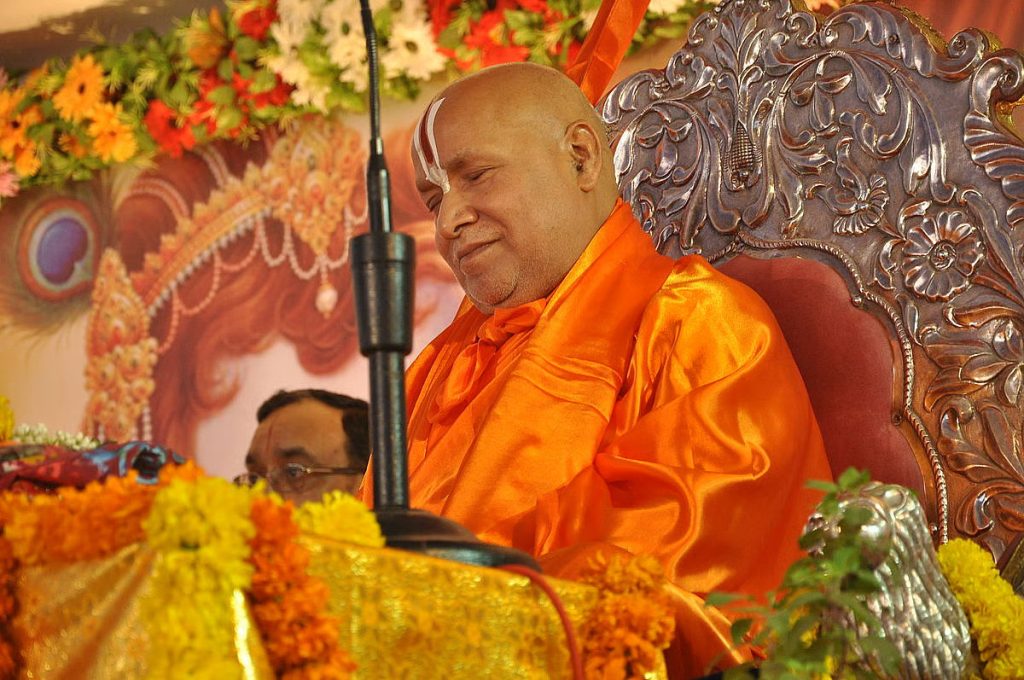
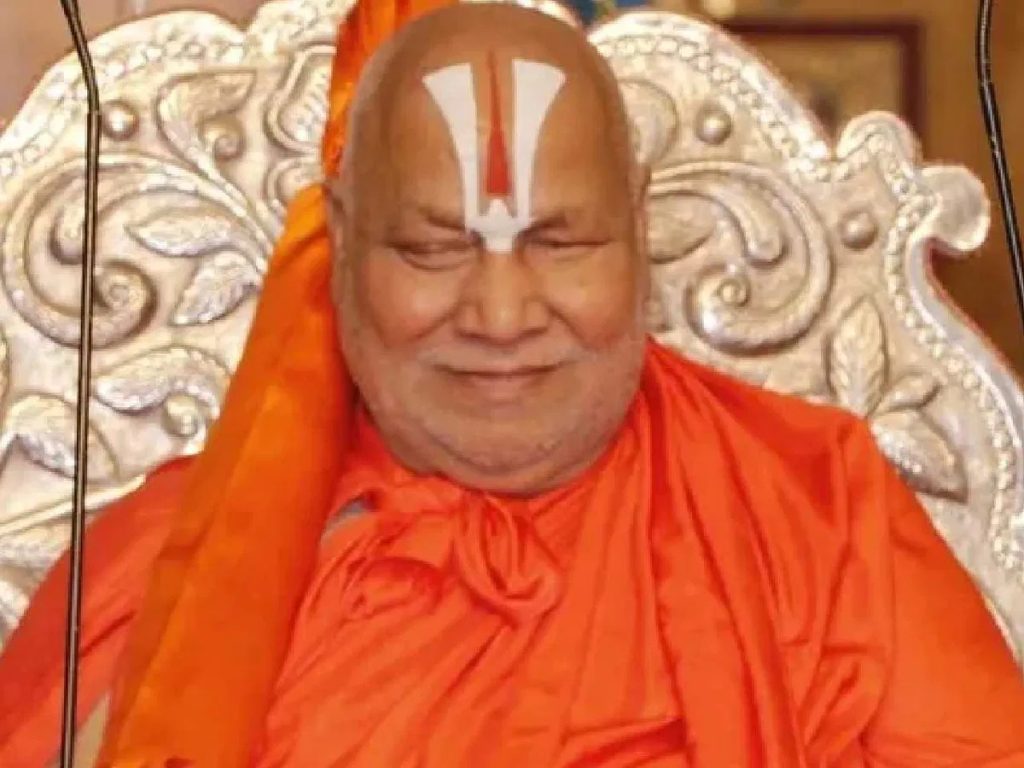
Jagadguru Ramanandacharya Swami Rambhadracharya is a blind Hindu spiritual leader, Sanskrit scholar, author, poet, and educator. Born in 1950, he has authored more than 100 books and epic commentaries on the Ramayana, Bhagavad Gita, and other Hindu scriptures. He is also the founder of the Jagadguru Rambhadracharya Handicapped University, a unique institution dedicated to the education of the differently-abled.
A Katha vachak (spiritual storyteller) of global acclaim, he has mesmerized audiences across the world with his soul-stirring discourses on Lord Ram and Hindu philosophy. Revered by millions, Rambhadracharya’s voice carries moral weight, spiritual authority, and profound nationalistic undercurrents.
Decoding the Statement: Ram Mantra, Hanuman, and Lanka
To understand the depth of his statement, we must return to the Ramayana, the epic that forms the backbone of Hindu cultural consciousness.
In the sacred tale, when Lord Hanuman embarks on his mission to find Sita Mata in Lanka, she gives him a divine mantra—a spiritual power booster—imbued with the strength of her devotion and blessings. It is with this Shakti that Hanuman crosses the ocean, enters Lanka, burns it down, and returns victoriously.
By stating that he gave a disciple the same Ram Mantra, Jagadguru Rambhadracharya evoked the symbol of divine conquest. But he didn’t stop there. He then added:
“I have asked for Dakshina from him that I want PoK.”
This part transforms the spiritual narrative into a national aspiration. Just as Hanuman conquered Lanka, Rambhadracharya symbolically asks the nation—or its warrior leaders—to reclaim PoK as a form of Dakshina—the offering or gratitude traditionally given by a disciple to the guru.
The Power of Mantra: Spirituality as Strength
Mantras are more than just words in Hinduism—they are believed to be cosmic codes that can awaken latent spiritual and physical power. The Ram Mantra in particular—“Shri Ram Jai Ram Jai Jai Ram”—is considered a weapon of devotion and courage.
In Ramayana, Hanuman becomes invincible with the power of Ram Naam. Similarly, Rambhadracharya’s message implies that with devotion to righteousness, India too can become fearless and achieve even the most formidable tasks, like reclaiming PoK.
This is a call for:
- Moral resurgence
- Spiritual nationalism
- Non-violent strength rooted in divine will
PoK: A Matter of History, Law, and Emotion
Pakistan-occupied Kashmir, commonly referred to as PoK, has been a thorn in India’s side since 1947. Although it was forcibly occupied by Pakistan during the first Indo-Pak war, India has always maintained that PoK is an integral part of its territory, illegally occupied by Pakistan.
Jagadguru’s demand for PoK as Dakshina taps into this unresolved wound of Indian identity. His statement resonates with millions who see PoK not just as land, but as legacy—a piece of cultural, spiritual, and civilizational identity that remains unjustly separated.
The Politics Behind the Spiritual
Though not a political figure, Rambhadracharya’s statements often carry political undertones. By invoking PoK, he:
- Reinforces the Modi government’s strong stance on territorial integrity.
- Inspires the Hindu nationalist narrative of restoring Akhand Bharat (Undivided India).
- Bridges the gap between religion and national policy, a pattern increasingly visible in Indian public life.
While critics may call this religious overreach, his followers believe it reflects the awakening of India’s dharmic soul—a force that will no longer tolerate division, deceit, or foreign domination.
Dakshina: A Gift of Patriotism
In traditional guru-shishya parampara, Dakshina is a token of respect, usually given after receiving knowledge. Asking for PoK as Dakshina does not mean Rambhadracharya seeks power or land for himself. Instead, he calls for:
- A national gift to the spiritual spirit of India.
- A tribute to Lord Ram, under whose name righteousness must be restored.
- A gesture of reclaiming what belongs to India—not just geographically, but morally and historically.
It’s a non-materialistic demand that holds immense symbolic power.
A Spiritual Surge in Indian Public Life
In recent years, spiritual figures like Jagadguru Rambhadracharya have become national voices. Their presence at major events, such as the Ram Mandir Bhoomi Pujan, Republic Day celebrations, and even foreign summits, shows how India’s spiritual heritage is no longer on the sidelines.
Statements like this:
- Elevate public discourse from the routine to the transcendental.
- Encourage citizens to look at national issues through moral and dharmic lenses.
- Inspire young Indians to connect with their cultural and spiritual roots.
Public Reactions: Reverence and Reflection
The reaction to Jagadguru’s PoK statement has been overwhelmingly passionate. While supporters hailed him as a seer of truth, critics argued he was politicizing religion. But even detractors couldn’t deny the emotional depth and cultural weight behind the reference to Sita, Hanuman, and Lanka.
Social media platforms buzzed with:
- Hashtags like #PoKDakshina and #RamMantraForPoK
- Memes portraying Hanuman flying across to reclaim PoK
- Calls for spiritual campaigns in support of India’s claim over PoK
Clearly, this wasn’t just a statement. It was a cultural spark.
The Ram Mandir Context
This statement also comes in the backdrop of the Ram Mandir completion in Ayodhya. With the inauguration of the temple, many see Ram Rajya—a just and ideal governance—being spiritually inaugurated as well.
By referencing Lord Ram, Hanuman, and Sita, Rambhadracharya was:
- Extending the message of Ram Rajya from Ayodhya to Kashmir
- Highlighting the unity of India’s sacred geography
- Suggesting that spiritual completion is only possible when India is whole
Spiritual Nationalism: India’s Unique Path
Unlike Western nationalism rooted in flags and constitutions alone, Indian nationalism has always been spiritual—rooted in rivers, temples, forests, and gods.
Jagadguru’s message, therefore, is not just for the government, but for every Indian:
“Just as Hanuman took Ram’s name and overcame every obstacle, so too can we, by invoking Ram’s strength, achieve the unthinkable.”
The Future: Will Words Become Action?
The road to PoK is not just about military strategies—it’s about:
- Diplomatic positioning
- International law
- Domestic unity
- Global perception
But statements like this build cultural momentum. When spiritual leaders set the moral tone, political leaders find public support more accessible.
With growing public support, consistent messaging, and a deep spiritual connection to Kashmir, India may see new strategies emerge—military, diplomatic, or civil—that aim toward PoK reintegration.
Conclusion
When Jagadguru Rambhadracharya declared, “I gave him the same Ram Mantra which Mother Sita gave to Lord Hanuman, and I asked for PoK as Dakshina,” he was not just quoting scripture—he was scripting history.
This wasn’t about land. It was about legacy. About Lord Ram’s justice, Sita’s grace, and Hanuman’s courage—embodied in India’s collective conscience.
As the spiritual winds rise once again in India’s public life, voices like Rambhadracharya’s remind us that Bhakti and Bharatiya pride are not separate streams—they are one Ganga.
In the end, whether or not PoK is returned soon, the idea of a unified, righteous, and culturally awakened India has already begun to take root. And in that spiritual soil, Rambhadracharya’s words echo like a mantra for a nation reborn.


https://shorturl.fm/68Y8V
https://shorturl.fm/j3kEj
https://shorturl.fm/JtG9d