

ISRO to Launch Its Heaviest Satellite for the Indian Navy on November 2: Strengthening India’s Maritime Power
Introduction: A New Milestone for India’s Space and Defence Sectors
The Indian Space Research Organisation (ISRO) is set to script yet another glorious chapter in India’s space journey with the launch of its heaviest satellite for the Indian Navy on November 2. The satellite, reportedly named GSAT-7R, will play a crucial role in bolstering India’s maritime communication and defense capabilities.
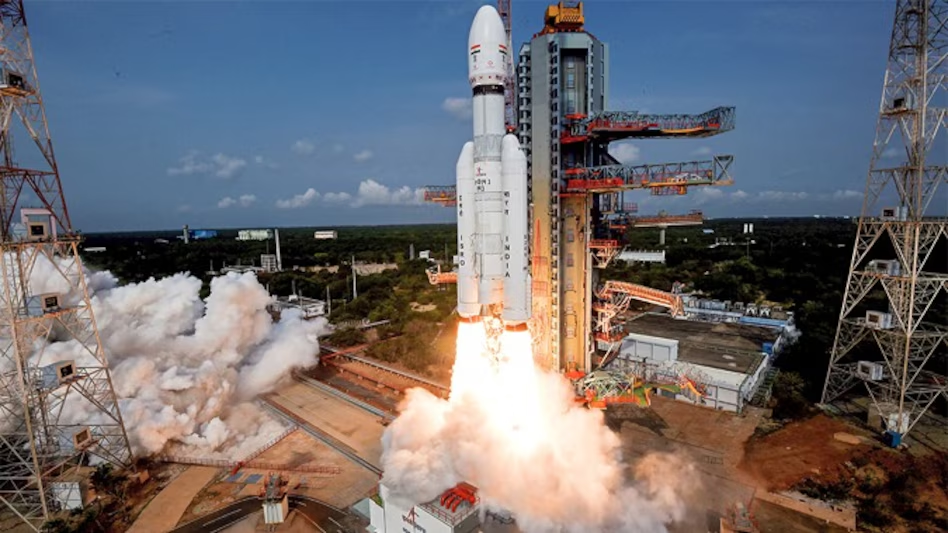
Interestingly, this mission will use the same powerful rocket that launched Chandrayaan-3, India’s historic lunar mission that made global headlines after successfully landing on the Moon’s south pole. The upcoming launch will not only enhance the Navy’s operational reach but also symbolize India’s growing self-reliance in defense and space technology.
The Satellite: GSAT-7R and Its Strategic Importance
The upcoming satellite, GSAT-7R, is designed specifically for the Indian Navy’s secure communication network. It will serve as a dedicated communication satellite providing real-time data, surveillance, and connectivity across the vast maritime zones under India’s watch.
GSAT-7R is part of the GSAT-7 series, following GSAT-7 (Rukmini), GSAT-7A (used by the Indian Air Force and Army), and GSAT-7B (planned for the Indian Army). Each satellite in the series plays a vital role in India’s defense communication architecture.
The new satellite is expected to have:
- Higher bandwidth capacity,
- Longer mission life, and
- Expanded coverage area across the Indian Ocean Region (IOR).
It will act as a force multiplier for the Navy, helping coordinate ships, submarines, and aircraft during missions, and ensuring secure communication links even in deep-sea operations.
The Launch Vehicle: GSLV Mk III – India’s Heavy-Lift Rocket
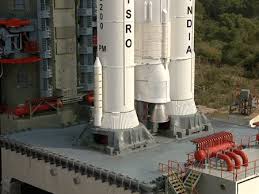
The satellite will be launched aboard the Geosynchronous Satellite Launch Vehicle Mark III (GSLV Mk III), also known as LVM-3, India’s most powerful and reliable rocket. This is the same launch vehicle that successfully carried Chandrayaan-3 to the Moon in 2023.
GSLV Mk III has proven itself as a workhorse for heavy payload missions, capable of carrying up to 4 tons of payload into geostationary transfer orbit (GTO). Its indigenous cryogenic engine and advanced stages make it a symbol of India’s technological advancement.
For this mission, ISRO engineers have made several modifications and optimizations to ensure the satellite’s smooth deployment and operational efficiency in space.
The Role of ISRO and the Indian Navy Collaboration
The collaboration between ISRO and the Indian Navy has grown immensely over the past decade. The Navy relies heavily on ISRO’s satellite network for navigation, surveillance, and communication across vast oceanic regions.
The first such collaboration began with the launch of GSAT-7 “Rukmini” in 2013. That satellite provided communication coverage over the Indian Ocean Region (IOR), helping the Navy link its fleet of warships and aircraft under one unified network.
With GSAT-7R, this capability will expand further — enabling secure, encrypted, and uninterrupted communication across an even larger maritime area, including regions of strategic interest such as the Arabian Sea, Bay of Bengal, and Indo-Pacific waters.
This advancement will also enhance coordination during:
- Anti-piracy operations,
- Humanitarian assistance and disaster relief (HADR) missions,
- Search and rescue operations, and
- Strategic surveillance missions.
Boost to India’s Maritime Security Architecture
In recent years, India’s maritime interests have expanded beyond its traditional boundaries. The growing presence of foreign naval forces in the Indian Ocean Region, especially from China, has prompted India to strengthen its maritime surveillance and communication systems.
The new satellite will help create an integrated maritime domain awareness system, linking:
- Naval warships,
- Submarines,
- Maritime reconnaissance aircraft (like P-8I), and
- Coastal command centers.
It will allow real-time monitoring of ships, ensure encrypted communications, and reduce dependency on terrestrial or foreign communication systems.
This marks a strategic leap toward “Atmanirbhar Bharat” (self-reliant India) in defense communication and space security.
ISRO’s Role in Strengthening National Security
While ISRO is primarily known for its scientific and civilian space missions, the organization has increasingly contributed to national defense and security infrastructure.
From launching reconnaissance satellites like RISAT and Cartosat for the armed forces to providing emergency disaster response systems, ISRO’s capabilities have made India one of the few countries that seamlessly blend civil and military space technologies.
The GSAT-7R mission reinforces this partnership, showing how space technology can serve national defense without militarizing space. Instead, it builds resilience, independence, and precision for India’s armed forces.
A Glimpse into ISRO’s Upcoming Missions
The launch of the Navy’s satellite is part of ISRO’s packed calendar of upcoming missions. After the success of Chandrayaan-3 and Aditya-L1 (India’s first solar mission), ISRO is moving toward several major projects:
- Gaganyaan Mission – India’s first human spaceflight program.
- NISAR Satellite – a joint mission with NASA for earth observation.
- Shukrayaan – Venus exploration mission.
- Next-gen communication satellites – for faster broadband and defense networks.
Each mission builds upon India’s growing expertise and international credibility as a space power with indigenous innovation at its core.
From the Moon to the Ocean: ISRO’s Expanding Horizons
ISRO’s journey from launching small satellites in the 1970s to moon and Mars missions today is a story of resilience and brilliance. Now, its work in supporting the Indian Navy symbolizes a new frontier — the integration of space and sea.
The success of Chandrayaan-3 demonstrated India’s capability to perform precision lunar landings. The same rocket now being used for a naval mission reflects technological versatility and reliability.
India is no longer just participating in the global space race — it is setting standards in cost-effective innovation and self-reliant engineering.
The Economic and Strategic Angle
Apart from defense advantages, the GSAT-7R mission has economic and strategic dimensions. India’s maritime domain includes vast Exclusive Economic Zones (EEZs), rich with natural resources, trade routes, and strategic chokepoints.
With improved communication and surveillance coverage, the Navy can better:
- Protect trade routes and shipping lanes,
- Prevent smuggling and illegal fishing,
- Respond swiftly to emergencies at sea, and
- Monitor foreign vessel activity in Indian waters.
The new satellite will thus help safeguard India’s maritime economy, estimated to contribute significantly to the national GDP through blue economy initiatives.
Voices of Pride: National Reactions
The announcement of this launch has evoked immense pride among Indians. Experts, defense analysts, and former naval officers have lauded ISRO’s consistent efforts in supporting national security.
Social media is buzzing with messages celebrating India’s self-reliance and technological advancement. Many see this mission as a symbol of India’s ascent as a global defense and space leader.
Technological Challenges and Overcoming Them
Launching a satellite of such massive size and complexity is no easy feat. Engineers at ISRO have spent months perfecting the satellite’s design, ensuring it can withstand extreme temperatures, radiation, and mechanical stress during launch.
Moreover, the mission involves:
- Precise orbital insertion to geostationary orbit (~36,000 km above Earth).
- Ensuring secure communication protocols resistant to cyber threats.
- Designing redundant systems for uninterrupted service throughout its lifespan.
These challenges reflect ISRO’s technical mastery and its ability to deliver on high-stakes national missions.
India’s Vision for a Secure Space Future
India’s approach to space security is grounded in peaceful development while safeguarding its strategic interests. By developing indigenous satellites for military and communication purposes, India aims to:
- Reduce dependence on foreign systems,
- Enhance real-time decision-making, and
- Protect its space assets from external interference.
In this sense, ISRO’s collaboration with the defense establishment is a model of how a civilian space agency can contribute to national security without compromising its peaceful mandate.
Conclusion: A Step Toward Self-Reliance and Strategic Strength
The launch of ISRO’s heaviest satellite for the Indian Navy on November 2 marks a defining moment in India’s journey toward becoming a global space and defense powerhouse.
By combining scientific excellence with strategic foresight, India is strengthening its maritime defenses, empowering its Navy, and proving its capability to protect its national interests — both on land and at sea.
As the countdown begins for the mission, one thing is certain: this launch will not just place a satellite in space — it will elevate India’s standing in the world of defense and technology.
Read more latest news

