
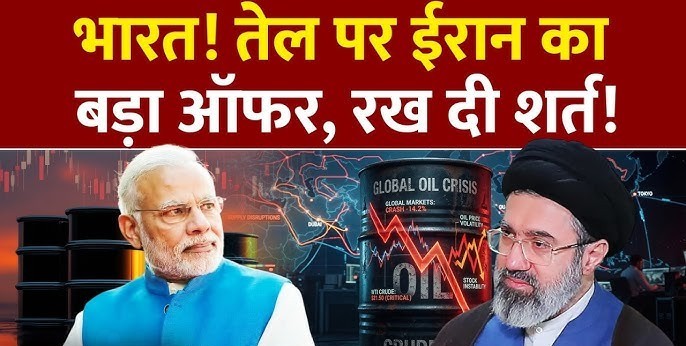
Iran Has Offered Sell Oil to India: Opportunity or Strategic Challenge?
Iran has offered sell oil to India, The global energy landscape is witnessing a dramatic shift amid rising geopolitical tensions in the Middle East. At the center of this development is a significant offer—Iran has offered sell oil to India, but under conditions that have sparked intense debate among policymakers, economists, and energy experts.
This proposal comes at a time when oil prices are volatile, supply chains are under stress, and India—one of the world’s largest crude importers—is seeking stable and affordable energy sources. However, the deal is far from straightforward. With pricing, payment mechanisms, and sanctions-related complications in play, the question arises: Is this an opportunity for India or a complex geopolitical gamble?
The Offer: What Exactly Is on the Table?
Reports indicate that Iran has offered sell oil to India at a premium of $6–8 above Brent crude prices. This is unusual because countries typically seek discounts to attract buyers, especially under sanctions.
At the same time, Iran has laid down strict conditions:
- Payment must be made in US dollars
- Transactions must be completed within a fixed timeframe
- The deal must navigate Iran’s exclusion from the SWIFT banking system
These conditions have created uncertainty around whether India will accept the offer, even though Iran has offered sell oil to India at a time of global supply stress.
Global Oil Market Context
The timing of this offer is crucial. Global oil prices have surged due to escalating tensions involving Iran and disruptions in the Strait of Hormuz—a key global oil transit route.
- Brent crude has crossed $100 per barrel amid supply concerns
- Oil prices have seen sharp volatility due to geopolitical risks
- India, which imports around 85% of its crude oil, is highly exposed to such shocks
In this context, Iran has offered sell oil to India, presenting a potential alternative supply source—but at a cost.
Why Is Iran Charging a Premium?
One of the most surprising aspects of this development is that Iran has offered sell oil to India at a higher price than Brent crude.
Possible Reasons:
1. Sanctions and Limited Buyers
Iran faces heavy international sanctions, limiting its pool of buyers. This restricted supply can command a premium in a tight market.
2. Geopolitical Risk Premium
Ongoing conflict in the region has added a risk premium to Iran oil prices. Buyers may be willing to pay more for assured supply.
3. Urgent Demand
With global supply disruptions, India may be compelled to secure oil even at higher prices. This is why Iran has offered sell oil to India despite the premium.

Payment Challenges: The SWIFT Problem
One of the biggest hurdles is Iran’s exclusion from the SWIFT international payment system. This makes financial transactions extremely complicated.
Even though Iran has offered sell oil to India, the payment mechanism remains unclear.
Key Issues:
- Dollar payments require compliant banking channels
- Sanctions restrict financial institutions from engaging with Iran
- Alternative payment systems (like rupee trade) may not be acceptable
Without a reliable payment framework, the fact that Iran has offered sell oil to India may remain more theoretical than practical.
India’s Energy Strategy
India has traditionally diversified its oil imports to reduce risk. In recent years, it has increased imports from countries like Russia, the US, and the Middle East.
Now, as Iran has offered sell oil to India, policymakers must evaluate:
- Cost vs. risk
- Supply security
- Diplomatic implications
India’s decision will depend on whether the benefits outweigh the complications.
Strategic Importance of Iran
Iran is geographically and strategically important for India:
- Close proximity reduces transportation costs
- High-quality crude suitable for Indian refineries
- Long-standing energy ties
This is why the news that Iran has offered sell oil to India is significant—it could revive an old energy partnership.
Impact on India’s Economy
If India accepts the offer, the economic implications could be substantial.
Positive Outcomes:
- Diversified oil supply
- Reduced dependence on other suppliers
- Strengthened energy security
Negative Risks:
- Higher import costs due to premium pricing
- Sanctions-related complications
- Currency pressure due to dollar payments
Thus, while Iran has offered sell oil to India, the economic impact is a mixed bag.
Geopolitical Implications
This deal is not just about oil—it is deeply political.
US Sanctions
Any deal with Iran could strain India’s relations with the United States.
Middle East Dynamics
The ongoing conflict adds uncertainty to supply routes and pricing.
Global Energy Politics
The fact that Iran has offered sell oil to India reflects shifting alliances and energy strategies.

Industry Response
Indian refiners are cautious. While they are exploring options, concerns remain about:
- Payment mechanisms
- Insurance for shipments
- Legal risks
Even though Iran has offered sell oil to India, companies are waiting for clarity before committing.
Comparison with Russian Oil
India has been importing discounted oil from Russia in recent years. Compared to that:
- Iranian oil is being offered at a premium
- Russian oil often comes with flexible payment terms
- Sanctions on Russia are structured differently
This raises the question—why choose Iranian oil when alternatives exist?
Yet, the fact remains that Iran has offered sell oil to India during a time of supply crunch.
The Role of Brent Crude Benchmark
Brent crude serves as the global benchmark for oil pricing. When Iran has offered sell oil to India at $6–8 above Brent, it signals:
- Tight supply conditions
- Strong bargaining power
- High demand
This premium reflects the current state of global energy markets.
Risks Involved
1. Financial Risk
Uncertain payment systems could delay transactions.
2. Legal Risk
Sanctions violations could have serious consequences.
3. Supply Risk
Ongoing conflict could disrupt shipments.
Despite these risks, Iran has offered sell oil to India, keeping the door open for negotiation.
Future Outlook
The future of this deal depends on several factors:
- Easing of sanctions
- Stability in the Middle East
- Development of alternative payment systems
If these issues are resolved, the fact that Iran has offered sell oil to India could turn into a long-term partnership.
Public and Market Reaction
Markets have reacted cautiously to the news. Oil prices remain volatile, and investors are closely watching developments.
The broader sentiment is that while Iran has offered sell oil to India, execution remains uncertain.
A Complex Opportunity
This situation highlights the complexity of global energy trade. It is not just about buying and selling oil—it involves:
- Politics
- Economics
- International relations
The fact that Iran has offered sell oil to India encapsulates this complexity.

Conclusion
The offer from Iran presents both an opportunity and a challenge for India. While it could enhance energy security, the associated risks cannot be ignored.
As Iran has offered sell oil to India, the decision now rests on balancing strategic interests with practical constraints.
In the end, this development underscores a key reality of modern geopolitics—energy is power, and every deal carries far-reaching implications.
Read More latest news

