
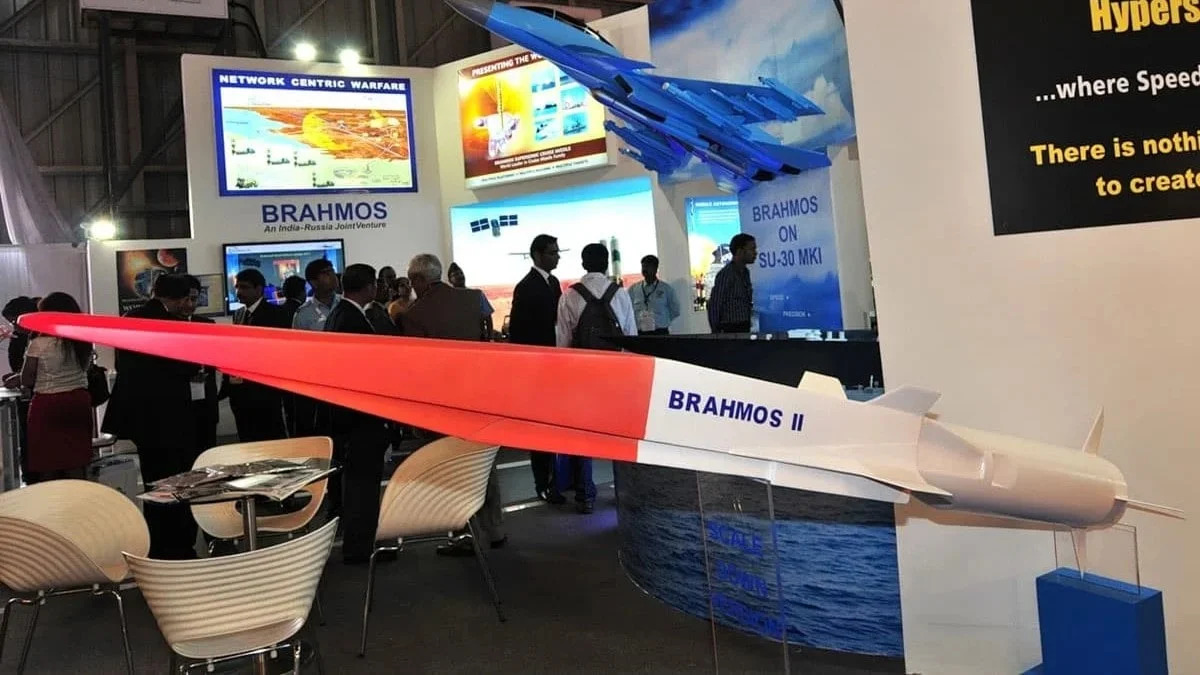
India Busy Preparing for BrahMos-II: A Hypersonic Leap in Defence Capability
Brahmos-2 India, in its continued pursuit of cutting-edge defence technology, is taking a significant leap forward with the development of the Brah Mos-II missile. This next-generation hypersonic cruise missile—being developed jointly by India’s Defence Research and Development Organisation (DRDO) and Russia’s NPO Mashinostroyenia—is poised to transform India’s offensive capabilities. With expectations that Brah Mos-II will reach speeds of Mach 6 to Mach 8, it will be one of the fastest and most lethal missiles in the world.
The journey toward BrahMos-II is not just a technological marvel but a symbol of India’s growing strategic autonomy, indigenous innovation, and military modernization. This blog explores the missile’s specifications, technological advancements, strategic implications, and what India’s preparation for this next-gen weapon means for the future of warfare.
The Legacy of BrahMos
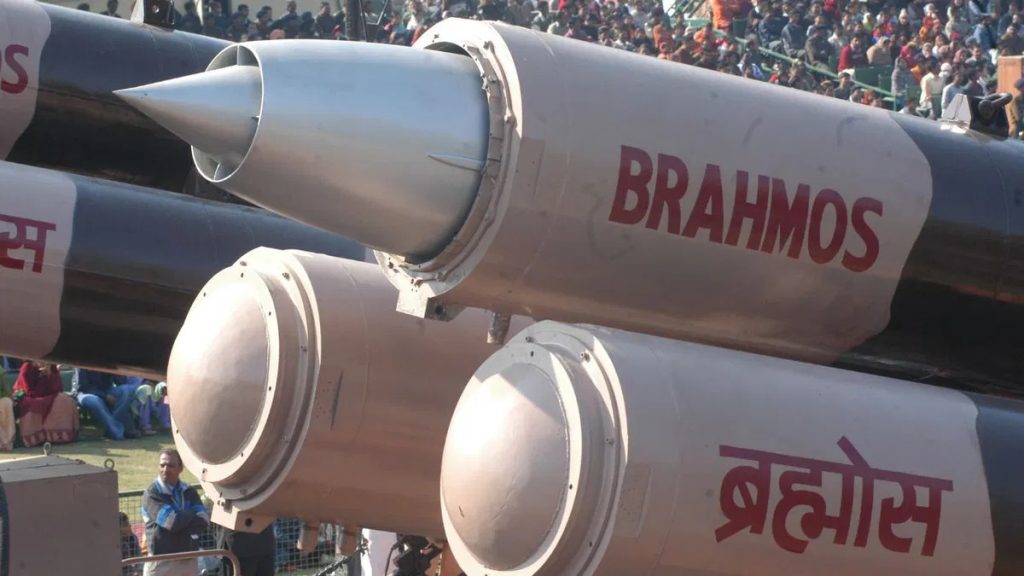
To understand the significance of Brah Mos-II, it’s essential to revisit the legacy of its predecessor—BrahMos-I. Named after the rivers Brahmaputra (India) and Moskva (Russia), the original Brah Mos is the world’s fastest supersonic cruise missile with speeds of Mach 2.8 to 3.0. It is already deployed across India’s land, naval, and air forces.
BrahMos-I is a formidable weapon, capable of precision strikes with a range of 300 to 800 km (extended in some variants). It has cemented India’s reputation as a missile power and bolstered deterrence against hostile adversaries. However, with nations like China and the United States developing hypersonic weapons, it became imperative for India to join the hypersonic race—and Brah Mos-II is that answer.
What Is BrahMos-II?
BrahMos-II (also referred to as BrahMos Mark II) is a hypersonic cruise missile expected to clock speeds of Mach 7 to Mach 8—more than twice as fast as Brah Mos-I. Unlike ballistic missiles that exit and re-enter the Earth’s atmosphere, BrahMos-II will fly within the atmosphere at sustained hypersonic speeds, making it extremely difficult to intercept.
Key Specifications (Tentative)
| Feature | Specification |
|---|---|
| Speed | Mach 6 to 8 |
| Range | ~1,000 to 1,500 km |
| Propulsion | Scramjet Engine |
| Launch Platform | Land, Sea, Air |
| Warhead Capacity | ~200-300 kg |
| Development Phase | Under development (2025 target) |
These specifications are being fine-tuned through iterative testing, and DRDO aims to showcase a prototype by 2026–2027.

Why Hypersonic? The Need for Speed
Hypersonic weapons represent the future of warfare. Their key advantage lies in their velocity. A missile traveling at Mach 8 (9,800 km/h) can hit a target 1,000 km away in under 6 minutes. Such speed compresses enemy reaction time and challenges traditional air defence systems.
For India, BrahMos-II is essential to counter China’s DF-ZF hypersonic glide vehicles and Russia’s Avangard system. As the Indo-Pacific becomes a hotbed of military build-up, India must match pace with global developments.
Technology Behind BrahMos-II
1. Scramjet Propulsion
At the heart of BrahMos-II lies its scramjet (Supersonic Combustion Ramjet) propulsion. Unlike conventional ramjets, scramjets can combust air at supersonic speeds, allowing the missile to sustain Mach 6+ velocity. India’s success with the Hypersonic Technology Demonstrator Vehicle (HSTDV) in 2020 laid the foundation for scramjet integration into BrahMos-II.
2. Heat-Resistant Materials
Travelling at hypersonic speeds generates immense heat due to atmospheric friction. BrahMos-II is being designed with advanced composite materials and ceramic heat shields to withstand temperatures exceeding 2,000°C during flight.
3. Navigation & Precision
DRDO is working on integrating advanced inertial navigation systems with real-time GPS and satellite telemetry for precise target tracking and mid-course correction. This allows BrahMos-II to engage moving targets with pinpoint accuracy.
DRDO’s Role and India’s Indigenous Push
DRDO is spearheading BrahMos-II development through the Hypersonic Test Centre in Hyderabad and propulsion labs in Bengaluru. India’s work on the HSTDV and successful testing of Agni-V have shown DRDO’s maturity in advanced aerospace engineering.
The missile is a critical component of India’s “Make in India” initiative in defence. The government has invested in high-speed wind tunnels, hypersonic test beds, and material research to reduce foreign dependency.
In 2022, a BrahMos production facility was inaugurated in Lucknow with a capacity of 100 missiles per year, showcasing India’s ambition to not only use but also export advanced weaponry.
Russian Collaboration
India and Russia have long enjoyed a fruitful defence partnership. BrahMos-II, like its predecessor, is a joint venture under BrahMos Aerospace. Russia is contributing its expertise in hypersonic aerodynamics and metallurgy, while India is developing propulsion systems and software components.
In fact, BrahMos-II is expected to borrow technological aspects from Russia’s Zircon missile. Russia’s operational use of Zircon in 2022 gave India access to real-world performance data, which is vital in refining BrahMos-II.
Expected Deployment Platforms
1. Land-Based Mobile Launchers
Highly mobile land-based launchers will allow the Indian Army to deploy BrahMos-II across strategic locations, including border areas near China and Pakistan. The mobility ensures survivability and rapid deployment.
2. Naval Ships
The Indian Navy plans to integrate BrahMos-II aboard frontline destroyers and frigates. Hypersonic capability will help neutralize carrier strike groups, submarines, and coastal targets with greater precision.
3. Air-Launched Variant
A miniaturized version of BrahMos-II may eventually be deployed on Sukhoi Su-30 MKI fighters and future fifth-generation AMCA jets. Air-launched hypersonic weapons drastically reduce enemy reaction time.
Strategic Significance for India
1. Deterrence against China and Pakistan
BrahMos-II sends a strong message to adversaries. With China developing hypersonic glide vehicles and expanding its missile arsenal, India’s hypersonic missile serves as a balancing force. For Pakistan, it raises the cost of any adventurism, ensuring strategic stability in South Asia.
2. Second-Strike Credibility
In a nuclear exchange scenario, hypersonic missiles enhance India’s second-strike capability by ensuring rapid retaliation before enemy defences can react.
3. Export Potential
Several Southeast Asian and Gulf countries have expressed interest in the BrahMos system. Once BrahMos-II is operational, India could emerge as a leading exporter of hypersonic weapons—a niche currently dominated by the U.S., China, and Russia.
Challenges Ahead
Despite its promise, BrahMos-II faces several hurdles:
- Technical Complexity: Sustaining controlled flight at Mach 7 is extremely challenging due to shockwaves, pressure fluctuations, and material stress.
- Cost: Each missile may cost between ₹50–₹70 crore, making mass deployment a budget-intensive proposition.
- Testing Limitations: India needs more hypersonic wind tunnels and long-range test ranges to simulate real-world conditions.
- Geopolitical Sensitivities: Hypersonic weapons are raising international concerns. Arms control treaties may eventually extend to such technologies, limiting proliferation.
Timeline and Expectations
While there is no official launch date, DRDO aims for a test flight by 2026, followed by initial operational capability (IOC) around 2028. The focus now is on component testing—scramjet engines, heat shields, flight control systems, and guidance.
The HSTDV success has accelerated timelines, and joint India-Russia reviews are being held quarterly to track project milestones.
Public and International Reactions
Domestic View:
India’s strategic community and defence experts have welcomed the BrahMos-II program as a necessary and ambitious step. Former DRDO chief Dr. Satheesh Reddy hailed it as “India’s entry into next-generation warfare.” Public sentiment also views it as a patriotic achievement and proof of India’s self-reliance.
Global Perspective:
China has raised concerns over India’s hypersonic ambitions. U.S. defence analysts acknowledge India’s entry as a stabilizing factor in the Indo-Pacific. Meanwhile, Russia sees the joint venture as a successful model of international collaboration.
Conclusion: Toward a Hypersonic Future
India’s preparation for BrahMos-II is more than just building a missile—it’s about rewriting the rules of deterrence, redefining defence manufacturing, and reclaiming strategic initiative in a volatile global landscape. It marks the beginning of a new era where India is not just a buyer of technology but a co-developer of next-gen weaponry.
As BrahMos-II moves closer to reality, it will not only elevate India’s missile capabilities but also fortify its position as a 21st-century military power ready to face modern threats with indigenous confidence and global collaboration.
read more latest news

