
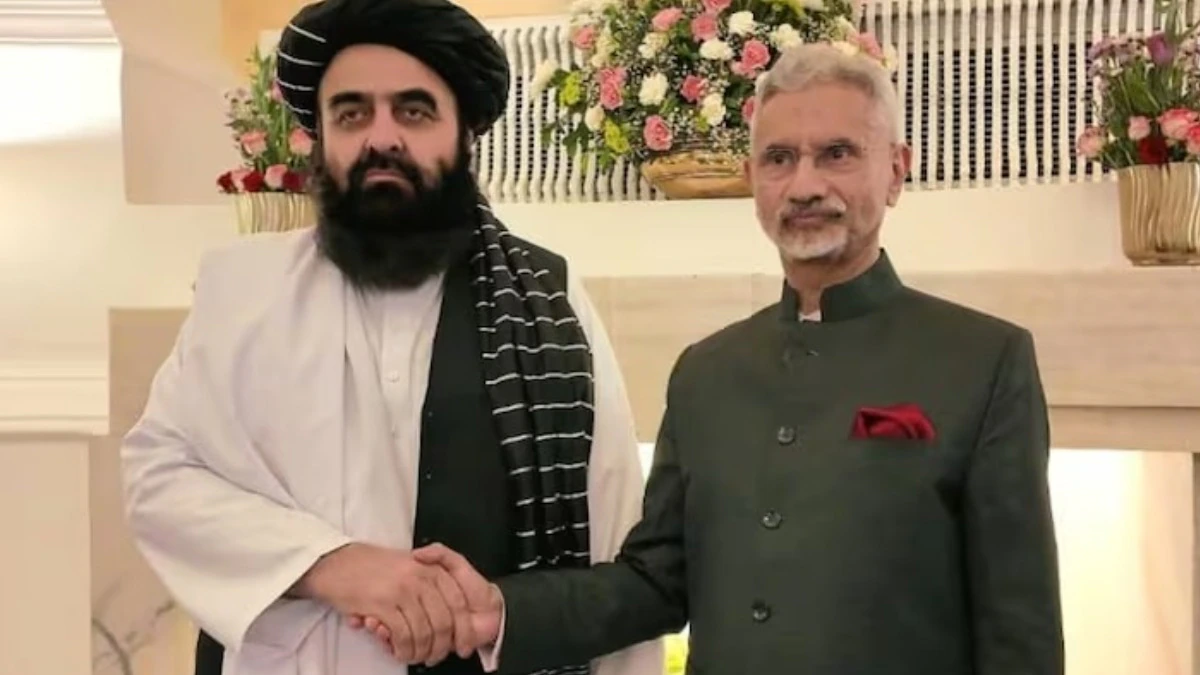
India–Afghanistan Relations: A New Era of Engagement and Opportunity
India–Afghanistan Relations Enter a New Era: A New Chapter of Cooperation and Strategic Engagement.
India-Afghanistan relations The relationship between India-Afghanistan has always been one of deep historical connection, cultural kinship, and mutual respect. Over the decades, these ties have seen moments of great collaboration and equally significant challenges. As of late 2025, the relationship is once again evolving — entering a new era of strategic engagement, where India is re-establishing its footprint in India-Afghanistan through developmental projects, diplomatic outreach, and economic cooperation.
This renewed partnership, though still cautious, carries immense symbolic and strategic weight. It represents India’s determination to remain a steadfast friend of the Afghan people while also recalibrating its policies to meet the realities of the post-2021 political landscape.
Historical Roots: A Friendship Forged in Culture and Cooperation
India’s relationship with India-Afghanistan predates modern geopolitics. The two nations share deep civilizational links that go back thousands of years. From trade along the ancient Silk Route to shared art, architecture, language, and music, India-Afghanistan have long influenced each other’s cultural evolution.
In modern history, especially since India’s independence in 1947, both countries have maintained friendly relations. India supported Afghanistan’s sovereignty and neutrality during the Cold War, even when global superpowers competed for influence in the region.
After the fall of the Taliban regime in 2001, India emerged as one of India-Afghanistan most trusted development partners. Over the next two decades, India invested more than USD 3 billion in reconstruction projects across India-Afghanistan — making it one of the largest regional donors to Afghan development.
Some landmark initiatives included:
- The Salma Dam (Afghan–India Friendship Dam) in Herat Province, providing hydroelectric power and irrigation.
- The Zaranj–Delaram Highway, built by India’s Border Roads Organisation, connecting Afghanistan’s road network to Iran’s Chabahar Port.
- The Afghan Parliament building in Kabul — a grand symbol of democracy, gifted by India.
- Thousands of educational scholarships for Afghan students to study in Indian universities.
- Establishment of hospitals, clinics, and capacity-building institutions across provinces.
These projects showcased India’s commitment not just to reconstruction but to empowering the Afghan people and institutions.
The Turning Point: The 2021 Taliban Takeover
When the Taliban returned to power in August 2021, the geopolitical balance in South Asia shifted dramatically. Like most countries, India had to reassess its engagement strategy. The security vacuum and uncertainty led to the temporary closure of India’s embassy in Kabul and a pause in many development programs.
However, India did not abandon the Afghan people. In the months following the Taliban’s return, India continued to provide humanitarian assistance, including wheat, medicines, vaccines, and essential supplies. This helped maintain goodwill and demonstrated that India’s commitment was to the Afghan people — not merely to any particular regime.
Despite international hesitation to formally recognise the Taliban government, India chose a pragmatic path: maintaining channels of communication, ensuring the safety of its aid operations, and exploring opportunities to restart developmental work under careful conditions.
This balancing act has now matured into a policy of calibrated re-engagement, where humanitarian concern and strategic necessity intersect.
The New Phase: Re-Engagement and Upgraded Diplomacy
In late 2025, India formally signaled a new era of engagement with Afghanistan. The decision to upgrade its Technical Mission in Kabul into a full-fledged Embassy marked the clearest indicator yet that India is willing to resume normal diplomatic activity, albeit cautiously.
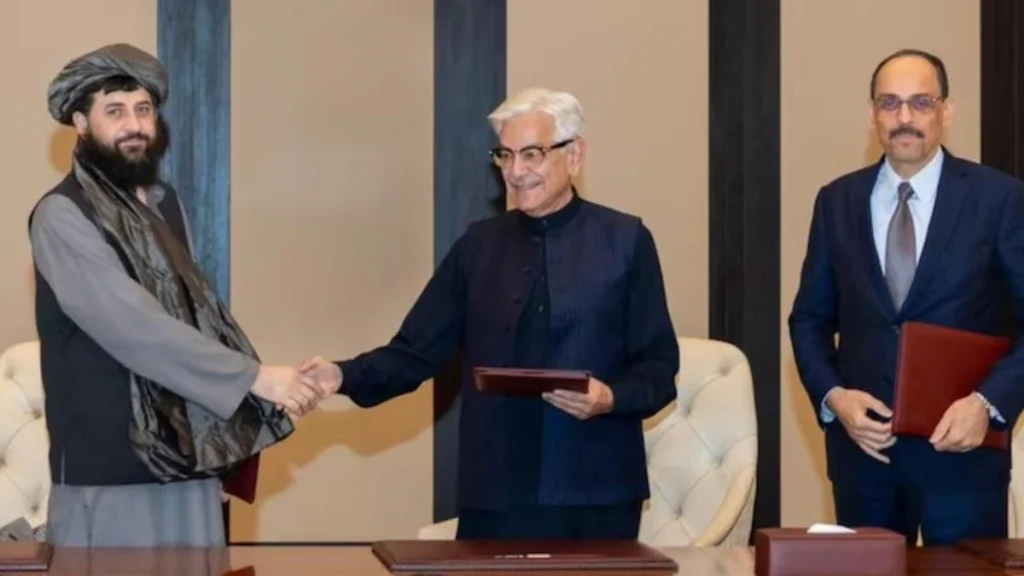
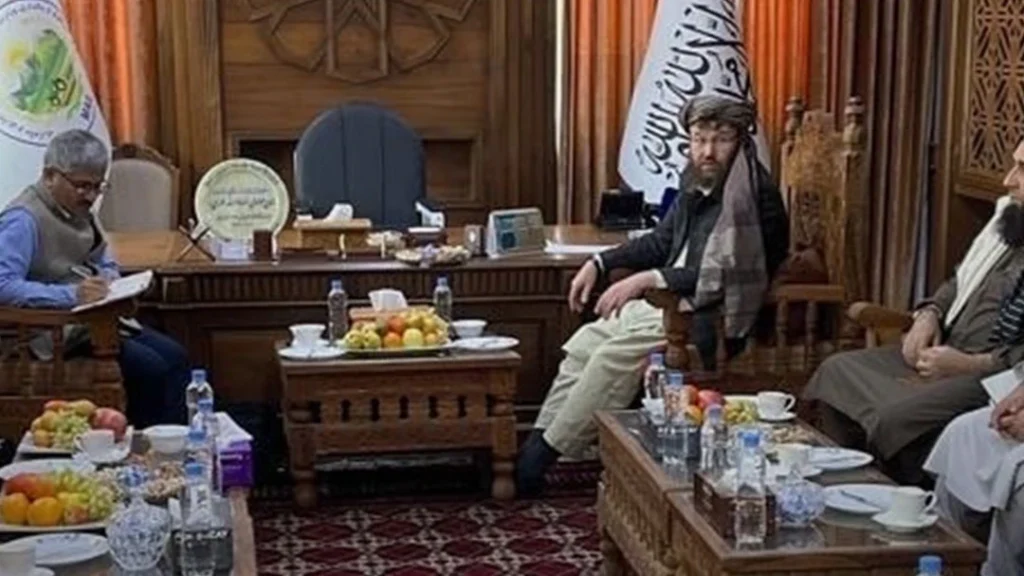
This upgrade followed a series of high-level meetings between Indian officials and representatives of the Afghan administration. It also coincided with India’s announcement of several new projects in key sectors such as healthcare, education, and infrastructure.
The message was clear: India intends to remain a long-term partner in Afghanistan’s development and stability, regardless of political transitions.
India’s New Projects: Rebuilding Hope from the Ground Up
1. Healthcare Initiatives
Recognising India-Afghanistan acute healthcare crisis, India has launched a number of new medical and humanitarian projects, including:
- Establishment of a Thalassemia and Diagnostic Centre in Kabul.
- A 30-bed hospital in Bagrami district to improve access to primary care.
- Upgrading heating systems at the Indira Gandhi Institute of Child Health — one of India-Afghanistan leading pediatric hospitals.
- Creation of an Oncology Centre and Trauma Centre to address chronic disease treatment and emergency response capacity.
- Construction of five maternity clinics in the provinces of Paktika, Khost, and Paktia to reduce maternal and infant mortality.
- Donation of 20 fully equipped ambulances to provincial hospitals and NGOs.
Through these healthcare initiatives, India is not only providing life-saving services but also reinforcing its image as a compassionate partner in India-Afghanistan recovery.
2. Education and Human Capital
India continues to sponsor scholarships for Afghan students under programs such as the Indian Council for Cultural Relations (ICCR) and Technical and Economic Cooperation (ITEC). Thousands of Afghan students are currently studying in India, contributing to the country’s future leadership and professional base.
Additionally, India has begun exploring ways to offer online learning programs and distance education opportunities through Indian universities — allowing students in India-Afghanistan to continue their education despite logistical challenges.
3. Infrastructure and Connectivity
Infrastructure has always been the cornerstone of India’s Afghan policy. In this new era, India is working to revive and maintain previously built projects while identifying new areas of collaboration.
Plans include the maintenance of the Zaranj–Delaram Highway, restoration of power and irrigation systems connected to the Salma Dam, and the upgradation of urban transport in Kabul and Herat.
India is also investing in digital connectivity, exploring telecommunications support, and introducing renewable-energy micro-projects in rural areas.
4. Trade, Commerce, and Connectivity Corridors
Trade between India and Afghanistan has faced logistical hurdles due to the lack of direct land routes through Pakistan. To overcome this, India has prioritized air-freight corridors and the Chabahar Port route via Iran, which allows goods to move more efficiently.
A new India–Afghanistan Trade Committee has been established to expand commercial cooperation in:
- Pharmaceuticals and healthcare products.
- Construction materials and machinery.
- Agricultural exports, including Afghan dry fruits, saffron, and carpets.
- Energy and mineral exploration partnerships.
This framework aims to make trade predictable, institutionalized, and mutually beneficial.
5. Humanitarian Aid and Social Support
India has consistently been among the first responders during India-Afghanistan crises — from earthquakes and floods to food shortages. Over the last few years, India has delivered thousands of metric tonnes of wheat, essential medicines, and winter relief supplies through United Nations channels and direct bilateral aid.
India’s humanitarian outreach reflects a belief that helping people survive and rebuild is the most enduring form of diplomacy.
Strategic Context: Why This Re-Engagement Matters
India’s renewed interest in Afghanistan is not just altruistic — it is strategically significant. The geopolitics of South and Central Asia make Afghanistan a pivotal player in regional stability and connectivity.
1. Counter-balancing Influence
Historically, Pakistan and, increasingly, China have sought to expand influence in India-Afghanistan. For India, re-engagement prevents its marginalization and keeps it relevant in shaping regional outcomes. A stable, India-friendly Afghanistan reduces security threats and enhances India’s access to Central Asia’s markets and energy resources.
2. Access to Central Asia
India-Afghanistan acts as a gateway to Central Asia, a region rich in natural resources such as gas, oil, and minerals. Through Afghanistan and Iran’s Chabahar Port, India can bypass Pakistan and connect directly to Central Asian republics. This access supports India’s ambitions for regional trade, energy connectivity, and greater geopolitical reach.
3. Security and Counter-terrorism
India’s engagement also carries a strong security dimension. Ensuring that Afghan territory is not used for cross-border terrorism or extremist networks remains a critical priority. Direct engagement allows India to maintain intelligence presence and situational awareness, rather than being dependent on second-hand information.
4. Humanitarian and Moral Leadership
India’s consistent aid and humanitarian stance have earned it moral credibility in India-Afghanistan. Even during turbulent political times, India’s refusal to abandon the Afghan people reinforces its soft-power leadership in the region. It also positions India as a responsible global player committed to peace and stability.
Challenges on the Road Ahead
Despite the optimism, India’s new engagement faces substantial obstacles.
1. Political Legitimacy of the Taliban
The Taliban regime is still not formally recognized by most countries, including India. Any official collaboration must therefore walk a tightrope between practical cooperation and ethical caution. India must engage without endorsing policies that contradict its democratic and human-rights principles.
2. Security Instability
Afghanistan remains volatile. Militant groups, internal power struggles, and transnational terror networks continue to pose risks. Indian workers, projects, and diplomats face potential threats if the security environment deteriorates.
3. Pakistan’s Hostility
Pakistan has long viewed India’s presence in Afghanistan as a strategic threat. Increased Indian involvement could provoke diplomatic or covert pushback from Pakistan, complicating the situation for both Kabul and New Delhi.
4. Economic Constraints India-Afghanistan
Afghanistan’s economy is struggling with sanctions, low revenue, and limited international funding. While India can offer aid and trade, large-scale investment requires stable policies and banking mechanisms — both of which remain uncertain.
5. Human-Rights and Gender Concerns India-Afghanistan
India, as the world’s largest democracy, cannot ignore issues such as women’s rights and minority freedoms in Afghanistan. Balancing principled advocacy with pragmatic engagement will be one of India’s toughest diplomatic challenges.
Regional Implications India-Afghanistan
1. A Balancing Act in South Asia
India’s renewed engagement will inevitably influence South Asia’s geopolitical calculus. It could lead to new alignments, with Iran, Russia, and Central Asian states supporting India’s stabilizing role — while Pakistan and China watch warily.
2. Role of Iran and the Chabahar Port India-Afghanistan
Iran remains a vital partner for India in accessing Afghanistan. The Chabahar Port project, co-developed by India, provides a crucial trade route that bypasses Pakistan. Strengthening this corridor can unlock significant economic and strategic advantages for both India and Afghanistan.
3. Coordination with Global Powers India-Afghanistan
The U.S., Russia, and China all have stakes in Afghanistan’s stability. India’s engagement provides a regional perspective — focused on development, people, and connectivity — rather than purely security or military interests. This helps position India as a constructive stakeholder rather than a competing power.
People-to-People Bonds: The Heart of the Relationship India-Afghanistan
Beyond strategy and economics, what truly binds India and Afghanistan is the warmth between their peoples. Over the years, thousands of Afghans have studied, worked, and received medical treatment in India. Bollywood movies, Indian television, and cultural exchange have deeply influenced Afghan society.
Similarly, Afghans have brought their cuisine, handicrafts, and traditions to India, enriching its cultural mosaic. The emotional connection between the two nations often transcends politics — making the bilateral relationship unique and resilient.
India’s continued support, therefore, resonates deeply among ordinary Afghans who view India as a friend that stands by them in difficult times.
The Road to the Future: What Lies Ahead India-Afghanistan
As India and Afghanistan move forward, several priorities are likely to define the next phase of their partnership.
1. Institutionalising Trade and Development Cooperation
India’s trade committee with Afghanistan must be empowered to convert dialogue into deliverables — through clear rules, private-sector involvement, and regular review mechanisms. Long-term economic partnerships will provide stability and mutual benefit.
2. Deepening Connectivity
Air-freight services, Chabahar routes, and digital connectivity should be expanded. These linkages not only enhance trade but also help Afghanistan integrate into regional markets, reducing its isolation.
3. Focusing on Humanitarian Development
India’s investments in health, education, and rural development must continue, even as large-scale projects resume. These areas deliver tangible impact and build enduring goodwill.
4. Engaging at Multiple Levels
While formal diplomatic recognition may remain pending, India can engage through multi-track diplomacy — involving NGOs, business chambers, cultural institutions, and academic exchanges. This layered engagement provides flexibility and reduces political risk.
5. Balancing Principles and Pragmatism
India’s engagement must remain rooted in its core values of democracy, inclusivity, and equality — even while acknowledging the realities of Afghanistan’s governance. By maintaining this balance, India can offer a model of responsible diplomacy.
Conclusion: A New Chapter with Old Foundations
The current phase of India–Afghanistan relations marks both continuity and change. Continuity — because India’s role as a trusted development partner remains central. Change — because the political realities have shifted, demanding a new approach that combines pragmatism with principle.
India’s renewed projects — in healthcare, infrastructure, education, and trade — symbolize a message of hope: that friendship, development, and compassion can prevail even amid uncertainty. Afghanistan’s recovery and India’s strategic vision are intertwined, and success in one supports stability in the other.
This new era is not without its risks, but it is also rich with opportunity. If managed wisely, it can bring tangible benefits to millions of Afghans, strengthen India’s regional influence, and contribute to long-term peace and prosperity across South and Central Asia.
In essence, India and Afghanistan stand once again at a crossroads — but this time, with decades of experience, deeper understanding, and a shared aspiration for stability. The projects underway today may well become the foundations of tomorrow’s peace.

