
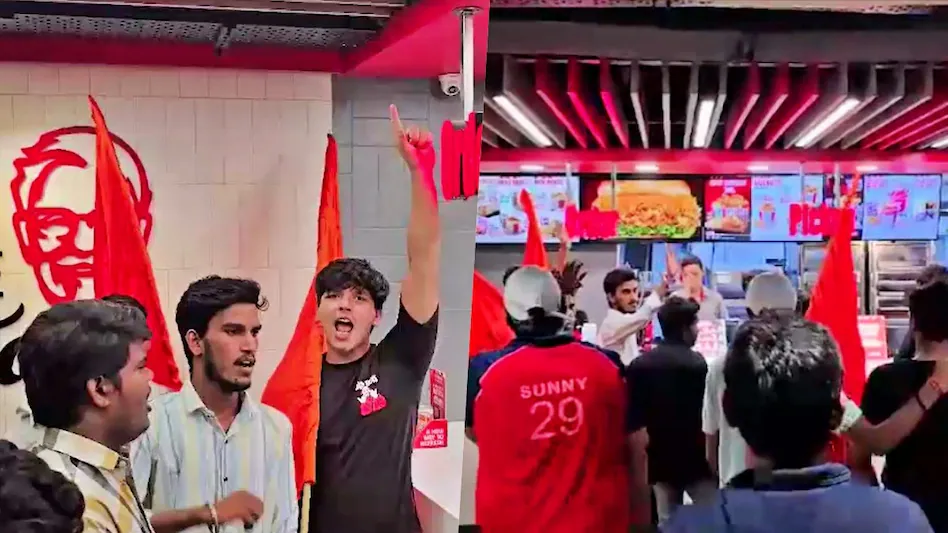
🛕 Ghaziabad, Uttar Pradesh: Hindu Raksha Dal Forces Closure of Non‑Veg Restaurants During Sawan, Storms into KFC
1. Introduction: When Devotion Turns Coercive
Hindu Raksha Dal In mid‑July 2025, a dramatic incident unfolded in Ghaziabad’s Vasundhara locality when members of an organization calling itself “Hindu Raksha Dal” stormed into a KFC outlet and forced it to shut down by pulling the shutter—all in broad daylight. The group, waving saffron flags and raising slogans of “Jai Shri Ram”, demanded that non‑vegetarian restaurants near Kanwar pilgrimage routes be closed during the sacred month of Sawan, citing the need to respect devotees’ religious sentiments. A video of the incident circulated widely on social media, triggering debates on vigilantism, religious tolerance, and law enforcement in the region.
2. What Happened? Sequence of Events Hindu Raksha Dal
- On July 17–18, 2025, about two dozen protesters from Hindu Raksha Dal gathered near the Kanwar route along Meerut Road in Vasundhara, carrying saffron flags.
- They marched into the KFC restaurant located there, instantly shutting the shutter and forcing employees to stop serving meat orders. Their slogans and presence intimidated staff and customers alike.
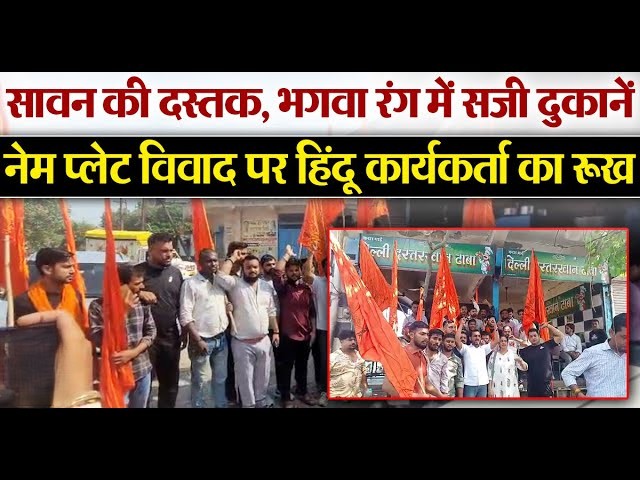
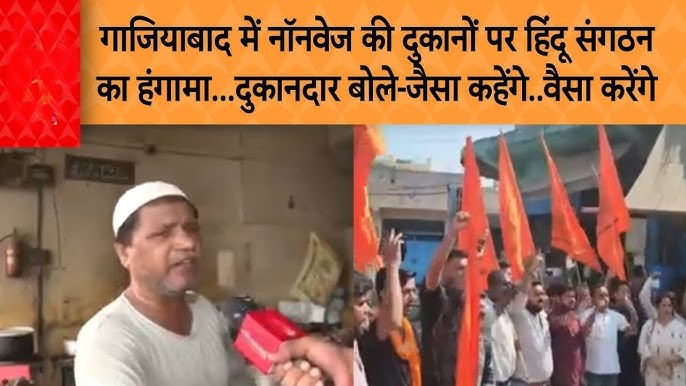
- They also targeted Nazeer Foods, another non‑veg outlet nearby. Along the route, the group demanded that all restaurants within 100–200 meters of the Kanwar path close or switch to vegetarian menus for the duration of Sawan.
A passerby recorded footage showing protesters chanting, an employee attempting to intervene, and one protestor declaring: “This is Hindustan—here we will do only what Hindus want.”
3. Why This Matters: Religious Sentiment vs Individual Rights Hindu Raksha Dal
📜 Religious Sensibilities
The group argued that meat-based smells and presence of non-vegetarian food outlets hurt the religious sentiments of Kanwariyas, who undertake devotional journeys carrying Ganga water. It saw itself as safeguarding the sanctity of Sawan.
⚖️ Rights & Business Impact Hindu Raksha Dal
However, this raises questions about individual rights, freedom of business, and rule of law. These eateries were licensed, operational, and had no legal directive to shut for Sawan. Forcing closure through intimidation—especially under police supervision—violates the right to livelihood and due process.
4. Police Response or Inaction? Hindu Raksha Dal
Shockingly, video and eyewitnesses suggest that police officers present at the scene remained passive, even as the shutter was pulled. No arrests were reportedly made, and the management of KFC and Nazeer Foods did not offer resistance, fearing escalation.
This has drawn sharp criticism—commentators questioned why law enforcement failed to enforce the law over mob power.
5. Historical and Regional Context Hindu Raksha Dal
This isn’t the first time such vigilantism has occurred in Ghaziabad or neighboring areas. Earlier incidents include:
- Ram Navami events, where municipal orders explicitly closed non‑veg shops temporarily out of religious sensitivity. In 2025, Ghaziabad Municipal Corporation mandated a one-day ban on meat shops during Ram Navami.
- Earlier attacks by Hindu Raksha Dal members on Muslim slum dwellers, evoking broader patterns of intimidation and targeting based on religion or minority status. Members have been arrested for similar behavior in the past.
- Across the NCR and UP, vigilante groups have enforced meat bans during festivals like Navratri and Sawan under social intimidation.
6. Impact on Affected Restaurants and Employees Hindu Raksha Dal
🍗 Loss of Business
Restaurants like KFC and Nazeer Foods were forced to halt operations mid-evening, resulting in immediate loss of revenue, disruption of orders, and distress to employees who had to deal with aggressive protestors.
😥 Employee Fear and Trauma
Staff—especially women at the pick-up counters—were seen trying to reason with the demonstrators verbally but were overpowered by crowd intimidation. No injuries were reported, but the emotional impact was severe.
7. Public Reactions: Social Media Rage & Opinion
The viral video brought mixed public responses:
- Many condemned the mob’s coercion, arguing that religious festivals should not override personal freedom, or impose dietary restrictions on others.
- Others supported the protest, believing religious sensitivity should be respected in public spaces during Sawan.
- Reddit users and online commentators pointed out that similar actions occur across festivals, often targeting Muslim-owned businesses regardless of the specific festival. “Around Hindu festivals authorities shutdown meat shops and non veg eateries to ostensibly protect Hindu sentiments… they never target KFC or pizza huts?”
8. Analysis: Who Holds the Moral High Ground?
🕵️ Legitimacy of Protests
While protecting religious sentiments can be legitimate in principle, the chosen method—forcible entry, business disruption, intimidation—crosses legal boundaries and undermines rule of law.
🛡️ Administrative Oversight
Administration and police have a responsibility to mediate such demands through legal channels (e.g., issuing temporary orders), not allow unauthorized groups to enforce vigilante closures.
⚖️ Constitutional Remedies
Affected restaurants may have legal recourse via FIRs, claims against trespass, and seeking orders against illegal mob actions.
9. What Happens Next?
- No official statement has yet been issued by local authorities or restaurant management on further action.
- The community awaits a response: will authorities file FIRs, take police action, or treat the protest as lawful?
- Vendors and civil rights defenders are likely to push back via legal and media frameworks.
10. Expanding
To develop this narrative into a full-length 3,000‑word blog, consider adding:
- First-person interviews: Voices of restaurant staff, customers present, local residents, law enforcement officers, and organization representatives.
- Legal context: Discussion of IPC sections (trespass, vandalism), businesses’ constitutional right to operate, and limits on public protests.
- Historical timeline: Outline previous communal protest-related closures in Ghaziabad and NCR, with dates and outcomes.
- Sociological analysis: Examine why festivals are settings for enforcing moral codes, and how this affects minorities and businesses.
- Expert voices: Insights from constitutional lawyers, civil rights activists, and political analysts.
- Policy recommendations: How administrations can balance religious sentiment with freedom—through regulated closures via formal orders rather than mob enforcement.
12. Conclusion: Democracy in the Balance
The Ghaziabad incident highlights a growing tension in India’s civic space: when religious devotion becomes grounds for imposing dietary norms onto others, via intimidation rather than law.
If administration and law enforcement fail to act, the door opens to anarchy under religious justification, eroding public confidence in fairness and equal rights. Moving forward, peaceful coexistence depends on institutions reclaiming control over such rogue moral policing and reinforcing constitutional guarantees.
✅ In Summary:
- What happened: Hindu Raksha Dal protesters stormed KFC and Nazeer outlets during Sawan, forced them to close, citing Kanwariyas’ sentiments.
- Why: They demanded no meat sale near Kanwar route for the sacred month.
- How it unfolded: Protesters entered, pulled the shutter, waved flags, police remained passive.
- Wider implications: Raises questions about group coercion, police accountability, rights of business and employees, and how religious sensibility is enforced.
read more latest news

