
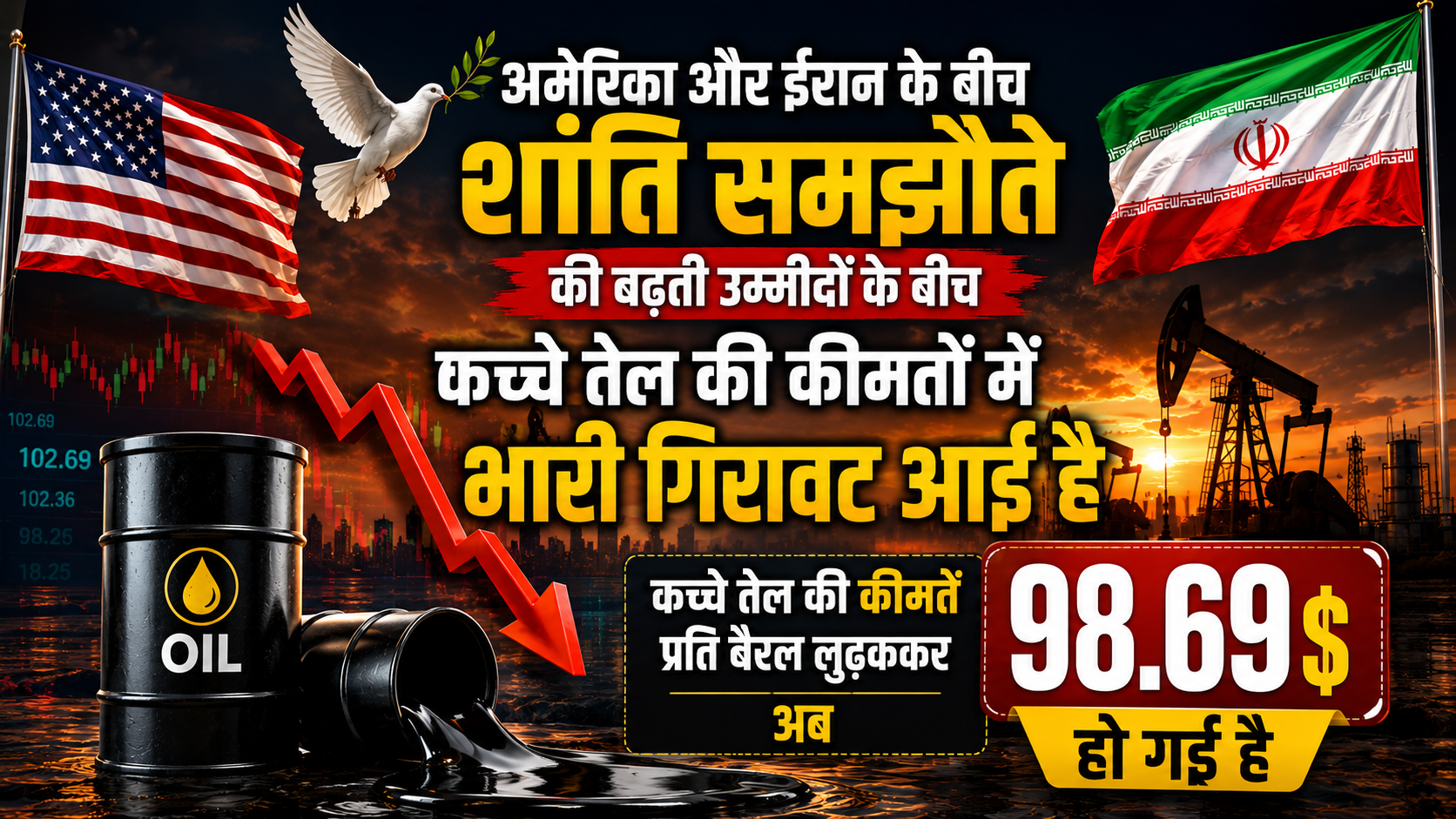
Crude Oil Prices Fell Sharply Amid Hopes of a US-Iran Peace Deal
As a result, Crude oil prices fell sharply and dropped below the critical $100 per barrel mark. Brent crude prices reportedly slipped to nearly $98.69 per barrel, creating major reactions in stock markets, commodity exchanges, and economic discussions worldwide. Global energy markets witnessed a dramatic shift after reports suggested progress toward a possible peace agreement between the United States and Iran. Investors across the world reacted positively as tensions in the Middle East appeared to ease.
The sudden fall in oil prices has become one of the biggest financial stories globally because crude oil directly affects transportation, inflation, fuel costs, and economic stability. For months, global oil markets had been under pressure due to fears of conflict escalation in West Asia. However, optimism surrounding diplomacy changed market sentiment rapidly.
Why Oil Prices Matter to the Global Economy
Oil is one of the most important commodities in the world. Every major economy depends on crude oil for transportation, manufacturing, electricity generation, and industrial production. Whenever oil prices rise, inflation tends to increase because the cost of goods and transportation becomes more expensive.
This is why the news that Crude oil prices fell sharply brought relief to governments, businesses, and consumers worldwide. Lower oil prices can reduce fuel costs, stabilize inflation, and improve economic confidence.
Countries like India, which import large quantities of crude oil, are particularly affected by international price movements. A decline in crude prices can help reduce import bills and support economic growth.
The US-Iran Peace Hopes That Changed Market Sentiment
The sharp movement in oil prices was triggered by growing expectations of a possible peace deal between the United States and Iran. Reports indicated that negotiations were progressing and that there was optimism regarding reduced tensions in the region.
The Strait of Hormuz, one of the world’s most critical oil shipping routes, had become a major concern during the conflict. Any disruption in this region immediately affects global oil supplies because a large percentage of the world’s oil passes through this narrow waterway.
When investors heard signals that diplomacy could reopen shipping routes and stabilize supply chains, Crude oil prices fell sharply as traders began selling oil contracts in anticipation of improved market conditions.
Brent Crude Falls Below $100 Per Barrel
Brent crude is considered one of the most important global oil benchmarks. In recent months, fears of war and supply disruptions pushed Brent crude above $100 per barrel multiple times. However, fresh hopes of peace caused prices to tumble rapidly. Reuters reported Brent crude dropping near $97.69 per barrel while several other reports placed prices around $98.69 per barrel.
Financial analysts noted that Crude oil prices fell sharply because markets had previously priced in the risk of a prolonged conflict. Once those fears began easing, oil traders rushed to reduce positions.
The price drop also reflected expectations that oil supply from the Middle East could normalize if diplomatic progress continues.
Impact on Asian and Global Stock Markets
The decline in oil prices immediately boosted stock markets across Asia and Europe. Investors believed that cheaper energy costs would support economic recovery and reduce inflationary pressure. Indian markets also reacted positively, with the Sensex and Nifty witnessing strong gains.
Analysts explained that Crude oil prices fell sharply at a time when global economies were struggling with inflation and high interest rates. Lower energy costs could ease pressure on central banks and consumers alike.
Airline companies, transportation firms, and manufacturing industries are expected to benefit significantly from falling oil prices because fuel expenses form a major part of their operational costs.
Relief for Oil-Importing Countries Like India
India is one of the world’s largest importers of crude oil. Rising oil prices increase India’s import bill, weaken the rupee, and raise fuel prices domestically. Therefore, the news that Crude oil prices fell sharply was welcomed positively by Indian economic experts.
Lower crude prices may help reduce petrol and diesel costs in the future if the trend continues. It can also support government finances by reducing subsidy pressures and lowering inflation risks.
Economic observers believe falling crude prices may create room for stronger growth in developing economies that rely heavily on imported energy.
Investors React to Peace Signals
Commodity traders are extremely sensitive to geopolitical developments. Even small changes in diplomatic relations can create major fluctuations in oil prices. In this case, reports suggesting progress toward a peace agreement between Washington and Tehran were enough to influence global trading activity.
Because of these developments, Crude oil prices fell sharply within a very short period. Market participants quickly adjusted their expectations regarding future supply disruptions.
However, analysts also warned that oil markets remain highly volatile. Any negative development or breakdown in negotiations could reverse the trend immediately.
The Strategic Importance of the Strait of Hormuz
The Strait of Hormuz plays a crucial role in global energy supply. Nearly one-fifth of the world’s oil shipments pass through this route. During periods of conflict, fears of shipping disruptions often cause oil prices to rise dramatically.
As diplomatic optimism increased, Crude oil prices fell sharply because traders believed shipping operations could become safer and more stable.
Experts say that reopening and securing maritime trade routes would help restore confidence in global energy markets and reduce supply fears.
Donald Trump’s Role in Market Optimism
According to several reports, statements made by Donald Trump contributed to optimism surrounding the peace talks. Trump reportedly suggested that negotiations were progressing, although he also cautioned that an agreement was not guaranteed.
These comments influenced investor sentiment significantly. As confidence grew that tensions might ease, Crude oil prices fell sharply and financial markets reacted positively.
Political analysts believe the United States understands that stable oil markets are important not only for global economic stability but also for domestic economic conditions.
Oil Prices and Inflation Connection
One of the biggest global concerns in recent years has been inflation. Rising fuel prices affect transportation costs, food prices, manufacturing expenses, and household budgets.
This is why the fact that Crude oil prices fell sharply was seen as encouraging news for consumers worldwide. Lower oil prices could help slow inflation and reduce pressure on central banks that have been raising interest rates aggressively.
Economists suggest that sustained declines in oil prices could improve purchasing power and support economic growth in many countries.
Why Markets Remain Cautious
Despite the optimism, experts warn that the situation remains uncertain. Peace negotiations in the Middle East are often complex and unpredictable. While hopes of diplomacy pushed markets higher, there is still no final agreement.
This means Crude oil prices fell sharply mainly because of expectations and market psychology rather than confirmed long-term stability.
Analysts also noted that restarting disrupted oil production and shipping routes could take time even if a deal is reached. Therefore, oil markets may continue to experience volatility in the coming weeks.

Impact on Consumers Worldwide
Consumers are among the biggest beneficiaries when oil prices decline. Lower crude oil prices often lead to cheaper fuel, reduced transportation costs, and potentially lower prices for goods and services.
Because Crude oil prices fell sharply, many people hope petrol and diesel prices may stabilize in the near future. Airlines may also reduce operational costs, which could eventually influence ticket prices.
For businesses, cheaper energy improves profitability and reduces production expenses.
Energy Companies Face Pressure
While consumers benefit from lower oil prices, energy companies may face financial pressure. Oil producers and exporting countries earn less revenue when prices decline sharply.
The news that Crude oil prices fell sharply created concerns among some oil-exporting nations that rely heavily on crude revenue to support government spending.
Major oil-producing countries may now monitor the situation carefully and consider production adjustments if prices continue falling.
Global Economic Confidence Improves
Falling oil prices are often interpreted as a positive sign for economic growth when the decline is caused by easing geopolitical tensions rather than weak demand.
In this case, Crude oil prices fell sharply mainly because investors believed diplomatic progress could reduce risks in global supply chains.
Stock markets reacted positively because lower energy costs may support industries, consumers, and overall economic activity.
Could Oil Prices Fall Further?
Many analysts are now debating whether oil prices could decline even more if a formal peace agreement is reached between the United States and Iran.
If tensions continue easing and shipping routes remain open, Crude oil prices fell sharply could become the beginning of a longer downward trend in global energy markets.
However, experts caution that geopolitical risks remain high, and sudden developments could easily push prices higher again.
India’s Economic Advantage
India stands to benefit significantly if crude oil prices remain lower for an extended period. Lower import costs can strengthen economic growth, reduce inflation, and improve trade balances.
Because Crude oil prices fell sharply, economists believe India could experience positive effects across transportation, manufacturing, and consumer sectors.
Lower energy prices may also support infrastructure projects and industrial expansion.
Market Experts Remain Divided
Some market analysts believe the fall in prices reflects genuine optimism about diplomacy. Others argue that oil markets may be reacting too quickly before a formal agreement is finalized.
Still, there is no doubt that Crude oil prices fell sharply because traders viewed peace negotiations as a major turning point for global energy markets.
Financial institutions and investors are expected to monitor every update regarding US-Iran discussions closely.

Conclusion
The global oil market experienced a dramatic turnaround as hopes of a peace agreement between the United States and Iran improved investor confidence. Brent crude prices falling near $98.69 per barrel became a major signal that fears of supply disruptions were easing.
The reason Crude oil prices fell sharply was largely connected to expectations that diplomatic progress could stabilize the Middle East and reopen secure oil shipping routes. The development brought relief to stock markets, businesses, consumers, and oil-importing nations around the world.
While uncertainty still remains, the recent decline in oil prices has shown how strongly global markets react to geopolitical developments. If peace negotiations continue successfully, the world economy could benefit from lower energy costs, reduced inflation, and improved financial confidence.
For now, investors, governments, and consumers will continue watching developments closely as the future of global oil prices depends heavily on the success of diplomatic efforts between Washington and Tehran.
Read more latest news

