
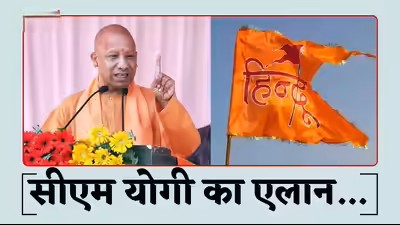
“Prison Bars Will Be Waiting for Them”: Yogi’s Ultimatum to Spoilers of Festival Joy
CM Yogi Adityanath In the days leading up to major festivals — be it Navratri, Dussehra, Diwali, or Chhath — Uttar Pradesh Chief Minister Yogi Adityanath has issued one of his most uncompromising warnings yet: “If anyone tries to spoil the joy and enthusiasm of this festival, prison bars will be waiting for them; whoever they are, they will be imprisoned without delay.”
This declaration is striking in both tone and scope. It’s not just a warning to fringe agitators, but a message aimed at establishing zero tolerance during a period of religious fervor, mass gatherings, heightened emotions, and potential flashpoints. In a state like UP — demographically large, socially diverse, politically volatile — the stakes are high.
In this blog, we will explore:
- The immediate context in which CM Yogi Adityanath made this warning
- The political and governance rationale behind the statement
- Risks, criticisms, and pitfalls of such rhetoric
- How law enforcement and the administration may respond
- Reactions from communities, civil society, opposition, and media
- Broader implications for civil liberties, public trust, and political narratives
- A concluding reflection on balance between security and rights
1. Context: Why This Warning Now?
A. Festival Season in Uttar Pradesh
Uttar Pradesh is ground zero for many of India’s most significant religious festivals. From the Navratri–Dussehra–Diwali cascade in the autumn to Chhath and other regional observances, the state witnesses millions of participants, processions, temple visits, lighting ceremonies, fairs, cultural programs, and mass gatherings.
This period is also one where small incidents — a rumor, an inflammatory slogan, a disagreement over space — can escalate quickly in a crowded environment. Administration, security, local communities, and political groups all brace themselves for potential tension.
B. Recent Triggers: Social Unrest and Communal Incidents
In recent months, some incidents have added fuel to the climate of tension:
- In Bareilly, clashes erupted after posters with “I Love Muhammad” were put up near a mosque; the situation escalated into confrontation with police.
- Reports suggest attempts to incite communal or caste-based friction in some districts. CM Yogi Adityanath public statements reference “elements trying to stop development” or “those sowing disruption” ahead of festivals.
- The administration and security machinery have flagged concerns about rumour-mongering via social media, provocative slogans, and weapon displays during gatherings.
Thus, the warning is not made in a vacuum; it builds on prior events and perceived threats.
C. Political Timing
CM Yogi Adityanath governance and public image often rest on strong law-and-order credentials. Ahead of festivals, when narrative and optics matter greatly, issuing a stern warning allows the state leadership to:
- Demonstrate control and deterrence
- Preempt criticism of laxity or delayed response
- Signal to political rivals and potential agitators that the state will not tolerate disorder
- Reassure citizens that safety and harmony are priorities
Thus, this warning also serves political messaging, reinforcing discipline at a crucial symbolic time.
2. Political & Governance Logic: What Does That Warning Achieve?
A statement as stark as “prison bars will await you” may seem dramatic, but from a governance standpoint, it has multiple intended effects:
A. Deterrence and Preemption
One of the core aims is to dissuade potential mischief-makers before they act. Fear of swift arrest and severe punishment can dissuade:
- Communal agitators
- Those planning protests or incitement
- Individuals planning to exploit tensions for personal or political gains
- Rumour spreaders who hope to spark conflict
By raising the cost high and making the warning public, the state tries to shape behavior proactively.
B. Legitimating Heavy-Handed Response
Once state machinery is given such a political mandate, enforcement agencies gain moral and political cover to act decisively — register FIRs quickly, arrest suspects, curtail gatherings, deploy forces, monitor communications, and restrict movement if needed.
C. Controlling the Narrative
Such a pronouncement also frames the narrative: whoever disrupts festivities is the villain, “spoiling joy and enthusiasm.” It shifts public discourse in favor of law-and-order measures and constrains counter-narratives that criticize state action as overreach.
D. Political Consolidation
For the ruling party and its supporters, tough-on-disorder messaging bolsters their appeal among voters who prioritize stability, governance, and security during emotionally sensitive times. It reinforces authority, especially in a large, diverse, competitive state like Uttar Pradesh.
E. Reinforcing Administrative Readiness
Finally, it sends signals down the hierarchy — to police chiefs, DMs, SPs, municipal officers — to gear up, strictly enforce, and take no laxity. The warning is a mandate for zero-tolerance.
3. Risks and Criticisms: When Rhetoric Meets Reality
While the warning has strategic logic, it is not without risks and critics. Several concerns emerge:
A. Overreach and Misuse
A broad statement such as “whoever they are” gives space for misuse — law enforcement could interpret dissent, protests, or criticism as attempts to “spoil the festival” and arrest people arbitrarily. Minor mischief or verbal satire could be treated harshly.
B. Chilling Effect on Free Expression
Citizens, organizers, cultural groups may feel constrained in expression, performances, processions, or public speeches out of fear. Social, artistic, or religious expressions might be suppressed in the name of security.
C. Targeting Vulnerable Communities
If enforcement is uneven, minority communities or dissenters may get disproportionately targeted under the pretext of “spoilers.” Past communal fault lines in the state amplify that risk.
D. False Alerts and Vigilantism
In a climate of heightened alert, false alarms or rumours can lead to overreaction. Vigilante social groups might take matters into their own hands, claiming they are preventing disruption.
E. Governance Burden and Escalation
Implementation of zero tolerance is demanding. The administration must ensure due process, fair investigations, avoid wrongful arrests, manage backlash, and maintain trust. A single high-profile misstep can backfire dramatically.
F. Public Pushback and Criticism
Civil society organizations, journalists, opposition parties may critique authoritarian rhetoric, highlighting the tension between security and civil rights. Negative media coverage could undermine public confidence.
4. Enforcement Mechanisms: How the Warning May Be Operationalized
A political statement becomes meaningful when translated into action. Here’s how the administration is likely to operationalize the warning:
A. Law & Order Review & Directives
CM Yogi Adityanath will likely chair high-level meetings with divisional commissioners, DGP, ADGs, IGs, SPs, and district-level officials to map out security plans.
He might issue a standing order that any complaint of festival disruption (rioting, stone-pelting, slogans, violence) must trigger an immediate FIR and detention of suspects.
B. Augmented Policing & Deployment
- Foot patrols and late-night deployments in sensitive neighborhoods
- Anti-Romeo squads and Mission Shakti units for women’s safety (already a recurring program in UP)
- Rapid Response Vehicles (PRV-112) or mobile teams on alert
- Police checkposts, barricades, traffic control near festival venues
- Drone surveillance, CCTV monitoring, and use of intelligence inputs
- Pre-positioning of reserve forces and quick-reaction teams
C. Social Media Monitoring & Rumour Control
- Scrutiny of posts, forward chains, viral content to flag inflammatory or false content
- Immediate takedown of provocative content when possible
- Identifying and penalizing “rumour-mongers” — i.e. individuals who spread false alerts, fake news, or incitement.
D. Regulatory Measures & Permissions
- Strict regulation of processions, public gatherings, religious functions, requiring prior permissions in certain localities
- Imposing limits on sound / loudspeakers
- Restrictions on weapon display, militant slogans, and provocative attire
- Monitoring of temporary stalls, shops, firecracker stock, verifying NOCs
- Inspection of public spaces, immersions sites, routes to ensure safe passage and compliance
E. Local Administration Engagement
- Mandating District Magistrates (DMs), SPs to personally supervise key locations
- Daily reporting, escalation protocols, and “zero tolerance logs” for districts
- Coordination with municipal, fire, medical, and transport departments to ensure amenities, emergency response
F. Post-Incident Accountability
- Fast-track judicial or quasi-judicial actions against those arrested
- Seizure/investigation of properties of those found guilty of disruption
- Publicizing convictions or penalties to reinforce deterrence narrative
5. Reactions: Public, Media, Opposition, Civil Society
A. Public and Citizens’ Views
- Many ordinary citizens — especially in large cities — may welcome strong action to prevent disruption, seeing it as reassurance for safety, especially for women, elderly, and children.
- Traders, temple bodies, and festival organizers may feel cautious, trying to navigate between celebration and compliance, wary of unnecessary interference.
- Some may express anxiety over over-policing or fear of arbitrary action, especially in minority or opposition-aligned areas.
B. Opposition and Political Critique CM Yogi Adityanath
- Opposition parties may question the wording — “whoever they are” — as too broad and open-ended, allowing misuse.
- They might accuse the government of using strong rhetoric to suppress dissent or opposition protests.
- They could demand clarity on oversight, safeguards, and assurance against overreach.
C. Media and Commentators CM Yogi Adityanath
- Editorials may debate the balance between security and civil liberties, praising intent but cautioning tone.
- Analysts may assess whether past warnings by CM Yogi Adityanath have been followed up with measured action or demonstrated excesses.
- There may be comparisons with other states’ approaches, or historical references to states that cracked down during festivals.
D. Civil Society and Human Rights Groups CM Yogi Adityanath
- These groups may raise red flags about preventive detention, misuse of laws, targeting of marginalized communities.
- They may demand clear protocols, transparency, and grievance redress mechanisms.
- Some may push for citizen helplines, legal aid readiness, and monitoring of enforcement to prevent harassment.
E. Community & Religious Leaders CM Yogi Adityanath
- In regions with active religious or community-run events, leaders may seek coordination with authorities, request guidelines, and ensure their devotees remain calm.
- They may also resist heavy-handed policing in sacred processions or cultural programs, asking for collaboration rather than confrontation.
6. Implications & Broader Significance
A. The Balance Between Security and Rights
CM Yogi Adityanath warning sits at a fault-line between two imperatives: maintaining peace and respecting civil liberties. The success of such a policy depends on:
- Clear definitions of what constitutes “spoiling festivities”
- Transparent procedures and accountability
- Safeguards against misuse
- Mechanisms for public grievance redress
If the state leans too far into coercion, it risks alienating citizens, eroding trust, and drawing legal challenges.
B. The Precedent It Sets CM Yogi Adityanath
The rhetoric and its enforcement may set a precedent for future festival seasons, for other states, and for how dissent or protest is handled around symbolic times. It may normalize strong punishments tied to religious occasions, which could be leveraged in other contexts.
C. Political Messaging & Polarization CM Yogi Adityanath
The tough-on-disorder messaging aligns with a political narrative where the ruling party positions itself as protector against chaos. But it also risks deepening polarization if enforcement is perceived as targeting specific groups or beliefs.
D. Governance Credibility & Public Trust CM Yogi Adityanath
If the warning is backed by effective, fair, transparent action and citizens feel safer, it boosts governance credibility. But any misstep — wrongful arrests, collateral damage, selective enforcement — can erode trust and empower critics.
E. The Role of Media & Social Media CM Yogi Adityanath
In the age of instant communication, rumors, viral content, and misinformation can rapidly provoke panic or conflict. The administration’s ability to monitor, respond, and correct false narratives is crucial. But doing this without suppressing legitimate speech will be delicate.
7. A Closer Look: Case Studies & Possible Scenarios
To make this more concrete, let’s imagine a few scenarios:
Scenario A: A Procession Plans to Deviate from Route CM Yogi Adityanath
A religious procession intends to take a route through a tightly populated area without informing authorities.
- Under CM Yogi Adityanath warning, police may compel them to change route, insist on permission, or arrest non-compliant leaders.
- If deviated, participants might be detained under the “spoiling festival” clause.
Scenario B: A Small Protest During Diwali CM Yogi Adityanath
A group stages a protest near a temple during the festivities, citing a local grievance.
- Authorities may argue it’s “spoiling joy.” The warning gives excuse to detain protestors even if their cause is legitimate.
- Opposition may claim suppression of democratic expression.
Scenario C: Social Media False Rumor CM Yogi Adityanath
A fake post claims a temple security guard insulted a deity, sparking a crowd to gather.
- Police crack down, arrest the person who made the post under “spoiler” clause.
- But if arrest is rash and proof weak, it becomes a case of overreaction and misuse.
Scenario D: Clash in a Sensitive Locale CM Yogi Adityanath
In an area with known communal tensions, slogans are raised, a skirmish begins.
- Vigilant policing may prevent escalation; stern punishment can deter further disorder.
- But heavy-handed arrests or use of force may deepen resentment.
Through such scenarios, the test lies in discretion, proportionality, and fairness.
8. What Will Determine Success? CM Yogi Adityanath
For CM Yogi Adityanath ultimatum to be more than symbolic, several variables matter:
- Clarity: The government must define what exactly counts as “spoiling the festival” — violence, slogans, weapon display, blocking roads, disruption of rituals, etc.
- Training and Conduct: Police officers must be trained not to overreach, to respect rights, to act on evidence, not perception.
- Accountability: Those wronged must have access to legal recourse, review mechanisms, and oversight.
- Transparency: Publicizing FIRs, arrests, convictions helps legitimacy. Lack of transparency invites suspicion.
- Community Engagement: Working with local religious and community leaders, pre-festival coordination can defuse tensions.
- Communication & Rumor Control: Fast response to viral misinformation is essential.
- Even-handedness: Enforcement should not target specific groups or communities unfairly.
- Post-Festival Assessment: After each festival, a review of incidents, corrective action, and public feedback is crucial.
If these align, the statement can help maintain peace without fracturing social trust. If they fail, it risks backlash.
9. Conclusion: Between Warning and Governance CM Yogi Adityanath
CM Yogi Adityanath’s warning — “prison bars will be waiting for them” — is audacious and direct. It reflects the political culture of UP, the sensitivity of festival seasons, and the administration’s posture toward law and order.
On one hand, it’s a necessary show of resolve: in large, populous, diverse states, festivals are moments of both joy and risk. Strong signals may prevent violence, communal flare-ups, and chaos. On the other hand, unchecked rhetoric can slide into coercion, misuse, and erosion of civil liberties.
The real test will not be in the declaration, but in its execution. Can the state walk the tightrope between deterrence and rights — between command and compassion? Can law enforcement act decisively yet judiciously? Will the public see protection or intimidation?
As festival lights glow across Uttar Pradesh, the eyes of citizens, civil society, and the media will watch: will the promise of security deliver harmony, or will it sow fear and grievance?
If you want, I can prepare a version with sidebars (e.g. historical warnings, legal safeguards, comparisons with other states) or an abridged version for newspaper format. Would you like me to do that?
Read more latest news

