
Rule Changes From January 1, 2026: 10 Major Changes That Will Impact Your Wallet and Daily Life.
new year 2026, As India prepares to step into the new year, several important rule changes are set to come into effect from January 1, 2026. These changes will directly affect salaried employees, taxpayers, bank customers, vehicle buyers, LPG consumers, and digital payment users. With the arrival of the new year, the government and regulatory bodies are implementing reforms aimed at improving transparency, boosting revenue collection, and streamlining public services.
Every new year brings expectations of growth, stability, and financial planning. However, it also comes with regulatory shifts that can make certain things expensive while offering relief in other areas. Before welcoming the new-year, it is crucial to understand what is changing, what may cost more, and how these rules could affect your personal finances.
Below is a detailed 3000-word guide explaining the 10 major rule changes from January 1, 2026, so you can enter the new year fully informed and prepared.
1. PAN Aadhaar Linking Deadline and Penalties
One of the most significant changes taking effect from the new-year is related to PAN–Aadhaar linking. The government has made it mandatory for all taxpayers to link their PAN with Aadhaar. Those who fail to do so by December 31, 2025, may face serious consequences from January 1, 2026.
What Will Change?
- Unlinked PAN cards may become inactive.
- Inactive PANs cannot be used for filing income tax returns.
- Higher TDS may be deducted on financial transactions.
- Refunds could be delayed or blocked.
Impact on Citizens
As the new year begins, taxpayers who have not completed this process may face compliance issues. Financial activities such as opening bank accounts, investing in mutual funds, or selling property could become difficult.
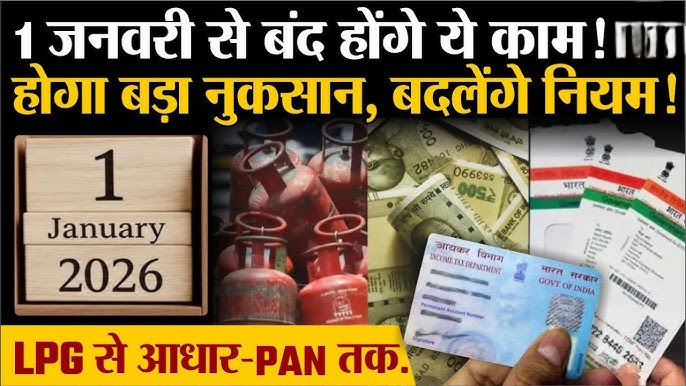
2. LPG Cylinder Price Revision
LPG prices are revised regularly, and the new-year is expected to bring another round of changes. Oil marketing companies typically update LPG prices on the first day of every month, and January 1, 2026, will be no exception.
What to Expect
- Domestic LPG prices may increase due to global crude oil trends.
- Commercial LPG cylinders could see sharper hikes.
- Subsidy policies may be revised for certain income groups.
For households, the new year could begin with slightly higher kitchen expenses, impacting monthly budgets.
3. Car Prices to Increase from January 1, 2026
If you are planning to buy a new vehicle, the new-year may not be the best time. Almost all major automobile manufacturers have announced price hikes effective January 1, 2026.
Reasons Behind the Price Hike
- Rising input and raw material costs
- Increased compliance costs for emission norms
- Higher logistics and transportation expenses
With the start of the new year, car prices could increase by 2% to 6%, depending on the brand and model.
4. 8th Pay Commission: Big News for Central Government Employees

The new-year could bring hope for over one crore central government employees and pensioners with developments related to the 8th Pay Commission.
Key Expectations
- Official notification or roadmap announcement
- Possible revision in basic pay and allowances
- Improved pension structure
While implementation may take time, announcements expected in the new year could significantly influence household income planning.
5. UPI Rule Changes: Limits and Security Updates
Digital payments continue to evolve, and the new year will introduce fresh UPI-related rules aimed at enhancing security and efficiency.
Likely Changes
- Revised transaction limits for certain categories
- Stronger fraud detection and authentication measures
- Possible charges on high-value commercial transactions
As the new-year unfolds, regular UPI users should stay updated to avoid transaction failures or compliance issues.
6. Bank Holiday Calendar Changes
With the new year, banks will release a revised holiday calendar for 2026. This is especially important for business owners, traders, and salaried individuals.
What’s New?
- Region-specific holidays
- More digital banking emphasis on holidays
- Changes in working Saturdays for select banks
Planning financial work in the new-year will require awareness of these updated bank holidays.
7. Fixed Deposit and Savings Account Interest Rates
Interest rates on fixed deposits and savings accounts often change at the start of a new year, depending on RBI policy and inflation trends.
Possible Scenarios
- Some banks may revise FD rates downward
- Special FD schemes may expire
- Savings account interest structures could be rationalized
Investors entering the new year should reassess their savings strategies accordingly.
8. Income Tax Rule Adjustments
Tax-related changes often align with the new-year, and January 1, 2026, may see procedural updates.
Expected Changes
- Stricter compliance checks
- Enhanced data sharing between departments
- Simplified online grievance redressal
For taxpayers, the new-year will demand better documentation and timely filings.
9. Insurance Premium and KYC Updates
Insurance companies are expected to enforce stricter KYC norms from the new-year.
What Will Change?
- Mandatory re-KYC for old policies
- Revised premium rates for health and motor insurance
- Faster claim settlement through digital verification
Policyholders should review their coverage before the new year begins.
10. Education and Digital Service Fee Revisions
The new-year may also bring changes in education-related fees and digital service subscriptions.
Areas Affected
- Online education platforms
- Government digital services
- Examination and application fees
Families planning budgets for the new year should factor in these potential increases.
What Will Become More Expensive in the New Year?
From LPG cylinders and cars to insurance premiums and digital services, the new-year is likely to begin with moderate inflationary pressure. While salaries and allowances may see positive movement, expenses will also rise.
How to Prepare Before January 1, 2026
To start the new year smoothly:
- Complete PAN–Aadhaar linking
- Book vehicles before price hikes
- Review insurance policies
- Plan major banking work in advance
- Reassess investments and savings
Proper planning before the new year can help you avoid unnecessary financial stress.
Final Thoughts
Every new year brings change, and 2026 is no different. While some rule changes may pinch your pocket, others aim to improve long-term financial stability and governance. Staying informed is the best way to adapt and thrive in the new year.
Read more latest news

