
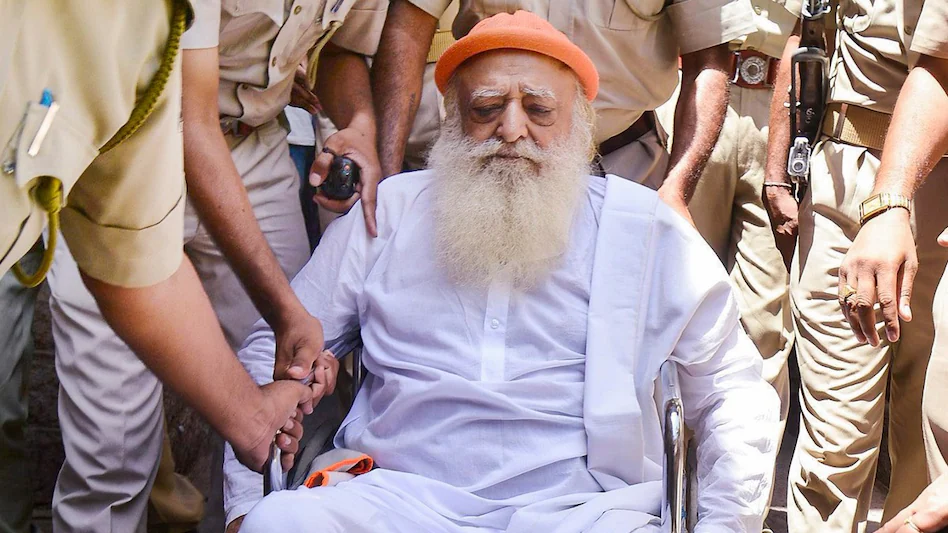
Rajasthan High Court Grants Medical Bail to Asaram: Understanding the Legal, Social, and Emotional Impact of the Verdict
Introduction: A Controversial Spiritual Figure Returns to Headlines
The name Asaram Bapu has once again surfaced in the national headlines. The Rajasthan High Court has granted him medical bail, a decision that has triggered widespread debate across legal, social, and political circles. Once a revered spiritual guru with millions of followers across India and abroad, Asaram Bapu is currently serving a life sentence after being convicted in a 2013 rape case involving a minor.
The court’s decision to release him temporarily on medical grounds has brought a mix of relief for his supporters and outrage from rights activists who fear it could undermine the justice system. The judgment also raises important questions about how India’s judiciary balances human rights with accountability, particularly when the convict is a powerful public figure.
This 3000-word analysis explores the timeline of the case, the legal reasoning behind the court’s decision, the reactions it has provoked, and the larger implications for India’s justice system, public faith, and political environment.
Who Is Asaram Bapu? From Spiritual Guru to Convict
Before delving into the legal decision, it’s essential to understand who Asaram Bapu is and how his once-glorious empire of faith collapsed under the weight of criminal charges.
Born Asumal Harpalani in 1941 in Sindh (now in Pakistan), Asaram Bapu rose to fame in the 1980s and 1990s as a Hindu spiritual preacher known for his discourses on morality, self-restraint, and spirituality. His organization, the Sant Shri Asaram Bapu Ashram Trust, grew exponentially, establishing hundreds of ashrams in India and abroad.
By the 2000s, Asaram Bapu had become one of India’s most influential godmen, commanding a following in the millions and enjoying political proximity with leaders across party lines. However, in 2013, his spiritual empire began to crumble when a minor girl from Shahjahanpur, Uttar Pradesh, accused him of sexual assault at his Jodhpur ashram.
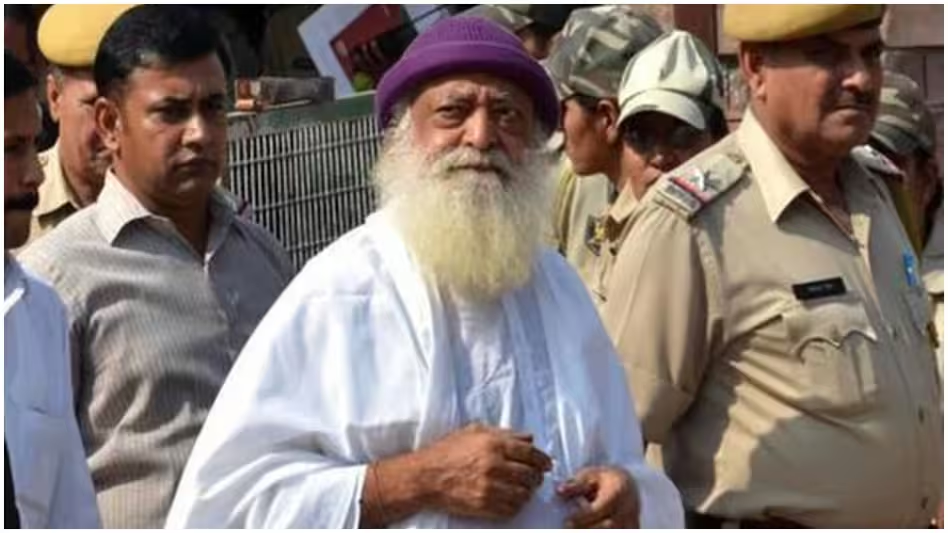
The 2013 Rape Case: A Turning Point
The complaint filed by the survivor and her family in August 2013 set in motion one of the most high-profile criminal investigations in recent Indian history. The victim, then 16 years old, alleged that Asaram Bapu sexually assaulted her under the pretext of performing a “spiritual healing ritual.”
After an intense nationwide manhunt, Asaram Bapu was arrested on September 1, 2013, from Indore and brought to Jodhpur for questioning. The subsequent investigation revealed alarming details — including testimonies from former disciples and staff members that painted a dark picture of exploitation and manipulation behind the façade of spirituality.
In April 2018, a Jodhpur court convicted Asaram Bapu under relevant sections of the Protection of Children from Sexual Offences (POCSO) Act and the Indian Penal Code (IPC), sentencing him to life imprisonment. His conviction was hailed as a victory for justice, particularly for survivors of sexual crimes against powerful figures.
The Legal Path After Conviction
Following his conviction, AAsaram Bapu legal team pursued several appeals, arguing that he was wrongly convicted and that the case had “political overtones.” However, the Rajasthan High Court and the Supreme Court of India repeatedly rejected his bail pleas over the years, citing the seriousness of the crime and the need for justice for the survivor.
Nonetheless, Asaram Bapu lawyers kept returning to the courts, this time on medical grounds, pointing to his deteriorating health. They argued that he suffers from multiple chronic ailments — including hypertension, spinal problems, and heart disease — and that his condition cannot be properly managed within the constraints of prison facilities.
After multiple rejections, the Rajasthan High Court finally granted medical bail in October 2025, citing humanitarian considerations.
Details of the Court’s Decision
The bench of the Rajasthan High Court, while delivering its decision, made it clear that the bail was strictly temporary and conditional. The court stated that Asaram Bapu medical reports, submitted by a team of government doctors, indicate that he needs specialized and long-term treatment not available in the prison hospital.
The order allows Asaram Bapu to seek treatment under medical supervision at a hospital of his choice but imposes strict conditions to ensure that he does not misuse his temporary freedom.
Key highlights of the order include:
- Asaram Bapu must remain under constant medical supervision and cannot travel without prior court permission.
- He must report his health status regularly to the court through official medical reports.
- The police will maintain security and monitoring during his treatment.
- The bail does not imply suspension of his sentence; it is purely on compassionate grounds.
The court, in its observation, said:
“Every convict, regardless of social or economic status, has the right to medical treatment and humane conditions. The grant of bail on medical grounds does not affect the merits of the case.”
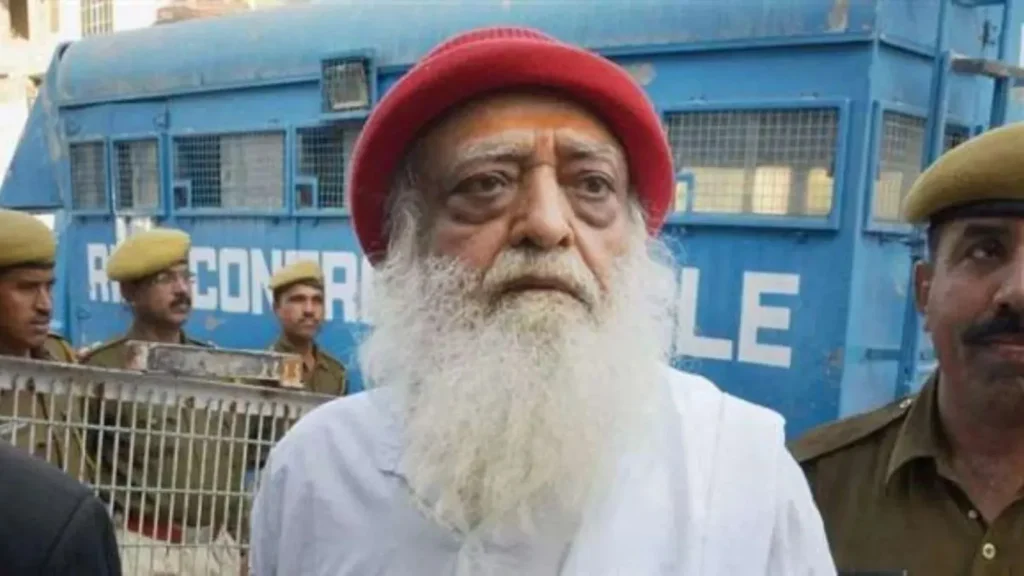
Public Reaction: Divided Between Sympathy and Outrage
The High Court’s decision has divided public opinion.
Supporters’ Reaction:
Asaram Bapu supporters and followers, who have always maintained his innocence, celebrated the decision. Outside his ashrams in Gujarat and Rajasthan, devotees were seen offering prayers, lighting lamps, and chanting slogans like “Bapu zindabad.” Many expressed hope that “truth will prevail” and that he will eventually be acquitted.
His legal team hailed the verdict as a victory of compassion, arguing that “even prisoners deserve dignity and healthcare.” They stressed that Asaram’s health condition is severe and that this decision reflects the humanitarian side of justice.
Critics’ Reaction:
However, women’s rights groups and social activists expressed strong disappointment, viewing the move as a setback to the survivor’s fight for justice.
Prominent activist Kavita Krishnan remarked:
“Medical bail should not become a loophole for convicted criminals to regain comfort outside prison. Asaram Bapu case must remind us that accountability must continue regardless of status.”
Many fear that allowing him temporary freedom, even under medical watch, could lead to influence on witnesses or supporters’ mobilization, given his past attempts to use his network to obstruct justice.
Legal Experts’ Take: Balancing Law and Humanity
Legal experts have offered a nuanced perspective on the verdict.
According to senior Supreme Court advocate Amit Desai,
“The judiciary must balance punishment with compassion. If medical evidence convincingly proves that a prisoner’s health cannot be maintained within the jail environment, temporary bail becomes a constitutional obligation.”
However, Desai added that such decisions must be monitored rigorously to prevent misuse, especially in high-profile cases involving social influence.
Constitutionally, Article 21 of the Indian Constitution guarantees the right to life and health, even to those behind bars. Thus, the court’s order stands on firm legal footing — provided it is implemented transparently.
Medical Grounds in Indian Jurisprudence
India’s judiciary has a long history of granting medical bail or parole to convicts under exceptional circumstances. The underlying principle is that imprisonment should not result in inhuman treatment or denial of essential healthcare.
However, courts also exercise judicial restraint to ensure such relief is not misused by powerful individuals to evade justice. Past cases, such as those involving Sanjay Dutt, Lalu Prasad Yadav, and Sukesh Chandrashekhar, have demonstrated the fine line between compassion and privilege.
In Asaram Bapu case, the public scrutiny is far more intense because of the nature of his conviction — a crime against a minor under the POCSO Act, which carries stringent sentencing norms and moral implications.
The Survivor’s Perspective: A Decade of Struggle
For the survivor and her family, the case has been a long and painful legal battle. Despite repeated intimidation attempts, they stood firm in their pursuit of justice.
Now, the news of Asaram Bapu medical bail has reportedly caused emotional distress to the family. They have expressed concern over his release, fearing it could embolden his followers or influence the pending appeals.
A close family source told media outlets:
“We respect the judiciary but hope the authorities ensure he doesn’t misuse this bail. We have already suffered enough.”
Their apprehension reflects a broader sentiment among victims of sexual violence — that justice must not only be done but must also be seen to be done.
Political and Social Dimensions
The Asaram Bapu case has always carried a political undertone. Over the years, various political figures across party lines have been associated with or distanced from him depending on the public mood.
His medical bail comes at a time when state elections are approaching in several regions, leading some commentators to speculate whether the decision could indirectly influence religious and political narratives.
Socially, the case continues to symbolize the conflict between faith and accountability — a struggle between blind devotion and rational justice.
Many sociologists point out that Asaram’s case exposed how unchecked authority within spiritual movements can lead to exploitation and corruption. Granting him temporary bail may rekindle debates about reform within religious organizations and the need for greater transparency.
Humanitarian vs. Legal Ethics: A Delicate Balance
The debate surrounding Asaram’s bail embodies the moral dilemma of the justice system — should compassion override the need for deterrence?
On one hand, compassion is an essential component of justice, especially when a convict’s life is genuinely at risk. On the other, accountability must not be diluted, particularly in crimes involving minors and abuse of power.
Legal ethicists argue that India’s courts must adopt a uniform standard for granting medical bail — one that ensures genuine need, not privilege, determines the outcome.
Possible Next Steps: What Happens After Bail
While Asaram is temporarily out on medical bail, the case is far from over. His appeal against conviction remains pending before the Rajasthan High Court, and eventually, the matter could reach the Supreme Court of India.
The prosecution has already indicated that they will closely monitor compliance with bail conditions and oppose any move that appears to misuse the relief.
If Asaram’s health improves, the court could revoke the bail and direct his return to custody. Conversely, if his condition worsens, the bail might be extended periodically under judicial review.
Implications for the Indian Justice System
The Asaram verdict once again puts the spotlight on the complex relationship between justice, health, and public perception in India.
- Reinforcing Equality Before Law: The court’s reasoning reflects that every individual, regardless of fame or infamy, is entitled to humane treatment under Article 21.
- Testing Public Faith in Judiciary: The decision also tests the judiciary’s ability to maintain public confidence, especially in cases where social emotions run high.
- Encouraging Accountability in Spiritual Institutions: The controversy surrounding Asaram has pushed for greater scrutiny of religious trusts and gurus operating without accountability.
- Setting Precedents: This case will likely serve as a reference for future debates around medical bail, especially for high-profile convicts.
Media Coverage and Public Discourse
News channels and social media platforms have been flooded with reactions since the court’s announcement.
Some media houses have emphasized the judicial reasoning and humanitarian angle, while others have highlighted the public outrage and fears of justice dilution.
On social media, hashtags such as #AsaramBapu, #MedicalBail, and #JusticeForSurvivor have been trending, showing the emotional polarization this case still evokes.
Analysts note that the media’s responsibility is immense in such cases — to report facts without sensationalism and ensure that the focus remains on legal transparency, not propaganda.
Conclusion: A Test of Faith — In Law, Not in Men
The Rajasthan High Court’s decision to grant medical bail to Asaram is not merely a legal event; it’s a mirror reflecting the moral, legal, and social complexities of modern India.
It reminds us that justice is not vengeance, and the state has a duty to protect even those convicted of heinous crimes from inhumane treatment. Yet, it also reaffirms that compassion must never become complicity.
Asaram’s case, in all its controversy, continues to challenge India’s conscience — pushing the nation to find a balance between law and mercy, faith and accountability, and power and justice.
Whether this temporary relief leads to genuine medical recovery or reignites old battles of influence remains to be seen. But one thing is certain: the eyes of the nation will remain on every step of this case until final justice is served — completely, transparently, and beyond doubt.
Read More latest news

