

Aravali Mountain: India’s Oldest Natural Wall Under Threat
The Aravali Mountain range stands as a silent witness to the geological and ecological history of the Indian subcontinent. Formed nearly 250 million years ago, this ancient mountain system is older than the Himalayas and has played a decisive role in shaping the climate, ecology, and civilization of northern India. Today, however, the survival of the Aravali Mountain is under severe threat due to unchecked illegal mining, rampant urbanization, and policy neglect.
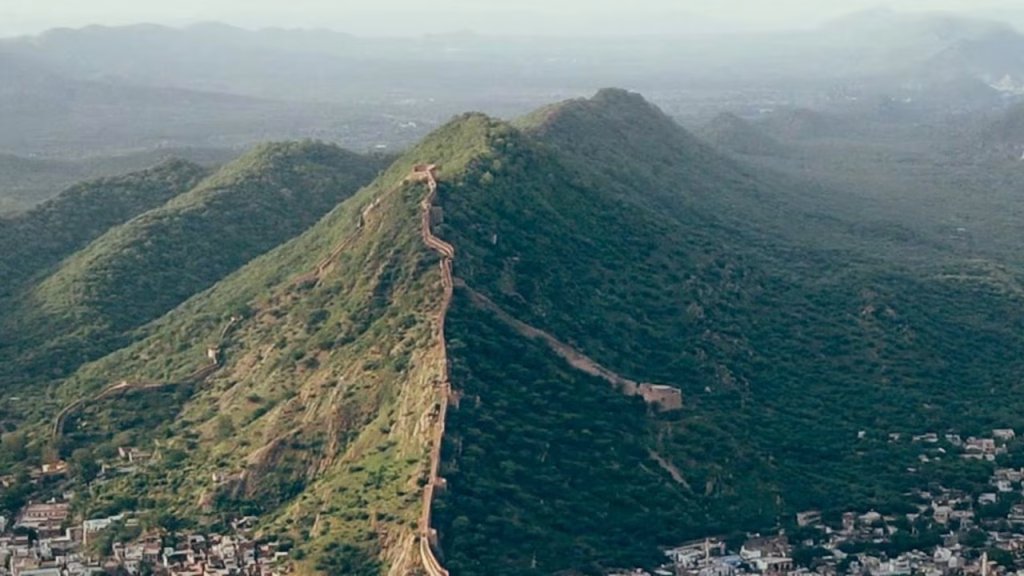
For centuries, the Aravali Mountain range has acted as a natural barrier preventing the expansion of the Thar Desert into fertile regions of Rajasthan, Haryana, and Delhi. Environmental experts warn that weakening this natural wall could have irreversible consequences, accelerating desertification, water scarcity, and ecological collapse.
Geological Significance of the Aravali Range
The Aravali Mountain is considered one of the oldest fold mountain systems in the world. Unlike younger mountain ranges formed by tectonic collisions, the Aravali-Mountain originated during the Proterozoic era. Over millions of years, erosion has reduced its height, but its ecological importance remains unmatched.
This ancient range has influenced soil formation, groundwater recharge, and biodiversity patterns across northwestern India. Scientists believe that without the presence of the Aravali-Mountain, large parts of northern India would resemble arid desert landscapes today.
Natural Shield Against Desertification
One of the most critical roles of the Aravali Mountain is its function as a barrier against desert winds. The range obstructs sand-laden winds from the Thar Desert, preventing them from spreading eastward. This protective role has safeguarded agricultural regions and human settlements for generations.
Experts caution that continuous degradation of the Aravali-Mountain could remove this shield, allowing desertification to creep closer to urban centers like Delhi, Gurugram, and Jaipur. Such a scenario would worsen air quality, reduce agricultural productivity, and disrupt regional climate patterns.
Biodiversity Hotspot Under Stress
The Aravali-Mountain supports a rich variety of flora and fauna, despite its semi-arid appearance. Indigenous plant species, medicinal herbs, and wildlife such as leopards, hyenas, jackals, and numerous bird species depend on this fragile ecosystem.
Forests along the Aravali Mountain also serve as vital carbon sinks, absorbing greenhouse gases and regulating temperature. Environmentalists argue that destroying these forests undermines India’s climate commitments and weakens natural resilience against extreme weather events.
Illegal Mining: The Biggest Threat
Illegal mining has emerged as the single largest threat to the Aravali Mountain. Quarrying for stone, marble, and minerals has eaten away large portions of the range, especially in Rajasthan and Haryana. Despite court orders and environmental regulations, mining continues covertly, often under political protection.
Each mining operation destabilizes the structure of the Aravali Mountain, leading to landslides, loss of vegetation, and groundwater depletion. Activists warn that continued mining could permanently alter the geological integrity of the range.
Urbanization and Real Estate Pressure
Rapid urban expansion has placed enormous pressure on the Aravali Mountain ecosystem. Cities like Gurugram, Faridabad, and parts of Delhi have expanded aggressively into forested zones. Hills have been flattened, forests cleared, and natural drainage systems disrupted.
Urban development around the Aravali-Mountain has also led to the disappearance of water bodies that once recharged aquifers. As a result, groundwater levels in surrounding areas have plummeted, creating an artificial water crisis driven by ecological destruction.
Impact on Water Security
The Aravali Mountain plays a crucial role in groundwater recharge. Rainwater that falls on its slopes percolates through rocky layers, replenishing underground aquifers. This natural process sustains wells, lakes, and rivers in arid regions.
When mining and construction damage the structure of the Aravali Mountain, this recharge mechanism breaks down. Experts link declining water tables in Haryana and Rajasthan directly to the degradation of the range.
Air Quality and Climate Regulation
Forests along the Aravali Mountain act as a green lung for northern India. They trap dust, reduce particulate matter, and moderate temperatures. With growing deforestation, dust storms have become more frequent, worsening air pollution in nearby cities.
Environmental studies suggest that preserving the Aravali Mountain could significantly improve regional air quality, particularly during summer months when desert winds intensify.
Legal Protection and Policy Gaps
Over the years, courts have recognized the ecological importance of the Aravali Mountain. The Supreme Court and National Green Tribunal have issued multiple orders banning mining and restricting construction in protected zones. However, weak enforcement has diluted their impact.
Policy loopholes, reclassification of forest land, and selective interpretation of regulations continue to undermine conservation efforts. Environmentalists argue that without political will, legal protection alone cannot save the Aravali Mountain.
Community and Cultural Importance
Beyond ecology, the Aravali- Mountain holds deep cultural and historical significance. Ancient settlements, temples, and trade routes developed around its terrain. Local communities have traditionally depended on its forests for livelihood, grazing, and water.
The erosion of the Aravali Mountain ecosystem has also disrupted these traditional ways of life, pushing communities toward unsustainable economic activities.
Role in India’s Climate Future
As India faces increasing climate challenges, natural systems like the Aravali Mountain become even more critical. They provide climate resilience by stabilizing weather patterns, conserving biodiversity, and supporting water security.
Climate experts warn that destroying the Aravali Mountain contradicts India’s long-term environmental and economic interests. Conservation, they argue, is not a luxury but a necessity for sustainable development.
Government Responsibility and Accountability
Protecting the Aravali Mountain requires coordinated action between central and state governments. Environmental clearances must be transparent, and violators should face strict penalties. Monitoring systems using satellite imagery and drones can help detect illegal activities in real time.
Public accountability, environmental audits, and community participation are essential to ensure that conservation policies translate into action on the ground.
Citizen Awareness and Activism
Civil society movements have played a crucial role in highlighting threats to the Aravali Mountain. Environmental activists, researchers, and local residents have repeatedly raised alarms through reports, protests, and legal interventions.
Greater public awareness can pressure authorities to prioritize conservation. Saving the Aravali Mountain is not just an environmental issue but a collective responsibility toward future generations.
Economic Myth vs Environmental Reality
Supporters of mining and urban expansion often argue that development generates employment and revenue. However, environmental economists point out that the long-term costs of destroying the Aravali Mountain far outweigh short-term gains.
Loss of water, health impacts, climate vulnerability, and disaster risks impose enormous economic burdens that remain invisible in conventional growth calculations.
A Race Against Time
The degradation of the Aravali Mountain has reached a critical stage. Satellite images reveal alarming shrinkage of forest cover and hill structures over the past few decades. If current trends continue, large sections of the range could disappear within a generation.
Scientists stress that ecological restoration is still possible, but the window for action is rapidly closing.
The Way Forward
Saving the Aravali Mountain requires a multi-pronged approach: strict enforcement of mining bans, restoration of degraded forests, sustainable urban planning, and community-driven conservation. Urban growth must respect ecological boundaries rather than override them.
Educational institutions, media, and policymakers must work together to redefine development in harmony with nature.
Conclusion
The Aravali Mountain is not merely a geographical feature—it is a living system that sustains life, climate, and culture across vast regions of India. Its destruction would mark not just an environmental failure, but a moral one.
Preserving the Aravali Mountain is about safeguarding India’s ecological heritage, securing water and food systems, and ensuring a livable future. The choices made today will determine whether this ancient natural wall continues to stand—or fades into history as a lost opportunity.
Read More latest news

