
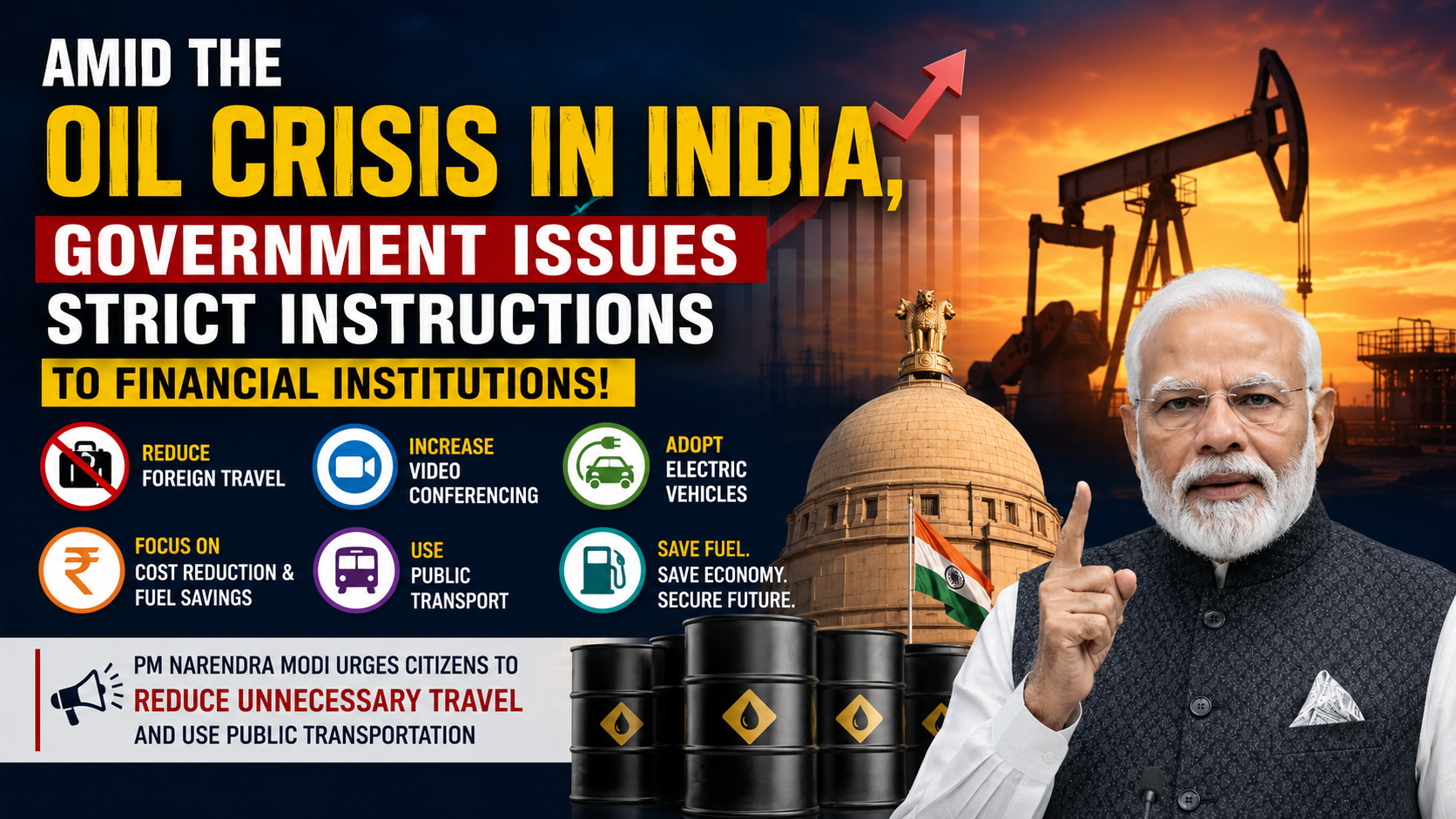
Amid the Oil Crisis in India: Government Issues Strict Instructions to Financial Institutions
Amid the oil crisis in india, the central government has now initiated a series of cost-cutting and fuel-saving measures aimed at reducing unnecessary expenditure and conserving energy resources.
The global energy market is once again under pressure as geopolitical tensions in the Middle East continue to rise. Increasing crude oil prices have started affecting several economies, and India is also feeling the impact.
The Ministry of Finance has issued strict instructions to public sector banks, insurance companies, and other financial institutions to minimize foreign travel, increase the use of video conferencing, and promote electric vehicles for official use. These measures reflect the government’s growing concern about the impact of rising fuel prices on the Indian economy Amid the oil crisis in india.
Prime Minister Narendra Modi has also urged citizens to avoid unnecessary travel and make greater use of public transportation systems. The government believes that reducing fuel consumption at both institutional and public levels can help India manage the ongoing energy crisis more effectively.
Rising Tensions in the Middle East and Their Impact
The Middle East remains one of the world’s most critical oil-producing regions. Any conflict or instability in this region directly impacts global crude oil prices. The recent escalation in tensions involving Iran, Israel, and the United States has increased uncertainty in international energy markets.
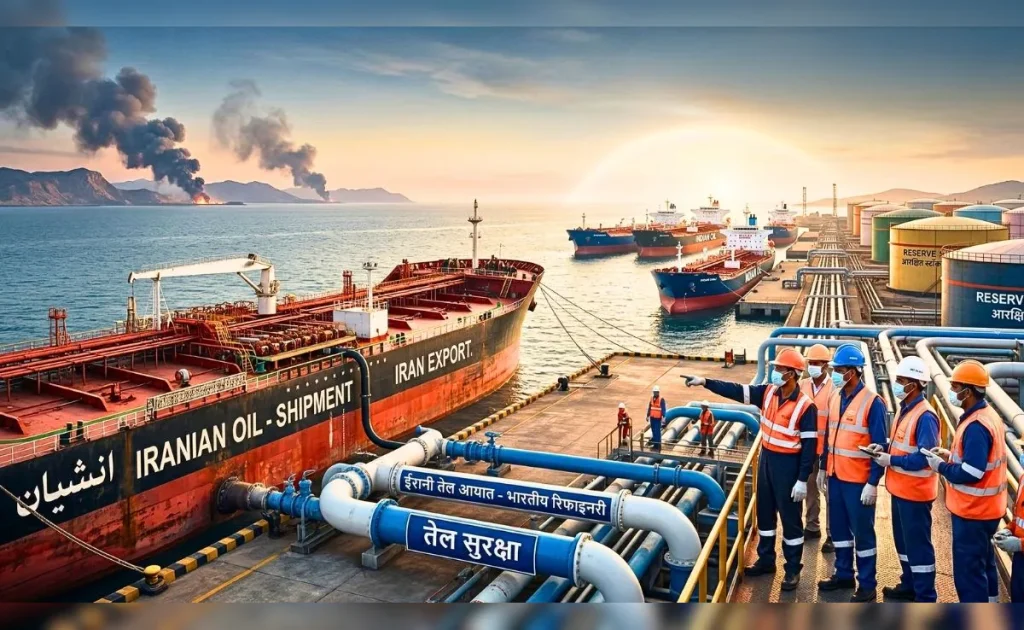
Amid the oil crisis in india, policymakers are closely monitoring global oil supply routes such as the Strait of Hormuz and the Red Sea. These routes are crucial for transporting crude oil to Asian countries, including India. Any disruption could significantly increase fuel costs and create supply shortages.
India imports nearly 85 percent of its crude oil requirements. This heavy dependence on imports makes the country highly vulnerable to international price fluctuations. As oil prices rise globally, the cost of petrol, diesel, transportation, and essential goods also increases domestically Amid the oil crisis in india.
Experts warn that if geopolitical tensions continue, crude oil prices could rise further, putting additional pressure on inflation and government finances.
Finance Ministry Issues Strict Directives
Amid the oil crisis in india, the Finance Ministry has directed all state-owned financial institutions to adopt immediate measures for fuel conservation and cost reduction.
According to government sources, public sector banks, insurance companies, and financial institutions have been advised to:
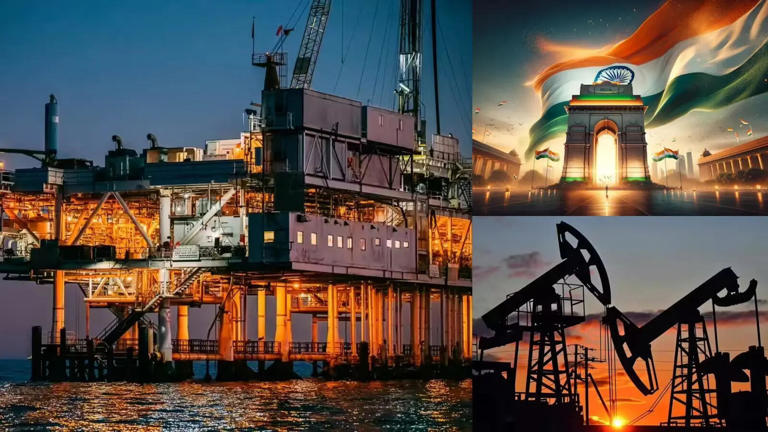
- Reduce non-essential foreign travel
- Prefer virtual meetings and video conferencing
- Limit fuel consumption in official vehicles
- Promote the use of electric vehicles
- Reduce operational expenses wherever possible
- Encourage employees to use public transport
These instructions are not merely advisory but are being treated as an important part of the government’s broader economic strategy.
The move is aimed at reducing unnecessary fuel usage and preparing institutions for possible economic challenges if the global oil crisis worsens further.
Video Conferencing Becomes a Priority
One of the most important directives issued by the Finance Ministry is the increased use of video conferencing for official meetings.
Amid the oil crisis in india, government departments and financial institutions are being encouraged to replace physical meetings with digital communication platforms. This approach can significantly reduce air travel, road transportation, hotel expenses, and fuel consumption.
The COVID-19 pandemic had already demonstrated the effectiveness of virtual meetings. Many organizations successfully operated remotely during lockdowns, proving that productivity can be maintained without frequent travel.
Officials believe that continuing this practice can save both fuel and public money.
Banks and insurance companies have now started reviewing travel policies to ensure that only essential trips receive approval.
Push for Electric Vehicles
Another major initiative announced amid the oil crisis in india is the promotion of electric vehicles within government-controlled institutions.
Public sector organizations are being encouraged to gradually replace petrol and diesel vehicles with electric alternatives. The government believes that adopting EVs can reduce dependence on imported crude oil and lower operational costs in the long run.
India has already been promoting electric mobility through several schemes and incentives. The Faster Adoption and Manufacturing of Electric Vehicles (FAME) scheme has supported EV adoption across multiple sectors.
Now, financial institutions are expected to actively participate in this transition.
Experts say that if government agencies lead by example, private companies and citizens may also accelerate their shift toward cleaner transportation.
Prime Minister Narendra Modi’s Appeal to Citizens
Prime Minister Narendra Modi has repeatedly emphasized the importance of energy conservation and responsible fuel usage.
Amid the oil crisis in india, the Prime Minister appealed to citizens to reduce unnecessary travel and use public transportation more frequently. He stressed that fuel conservation is not only an economic necessity but also an environmental responsibility.
The Prime Minister highlighted that small changes in daily habits can collectively create a significant national impact.
Using metro services, buses, carpooling, cycling, and electric vehicles can help reduce fuel consumption across the country.
His message aligns with India’s long-term vision of reducing dependence on imported fossil fuels and promoting sustainable development.
Why India Is Concerned About Rising Oil Prices
There are several reasons why the government is taking the situation seriously amid the oil crisis in india.
1. Inflation Pressure
Higher oil prices increase transportation and manufacturing costs. This eventually affects the prices of food, consumer goods, and essential services.
2. Increased Import Bill
India spends billions of dollars annually on crude oil imports. Rising prices can significantly increase the country’s import bill and widen the trade deficit.
3. Pressure on the Rupee
Higher oil imports require more foreign currency payments, especially in US dollars. This can weaken the Indian rupee against the dollar.
4. Fiscal Burden
The government may need to provide subsidies or reduce taxes to protect consumers from rising fuel prices, which can impact fiscal planning.
5. Economic Growth Risks
Sustained high fuel prices can slow economic activity by increasing business costs and reducing consumer spending.
Because of these concerns, the government is focusing heavily on preventive measures and energy conservation strategies.
Public Sector Banks Begin Cost-Cutting Measures
Several state-owned banks have already started implementing internal measures amid the oil crisis in india.
Bank officials are reportedly reviewing:
- Travel budgets
- Fuel reimbursements
- Vehicle usage policies
- Energy consumption in offices
- Meeting and conference expenditures
Many institutions are also exploring hybrid work models to reduce commuting-related fuel consumption.
Digital banking and remote operations have become more important than ever. Online customer service, digital documentation, and virtual training sessions are expected to increase further.
The banking sector believes that operational efficiency and technology adoption can help reduce expenses without affecting customer service quality.
Insurance Companies Also Under Pressure
Insurance companies have also received instructions to adopt energy-saving practices amid the oil crisis in india.
Public sector insurers are being encouraged to:
- Limit international conferences
- Reduce physical inspections when possible
- Use digital claim processing systems
- Encourage virtual client interactions
- Adopt electric vehicles for field operations
The insurance sector is increasingly using digital technologies such as AI-powered assessments, online claim verification, and remote customer support to reduce operational costs.
These steps are expected to improve efficiency while supporting national fuel conservation efforts.
India’s Long-Term Energy Strategy
The current situation amid the oil crisis in india has once again highlighted the importance of energy security and diversification.
India has been actively pursuing multiple long-term strategies, including:
- Expanding renewable energy capacity
- Increasing solar and wind power generation
- Promoting ethanol blending
- Encouraging electric mobility
- Investing in green hydrogen
- Diversifying crude oil import sources
The government aims to reduce India’s dependence on imported fossil fuels over time.
India has already become one of the world’s largest renewable energy producers. Massive investments are being made in solar parks, electric charging infrastructure, and battery manufacturing.
Experts believe that the present crisis may accelerate the country’s transition toward cleaner energy sources.
Impact on Common Citizens
Common citizens are also feeling the effects amid the oil crisis in india.
Rising fuel prices impact daily life in several ways:
- Higher transportation costs
- Increased food prices
- Expensive airline tickets
- Costlier logistics and delivery services
- Increased electricity costs in some sectors
Middle-class families and small businesses often face the greatest pressure during fuel price hikes.
As a result, many people are now choosing fuel-efficient vehicles, public transportation, and ride-sharing options to reduce expenses.
The government’s appeal for responsible fuel usage is aimed at creating nationwide awareness about conservation.
Experts Support Government Measures
Many economists and energy experts have supported the government’s recent directives amid the oil crisis in india.
They believe that reducing unnecessary expenditure and fuel usage is a practical short-term response to global uncertainty.
Experts also argue that government institutions must lead by example in adopting sustainable practices.
Several analysts say that:
- Video conferencing can significantly reduce travel costs
- Electric vehicles can lower long-term fuel dependency
- Public transportation reduces congestion and pollution
- Energy conservation improves economic resilience
However, some experts also emphasize the need for broader structural reforms, including faster renewable energy expansion and increased domestic energy production.
Global Oil Market Remains Uncertain
The international oil market remains highly unpredictable amid the oil crisis in india.
Several factors continue to influence global prices:
- Middle East conflicts
- OPEC production decisions
- Sanctions on oil-producing nations
- Global economic slowdown fears
- Shipping route security concerns
Any further escalation in geopolitical tensions could create additional supply disruptions.
India is therefore preparing for multiple scenarios while focusing on economic stability and fuel conservation.
Importance of Public Transportation
The government has strongly emphasized public transportation amid the oil crisis in india.
Metro systems, buses, local trains, and shared mobility services can help reduce fuel demand significantly.
Cities like Delhi, Mumbai, Bengaluru, and Hyderabad already have expanding metro networks that support sustainable urban transportation.
Using public transportation not only saves fuel but also reduces pollution and traffic congestion.
Experts say that if more citizens adopt public transport habits, India can lower its oil consumption considerably.
Role of Technology in Fuel Savings
Technology is playing an increasingly important role amid the oil crisis in india.
Digital transformation can reduce physical travel requirements across industries.
Some major technological solutions include:
- Video conferencing platforms
- Digital banking
- Online education
- Remote working systems
- E-commerce logistics optimization
- Smart transportation systems
These innovations can help organizations reduce fuel consumption while maintaining productivity and efficiency.
The government’s current directives encourage institutions to use technology more effectively for operational management.
Economic Discipline During Crisis
The government’s actions amid the oil crisis in india reflect a broader focus on economic discipline and preparedness.
Reducing unnecessary expenditure during uncertain global conditions is considered an important financial strategy.
Government departments and institutions are expected to monitor spending carefully while prioritizing essential operations.
Analysts believe that early preventive measures can help India avoid larger economic disruptions if oil prices continue to rise.
This approach also demonstrates the government’s attempt to balance economic growth with fiscal responsibility.
Conclusion
The growing instability in the Middle East and rising crude oil prices have created serious concerns for energy-importing nations like India. Amid the oil crisis in india, the government has adopted a proactive approach focused on fuel conservation, operational efficiency, and cost reduction.
The Finance Ministry’s strict instructions to banks, insurance companies, and financial institutions highlight the seriousness of the situation. Increased use of video conferencing, reduced foreign travel, and promotion of electric vehicles are now becoming central elements of India’s short-term response strategy.
Prime Minister Narendra Modi has also urged citizens to participate by reducing unnecessary travel and using public transportation more frequently.
The current crisis serves as a reminder of India’s dependence on imported energy and the importance of long-term investments in renewable energy, electric mobility, and sustainable development.
While global oil markets remain uncertain, India’s emphasis on energy conservation, technological adoption, and economic discipline may help the country navigate the challenges more effectively. The coming months will be crucial in determining how global geopolitical developments impact fuel prices and the broader economy.
Read more latest news

