
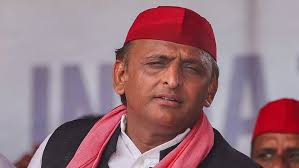
Akhilesh Yadav’s Sharp Attack in Parliament: Politics, Symbolism and the Debate Around Faith
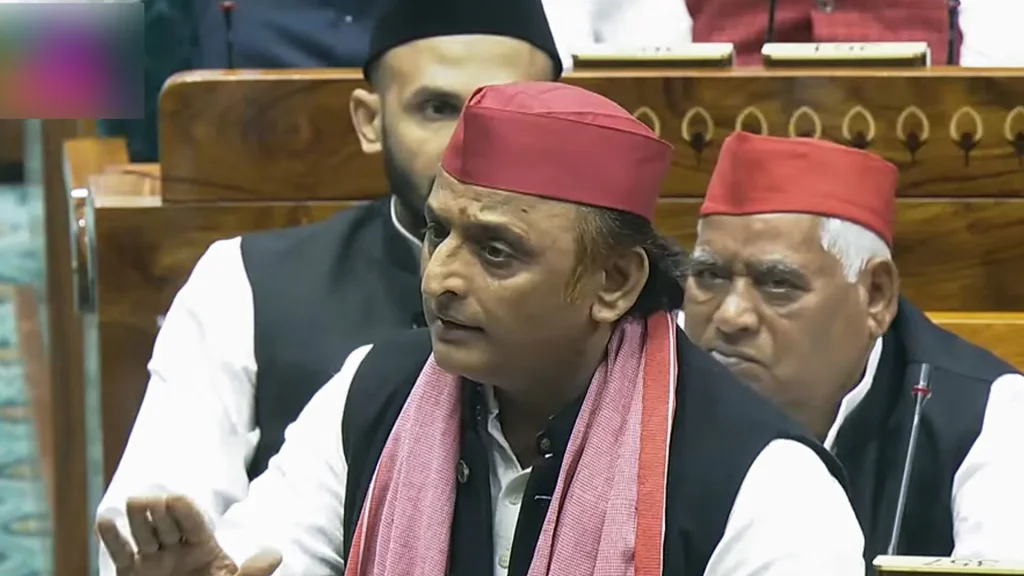
Ramji Bill On Tuesday, Samajwadi Party chief and Lok Sabha MP Akhilesh Yadav once again drew national attention with a sharp and symbolic political attack during the ongoing parliamentary debate. Taking aim at the ruling party, Akhilesh questioned the intent, presentation, and political messaging behind the Ramji Bill, arguing that it reflected not governance but a carefully crafted spectacle. His most striking remark—that actor-turned-politician Arun Govil’s seat should be placed next to the Prime Minister—sparked heated discussion across political circles, social media, and newsrooms alike.
Akhilesh Yadav is no stranger to strong statements in Parliament. Known for blending sarcasm with pointed political critique, the former Uttar Pradesh chief minister used this opportunity to highlight what he called the BJP’s obsession with symbolism over substance. By invoking the Ramji Bill, he sought to underline what the Samajwadi Party sees as the ruling party’s attempt to politicize faith and cultural icons for electoral gain.
The Context of the Parliamentary Debate
The debate unfolded at a time when Parliament is already charged with ideological confrontation. Issues of religion, nationalism, and identity politics have dominated recent sessions, often overshadowing discussions on inflation, unemployment, farmers’ distress, and social justice. Against this backdrop, Akhilesh Yadav’s remarks were not just about a single piece of legislation but about a broader political narrative.
Referring to the Ramji Bill, Akhilesh questioned why the government repeatedly brings emotionally charged themes to the forefront instead of addressing bread-and-butter issues. He argued that while faith is deeply personal and respected across India, it should not be converted into a tool for daily political messaging.
Arun Govil, Symbolism, and Political Theatre
One of the most talked-about moments of Akhilesh Yadav’s speech was his reference to Arun Govil, the veteran actor famous for portraying Lord Ram in the iconic television serial Ramayan. Now a BJP MP, Govil represents a unique blend of religious symbolism and electoral politics.
Akhilesh sarcastically suggested that if symbolism is so central to governance, then Arun Govil’s seat should logically be placed next to the Prime Minister. Through this remark, he questioned whether the Ramji Bill was meant to serve public interest or to reinforce a particular ideological image inside Parliament.
According to Akhilesh, such gestures turn the House into a stage rather than a forum for serious debate. He emphasized that lawmakers are elected to solve real problems, not to perform roles designed to impress television audiences.
Samajwadi Party Broader Political Stand
The Samajwadi Party has consistently positioned itself as a party focused on social justice, secularism, and economic equality. Akhilesh Yadav reiterated that stance during his speech, stating that the Ramji Bill diverts attention from urgent matters such as youth unemployment, price rise, farmers’ income, and the shrinking space for small businesses.
He accused the BJP of using emotionally resonant narratives to avoid accountability on governance failures. According to him, repeated emphasis on cultural and religious symbolism creates polarization, which benefits the ruling party electorally but harms social harmony.

Faith, Politics, and the Indian Democracy
Akhilesh Yadav was careful to clarify that his criticism was not directed at faith itself. He acknowledged the deep reverence millions of Indians hold for Lord Ram. However, he argued that faith should unite people, not be deployed as a political weapon. In his view, the Ramji Bill blurs the line between spiritual belief and state policy.
This argument resonates with a long-standing debate in Indian democracy: how to balance religious sentiment with constitutional values. Akhilesh reminded the House that India’s strength lies in its pluralism, where no single belief system dominates state institutions.
BJP Political Messaging and Counter Narrative
From the BJP’s perspective, initiatives like the Ramji Bill are portrayed as steps toward cultural renaissance and civilizational pride. Party leaders argue that recognizing and celebrating India’s heritage corrects historical neglect and restores national self-confidence.
However, Akhilesh Yadav countered this narrative by asking why cultural pride must come at the cost of economic discussion. He questioned whether pride can fill empty stomachs or provide jobs to millions of educated but unemployed youth.
Media Reaction and Public Discourse
As expected, Akhilesh Yadav’s remarks quickly became a trending topic. Television debates dissected his statement about Arun Govil’s seating, while social media users were sharply divided. Supporters praised him for exposing what they see as political theatrics, while critics accused him of mocking religious sentiments.
The Ramji Bill thus became more than a legislative proposal—it turned into a symbol of India’s current political polarization. For many observers, the episode highlighted how Parliament increasingly mirrors the broader ideological battles playing out across society.
Uttar Pradesh Politics and Electoral Implications
For Akhilesh Yadav, the debate also has clear implications in Uttar Pradesh, a state where religious symbolism and caste equations play a decisive role in elections. By challenging the Ramji Bill, he positioned the Samajwadi Party as an alternative voice that respects faith but rejects its political exploitation.
This strategy appears aimed at consolidating minority voters while also appealing to sections of the majority community who are concerned about jobs, education, and healthcare rather than constant ideological confrontation.
Parliament as a Space for Performance or Policy?
A recurring theme in Akhilesh Yadav’s speech was the transformation of Parliament into a performative arena. He argued that bills like the Ramji Bill encourage political showmanship instead of meaningful lawmaking. The reference to seating arrangements, cameras, and symbolism was meant to expose what he described as “optics-driven politics.”
According to him, democracy weakens when lawmakers focus more on how debates look on television than on how policies impact people’s lives.
The Constitutional Angle
Akhilesh Yadav also subtly invoked constitutional principles during his critique. He reminded the House that India’s Constitution envisions a secular state where all citizens are equal, regardless of faith. In his view, the Ramji Bill risks setting a precedent where religious identity becomes intertwined with legislative priorities.
This, he warned, could marginalize communities and undermine the inclusive spirit that has held India together despite its vast diversity.
Opposition Unity and Political Messaging
The speech was also seen as an attempt by Akhilesh Yadav to energize the opposition. By taking a bold stand on a sensitive issue, he signaled that opposition parties would not shy away from confronting the BJP’s ideological agenda head-on. The Ramji Bill, in this sense, became a rallying point for those who believe the ruling party dominates the narrative unchallenged.
Opposition leaders from other parties echoed similar concerns outside the House, indicating a possible convergence of views on the need to refocus parliamentary debate on governance issues.
Public Concerns Beyond Ideology
Akhilesh Yadav concluded his broader argument by listing issues he believes deserve priority: rising household expenses, shrinking job opportunities, farmers struggling with input costs, and young people losing faith in the future. He argued that no amount of symbolism, including debates around the Ramji Bill, can replace concrete policy action.
This appeal was aimed directly at the public, urging citizens to question what truly improves their daily lives.
A Statement That Will Be Remembered
Political observers agree that Akhilesh Yadav’s comment about Arun Govil’s seating will be remembered as one of the more provocative moments of the session. Whether one agrees with him or not, his critique of the Ramji Bill succeeded in forcing a conversation about the direction of Indian politics.
Such moments underline the role of the opposition in a democracy: to question, challenge, and provoke debate, even at the risk of controversy.
Conclusion: Politics at a Crossroads
In the end, Akhilesh Yadav’s criticism was not merely about a single proposal or a seating arrangement. It was a broader commentary on the state of Indian democracy, where spectacle often overshadows substance. By questioning the intent behind the Ramji Bill, he highlighted the tension between faith and governance, symbolism and policy, performance and responsibility.
As Parliament continues its sessions, the larger question remains: will political discourse move back toward solving everyday problems, or will it remain dominated by symbolic battles? Akhilesh Yadav’s intervention ensures that this question cannot be easily ignored.
Read More latest news

