

India’s Diplomatic Tightrope: Responding to “Absolute Resolve” in Venezuela.
Absolute Resolve The geopolitical shockwaves emanating from Venezuela in early January 2026 have tested the diplomatic agility of nations around the globe. Central among the global responses is India’s careful yet clear stance on the unfolding crisis, particularly in light of the U.S. military mission code-named Absolute Resolve, which saw Venezuelan President Nicolás Maduro captured and transported to the United States. India, under the leadership of External Affairs Minister S. Jaishankar, has repeatedly underscored its concern not only about the human cost but also about the implications of such unilateral military actions for international norms and sovereignty.
In this blog, we examine the context of the crisis in Venezuela, define what Absolute Resolve entailed, explore India’s diplomatic response, and discuss what the situation may mean for both regional stability and broader global order.
What Was “Absolute Resolve”?
Before delving into India’s reaction, it is critical to understand what Absolute Resolve was. This is the code name used to describe the United States’ bold military operation that began in Caracas in the first days of January 2026. The mission involved precision air strikes, special forces operations, and the capture of Venezuelan President Nicolás Maduro on allegations related to narcotrafficking and narco-terrorism. While the United States government described the operation as a targeted mission, many observers around the world view Absolute Resolve as one of the most aggressive deployments of force by a major power in Latin America in decades.
The world watcheaààd with mixed reactions as U.S. forces executed Absolute Resolve, swiftly detaining Maduro and his wife before transporting them to New York, where they appeared in federal court to face charges. This dramatic turn of events has raised profound questions about sovereignty, legality, and the future of Venezuela’s governance.

India’s Immediate Diplomatic Reaction
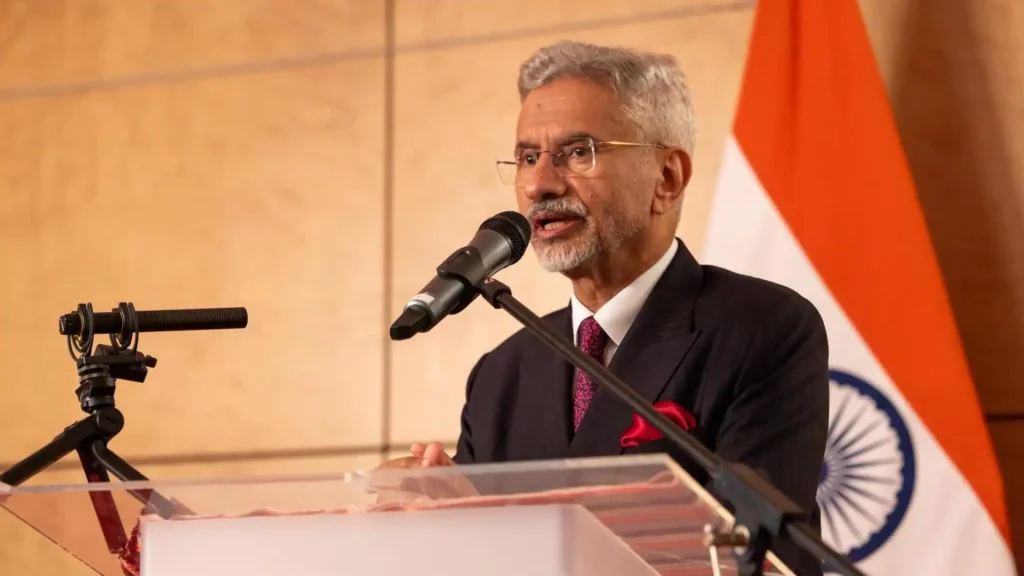
India’s response to the Venezuelan crisis and Absolute Resolve has been measured, with a focus on humanitarian concerns and peaceful resolution. Speaking at a public event during an official visit to Luxembourg, External Affairs Minister S. Jaishankar expressed that India is concerned about recent developments in Venezuela. This included the fallout from Absolute Resolve and its effects on Venezuelan people and regional stability.
Rather than endorsing or condemning the operation outright, Jaishankar’s comments emphasized India’s longstanding friendship with Venezuela and the well-being of its citizens. He articulated India’s priority: that the Venezuelan people should come out of this crisis safely, regardless of how global powers choose to act. Such a stance reflects New Delhi’s broader diplomatic traditions of non-interference, respect for sovereignty, and dialogue.
Building the Context: India’s Historic Relations with Venezuela
India and Venezuela have shared decades of diplomatic engagement. Although not among India’s closest strategic partners, Venezuela has historically been significant to India’s energy security and multifaceted international cooperation. Caracas once supplied crude oil to India and played a role in India’s outreach to the broader Latin American region. That relationship ultimately contributed to New Delhi’s decision to watch events unfold with keen interest when Absolute Resolve was launched.
India’s foreign policy has traditionally underscored respect for sovereignty and the peaceful resolution of disputes. This posture, rooted in the principles of the Non-Aligned Movement and the United Nations Charter, has informed India’s public reaction to Absolute Resolve.
Jaishankar’s Nuanced Messaging
When S. Jaishankar speaks, he does so with both strategic caution and clarity. His response to the crisis did not explicitly mention Absolute Resolve by framing it in legal or moral terms, but he clearly acknowledged that developments triggered by the operation are worrying. India’s priority, as stated by Jaishankar, is to urge all parties involved in the crisis to prioritize the safety and well-being of the Venezuelan people.
He underscored that India has “had very good relations” with Venezuela for many years, suggesting that New Delhi’s concern is rooted in a diplomatic history of mutual respect and cooperation that predates the crisis. That acknowledgement is important because it reflects the deeper context in which India’s foreign policy operates — one where relationships are enduring and defined by more than transient political upheavals.
What India Is Concerned About
India’s reservations are not centered on the legality of Absolute Resolve alone, but also on its consequences. A few key Indian concerns include:
- Humanitarian Impact: The displacement, disruption, and suffering of ordinary Venezuelan citizens caught in the turmoil.
- Respect for Sovereignty: India’s global diplomatic posture emphasizes non-interference and respect for territorial integrity. Absolute Resolve, to some international observers, appears to challenge that principle.
- Regional Instability: The crisis has sparked reactions from countries across the world, including strong statements from the United Nations and nations like Russia and China that view Absolute Resolve as an unacceptable breach of international norms.
For Indian policymakers and diplomats, these concerns are not theoretical — they shape how India positions itself in multilateral forums like the United Nations, where debates over sovereignty and intervention are perennial. India’s response to the Venezuelan crisis is rooted in decades of foreign policy thinking that seeks stability through dialogue and cooperation, not through what may be perceived as unilateral force.
Global Reactions and India’s Place in Them
The world’s response to Absolute Resolve has been far from monolithic. Countries have voiced a wide range of positions:
- The United Nations: UN Secretary-General Antonio Guterres expressed deep alarm at the potential for wider instability and emphasized the necessity of peaceful, democratic solutions.
- Russia and China: Both condemned the U.S. operation as a violation of international law and a breach of Venezuelan sovereignty.
- Regional Actors: Governments across Latin America have offered their own interpretations of how power dynamics should evolve in the aftermath of Absolute Resolve.
India’s voice in this chorus has been cautious but resolute — advocating for dialogue, humanitarian respect, and diplomatic avenues before anything else. This posture may appear understated compared to more vociferous criticisms, but it is aligned with India’s long-term strategic emphasis on peace and stability.
What Does India’s Stance Mean for Its Foreign Policy?
India’s reaction to Absolute Resolve is a microcosm of its broader global strategy — one that prioritizes balancing relationships, safeguarding national interests, and promoting stability through dialogue.
India’s careful response suggests that, while it does not condone or endorse military interventions like Absolute Resolve, it also does not want to ignite diplomatic flames that could jeopardize other strategic interests, including relations with the United States. This balancing act — recognizing the U.S. as a partner in many international arenas while also asserting independent viewpoints — underscores India’s rising stature as a diplomatic power that charts its own path.
Importantly, India’s official statements have not descended into overt condemnation of Absolute Resolve itself, but instead have focused on the human impact, the need for dialogue, and respect for Venezuela’s future as a sovereign nation. That distinction highlights India’s nuanced approach to global crises.
Domestic and International Repercussions
India’s messaging around Absolute Resolve also has domestic implications. By framing the crisis in humanitarian terms and refusing to align unequivocally with any single global perspective, India reinforces its image as a state that champions international law and the welfare of civilians caught in conflicts.
On the international stage, this posture allows India to maintain influence with a wide spectrum of partners — from Western democracies to non-aligned nations — without being boxed into rigid ideological camps. In an increasingly multipolar world, the ability to articulate independent but balanced positions on complex geopolitical issues like Absolute Resolve enhances India’s diplomatic credibility.
Looking Ahead
As the Venezuelan crisis continues to evolve in the aftermath of Absolute Resolve, India’s response will likely remain consistent: voicing concern, advocating dialogue, and urging all parties to protect civilians and uphold international norms.
For policymakers in New Delhi, the current crisis underscores the importance of maintaining diplomatic agility — a quality that allows India to stand firm on its principles while navigating a rapidly changing global order.
No matter how the situation develops — whether through political transition in Venezuela, negotiated settlements, or further international debate over Absolute Resolve — India’s approach signals a commitment to peace, stability, and the rule of law.
Conclusion
The Venezuelan crisis and its epicenter in Absolute Resolve have thrust a distant region into the spotlight of global diplomacy. India’s response, articulated by External Affairs Minister S. Jaishankar, reflects a principled, balanced, and humanitarian-focused position that underscores respect for sovereignty, concern for ordinary people, and an unwavering belief in dialogue over force.
Through its careful diplomacy, India has signaled that while it may not always align with the actions of powerful nations, it remains deeply committed to upholding principles that have guided its foreign policy for decades — even in the face of dramatic and unpredictable events triggered by operations like Absolute Resolve.
Read more latest news

