
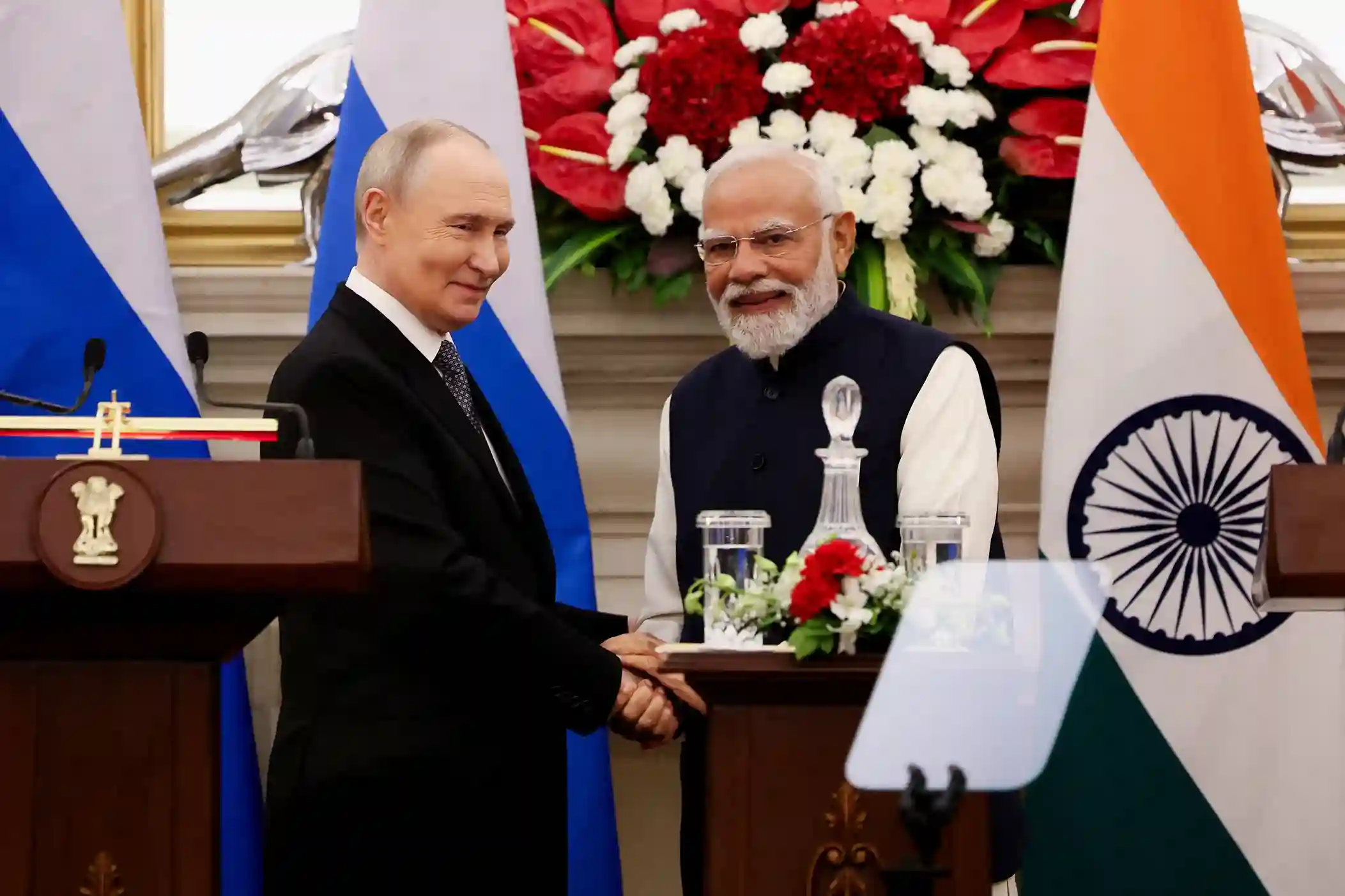
President Vladimir Putin India Visit: A New Chapter in India–Russia Strategic Partnership.
The recent visit of Russian leader President Vladimir Putin to India has once again underlined the enduring strength of India–Russia relations. At a time when global geopolitics is marked by uncertainty, shifting alliances, and economic turbulence, this high-level engagement has sent a clear signal that New Delhi and Moscow continue to view each other as trusted strategic partners. The visit was not merely symbolic; it produced tangible outcomes in defence, trade, energy cooperation, and private-sector engagement, setting the stage for a renewed phase of shared growth and long-term strategic alignment.
Historical Depth of India Russia Relations
India–Russia relations are rooted in decades of mutual trust. From the Cold War era to the post-Soviet period, Moscow has remained a key partner for New Delhi in defence technology, diplomatic support, and strategic autonomy. During his visit, President Vladimir Putin emphasized that this relationship is not driven by short-term interests but by a long-standing commitment to mutual respect and sovereign decision-making.
India, for its part, has consistently maintained that Russia remains an indispensable partner, especially in areas where strategic continuity matters more than momentary political pressures.
Strategic Significance of the Visit
The visit of President Vladimir Putin came at a crucial time when India is balancing relations with multiple global powers. The meetings focused on reinforcing bilateral mechanisms, accelerating stalled projects, and identifying new areas of cooperation. Both sides reiterated that their partnership is “special and privileged,” a phrase that reflects not only diplomatic language but also strategic reality.
According to officials, discussions were candid, forward-looking, and focused on long-term outcomes rather than immediate optics.
Defence Cooperation: The Backbone of the Relationship
Defence cooperation remains the cornerstone of India–Russia ties. During the visit, President Vladimir Putin reaffirmed Russia’s commitment to being India’s most reliable defence partner. From fighter aircraft and submarines to missile systems and joint production initiatives, defence collaboration continues to evolve.
India has increasingly emphasized technology transfer and domestic manufacturing, and Russia has shown flexibility in aligning with India’s “Make in India” vision. The discussions reflected a shared understanding that defence cooperation must adapt to changing security environments while preserving strategic trust.
Trade Relations Unlocking Untapped Potential
Despite strong political ties, trade between India and Russia has historically remained below potential. Addressing this gap was a key focus area during the visit of President Vladimir Putin. Both sides agreed to diversify trade beyond defence and energy into pharmaceuticals, agriculture, fertilizers, digital services, and heavy engineering.
There was also emphasis on using national currencies for trade settlements, reducing dependency on third-party financial systems, and ensuring smoother banking channels.
Energy Partnership: The Core of Economic Cooperation
Energy cooperation emerged as one of the most significant outcomes of the visit. President Vladimir Putin highlighted Russia’s role as a stable and long-term energy supplier to India. Oil, gas, nuclear energy, and renewable technologies were all discussed in detail.
India’s growing energy demand makes diversification essential, and Russia’s vast resources provide strategic security. The two countries agreed to expand cooperation in upstream and downstream projects, ensuring long-term supply stability.
Nayara Energy and Private Sector Participation
One of the most notable aspects of this renewed engagement is the growing role of the private sector. During discussions led by President Vladimir Putin, companies like Nayara Energy were highlighted as examples of successful collaboration.
Nayara Energy, with Russian investment and Indian operational presence, represents a model where strategic interests and commercial viability converge. This model is expected to inspire further private-sector partnerships across infrastructure, petrochemicals, and logistics.
Nuclear Energy Cooperation
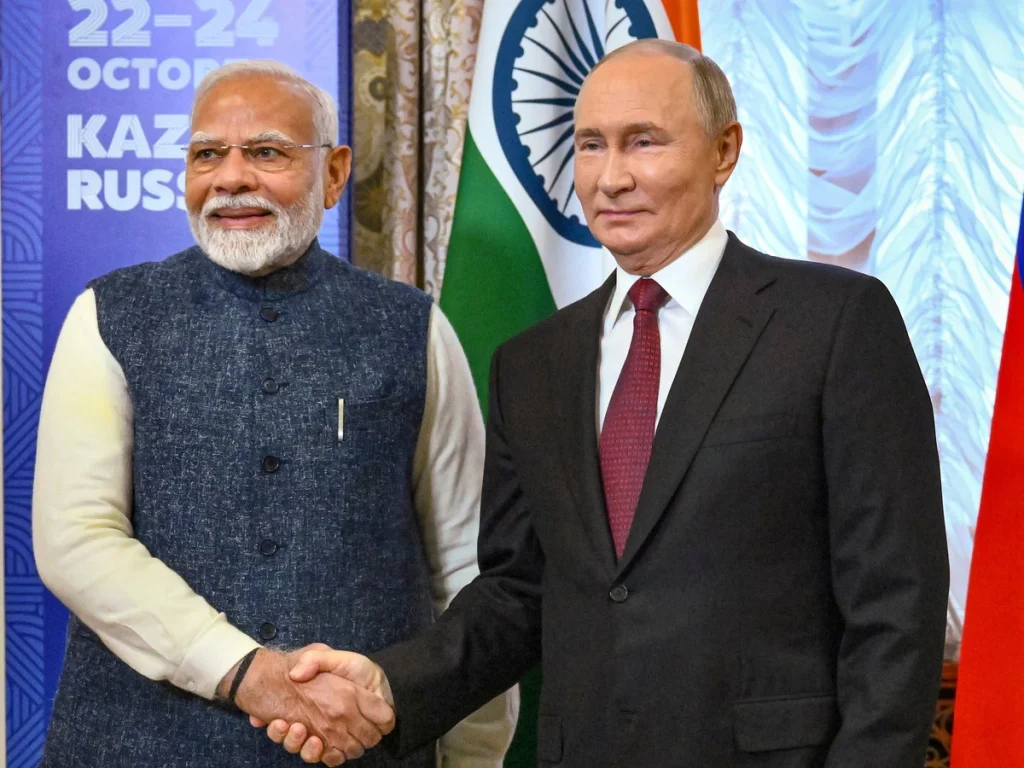
Civil nuclear cooperation has long been a pillar of India–Russia relations. During the visit, President Vladimir Putin reiterated Russia’s commitment to expanding nuclear energy collaboration, including additional reactors and fuel supply assurances.
These projects not only contribute to India’s clean energy goals but also strengthen technological cooperation between the two countries.
Connectivity and Transport Corridors
Another important area discussed during the visit of President Vladimir Putin was connectivity. The International North–South Transport Corridor (INSTC) featured prominently, as both sides acknowledged its potential to reduce transit time and costs between India, Russia, and Eurasia.
Enhanced connectivity is expected to boost trade, attract investment, and integrate regional markets more efficiently.
Geopolitical Coordination on Global Platforms
India and Russia continue to coordinate closely on global platforms such as the United Nations, BRICS, SCO, and G20. President Vladimir Putin emphasized that both countries share similar views on multipolarity, sovereignty, and non-interference.
India’s balanced foreign policy approach and Russia’s emphasis on strategic independence create natural convergence in multilateral diplomacy.
Ukraine Conflict and India’s Balanced Stance
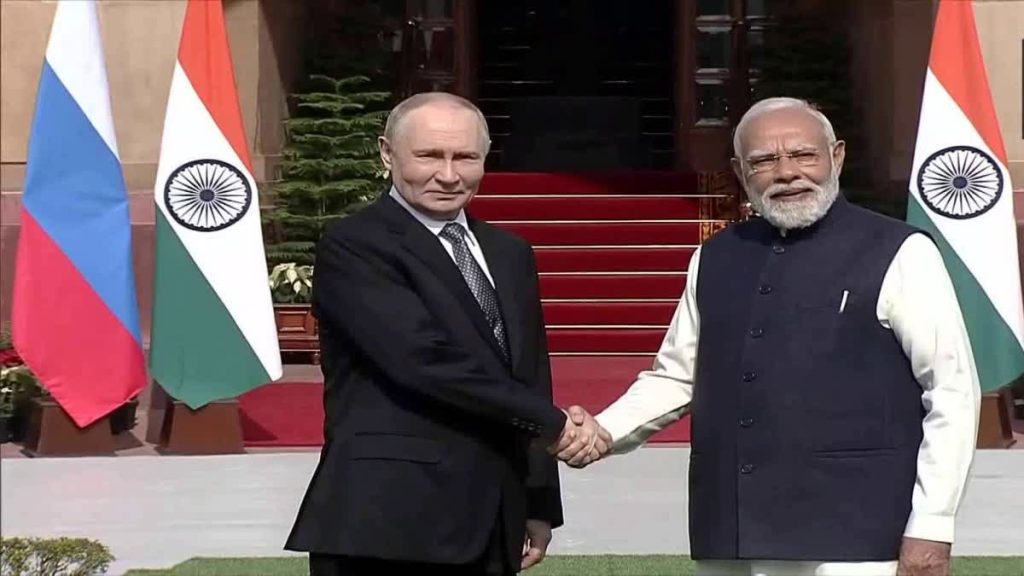
While global attention remains focused on the Ukraine conflict, India has maintained a nuanced position. During the visit, President Vladimir Putin acknowledged India’s independent stance and its consistent call for dialogue and diplomacy.
India reiterated its belief that lasting peace can only be achieved through negotiations, a position that reflects its strategic autonomy and global credibility.
Technology and Innovation Cooperation
Beyond traditional sectors, the visit of President Vladimir Putin also opened doors for cooperation in technology, artificial intelligence, cybersecurity, and space research. Both countries recognize that future strategic strength will depend heavily on innovation-driven growth.
Joint research programs, academic exchanges, and startup collaborations were discussed as potential growth areas.
Cultural and People-to-People Ties
India–Russia relations are not limited to governments and corporations. Cultural ties, educational exchanges, and tourism also play a crucial role. President Vladimir Putin highlighted the importance of strengthening people-to-people contacts to ensure long-term goodwill.
Scholarship programs, language exchanges, and cultural festivals are expected to receive renewed focus.
India’s Strategic Autonomy Reinforced
One of the key takeaways from the visit of President Vladimir Putin is the reinforcement of India’s strategic autonomy. By maintaining strong ties with Russia while engaging with the West, India continues to demonstrate its ability to pursue an independent foreign policy.
This approach enhances India’s global standing and negotiating leverage across multiple forums.
Russia’s Asia Pivot and India’s Role
For Russia, India remains central to its Asia-focused strategy. President Vladimir Putin made it clear that Moscow views New Delhi not merely as a regional partner but as a global player with growing influence.
India’s economic growth, demographic strength, and diplomatic credibility make it a key partner in Russia’s long-term strategic planning.
Challenges and Realistic Expectations
Despite positive outcomes, challenges remain. Logistical bottlenecks, financial sanctions, and geopolitical pressures could slow progress. However, during the visit, President Vladimir Putin and Indian leaders emphasized pragmatic solutions and institutional mechanisms to overcome these hurdles.
The emphasis was on realism rather than rhetoric.
Media and Global Reactions
The international media closely watched the visit of President Vladimir Putin to India, interpreting it as a signal of deepening ties despite global tensions. Analysts noted that India’s engagement reflects confidence rather than defiance, rooted in national interest.
Global reactions highlighted India’s growing role as a bridge between competing geopolitical blocs.
Long-Term Vision for the Partnership
The long-term vision articulated during the visit of President Vladimir Putin focuses on stability, economic resilience, and strategic trust. Both sides acknowledged that their partnership must evolve with changing global realities while preserving its core principles.
This vision emphasizes mutual benefit, respect for sovereignty, and shared development goals.
Conclusion: A Partnership Entering a New Phase
The visit of President Vladimir Putin has clearly marked the beginning of a renewed chapter in India–Russia relations. From defence and energy to trade, technology, and private-sector participation, the partnership is expanding in scope and depth.
As global uncertainties continue to rise, the India–Russia relationship stands out as one built on consistency, trust, and strategic clarity. With strengthened energy cooperation, growing private-sector involvement through companies like Nayara Energy, and shared geopolitical perspectives, both nations are poised to move toward a new era of shared growth and strategic alignment.
In a rapidly changing world order, the outcomes of this visit reaffirm that strong bilateral partnerships, guided by national interest and mutual respect, remain essential for global stability.
Read More latest News

