
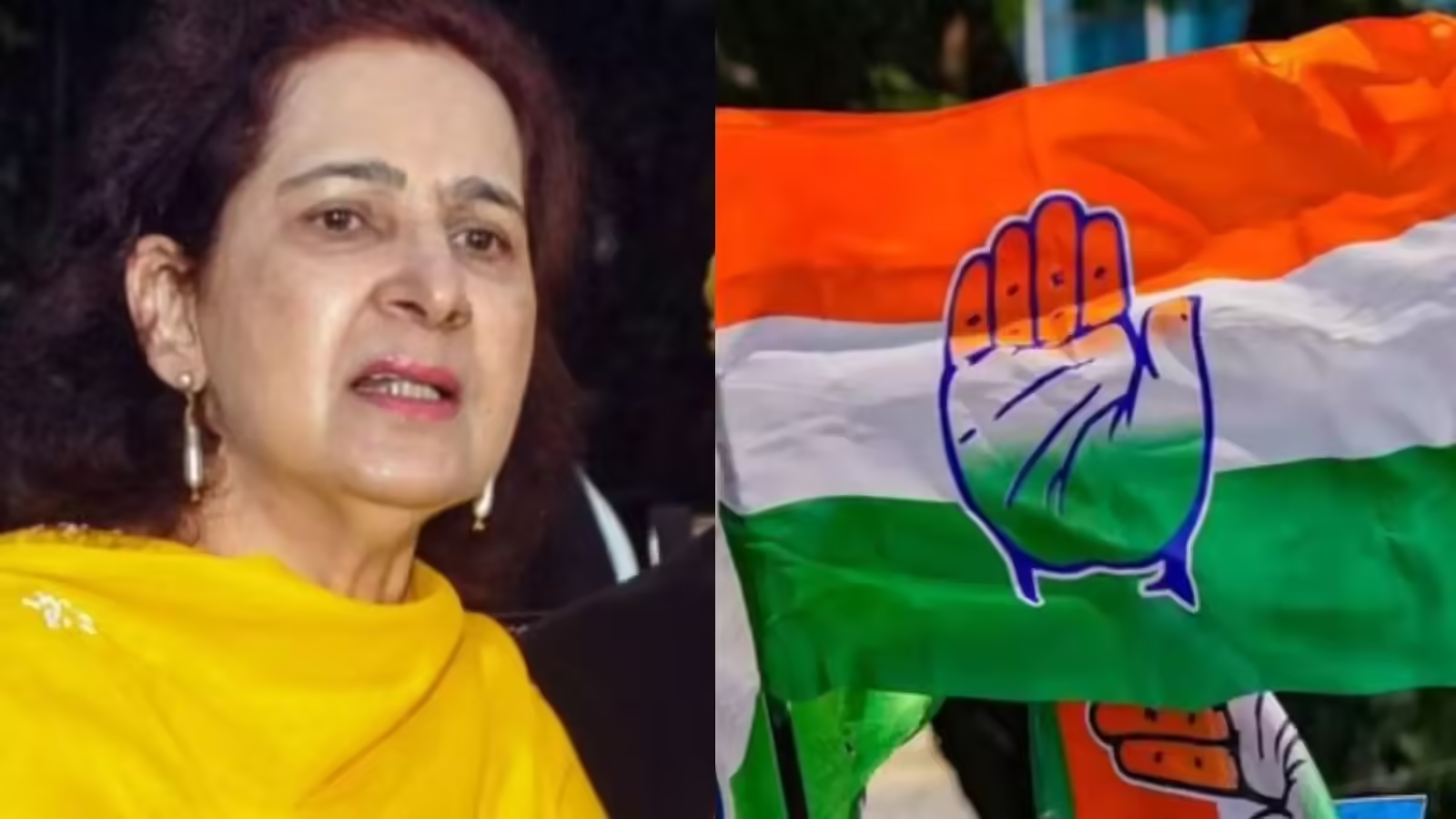
Navjot Kaur Sidhu Suspended by Congress: The Controversy Behind the ‘500 Crore Rupees to Become CM’ Statement.
Navjot Kaur Sidhu suspended by Congress, Political controversies are not uncommon in India, but every once in a while, an episode erupts that shakes the internal foundations of a national party. The suspension of Navjot Kaur Sidhu by the Congress party over her explosive statement claiming that “500 crore rupees is required to become Chief Minister” has created a political storm in Punjab. This issue has captured national attention, stirred debates within political circles, and raised serious questions about transparency, internal party democracy, and the influence of money in politics.
the political implications, reactions from different factions, the broader question of leadership selection in Indian parties, and the future of Navjot Kaur Sidhu within the Congress. It also examines how this statement could reshape the conversation around corruption and the cost of power in Indian politics.
1. Who Is Navjot Kaur Sidhu? A Brief Background
Before diving into the controversy, it’s important to understand who Navjot Kaur Sidhu is and how her political journey evolved. A doctor by profession and former Member of Legislative Assembly from Amritsar East, she has been a recognizable face in Punjab politics. Married to former cricketer and politician Navjot Singh Sidhu, she entered politics with the promise of clean governance and honesty.
Over time, she has earned a reputation for speaking openly, sometimes bluntly, even at the cost of upsetting her own party leadership. This outspoken nature forms the backdrop of the current political storm. Her credibility among supporters comes from the fact that she doesn’t hesitate to challenge internal party decisions when she feels something is wrong. But this same behavior has often brought her into conflict with the Congress high command.
The suspension of Navjot Kaur Sidhu is perhaps the biggest political setback she has faced, but it also highlights how her straightforward style continues to disrupt political comfort zones.
2. The Controversial Statement: “500 Crore Rupees to Become CM”
The heart of the controversy lies in a powerful and shocking statement made by Navjot Kaur Sidhu. During an interaction, she stated that in Indian politics—and specifically in her party—one needs around 500 crore rupees to become a Chief Minister. This accusation implied that leadership positions can be “bought,” raising the question: Is political leadership influenced by money more than merit?
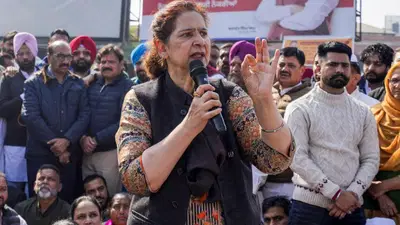
While political analysts have debated this topic privately for decades, very few mainstream politicians have ever said it openly. When Navjot Kaur Sidhu made such a statement, she touched a nerve. She didn’t merely criticize the system; she accused it of being deeply monetized and corrupt.
For the Congress leadership, such an allegation—made publicly—was intolerable. The immediate aftermath was predictable: internal outrage, public embarrassment, and swift disciplinary action.
3. Congress’s Reaction: Why the Suspension Happened
Congress responded with urgency, announcing the suspension of Navjot Kaur Sidhu for violating party discipline and tarnishing its image. The party leadership argued that such statements weaken the credibility of the organization and give ammunition to rival political parties.
The Congress maintains that internal issues should not be aired publicly. But this raises a deeper question: If leaders cannot talk about corruption internally or externally, then how can parties truly reform?
The suspension also reveals a pattern. Political parties in India prefer silence over transparency. For Congress, which has been trying to rebuild its image after successive electoral setbacks, the statement from Navjot Kaur Sidhu risked damaging the party during a politically sensitive time.
4. Reactions Across Punjab and India
The political landscape in Punjab is always vibrant, and controversy tends to spread quickly. Once the statement of Navjot Kaur Sidhu became public, leaders from various parties responded rapidly.
Aam Aadmi Party (AAP) Reaction
AAP leaders used this to criticize Congress and claim that their own party represents cleaner governance. They argued that the statement validated their long-standing accusations against traditional parties.
Bharatiya Janata Party (BJP) Reaction
BJP leaders called it proof of “internal decay” within Congress. The party accused Congress of being controlled by money and power brokers.
Shiromani Akali Dal (SAD) Reaction
SAD leaders said that such allegations reflect Congress’s internal chaos and lack of serious leadership.
Public opinion was divided. Some supported Navjot Kaur Sidhu for having the courage to speak the truth. Others criticized her for making such claims without presenting concrete proof. Regardless of the divide, one thing became clear—her suspension had become a national talking point.

5. Is There Truth Behind the Statement? A Larger Political Question
Whether the figure of 500 crore rupees is accurate or not, the underlying concern is real. Money and power have always played a strong role in Indian politics. Contesting elections itself requires large financial resources, and leadership battles often involve factors beyond public merit.
What Navjot Kaur Sidhu did was bring these hidden concerns into the spotlight. Political analysts argue that instead of suspending her, the party should have initiated an internal investigation or discussion about the issue. By suspending her, Congress may have unintentionally validated the perception that it does not welcome internal criticism.
6. Navjot Kaur Sidhu’s Political Image After Suspension
Every suspension creates two possibilities:
- A leader becomes irrelevant
- Or a leader becomes more powerful because the suspension makes them a symbol of truth
In the case of Navjot Kaur Sidhu, many believe it’s the latter. Her supporters argue that she is being punished for speaking honestly. This strengthens her image as a fearless political figure who refuses to compromise on ethics.
Since Navjot Kaur Sidhu has always positioned herself as someone who speaks for the people, this controversy may actually boost her credibility among voters who are frustrated with corruption and money-driven politics.
7. The Sidhu Factor: Connection With Navjot Singh Sidhu
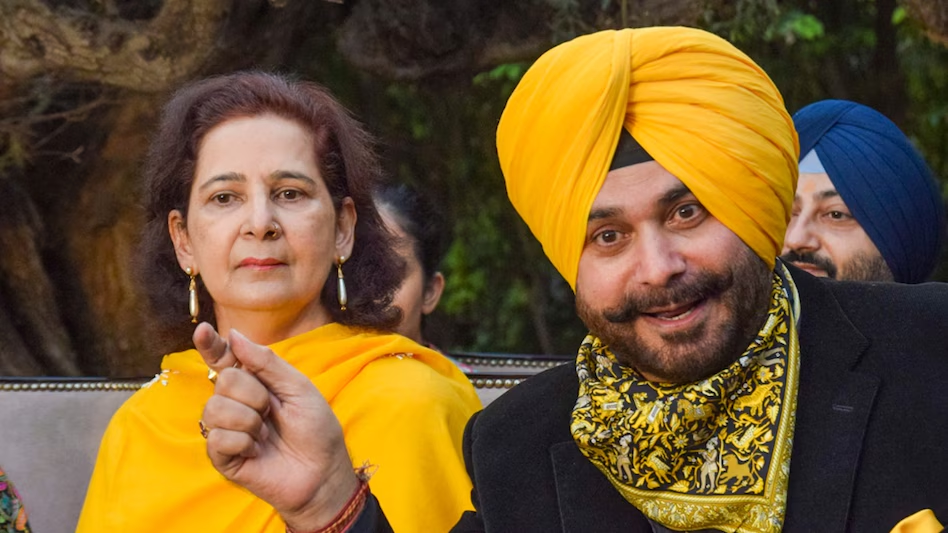
Another dimension to the controversy is her connection with Navjot Singh Sidhu, who has also had a turbulent relationship with Congress leadership. His straightforward personality, frequent disagreements with party decisions, and contrasting views with certain leaders have already created discomfort within the party.
Now that Navjot Kaur Sidhu has been suspended, it raises questions:
- Will Navjot Singh Sidhu speak publicly against the decision?
- Will this incident distance the Sidhu family from Congress altogether?
- Could this be a turning point leading them toward a different party?
Political observers are closely watching whether this suspension will influence the couple’s future political decisions.
8. The Future of Navjot Kaur Sidhu in Congress
Despite her suspension, Navjot Kaur Sidhu still has significant political capital. She is known for her integrity, connects well with the people, and has never been part of major corruption allegations.
But the suspension raises doubts:
- Will Congress reinstate her after pressure builds?
- Will she leave the party voluntarily?
- Or will she stay and fight from within?
Her next step will determine her long-term political trajectory. Many believe that if Congress does not address her concerns respectfully, she may consider aligning with another party or contesting independently.
9. What This Means for Congress as a National Party
Congress has been struggling to redefine itself. At a time when internal unity is crucial, suspending a leader like Navjot Kaur Sidhu sends mixed signals.
It raises important issues:
- Does Congress allow internal dissent?
- Does the party prioritize image over addressing corruption concerns?
- Is leadership selection transparent?
By avoiding a public discussion and instead opting for disciplinary action, the party risks alienating leaders who want structural reforms.
10. Public Perception: How Voters View the Controversy
Voters in Punjab have always valued honesty and straight talk. So when Navjot Kaur Sidhu made the statement, many saw it as a courageous act. The suspension, therefore, may appear as an attempt to silence truth.
For many young voters, this controversy symbolizes the real issue in Indian politics—money overshadowing merit.
This could lead to two outcomes:
- Sympathy for Navjot Kaur Sidhu
- Growing mistrust toward Congress
Either way, the controversy has reshaped political dynamics.
11. Political Funding in India: A Deep Look Into the Problem
The issue raised by Navjot Kaur Sidhu is not new, but politicians rarely address it openly. Political funding in India remains opaque. Electoral bonds, donations, and lobbying have created a system where money plays a critical role.
If leadership positions truly require vast financial support, then ordinary people can never rise within political structures. This contradicts the idea of representative democracy.
Her statement has forced Indians to ask:
- Who controls political parties?
- Are leaders chosen by votes or by financial power?
- Can a clean and qualified person ever become a Chief Minister without wealth?
These questions are uncomfortable, but necessary.
12. The Possible Legal Angle
While her statement created a political uproar, some legal experts argue that if Navjot Kaur Sidhu has evidence, she could approach investigative agencies. However, she has not indicated any legal action. It’s possible that her aim was to highlight the problem, not to pursue a legal battle.
Congress, on its part, may view legal exposure as a further threat to its reputation.
13. Media Coverage and Public Debate
News channels, political talk shows, and social media platforms have been discussing the suspension nonstop. The media has played a major role in turning this into a national conversation.
For many people, Navjot Kaur Sidhu has become a symbol of honesty versus political pressure. For others, she is seen as someone who may have exaggerated claims. But regardless of opinion, the issue has grabbed attention.
14. Is This a Turning Point for Women in Politics?
The suspension of a strong female voice like Navjot Kaur Sidhu sparks another debate: Do women face more punishment than men for speaking out?
Many female politicians have pointed out that when men make controversial statements, parties often defend them. But when a woman challenges authority, the consequences are harsher.
This controversy could inspire more women to speak out against political inequality.
15. The Road Ahead for Navjot Kaur Sidhu
The future holds many possibilities, and Navjot Kaur Sidhu stands at a political crossroads. Her next steps could include:
- Negotiating with Congress
- Starting her own political movement
- Joining another national party
- Focusing on activism rather than traditional politics
Whatever she chooses, her voice will continue to influence Punjab politics.
Conclusion: A Controversy That Exposed Deeper Issues
The suspension of Navjot Kaur Sidhu is not just a disciplinary action—it is a reflection of the internal struggles within Indian political parties. Her statement about “500 crore rupees to become CM” may be controversial, but it has forced the nation to confront uncomfortable truths about money, power, and ethics.
By using her platform, Navjot Kaur Sidhu has initiated a conversation that India needs. Whether people agree with her or not, she has highlighted a serious problem within the political system. The controversy may fade over time, but the questions she raised will continue to resonate.
And as political observers say:
Sometimes a single honest statement can shake a whole system—and Navjot Kaur Sidhu has done exactly that.
Read more latest news

