
Delhi: What Chirag Paswan and Parliament Said on ‘Vande Mataram’ as It Marks 150 Years — Significance, Debate, and Future
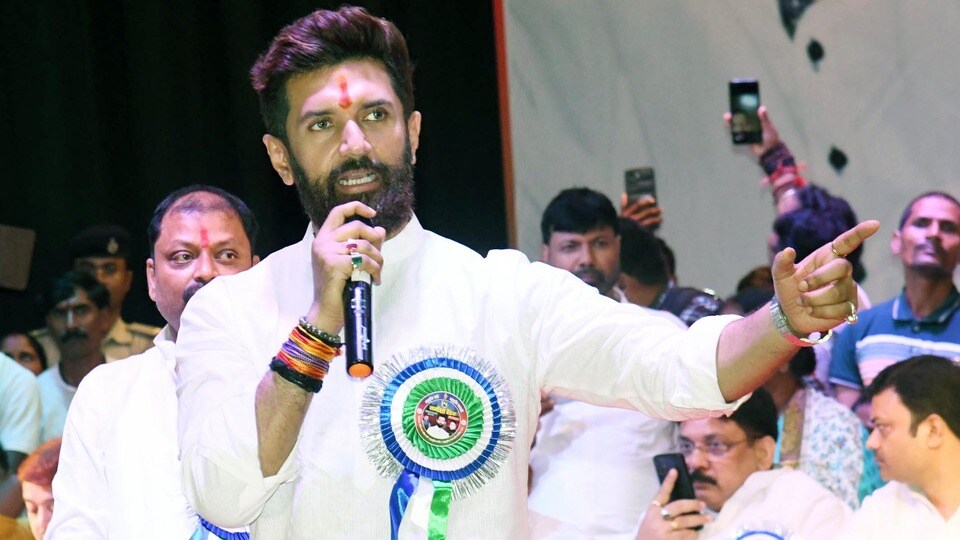
debate on Vande Mataram, On 8 December 2025, the halls of Parliament resonated with patriotic fervour, history, and also sharp political debate. The lower house — Lok Sabha — convened a special session to commemorate the 150-year anniversary of “Vande Mataram”, the iconic song deeply rooted in India’s freedom movement and national identity. As MPs, ministers and leaders took turns to reflect on its legacy, one voice stood out for its forward-looking note: Union Minister Chirag Paswan. In his remarks, he said:
“It is important not only to commemorate 150 years of Vande Mataram, but also to lay a strong foundation for the next 150 years.”
This blog examines — what exactly was said in Parliament, why the debate on Vande Mataram was called today, what the song means historically and symbolically, the controversies it carries, and whether this 150-year milestone can help build a unifying foundation for India’s future.
Why Parliament Is Discussing Vande Mataram in 2025
The 150-Year Milestone
The year 2025 marks 150 years since the original publication of Vande Mataram. The poem was first published on 7 November 1875, in the literary journal Bangadarshan. Later, it was incorporated by the poet-novelist Bankim Chandra Chattopadhyay into his novel Anandamath (published 1882), which helped it gain widespread reach.
Over the decades, Vande Mataram became more than a poem — it became a rallying cry in India’s freedom struggle. During the anti-Partition protests in Bengal in 1905, students first raised Vande Mataram as a slogan; from there, it spread across the country as a symbol of resistance against colonial rule.
Given this rich history, the government decided to use the 150th anniversary as an occasion for a renewed public reflection: not only to honour the past, but also to hopefully strengthen its meaning for the future. On 7 November 2025, the year-long commemoration began.
Hence, Parliament scheduled a special discussion in Lok Sabha on 8 December 2025, spanning nearly 10 hours, inviting members from all parties to speak on the significance, legacy, and future course linked to Vande Mataram.
Chirag Paswan’s Message: Reflection and a Call for the Future
In this debate, when Chirag Paswan rose to address the House, his message was both patriotic and forward-looking. He emphasised that while celebrating 150 years is important, what truly matters is to build a “strong foundation for the next 150 years.”
What does that mean? It reflects the understanding that Vande Mataram isn’t just a relic of the past, but a living symbol of unity, identity, and national pride — something that should guide India’s journey into its future. It’s a call to the youth, to civil society, to policymakers: to preserve the ideals of Vande Mataram, to honour its legacy, and to ensure those values remain relevant for coming generations.
In the words of supporters quoted during the debate, Vande Mataram is a unifying force and a reminder of collective sacrifice and shared ideals.
Chirag Paswan’s statement resonated because it offered a bridge between reverence for history and a vision for a cohesive future — one where India’s diversity, cultural legacy and national identity are not just remembered, but continuously nurtured.
Historic Journey of Vande Mataram: From Poem to National Song
To appreciate why Vande Mataram still evokes intense emotions and debate — even 150 years later — it helps to trace its journey.
- As noted, Vande Mataram was first published in 1875, by Bankim Chandra Chattopadhyay.
- Later, in Anandamath, the poem acquired deeper resonance: the book’s themes of sacrifice, resistance and national identity made the poem a cultural rallying cry.
- The poem was first sung in public at the 1896 session of the Indian National Congress (INC), where the legendary poet-philosopher Rabindranath Tagore is said to have set it to tune.
- Over the early 20th century — especially during the Swadeshi movement, the Anti-Partition protests, and the broader fight against British colonial rule — Vande Mataram emerged as the de facto national song. It unified people of diverse languages, cultures, and regions under one cry: Maa Bharati, their Motherland.
- After independence, when the Constitution was framed, the song was accorded a special status: it was adopted on 24 January 1950 as India’s National Song, distinct from (but complementary to) the National Anthem.
Beyond its political and historical role, Vande Mataram became a cultural symbol — sung in schools, at public events, cultural festivals, and patriotic gatherings — binding together India’s mosaic of identities.
Why Is Vande Mataram Still Politically Contested? The Controversies and Criticisms
Even as many revere Vande Mataram as a unifying patriotic song, the 150-year celebration has reopened old debates. The special discussion in Parliament exposed renewed scrutiny of the song’s history, symbolism, and inclusive acceptability. Here are the main points of contention:
🔹 The “Missing Stanzas” and Communal Sensitivities
Critics argue that certain stanzas of the original composition — which may invoke religious imagery or metaphors — were removed in 1937 by the INC’s Working Committee to make the song more inclusive, especially to address objections from sections of the Muslim community.
Supporters of the fuller version view this removal as dilution of the song’s original spirit; some even argue it contributed to a broader sense of division that culminated in the Partition.
Today, as parties prepare to revisit its origins, these arguments have resurfaced — making Vande Mataram not just a patriotic symbol, but a site of contested history, identity and religious pluralism.
🔹 Identity, Secularism and National Unity
For many critics, mandating or promoting Vande Mataram as a compulsory song or slogan can challenge India’s secular ethos. They argue that people from minority communities may feel excluded or uncomfortable given the song’s association with Hindu imagery. This apprehension, they say, can alienate rather than unify.
Hence, while the 150-year commemoration is widely supported by many as a tribute, the debate around its universal acceptance remains alive. Some MPs cautioned against using it to push a monolithic cultural identity, warning that doing so could deepen communal divides instead of bridging them.
🔹 History, Revisionism and Political Narrative
The commemoration has also triggered a broader reassessment of historical events: the role of the British period, the freedom struggle, Partition, and how post-independence political decisions (like trimming verses) affected national unity. For some, revisiting these episodes is a necessary exercise in truth and reconciliation; for others, it is politicisation of culture and history.
In this context, the Parliament debate aims not only to celebrate, but also to confront difficult questions: What does Vande Mataram mean today? Can it belong to all Indians, irrespective of religion, caste, or region? And can it become a genuine symbol of inclusive national identity?
What MPs and Leaders Are Emphasizing in the Current Debate
The 2025 debate in Lok Sabha is expected to cover a wide range of perspectives. Based on early remarks and reporting, here are the key themes being raised:
- For many MPs, including those aligned with the ruling party, Vande Mataram is a symbol of India’s freedom struggle, unity, sacrifice, and the motherland’s spiritual essence. They argue that commemorating 150 years and promoting wider awareness is essential to revive patriotic spirit among younger generations.
- Some voices, like Chirag Paswan’s, urge that this commemoration should not just be symbolic — it should mark the beginning of a renewed commitment to national unity, mutual respect, and preserving cultural heritage for posterity.
- Critics — especially from opposition parties or minority-representative groups — caution that compulsory or enforced singing or promotion of Vande Mataram can create discomfort among religious or cultural minorities. They call for sensitivity, voluntary observance, and recognition of India’s plural identity.
- Others see the debate as a chance to revisit historical injustices: to honestly discuss whether decisions taken in the past (like the 1937 truncation) hurt the inclusive fabric of the nation, and to ensure that going forward, national symbols are adapted — if at all — with democratic and plural sensibilities in mind.
Thus, the 150-year debate is not just a celebration, but a crossroads — between nostalgia and modernity, unity and diversity, memory and reinterpretation.

Why This Debate Matters Now — In Contemporary India
You might ask: Why is a song from 1875 still stirring such intense discussion in 2025? The answer lies in the context.
1. Identity and National Consciousness in a Globalising World
As India rapidly changes — economically, socially, culturally — questions of identity, belonging, and heritage have gained renewed importance. A song like Vande Mataram, which once united masses during colonial rule, can serve as a reminder of shared history and values in a time of fragmentation. Commemorating 150 years is an opportunity to reconnect with those roots.
2. Generational Transmission of Patriotism and Values
Many young Indians may not be aware of the history of Vande Mataram — when and why it was written, who sang it first, its link with the freedom struggle. The current debate — begun by the government — attempts to re-educate and re-emphasize its place in the national consciousness.
3. Tensions Between Cultural Symbolism and Social Plurality
India’s diversity — linguistic, religious, cultural — runs deep. For a symbol like Vande Mataram to remain relevant, it must be seen as belonging to all. The debate is thus also a negotiation: Can we honour historical symbols without alienating communities? Can we accept plural narratives while preserving national identity?
4. Historic Reckoning and Accountability
With recollections of past decisions — like the 1937 truncation — surfacing, there’s a moral and political case for reckoning with history. Understanding these choices, acknowledging their consequences, and possibly healing their outcomes, becomes essential if the song is to regain its original unifying spirit.
5. Using Heritage to Inspire Future National Discourse
As India embarks on its next phase of development — technologically, socially, geopolitically — the debate underscores the idea that national symbols are not relics. They are tools: tools to build unity, educate citizens, inspire responsibility, and reinforce the values of freedom, sacrifice, and respect.
In this light, Chirag Paswan’s call for laying a “foundation for the next 150 years” is not just poetic — it is deeply relevant.
Challenges Ahead: Can Vande Mataram Be a Truly Inclusive Symbol?
Despite goodwill and patriotic sentiment, converting this moment into a unifying force is not without challenges.
⚠ Historical Skepticism & Communal Concerns
As mentioned, certain stanzas of the original song contain references and imagery that some religious communities have found uncomfortable. For Vande Mataram to be genuinely inclusive, such concerns must be sensitively addressed.
Mandating the song in public institutions — schools, government functions — could rekindle resistance, feelings of exclusion, or perceived coercion. India’s constitutional values demand respect for pluralism, and any push for enforced uniformity risks backfiring.
⚠ Political Polarization & Revisionism
Given the political significance of the debate, there is a risk that Vande Mataram may be used as a tool for majoritarian posturing or rewriting historical narratives to favour particular ideological positions. That could deepen divisions rather than heal them.
⚠ Over-Sentimentality vs. Real Social Issues
While symbolism is powerful, real concerns remain unaddressed: social inequality, religious tensions, discrimination, economic disparities. If the debate remains symbolic and does not translate into inclusive social policy — the moment could become hollow nationalism.
⚠ Youth Disconnection
Younger generations, already globally connected and culturally diverse in outlook, may view such debates as nostalgic or irrelevant — unless the message is adapted responsibly, sensitively, and inclusively.
Hence, to truly lay a “foundation for the next 150 years,” as Chirag Paswan said, stakeholders must go beyond speeches. They need education, dialogue, inclusion, and real policies that reflect the song’s spirit: unity in diversity, respect for all, and collective progress.
What Should India Do Now: A Way Forward — Recommendations
Based on the debates, history, hopes and concerns — here are some suggestions on how India can honour Vande Mataram’s legacy while also making it inclusive, relevant and unifying for future generations.
✅ Promote Voluntary and Respectful Celebrations
Rather than imposing the song as mandatory, institutions — schools, colleges, public events — should encourage voluntary singing or recitation of Vande Mataram. Emphasis should be on the song’s message — unity, respect for motherland, diversity — not on coercion or ritualistic nationalism.
✅ Educational Outreach & Historical Awareness
Curricula (especially in history, social studies, civic education) should include detailed context about Vande Mataram: its origin, role in freedom struggle, controversies, and significance. This will help youth understand why it matters — not just as a song, but as collective memory and identity.
✅ Inclusive Dialogue with Communities
Given sensitivities, government and civil society should organize interfaith and community dialogues discussing Vande Mataram’s meaning, accommodating plural identities, and respecting objections, if any. Such dialogue could pave the way for inclusive acceptance rather than forced compliance.
✅ Cultural Celebrations — Music, Art, Literature
Use culture to celebrate diversity: encourage reinterpretations of Vande Mataram in different Indian languages, regional musical styles, diverse artistic expressions — to emphasise unity in plurality.
✅ Honour Real Values — Sacrifice, Service, Harmony
Beyond symbolism, the spirit of Vande Mataram should inspire tangible civic values: national integration, social justice, inter-community harmony, respect for heritage — not just emotional patriotism.
✅ Transparent Historical Reckoning
An academic and public review of Vande Mataram’s history — including why certain stanzas were dropped, how different communities responded — could foster healing and collective understanding. Official archives, scholarly debates, public records should be made accessible.
If India takes these steps — combining respect for heritage with sensitivity, inclusion with national pride — then the 150-year commemoration of Vande Mataram can become more than a symbolic milestone. It can mark a renewed commitment to building a plural, united, future-ready India.
Why Chirag Paswan’s Statement Resonates — And What It Signals for India’s Future
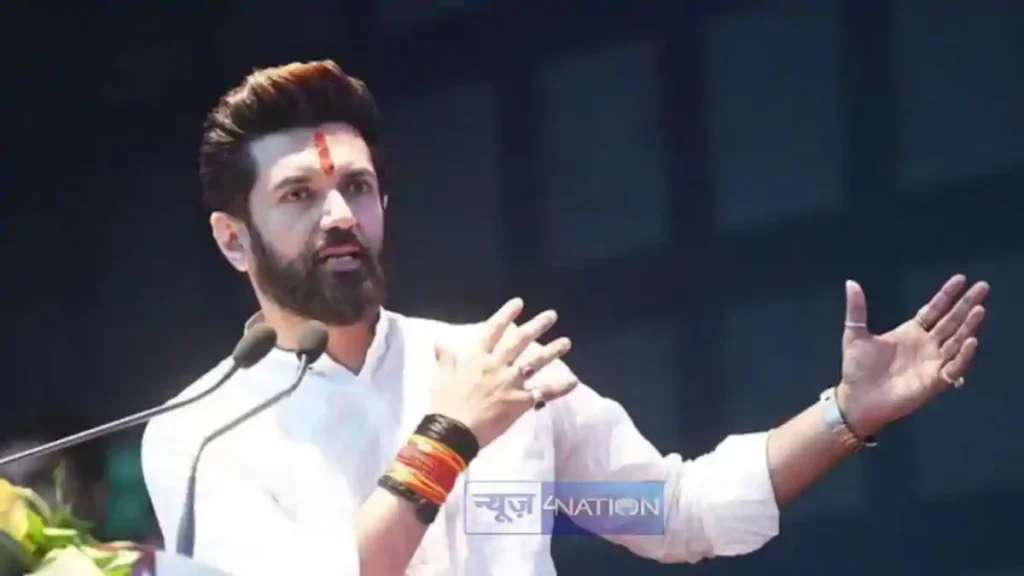
When Chirag Paswan said that we must lay a strong foundation for the next 150 years of Vande Mataram, he touched upon a central truth: the song’s power lies not just in history, but in its capacity to unite people across generations, regions, religions, and languages.
In a time of rapid global change, digital connectedness, social upheavals and identity assertions — the need for symbols that can bind people together is greater than ever. Vande Mataram — when understood, respected, and celebrated inclusively — has the potential to be such a symbol.
Paswan’s statement signals that this is not just a nostalgic exercise. It is a call for action — to reimagine national identity as shared values, shared heritage, and shared future. It is an invitation to every Indian: to remember, reflect, and recommit.
But whether that promise will be fulfilled depends on genuine effort — by policymakers, educators, civil society, communities and individuals alike.
Conclusion: A Song, a Symbol, a Nation — Vande Mataram in 2025 and Beyond
The 150th anniversary debate on Vande Mataram in Parliament is more than a commemoration. It is a moment of reflection: on India’s past, present, and future. It invites us to revisit our roots, to acknowledge our diversity, to honour sacrifices, and to forge unity without erasing plurality.
Chirag Paswan’s words capture this opportunity: the chance not only to celebrate, but to build — “a strong foundation for the next 150 years.” Whether that foundation holds depends on how we, as a nation, choose to interpret, preserve, and live the spirit of Vande Mataram: not just in speeches, but in actions, respect, inclusivity, and collective progress.
As Parliament debates, citizens listen. As history meets the present, the future awaits. May Vande Mataram — the song, the memory, the ideal — continue to guide India toward unity, dignity, and shared aspirations for generations to come.
Read More latest news

